 Image: Maruti press kit
A well-rounded crossover with strong fundamentals and Maruti reliability, though it demands smart variant selection to extract real value.
The Maruti Fronx is a Baleno wearing crossover boots: taller stance, sharper styling and an exclusive 1.0L Boosterjet turbo-petrol that no other Maruti currently offers. It looks the part and drives well, but the cabin and pricing don't always match the SUV-flavoured promise.
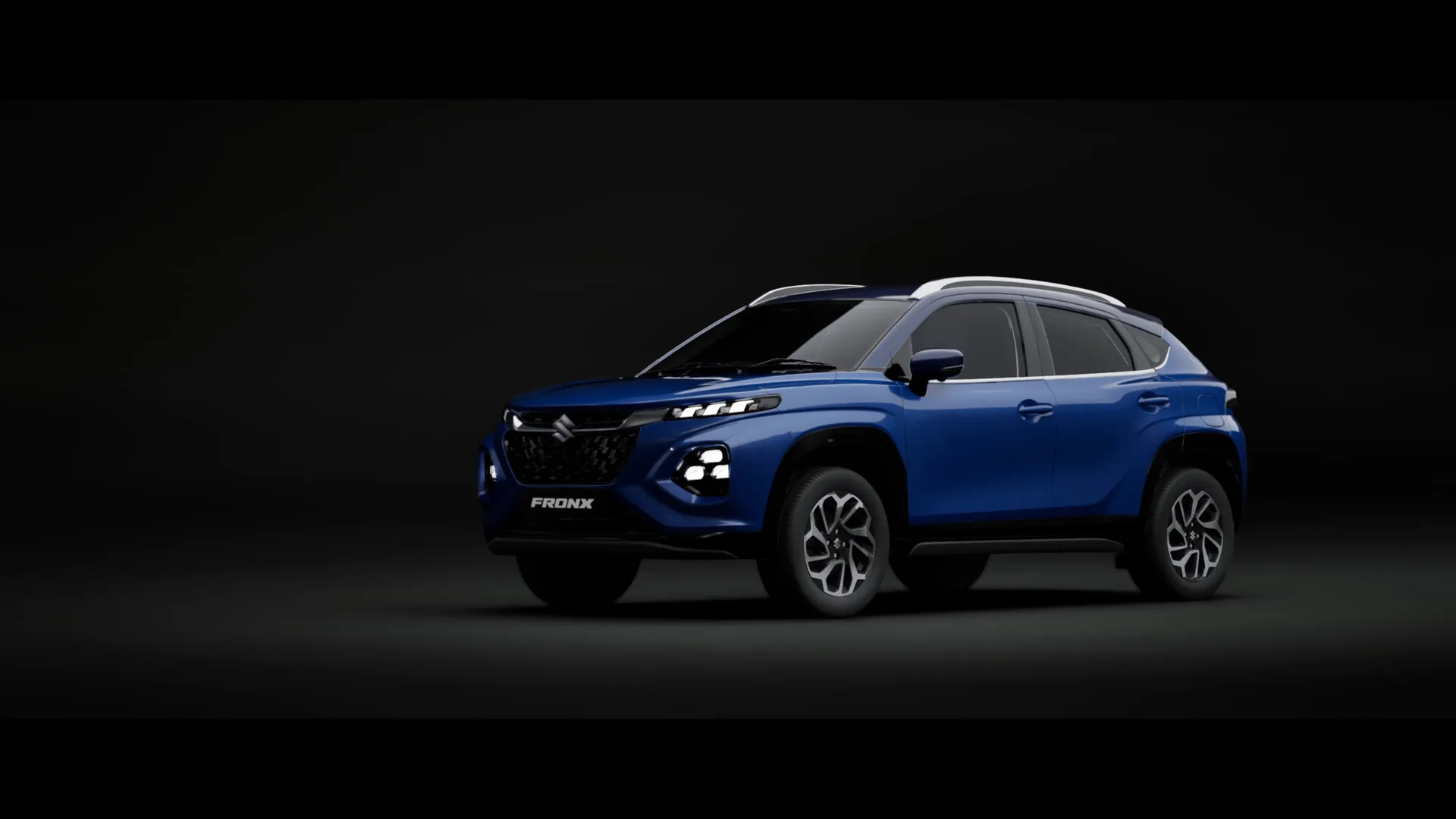
The Fronx is built on the Baleno platform but works hard to look like its own car. Almost every panel is different, with a Grand Vitara-inspired front, body cladding, skid plates and roof rails giving it crossover credentials. Ground clearance climbs to 190mm and the stance is taller, though it doesn't look as substantial as a Brezza, Nexon or Kia Sonet despite being longer. LED headlamps double up effectively as fog lamps, and the 16-inch alloys fill the arches well. Namaste Car notes the Nexa Blue and chrome detailing lift the kerb appeal further. The rear is cleaner than the Baleno, and UV-cut glass is a thoughtful Indian-summer touch. Overall, the design is the Fronx's biggest pull factor in showrooms.
Step inside and the SUV illusion fades quickly. The dashboard, steering, seats and infotainment are essentially Baleno-spec, with red accents and a wireless charger as the main differentiators. The 9-inch SmartPlay Pro+ touchscreen, head-up display, automatic climate control and 360-degree camera are present on top trims, but the swoopy roofline eats into rear headroom for anyone above average height. Boot space is a modest 308 litres, among the smallest in the segment. Fabric upholstery quality is average, there's no sunroof, no ventilated seats, no rear armrest and no TPMS on most variants. Seat comfort over long drives is genuinely good, and the front seats offer solid support. For the price, however, a Sonet's cabin feels noticeably more special.
Build quality is a step up from older Marutis, with neatly packed panel gaps, a heavier bonnet and boot, and a generally solid feel on the move. The platform itself remains the concern: it has not consistently scored well on crash tests, and Maruti has yet to publish a strong NCAP rating for the Fronx specifically. Six airbags, ESP, hill-hold and ISOFIX are standard on top variants, which improves the active and passive safety story. Feature count is generous for the segment, but conspicuous omissions like a sunroof, ventilated seats, drive modes and front parking sensors hurt the premium pitch. TeamBHP owners report zero major reliability issues over long-term use, which aligns with Maruti's broader reputation.
Two petrol engines are on offer: a 1.2L naturally-aspirated four-cylinder with mild-hybrid making 90PS, and the headline 1.0L Boosterjet three-cylinder turbo producing 100PS and 147Nm. The turbo, exclusive to the Fronx in Maruti's current line-up, is the enthusiast pick. With the slick 5-speed manual it feels genuinely quick, pulls cleanly from low revs, and as MotorBeam puts it, adds real character to the car. The 6-speed torque-converter automatic is smooth on the open road but hesitant in stop-go traffic, with an over-eager start-stop system and occasional jerkiness. NVH from the three-cylinder unit is audible past 3,000rpm and idle vibration is noticeable. The 1.2L is the easier, more efficient choice for city-focused buyers who don't crave the turbo punch.
This is where the Fronx earns its crossover badge. The suspension is retuned and slightly firmer than the Baleno, with the taller sidewalls absorbing potholes and broken patches more confidently. At 190mm, ground clearance is meaningfully higher than the hatchback it's based on, making speed breakers and rural roads less stressful. High-speed stability is composed, body roll is well contained for the segment, and the steering, while light and typically Maruti in feel, is predictable. The turbo-automatic variant rides slightly stiffer due to added weight. Handling won't thrill enthusiasts the way a Polo once did, but for a family crossover it strikes a sensible balance. The unknown reviewer rightly notes it's better than the Baleno on rough roads, but not transformatively so.
Pricing is where the Fronx gets complicated. The 1.2L variants start around ₹7.5 lakh ex-showroom and offer the strongest value, but the turbo-petrol manual commands roughly ₹1 lakh more, and the 6-speed turbo-automatic adds another ₹1.5 lakh on top. Arun Panwar's owner contact picked up a top-spec turbo-AT for ₹12.7 lakh on-road after discounts, against a list price near ₹14 lakh. At that level, buyers can stretch to a base Hyundai Creta, Kia Seltos or Mahindra XUV 3XO. The sensible buys are the 1.2L Delta or the turbo-petrol Zeta manual. The Maruti Brezza, similarly priced, offers more SUV substance, while the Kia Sonet and Hyundai Venue offer richer cabins.
TeamBHP rates the Fronx as a smart-looking crossover with a punchy Boosterjet engine, well-tuned suspension and excellent fuel efficiency, but flags the Baleno-clone interior, mediocre plastics, small 308-litre boot and missing features like sunroof, TPMS and rear armrest.
Read full forum review →"The turbo-manual is genuinely fun, but the automatic disappoints; buy the Fronx only if you need that extra ground clearance over Baleno."
"A young, stylish crossover with Grand Vitara design cues, decent features and Maruti's trusted Boosterjet, available on subscription from around ₹17,000 monthly."
"The turbo Fronx is a rare, fast hatchback-crossover that makes sense only at discounted prices around ₹12.5 lakh, not at sticker."
"After 10,000+ km, the Boosterjet manual was reliable, fun and averaged 13 kmpl; cabin could feel more premium for the money."
"Fronx looks cool but isn't truly premium; the 1.2L is the smarter buy, and the turbo-automatic premium isn't worth it."