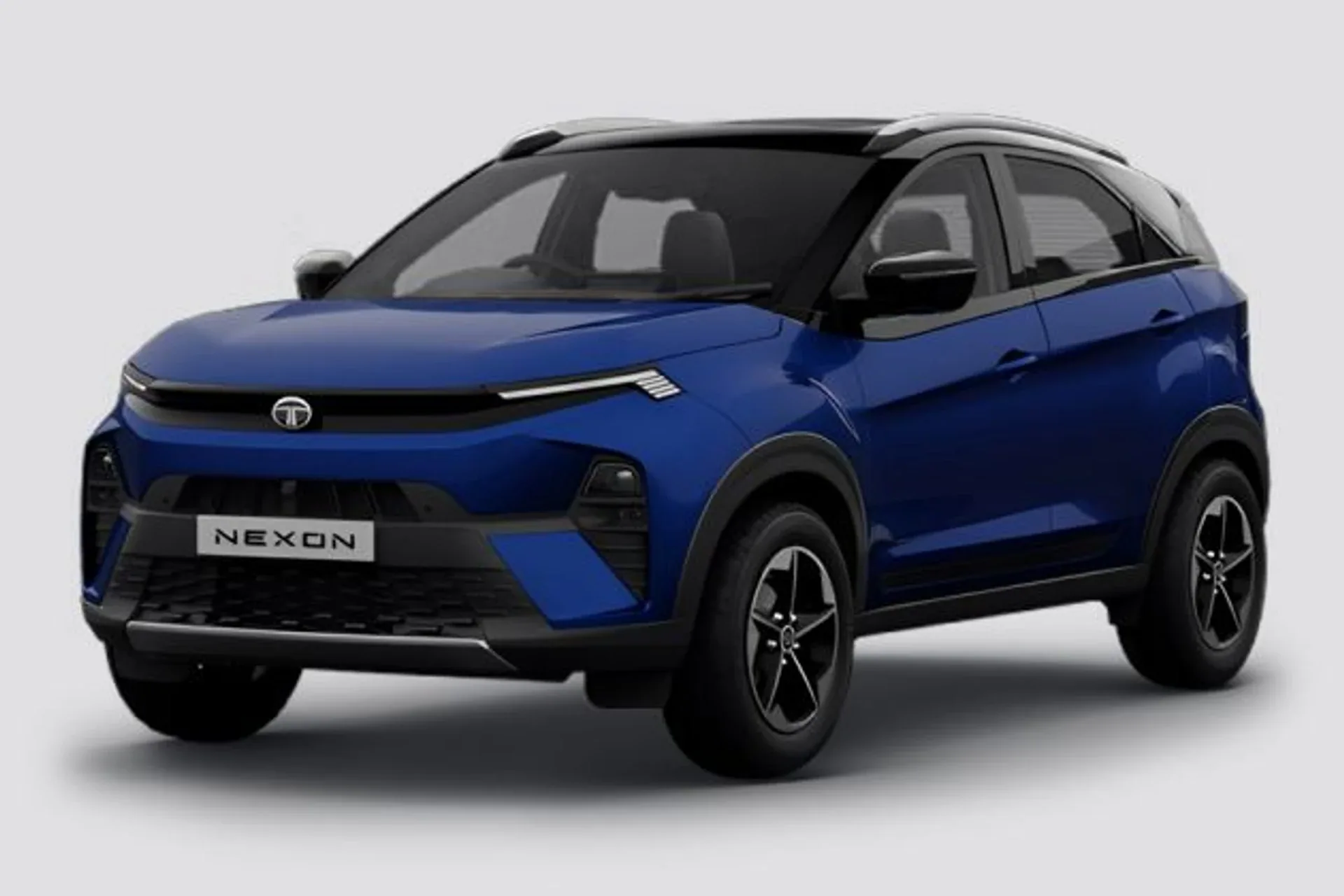
The 2025 Tata Nexon remains one of India's most complete compact SUVs, blending sharp facelifted styling, a 5-star Global NCAP body, and a powertrain spread that now includes petrol, diesel and a segment-first turbocharged CNG. It is sold across a sprawling 36-variant range from roughly Rs. 8 lakh to Rs. 15.26 lakh ex-showroom, covering nearly every compact SUV buyer profile. Some interior ergonomics and petrol refinement still trail the best, but the overall package is hard to argue with.
Jury Score Breakdown
What Works
- 5-star Global NCAP safety with six airbags as standard on top trims
- Excellent ride quality and high-speed composure, helped by 209 mm ground clearance
- Diesel and turbo-CNG powertrains both deliver strong real-world efficiency
- Feature-rich cabin with panoramic sunroof, ventilated seats, 360-degree camera and JBL audio
- Wide variant and powertrain spread (36 variants, petrol/diesel/CNG, MT/AMT/DCA)
Watch Out For
- Petrol engine has noticeable turbo lag and flat spots below 2,000 rpm
- Touch-based climate panel and limited front cubby space hurt day-to-day usability
- Traction control cannot be switched off, and steering offers only height (not reach) adjustment on most variants
- Fit-finish, switchgear and rear headroom (especially on the CNG with panoramic sunroof) still trail the segment best
Design
The facelifted Nexon is the most resolved-looking Tata yet, with slim LED headlamps, a gloss-black grille, tri-arrow DRLs borrowed from the EV, and a connected LED tail-lamp signature with a Union Jack motif that polarises opinion. It measures under 4 metres in length, stands 1.6 metres tall and rides on 16-inch diamond-cut alloys wrapped in 215/60 R16 Bridgestone Turanza rubber, with 209 mm of ground clearance that comfortably clears Indian speed breakers. Dual-tone paint schemes, gloss-black C-pillars, roof rails and a shark-fin antenna give it genuine showroom appeal, and Faisal Khan notes the tri-arrow detailing is so prolific that the car almost feels like it carries Mercedes-style logos throughout. The flatter bonnet now meets pedestrian-safety norms, and panel gaps are visibly tighter than older Tatas. Compared with the boxier Maruti Brezza and the more compact Tata Punch, the Nexon strikes the most contemporary, SUV-like stance in the sub-4m class.
Interior & Features
Inside, the Nexon gets a thoroughly redesigned three-tone dashboard with a 10.25-inch floating touchscreen, a 10.25-inch digital cluster, a flat-bottom leather steering, a touch-based climate panel and a panoramic sunroof on top variants. Quality of plastics, leatherette and seat fabrics is genuinely good for the segment, and the front seats are supportive enough for long drives, with ventilation on higher trims. Rear-seat comfort has been improved with a slightly more reclined backrest and scooped roof lining, though anyone above 5'8" will find headroom tight, especially on the CNG variant where the panoramic sunroof eats further into it. Storage is the weak link: there is no proper phone cubby, the drive-mode dial occupies space that should have held a cup holder, and the touch climate panel demands a glance away from the road. The JBL eight-speaker system, wireless charging, connected-car tech via iRA 2.0 and a clear 360-degree camera lift the ambience considerably.
Build Quality & Technology
Build quality is a clear Tata strength. The Nexon holds a 5-star Global NCAP rating, with six airbags, ESP, hill-hold, ISOFIX, TPMS, blind-view monitor, driver attention alert, three-point belts for all and rollover mitigation as standard on top trims. Doors shut with a reassuring thud, panel gaps are noticeably tighter than older Tatas, and the kerb weight of around 1,300 kg reflects the heavier-gauge structure. Feature count is generous: panoramic sunroof, ventilated front seats, wireless charging, automatic LED headlamps with cornering function, rain-sensing wipers, auto-dimming IRVM, JBL audio with subwoofer, 360-degree camera and iRA 2.0 connected tech with over 200 voice commands. The Nexon is backed by a 3-year/1.25-lakh-km warranty. Niggles persist, though: switchgear borrowed from older Tatas, no auto-dimming ORVMs, traction control with no off switch, and Namaste Car points out that after-sales service consistency still needs work to match Maruti and Hyundai.
Performance & Powertrain
Three powertrains are on offer. The 1.2-litre three-cylinder turbo-petrol makes 120 PS and 170 Nm, paired with a 6-speed manual, 6-speed AMT or 7-speed DCA. The 1.5-litre four-cylinder diesel produces 113 PS and 260 Nm with manual or AMT, and the new turbocharged 1.2 i-CNG makes around 100 PS, the most powerful factory CNG in India. The diesel is the enthusiast's pick: low-end is blunted by emission tuning, but mid-range from 2,000 rpm onwards is muscular, and Sport mode unlocks the full 110 PS and 260 Nm between 1,500 and 2,750 rpm. The petrol is more divisive; Arun Panwar enjoys its Sport-mode willingness, while others flag turbo lag below 2,000 rpm and flat spots higher up. The CNG impresses with no real loss of drivability and a tested 24.6 km/kg highway figure, though city efficiency drops to 18-19 km/kg. Traction control intrusively cannot be switched off.
Ride Quality & Handling
Ride and handling remain the Nexon's strongest dynamic suit. The suspension is set up on the firmer side, but long spring travel and 209 mm of ground clearance mean it absorbs broken Indian roads with composure, only transmitting sharper edges at low speeds. At highway pace the car tracks dead straight, body control is well managed for a tall SUV, and the steering weighs up convincingly with genuine feel, even if it offers only height adjustment. Grip from the Bridgestone Turanza tyres is reassuring through corners, and brake performance is strong without significant nose dive. MotorBeam rates the rider-handling balance among the best in the compact SUV segment, and Biturbo Media's experience with Tata's newer FDD-equipped products suggests the brand has clearly learned how to tune dampers for Indian conditions. Some resonance and tyre roar creep in above 100 km/h, and the stiffer low-speed setup means rear passengers feel sharp expansion joints, but overall this is a confident, mature chassis.
Price & Value
Pricing spans roughly Rs. 8 lakh to Rs. 15.26 lakh ex-showroom across a head-spinning 36 variants, with the diesel range opening at about Rs. 10.06 lakh and the top diesel automatic at Rs. 15.26 lakh. The diesel commands a premium that is justified by performance and real-world economy of 14-18 km/l from a 44-litre tank. The turbo-CNG is a genuinely clever proposition for high-running buyers, returning around 24 km/kg on the highway with two underfloor cylinders that preserve usable boot space. Against the Maruti Brezza, the Nexon offers more equipment, a stronger safety credential and a diesel option Maruti does not sell; against its own sibling the Tata Punch, it offers more space, more powertrains and a more grown-up cabin. Buyers cross-shopping the Kia Sonet will find the Nexon's JBL system louder but the Sonet's touchscreen and 360 camera feed crisper.
What India's Reviewers Agree On
Consensus
- Bold facelifted styling with full-LED lighting front and rear gives strong road presence
- Ride quality and high-speed stability are class-leading, with confident straight-line tracking
- 5-star Global NCAP rating, six airbags, ESP, TPMS and 360-degree camera make it one of the safest SUVs in its segment
- Diesel engine offers strong mid-range and remains the pick of the lineup, while the turbo CNG returns a real-world figure of around 24 km/kg
- Three drive modes (Eco, City, Sport) genuinely transform character, especially on the diesel
Points of Disagreement
- Petrol engine tuning: some find the 1.2 turbo-petrol responsive and sprightly in Sport mode, others call it laggy with flat spots and rate it inferior to the diesel
- Interior usability: build quality and dashboard design are praised, but the touch-based climate panel, lack of phone storage and absence of a traction-control off switch draw consistent criticism
TeamBHP's Take
Long-term owner threads on TeamBHP consistently praise the Nexon's tank-like build, ride quality and 5-star crash credentials, while flagging niggling electrical and infotainment glitches and inconsistent dealer after-sales as the recurring pain points. Diesel owners report real-world efficiency of 16-19 km/l and largely trouble-free engines, while early CNG owners are reporting figures close to Tata's 24 km/kg claim in mixed driving.
Individual Reviewer Verdicts
"Recommends the diesel manual unequivocally as a spacious, safe and fun-to-drive all-rounder, while finding the petrol underwhelming and flagging the inability to switch off traction control."
"Tested the i-CNG over 220 km and recorded 24.6 km/kg, calling it a genuine breakthrough as India's first turbo-CNG with negligible loss of drivability versus the petrol."
"Praises Tata's improved shut lines and chassis tuning, noting that the brand's newer FDD-equipped products show how far ride and handling have come."
"Calls the Nexon one of the most attractive compact SUVs in the segment but says after-sales service still needs to catch up with the product."
"Found the BS6 petrol genuinely enjoyable in Sport mode, with accurate steering and confidence-inspiring handling."
"Rates the Nexon as one of the strongest contenders in the compact SUV segment thanks to its safety, ride and feature list, but flags petrol turbo lag and flat spots."
"Showcases an almost-new pre-owned Nexon XZ at around Rs. 6.95 lakh, underlining strong residual value and demand in the used market."
"In a head-to-head against the Kia Sonet, finds the Nexon's JBL audio louder and AC more powerful, but concedes the Sonet's 360 cameras and touchscreen are crisper and more responsive."