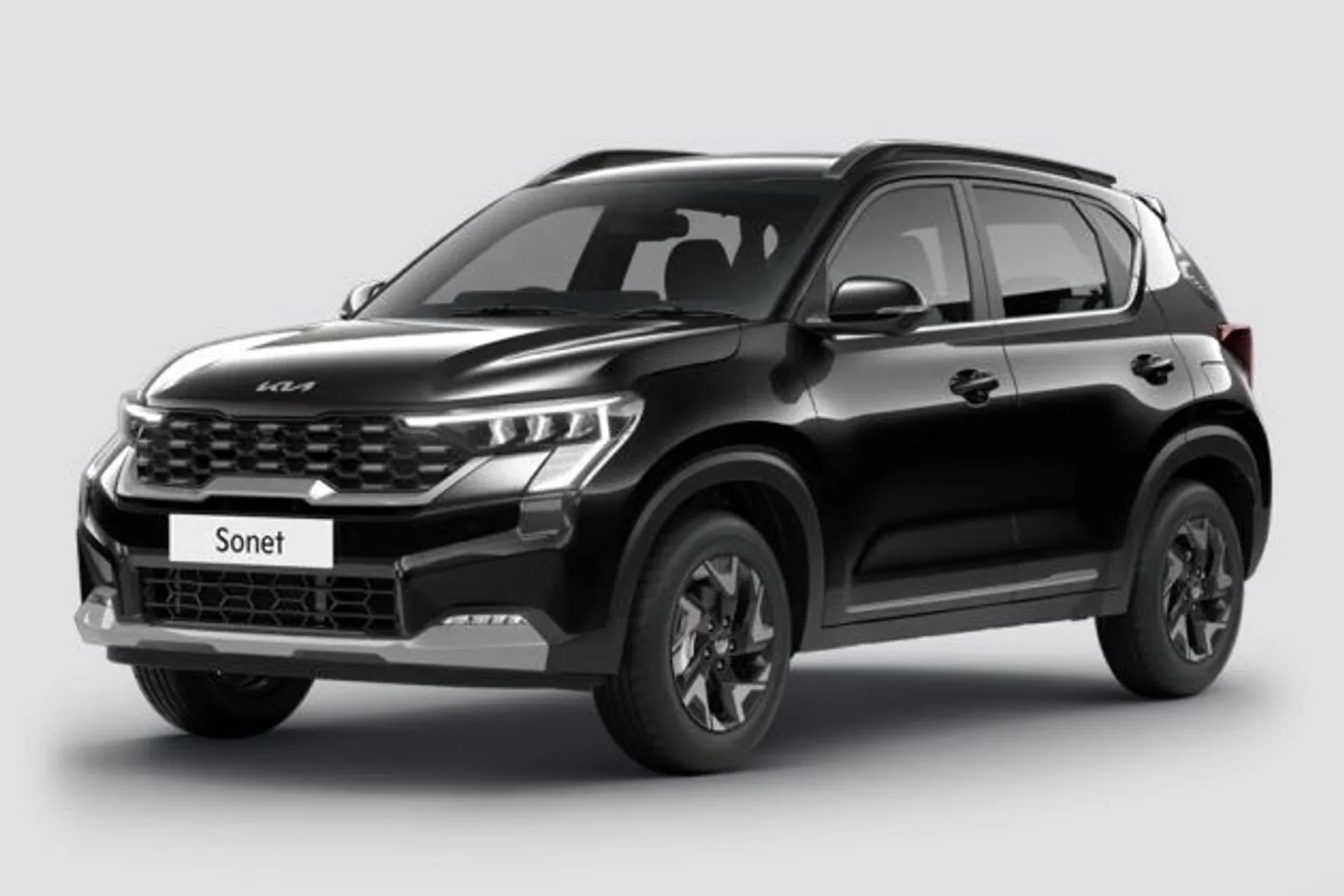
The 2025 Kia Sonet facelift sharpens the styling, upgrades the cabin tech and adds Level 1 ADAS while retaining its trio of petrol and diesel powertrains. It remains one of the most feature-loaded sub-4m SUVs in India, with strong driving dynamics and a class-leading cockpit. Top variants do creep into Creta territory, so variant choice is critical.
Jury Score Breakdown
What Works
- Punchy 1.0 turbo petrol paired with a quick-shifting 7-speed DCT
- Best-in-class cockpit ergonomics with physical buttons and large rotary knobs
- Comprehensive safety kit: 6 airbags, ESC, Level 1 ADAS, 360-degree camera
- Improved ride quality and well-contained NVH levels
- Loaded feature set including ventilated seats, sunroof, air purifier and Kia Connect
Watch Out For
- Rear seat space is only adequate, tight on knee room for taller occupants
- Top X-Line variant pricing is steep for a sub-4m SUV
- DCT reliability concerns and complex variant matrix make buying confusing
- Some misses: auto wipers, front passenger seat height adjust, dash cam
Design
The facelift adopts Kia's newer family face with vertical LED indicators, a slimmer signature grille and squared-off LED headlight clusters that, when lit, give the Sonet an almost monolithic, retro-modern look. Biturbo Media notes the design grows on you in person far more than in launch photos, with bold shoulder lines and an aggressive nose that read muscular on the road despite the compact 4-metre footprint. The rear sticks to typical Kia cues with star-map LED connected tail lamps, a roof spoiler and high-gloss skid plates front and rear. Crystal-cut 16-inch alloys, shark-fin antenna and dual-tone black-roof options add visual interest, while the X-Line trim brings a matte graphite finish and sage-green leatherette inside. The green brake calipers, however, divide opinion and look aftermarket. Overall the Sonet is no longer trying to look like a baby Seltos; it has a distinct identity that should age well, even if it does not have the imposing road presence of larger rivals like the Hyundai Venue's bigger siblings or the Mahindra XUV 3XO.
Interior & Features
Inside, the Sonet feels modern and genuinely premium for the segment. The dashboard is dominated by a 10.25-inch touchscreen paired with an equally large 10.25-inch digital instrument cluster, and the integration is what stands out. Physical shortcut keys for maps, media and home flank the screen, the climate panel uses real knobs and buttons, and the rotary gear selector is easy to grip. Materials, soft-touch plastics and panel gaps sit a clear notch above what Tata or Mahindra offer at this price. The 10-way adjustable, ventilated front seats are plush with excellent headrests and under-thigh support. Rear-seat space is the weak link: knee room is just adequate, the cabin tapers towards the roof making it feel visually smaller, and headroom is tight for taller passengers. Practicality is helped by rear sunshade curtains, an air purifier with AQI display, wireless charging, seven-speaker Bose audio on top trims and 385 litres of boot space. Auto wipers and front passenger seat-height adjust are notable omissions.
Build Quality & Technology
Build quality is one of the Sonet's strongest suits. Panel gaps are tight, the doors thunk shut with reassuring weight, and Kia has resisted the industry trend of replacing physical controls with capacitive panels: the steering buttons, climate dials and gear selector are all proper tactile units, which MotorBeam highlights as a genuine usability win in everyday driving. Hard and soft plastics are consistently finished with no rough edges, and even high-touch areas like the centre console and door pads feel hard-wearing. Safety has moved on substantially: six airbags, ESC, hill-start assist, TPMS, blind-spot monitor, 360-degree camera and Level 1 ADAS with ten autonomous functions are standard on top variants, and a 10.25-inch infotainment with six speakers is offered even on lower trims. Kia Connect adds 70-plus connected features with three years of free subscription. The K3 platform is claimed to be significantly stronger, though a Bharat NCAP or GNCAP rating is yet to come.
Performance & Powertrain
Three engines carry over: a 1.2 NA petrol, a 1.0 T-GDi turbo petrol with 118-120 bhp and the 1.5 CRDi diesel making 114 bhp and 250 Nm. The 1.0 turbo paired with the 7-speed DCT is the pick of the range and feels noticeably punchier than the equivalent torque-converter setups in larger rivals, with the RPM needle climbing eagerly and paddle-shift response that is genuinely quick. Sport mode sharpens throttle and gearbox calibration meaningfully. The diesel with the 6-speed torque converter is relaxed and tractable rather than sporty, with strong low-end and a softer top end. NVH is well managed: the cabin is near silent at idle, a faint sporty engine note creeps in under load, and diesel clatter is largely contained though some steering vibration remains at idle. The DCT does take a beat to downshift under hard kickdown, a familiar trait at this price. Claimed real-world economy works out to roughly 10-11 kmpl in the city, 16 kmpl on the highway for the turbo petrol and around 18 kmpl for the diesel.
Ride Quality & Handling
The K3-based platform brings a clear improvement in ride manners. The previously stiff suspension has been retuned softer, and large potholes no longer produce the loud thuds that owners of the older car often complained about. On broken roads the Sonet now feels closer to a typical family SUV, allowing higher cruising speeds without occupants being jostled. Ground clearance up to 205 mm helps it shrug off speed breakers and rural roads. The trade-off is slightly more vertical body movement at highway speeds, particularly on undulating curves, where Namaste Car notes you do dial back a touch to stay comfortable. On smooth highways stability is excellent and the low height makes the car feel nimble through quick direction changes. Steering is light at city speeds and weighs up acceptably, though enthusiasts may find a Tata Nexon a touch more planted on truly bad roads. Brakes are confidence-inspiring, with disc setups on top variants and improved pedal feel post-update.
Price & Value
Pricing spans roughly Rs 8 lakh ex-showroom for the base petrol to about Rs 16.9 lakh for the top X-Line turbo petrol DCT, which is where the Sonet starts to feel expensive for a sub-4m SUV and bumps into Hyundai Creta and Kia Seltos territory. The mid-spec turbo petrol manual or iMT variants offer the sweet spot, packing most of the meaningful features without the X-Line premium. Against the Hyundai Venue the Sonet feels more modern and better equipped, while the Mahindra XUV 3XO undercuts it on price but cannot match the cabin tech or refinement. Kia's 3-year unlimited-km warranty, extendable to 5 years, plus 3 years of roadside assistance and a one-time free scratch repair, sweeten ownership. The variant matrix is genuinely confusing with seven trims and multiple transmission combinations, and waiting periods on popular variants can stretch. Overall, value is good lower down the range and merely acceptable at the top.
What India's Reviewers Agree On
Consensus
- Cockpit ergonomics, with proper tactile buttons and shortcut keys, are class-leading
- The 1.0 turbo petrol with 7-speed DCT delivers strong, responsive performance
- Ride quality is now more pliant than the pre-facelift car without losing composure
- Feature list, including ADAS, ventilated seats, 360 camera and air purifier, is comprehensive
- Build quality and fit-finish are a clear step above several Indian rivals
Points of Disagreement
- Whether the exterior design is genuinely muscular or still slightly bland next to bigger rivals like the Sierra
- Whether rear-seat space is acceptable for a family or noticeably tight for taller adults
TeamBHP's Take
TeamBHP's community broadly rates the Sonet as one of the better-engineered sub-4m SUVs, praising the turbo petrol DCT's eagerness, the cabin's tactile ergonomics and the post-facelift ride comfort. Long-term owner threads do flag concerns around DCT reliability under stop-go traffic and the steep top-variant pricing, while highlighting that mid-spec turbo iMT and diesel manual variants offer the best value-to-feature balance.
Individual Reviewer Verdicts
"Calls the Sonet's cockpit the best in the segment thanks to proper tactile buttons and shortcut keys, and rates the 1.0 turbo DCT as the standout pick despite slight rear-space limitations."
"Highlights the comprehensive safety kit, multiple transmission options and improved build quality, positioning the Sonet as a premium yet slightly overpriced choice at the top."
"Praises the engine line-up and feature load but flags that variant selection is tricky and some trims feel pricey against the Creta and Seltos."
"Rates the Sonet a near-perfect package for style, performance and tech, but notes rear legroom, missing auto wipers and X-Line's single colour option as drawbacks."