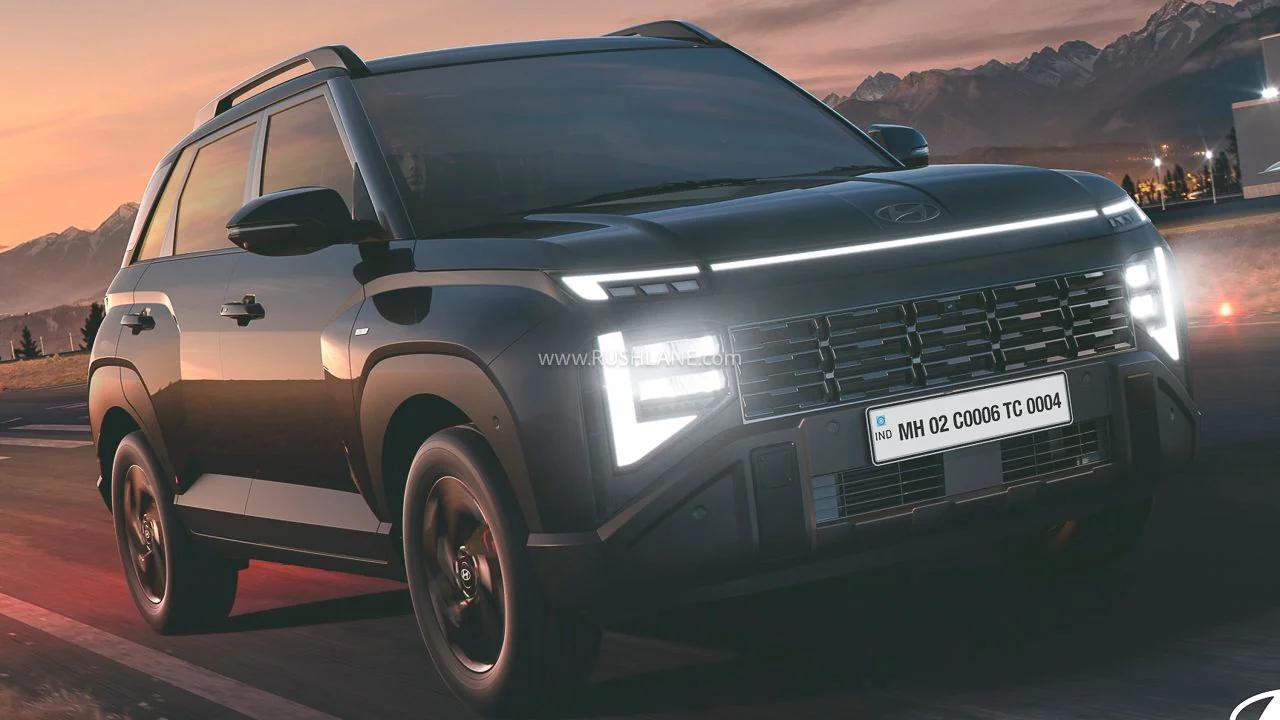
The 2025 Hyundai Venue is an all-new second generation built on the new K1 platform, taller, wider and packed with Creta-inspired tech including dual 12.3-inch screens and Level 2 ADAS. With three engines, including a segment-rare diesel automatic, it stays Hyundai's strongest pitch in the sub-4 metre SUV space, even if the top-end pricing tests buyer patience.
Jury Score Breakdown
What Works
- Three engine choices including a 116 PS diesel manual and automatic, unmatched in the segment barring the Sonet
- Premium-feeling cabin with dual 12.3-inch screens, 360-degree camera and Bose eight-speaker audio on top trims
- Generous standard safety: six airbags, ESC, VSM, hill descent and Level 2 ADAS with 16 features on higher trims
- Mature ride quality, planted highway manners and a refined diesel that delivers real-world 24-25 kmpl
- Useful packaging gains: 20 mm wider, 46 mm taller, 375-litre boot and reclining rear seats with three-point belts
Watch Out For
- Top HX10 variant is the most expensive in the segment, and the white interior trim will age quickly in Indian conditions
- Rear bench remains snug for three adults and the middle passenger lacks a headrest
- Notable omissions: rain-sensing wipers, halogen roof lamps, no rear radar so rear collision warning is missing from ADAS
- Telescopic steering, sliding armrest and wireless charging reserved for higher trims; lower variants miss key conveniences
Design
The second-generation Venue finally looks like a proper sub-4 metre SUV rather than a jacked-up hatchback. Hyundai has moved it onto the new K1 platform, increasing width by around 20 mm and height by 46 mm, and the shorter front overhang plus squared wheel arches give it a more grown-up stance. The dark chrome grille, LED DRL strip across the bonnet, quad-beam LED headlamps on top trims and a full-width LED tail bar lift kerb appeal considerably, with Venue lettering integrated inside the tail lamp housing rather than stuck on. Arun Panwar notes the front-end styling now borrows heavily from the Creta, which works in black, although Team-BHP is less convinced about the bulky grille treatment. Sixteen-inch alloys with 215/60 R16 rubber sit on most trims, while the petrol base drops to 15-inchers. Six colours are offered, with dual-tone black roof limited to Hazel Blue and Atlas White.
Interior & Features
The cabin is where the new Venue makes its strongest case. A dual 12.3-inch curved panoramic display dominates the dashboard on the HX10, accelerated by Nvidia for sharper, faster graphics, with wireless Android Auto and Apple CarPlay that connect within seconds. Hyundai has sensibly retained physical buttons for climate control and infotainment shortcuts, and the D-cut leather-wrapped steering with customisable mode and star buttons feels genuinely premium. The Razo-textured white dashboard trim with Venue lettering looks fresh, though Team-BHP rightly flags that white touch points will soil quickly in Indian conditions. Seats are broad, firm and well-suited to long drives, with four-way electric adjustment for the driver, ventilation up front and reclining rear backrests. Three adults at the rear remain a squeeze and the middle passenger misses a headrest, but legroom and headroom are decent. Boot space grows to 375 litres, with a 15-inch full-size steel spare. Halogen roof lamps at this price feel cost-cut.
Build Quality & Technology
Build quality is solid and very Hyundai, even if it is not a dramatic step up over the previous Venue. The K1 platform uses a higher proportion of high-strength steel, which Hyundai says improves crash performance, and the body feels tightly screwed together. Standard safety is generous from the base HX2: six airbags, electronic stability control, vehicle stability management, hill descent control, traction control and ISOFIX. Higher trims add Level 2 ADAS with 16 features, a 360-degree camera with dynamic guidelines and an electronic parking brake with auto hold, although the absence of a rear radar means rear collision warning and avoidance assist are missing. The Bose eight-speaker setup with subwoofer on the HX10 is a genuine highlight. Niggles persist: the centre armrest is small and does not slide, roof lamps are halogen, rain-sensing wipers are not offered, and the egg-shaped key has a dummy button. The Venue is now built at Hyundai's Pune plant acquired from General Motors.
Performance & Powertrain
Engine choice is the Venue's biggest weapon. The 1.2-litre naturally aspirated petrol with 83 PS pairs only with a five-speed manual for budget buyers, the 1.0-litre turbo-GDI petrol delivers 120 PS and 172 Nm with a six-speed manual or seven-speed DCT, and the 1.5-litre diesel produces 116 PS and 250 Nm, available with either a six-speed manual or, crucially, a new six-speed torque converter automatic. The IMT has been dropped. The turbo-petrol DCT impresses with imperceptible low-throttle shifts, brisk mid-range response and confident highway overtakes once the turbo is on song, with the gearbox refusing to hunt and capping revs around 6300 rpm even in manual mode. Eco, Normal and Sport modes meaningfully alter throttle and shift behaviour. The diesel remains the segment benchmark for refinement and real-world economy, with owners regularly reporting 24-25 kmpl. NVH suppression is good for a sub-4 metre car, although the chassis is tuned for composed cruising rather than hot-hatch theatrics.
Ride Quality & Handling
Ride and handling have been retuned without abandoning the car's daily-driver brief. McPherson struts up front and a coupled torsion beam at the rear deliver a low-speed ride that is compliant and mature over broken urban surfaces, with small bumps absorbed cleanly. Larger potholes still register inside the cabin because the suspension is tuned on the firmer side, a trait carried over from the outgoing car. Where the new Venue genuinely shines is high-speed stability: it sits planted over expressway undulations and stays unruffled when you drop from Sport back to Normal at triple-digit speeds, a Hyundai trademark also seen on the Verna and Creta. Steering is light and easy in the city, gains a touch of weight in Sport, but offers little feedback when pushed through corners, keeping behaviour neutral rather than engaging. Brake response is strong with all-disc setups on HX8 automatic and HX10, although the pedal has an initial bite that needs acclimatisation.
Price & Value
Pricing is where the Venue gets interesting. The petrol range starts at around 7.89 lakh and the diesel HX2 manual at 9.69 lakh ex-showroom, working out to roughly 11.5 lakh on-road, which makes the diesel base variant arguably the strongest value proposition in the sub-4 metre segment for high-mileage buyers. The diesel automatic starts higher, with HX5 around 11.58 lakh, and the fully loaded HX10 sits at the top of the segment, a deliberate Hyundai stance that they will not discount their way into your driveway. Against the closely related Kia Sonet, which shares the 1.5 diesel and 1.0 turbo petrol, the Venue trades some style for arguably better-resolved ergonomics, while the Mahindra XUV 3XO undercuts on price and the Maruti Brezza lacks a diesel altogether. For Hyundai loyalists wanting Creta-like tech in a smaller footprint, the maths works; for badge-agnostic buyers, the top trims demand careful cross-shopping.
What India's Reviewers Agree On
Consensus
- The new K1 platform delivers a more SUV-like stance, larger cabin and improved structural feel over the previous K2-based car.
- The 1.5 diesel with 116 PS and 250 Nm remains a segment standout, especially now paired with a six-speed torque converter automatic.
- The dual 12.3-inch curved display, Nvidia-powered infotainment and wireless Android Auto/CarPlay lift cabin tech well above class norms.
- Build quality, fit and finish are solid and very Hyundai-like, with thoughtful physical controls retained for climate and shortcuts.
- Even base variants come well kitted, with six airbags, ESC, hill descent control and all-four power windows as standard.
Points of Disagreement
- Front-end styling polarises: one view finds the dark chrome grille bold and Creta-like, another finds it awkward and almost cartoonish.
- Value perception splits, with the diesel base variant praised as a steal under 12 lakh on-road, while the HX10's segment-topping price is questioned.
TeamBHP's Take
Team-BHP's reviewer Utkarsh Negi frames the second-gen Venue as classic Hyundai: take a proven recipe, modernise the experience and make daily life easier rather than chase reinvention. The forum's typical concerns surface around the white interior trim ageing poorly, halogen roof lights at this price, and the asterisk on ADAS due to the missing rear radar, but the diesel automatic and high-speed composure are flagged as genuine wins for long-distance Indian buyers.
Individual Reviewer Verdicts
"Calls the diesel HX2 manual a near-perfect package for diesel lovers under 12 lakh on-road, praising the Creta-derived 1.5 diesel and the surprisingly rich base equipment, while flagging the absence of an armrest and LED headlamps as minor aftermarket fixes."
"Sees the new Venue as Hyundai playing to its strengths, with a competent mid-range cruiser brief, strong DCT calibration and finally a diesel automatic, but questions the dummy key button, halogen roof lamps and the white cabin's long-term liveability."