 Image: Hyundai press kit
A feature-rich, spacious and powerful sedan that nails the package, provided you can live with its polarising face and firm rear ride.
The 2025 Hyundai Verna is the most feature-rich and spacious sedan in its class, with a punchy 1.5 turbo-petrol that does 0-100 in 8.1 seconds and a refined 1.5 NA petrol for the sensible buyer. Polarising styling and a firm rear ride hold it back from being a runaway winner, but the substance underneath is genuinely excellent.
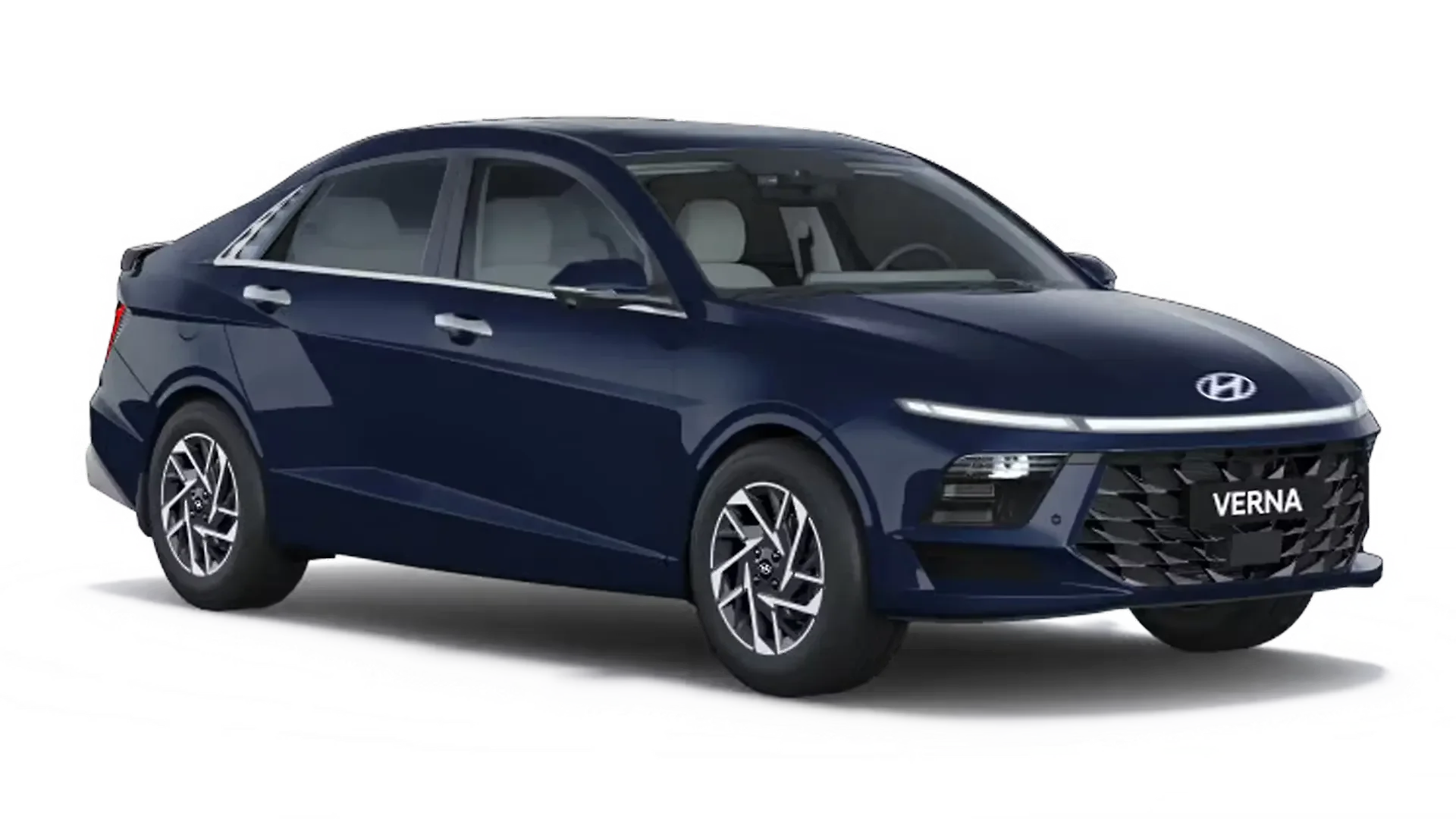
The Verna's design is the single biggest talking point and the single biggest gamble. The front and rear look like two different cars stitched at the B-pillar: a full-width LED DRL bar and large grille up front, and a connected tail-lamp with crushed-glass effect at the back that most reviewers genuinely like. The fastback silhouette, wide stance and shrunken glasshouse make it look longer and more expensive than it is, particularly in the dual-tone turbo trim with red brake calipers and black 16-inch alloys. The flip side, as Gagan Choudhary points out, is that the low nose and aggressive grille make the car look smaller and more hunkered down than its rivals. It is best appreciated at night and in the metal, less so in photographs.
Step inside and the Verna's case becomes much easier to argue. The dual 10.25-inch screens, twin-spoke steering and ambient lighting integrated into the dash create a modern, lounge-like ambience that feels a class above. Plastic textures and fit-finish are typical Hyundai, which is to say among the best in segment, though hard plastics dominate the lower half and the satin-finish silver buttons feel a touch plasticky. The white-and-black dual-tone cabin offered with the NA petrol looks airier than the all-black turbo trim. Storage is well thought out, the wireless charger and dual Type-C ports are useful additions, and the rear seat now genuinely seats three adults across thanks to a wider bench. Headroom for six-footers is the one tight spot.
Hyundai's reputation for fit-finish holds up. Panel gaps are tight, switchgear feels solid, and the heavy front bonnet with proper insulation is the kind of detail buyers notice. Where the Verna stumbles is consistency: the satin-finished door pads will scuff with use, the steering's silver buttons don't click crisply, and the door-pad ambient lighting integration looks unfinished. The feature list is the segment benchmark: Level 2 ADAS with adaptive cruise, blind-spot monitor, eight airbags on top variants, ventilated and heated front seats, electric driver's seat, hands-free boot, dual-zone climate, BlueLink connected tech and a Bose system. A 5-star Global NCAP rating and high-strength steel construction back up the safety pitch, though the entry variant misses out on key kit.
Hyundai offers two petrols: a 115PS 1.5 NA with 6-speed manual or CVT, and a 160PS 1.5 turbo paired exclusively with a 7-speed DCT. The turbo is the headline act, dispatching 0-100 km/h in 8.1 seconds with strong mid-range and a subdued but audible engine note past 5000rpm. The DCT is smoother and quicker than before, though it prioritises efficiency over outright aggression off the line. The NA petrol with CVT is the sensible pick for most buyers: refined, quiet, cheaper to run and good for 16-17 km/l on the highway. The turbo returns roughly 17-18 km/l on the highway and 11-12 km/l in the city. There is no diesel in this generation.
Ride quality is a tale of two seats. Up front, the Verna is composed, comfortable and confident, with light steering that weights up acceptably at speed and good stability past 120 km/h. The rear, however, is firmer than it should be: the Namaste Car drive on rough patches confirmed bumps register more sharply at the back than the front. The Verna corners flatter than its predecessor and the wider 205/55 R16 tyres on the turbo grip well, but enthusiasts will still rate the Honda City's steering feedback and the Skoda Slavia's chassis tuning above it. Braking from the four-disc setup on the turbo variant is reassuring; lower variants get rear drums. For typical Indian buyers prioritising comfort and stability over outright sportiness, this tune works.
Priced from approximately Rs 11 lakh to Rs 17 lakh ex-showroom, the Verna sits squarely against the Honda City, Skoda Slavia and Volkswagen Virtus. Against the Slavia and Virtus it offers more equipment, more rear space and a stronger ADAS suite for similar money; against the City it counters with sharper tech and the turbo's outright pace. MotorBeam's owner-comparison against a modified Volkswagen Virtus GT made the trade-off clear: the Virtus wins on pure driving feel and braking bite, the Verna wins on features, comfort and value-for-money. For families prioritising space, technology and a premium-feeling cabin, the Verna is the strongest all-rounder. Skip the entry S variant; the SX is the value sweet spot.
TeamBHP rates the Verna a strong all-rounder with a punchy 158 BHP turbo, slick DCT, spacious cabin and 5-star NCAP rating. Drawbacks flagged: polarising styling, plastics below the 20-lakh on-road price, and a comfort-skewed chassis that disappoints enthusiasts.
Read full forum review →"Highlights the facelift's expanded engine line-up, BlueLink tech and standard safety kit as headline upgrades over the old car."
"Praises the transformed rear-seat space and refinement but flags the front styling and absent rain-sensing wipers."
"Calls the Verna attractively designed with strong feature value, particularly the ventilated seats and large boot."
"Owner-comparison verdict: Verna wins on features and comfort, Virtus GT still wins on driving feel and braking."
"Rates it on the verge of excellent: lounge-like cabin, no bad powertrain choice, only let down by firm rear ride."