Renault Duster vs
Toyota Hyryder
One chases driving thrill; the other chases the fuel pump.
Most buyers decide here. Read this before anything else.
- You drive long highway stretches on weekends and want a car that feels planted and alert, not merely comfortable.
- You live on broken city roads and pothole-ridden state highways where a pliant, confidence-inspiring suspension matters every single day.
- You are a two-adult household or a couple with one child, so the tight Duster rear seat is never going to be a daily problem.
- You want a cabin that feels genuinely premium, not assembled from shared parts bins, and you will notice the difference every morning.
- You prioritise sharp steering feel and a responsive DCT over maximum efficiency, and you are willing to budget Rs 10-12 per kilometre on petrol.
- You want a car that looks distinct and rugged on the road rather than blending into the sea of crossovers in your apartment parking lot.
- You cover 1,500 kilometres or more every month inside city limits and the 19-20 kmpl real-world return genuinely changes your monthly budget.
- You want near-silent EV-mode running in stop-and-go traffic and find combustion engine noise in slow crawls genuinely fatiguing.
- You are buying a car primarily for daily urban commuting, and outright highway performance or spirited drives on weekends are not part of your routine.
- You trust Toyota's long-term reliability record above everything else and plan to keep the car for eight or more years without worry.
- Your household runs on a tight monthly fuel budget and the hybrid tax exemption benefit in your state makes the Hyryder's on-road price meaningfully lower.
- You frequently carry four or five adults inside the city and need a rear seat that does not punish passengers on every 20-minute ride.
The Duster scores 8.4/10, the Hyryder 6.6/10. In real life, they are built for different people.
The Hyryder's strong hybrid returns a verified 19-20 kmpl in real urban conditions, which translates to roughly Rs 3,000-4,000 in monthly savings over the Duster for a 1,500 km commuter. The Duster's 1.3 turbo is no guzzler, but it is a conventional petrol engine and city mileage will settle closer to 11-13 kmpl. For anyone clocking serious city kilometres, the Hyryder pays back its premium quickly.
Faisal Khan called the Duster 'the new segment benchmark' for ride and handling, and on the open road that reputation holds. The suspension soaks big undulations without drama, the DCT shifts crisply, and 160 PS keeps overtakes effortless. The Hyryder's hybrid system delivers adequate performance in EV mode but the transition between motor and engine can feel hesitant at highway speeds, and MotorBeam notes NVH from the three-cylinder unit becomes noticeable once the engine kicks in.
Toyota's service network and reputation for mechanical reliability give the Hyryder a structural advantage for buyers planning a 7-10 year ownership cycle. The hybrid battery warranty and Toyota's documented low breakdown rates matter over that horizon. The Duster re-enters the market after a four-year absence, and while Renault India has improved its network, its resale trajectory will only become clear after 2-3 years of sales data builds up.
The Duster's monocoque platform, 212 mm ground clearance, and driver-tilted cockpit were designed with precisely this scenario in mind. autoX's mega comparo put the Duster through a go-kart circuit and the review emphasised chassis balance and drivetrain responsiveness as its clearest strengths. The Hyryder is perfectly competent on hilly routes but the hybrid system's calibration and the softer steering tune are built for urban serenity, not mountain enthusiasm.
Scores shown inline. "Best for" tells you who each result matters to.
| Axis | Renault Duster | Toyota Hyryder | Best for |
|---|---|---|---|
Design |
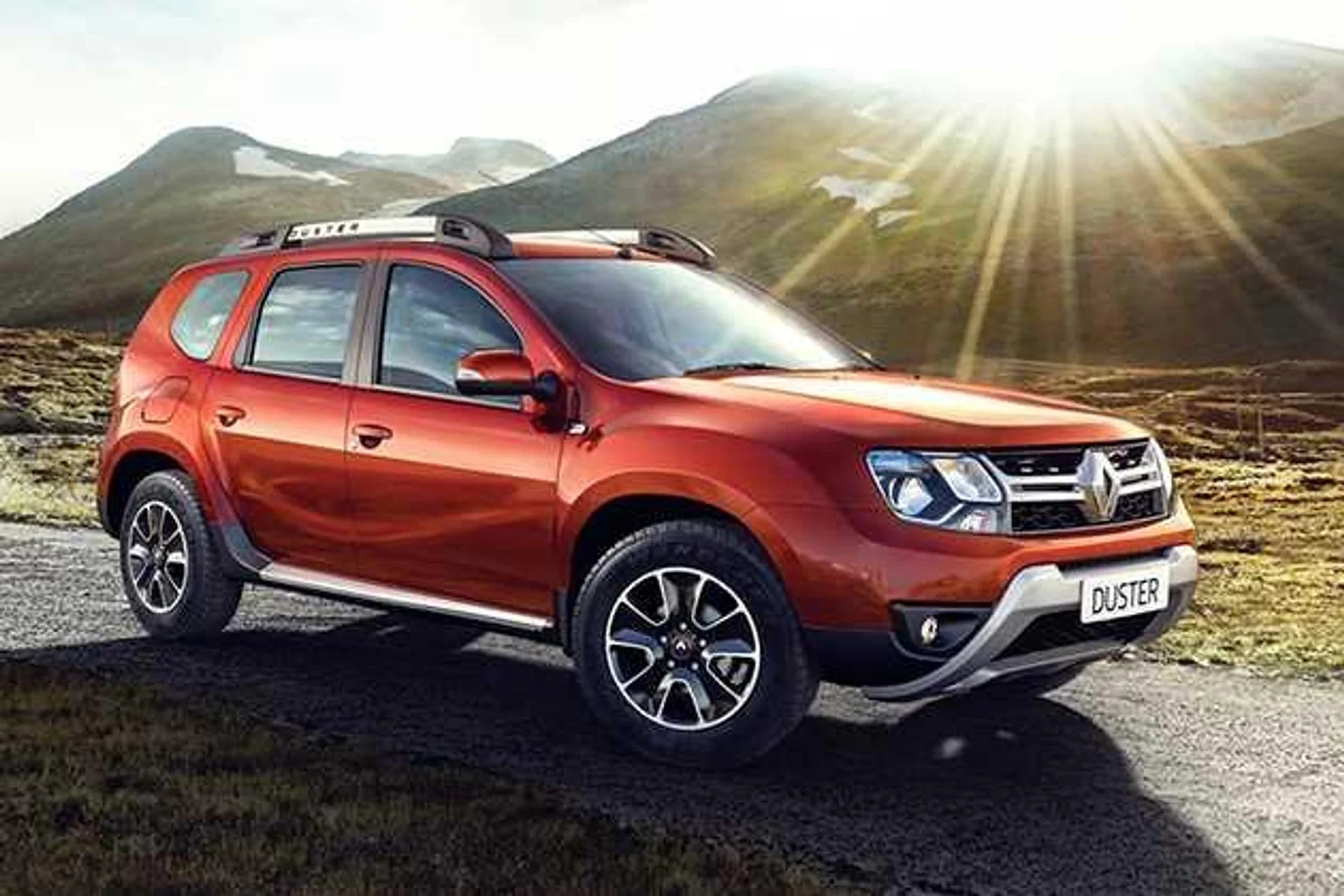
V3Cars describes the Duster as muscular, with thick cladding, 18-inch alloys, and a 212 mm ground clearance that reads as genuinely capable rather than decorative. Faisal Khan points out there is no Renault badge at the front; the Duster name sits directly on the grille, which gives it a confident, standalone identity. Full LED lighting and connected tail lamps round off a design that feels contemporary without chasing trends. 8.0 / 10 |
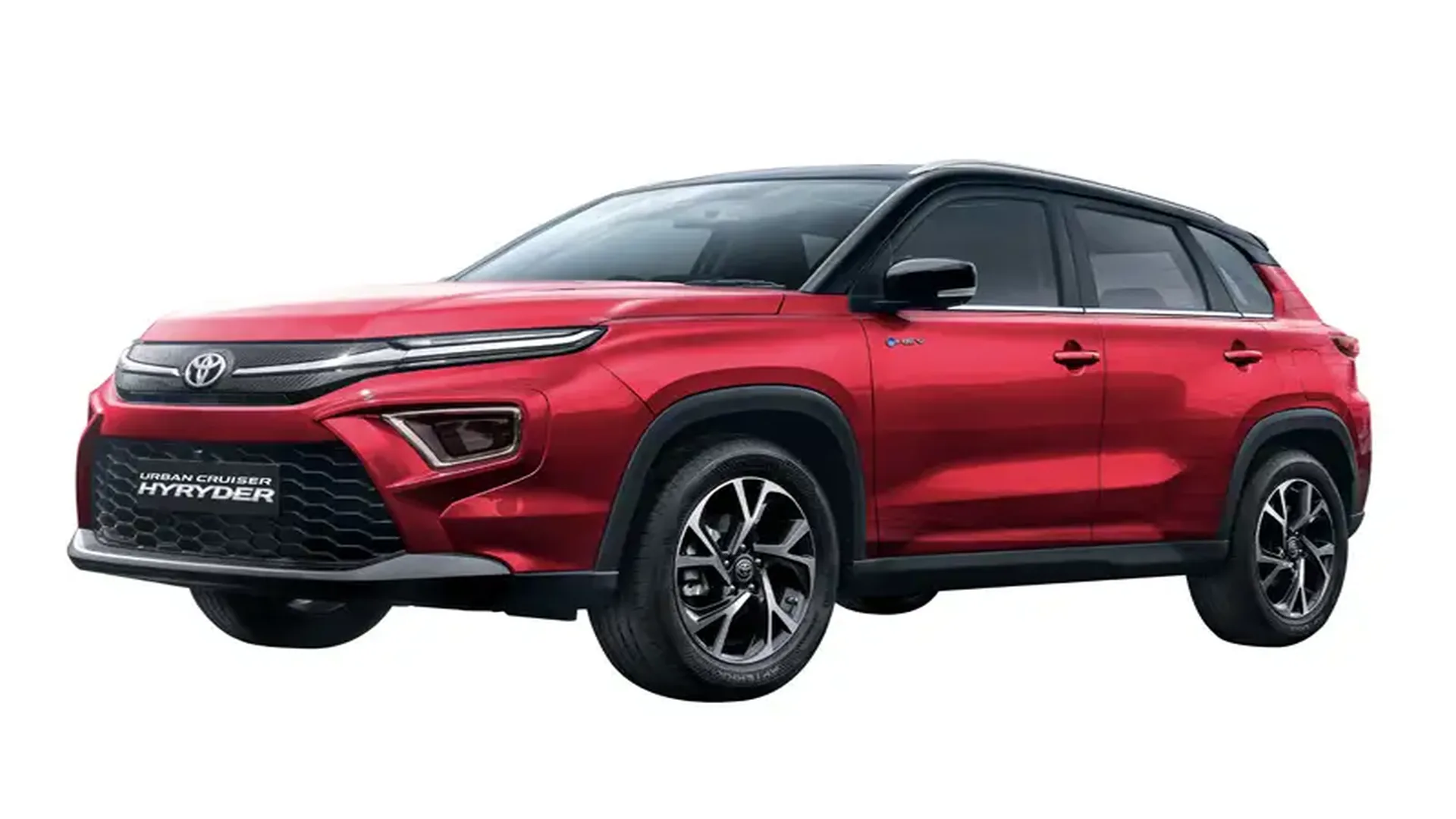
The Hyryder wears a more upright SUV face with a crystal-acrylic upper grille, LED projector headlamps, and a connected light bar at the rear. Namaste Car notes the 5.4-metre turning radius and 17-inch machine-cut alloys on top trims. The overall silhouette is tidy but conservative, and buyers who see the Grand Vitara on the same road will immediately recognise the shared DNA. 7.5 / 10 |
Style-conscious buyersDuster carries a more distinctive, rugged road presence
|
Interior |
V3Cars rates the Duster cabin 'second only to the Seltos in this segment', citing soft leather trim, ambient lighting, and a driver-tilted infotainment layout that creates a cockpit feel. Faisal Khan highlights the 10.1-inch Google Built-in touchscreen, 48-colour ambient lighting, panoramic sunroof, and dual-zone climate control as features that feel genuinely integrated rather than ticked off a checklist. The rear seat is the one compromise: it is tight for three adults. 7.5 / 10 |
Inside, the Hyryder mixes a brown-and-black theme with soft-touch dashboard inserts, a 9-inch touchscreen, wireless charging, ventilated front seats, and a 360-degree camera. The feature list is competitive but the execution shows the car's Maruti origins: switchgear, window switches, and the sunroof shade feel borrowed from the Swift parts bin rather than engineered for this price point. The cabin is pleasant but not premium. 7.0 / 10 |
Premium experience seekersDuster's cabin materials and integration feel a class above
|
Build & Safety |
The Duster scores a segment-high 9.0 on this axis. Gagan Choudhary notes the monocoque structure feels tight and rattle-free, and the car projects a solidity that its predecessor never quite managed. Crash safety data for the 2026 model is still pending a full NCAP run, but the structural rigidity and build consistency reviewers report puts it among the most confidence-inspiring cars in this segment. 9.0 / 10 |
The Hyryder scores 7.8 on this axis. Doors shut with a reassuring thud and the structure feels solid in daily use, but Gagan Choudhary and MotorBeam both flag the gloss-black centre console, shared Baleno-era stalks, and visible dashboard panel gaps as quality inconsistencies that undercut the asking price. The TeamBHP community also notes audible NVH from the three-cylinder engine and vacuum pump under certain conditions. 7.8 / 10 |
Safety-first familiesDuster's structural solidity and build consistency lead the comparison
|
Performance |
The 160 PS 1.3L turbo, co-developed with Mercedes-Benz according to Gagan Choudhary, is the strongest combustion engine in this comparison. Paired with a wet-clutch DCT, it delivers quick, confident overtakes on the highway and pulls cleanly from low revs in city traffic. autoX's go-kart circuit test confirmed that drivetrain responsiveness is a clear strength, not just a spec-sheet claim. 7.5 / 10 |
The Hyryder's strong hybrid system produces a combined output that handles urban traffic effortlessly in EV mode, and the instant electric torque makes city driving genuinely smooth. The limitation surfaces on the highway: the 1.5L three-cylinder's soundtrack becomes intrusive once the engine spins up, and the step-off response at expressway speeds lacks the assertiveness that the Duster's turbo provides. Arun Panwar describes it as a city sprinter rather than a highway cruiser. 7.0 / 10 |
Highway and enthusiast driversDuster's 160 PS turbo pulls harder and feels more responsive
|
Ride Quality |
This is the Duster's defining strength and where the 9.0 score is fully justified. Faisal Khan called it the new segment benchmark for ride, and every reviewer in the jury concurred that the suspension tuning handles broken roads, speed breakers, and highway undulations with uncommon composure. The car does not feel nervous or jittery at speed, which makes long-distance trips significantly less tiring. 9.0 / 10 |
The Hyryder rides with a 7.5 score, which reflects a competent but unremarkable setup. It handles city roads without complaint and the suspension absorbs routine urban abuse adequately. At higher speeds, the ride does not quite match the Duster's settled quality, and MotorBeam notes that the three-cylinder vibration felt through the cabin at certain RPMs is an additional discomfort the Duster's four-cylinder avoids entirely. 7.5 / 10 |
Long-distance travellersDuster's ride quality reduces fatigue on multi-hour drives
|
Value for Money |
The Duster scores 7.5 on value, reflecting a strong feature-to-price equation at the top trim but a real cost of ownership that comes with conventional petrol running. Buyers who cover moderate kilometres will find the package fair. The missing diesel and AWD options, however, remove choices that the original Duster owner base valued, which limits its appeal to a narrower buyer profile than the name suggests. 7.5 / 10 |
The Hyryder also scores 7.5, but its value equation is highly situational. For a buyer covering 1,500 or more city kilometres monthly, the fuel savings compound meaningfully over a three-year ownership period and the hybrid premium pays for itself. For a light-use buyer, the higher purchase price without the fuel benefit makes the equation look less attractive. Namaste Car and Faisal Khan both frame it as a city-specific value proposition. 7.5 / 10 |
High-mileage city commutersHyryder's fuel savings justify its premium for frequent city users
|
Practicality |
The Duster carries 470 litres of boot space and a 212 mm ground clearance that handles bad roads and rough terrain without stress. The front cabin and storage areas are well thought out. The rear seat is the practical weakness: it is tight for three adults on longer journeys, which makes the Duster better suited to couples or small families than to households that regularly carry five. |
The Hyryder offers a more accommodating rear seat for urban family use and a usable boot, though the hybrid battery pack trims cargo volume slightly compared to a conventional layout. The 5.4-metre turning radius makes it genuinely easy to manoeuvre in tight city parking. The 360-degree camera and compact footprint make it the more practical daily tool for dense urban environments where space is always at a premium. |
Urban families of four or fiveHyryder's rear space and city manoeuvrability suit daily family use
|
The Duster scores 8.4/10 and the Hyryder 6.6/10, from 8 independent creators. The overall number is only part of the story here: the dimension breakdown is where the real comparison lives.
autoX: 2026 Duster vs Creta vs Seltos vs Taigun vs Kushaq vs Victoris vs Hyryder | Mega Comparo Pt. 1