 Image: Autocar India / Renault Press Kit
A driver-focused, ruggedly built SUV with segment-benchmark ride and handling, let down only by missing diesel/AWD and a tight rear seat.
The 2026 Renault Duster returns after a four-year hiatus as a monocoque, turbo-petrol-only SUV that Faisal Khan calls 'the new segment benchmark' for ride and handling. It pairs a 160 PS 1.3L turbo (co-developed with Mercedes-Benz, per Gagan Choudhary) with a wet-clutch DCT or 6-speed manual, but drops diesel and all-wheel drive , two of the original Duster's signature traits.
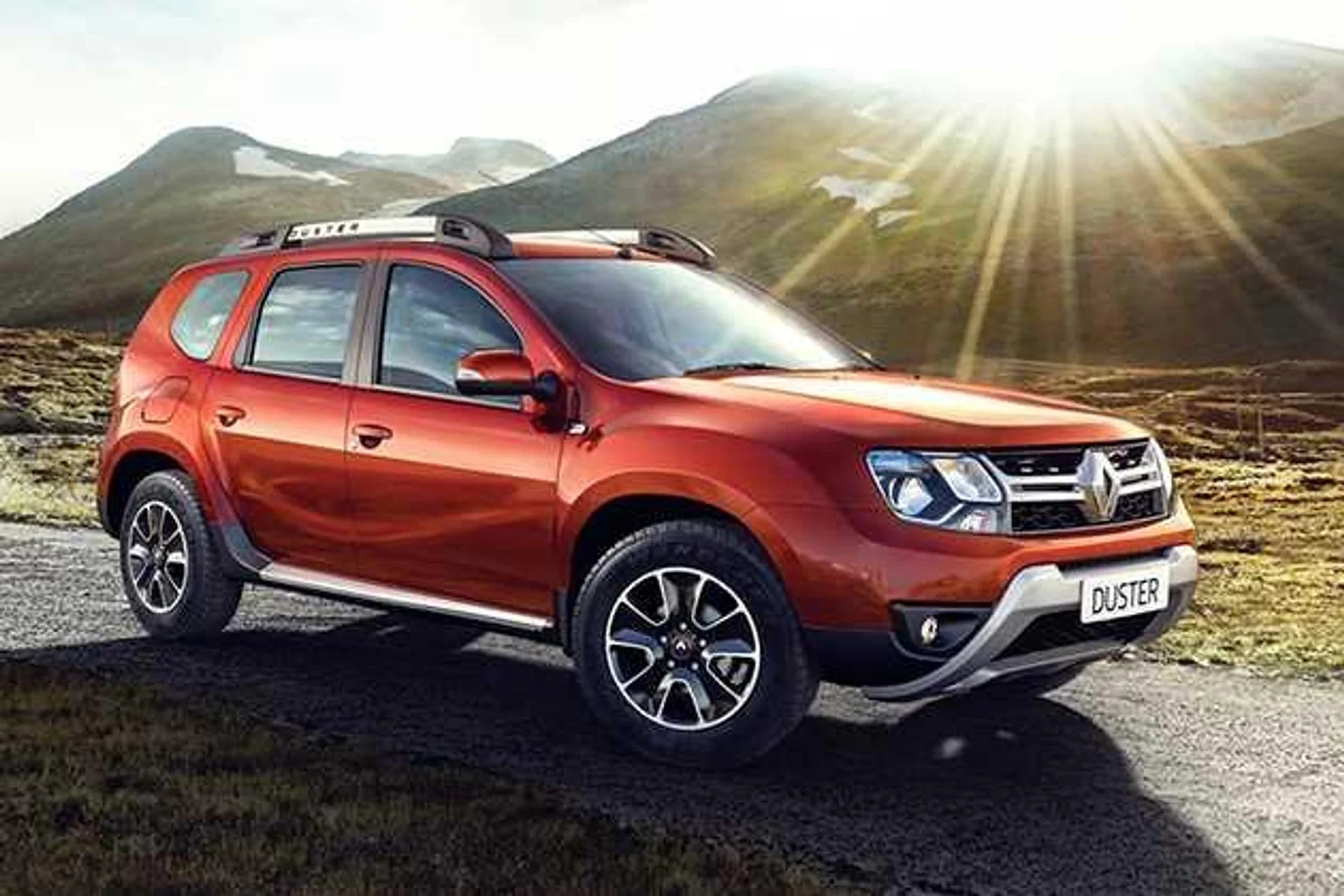
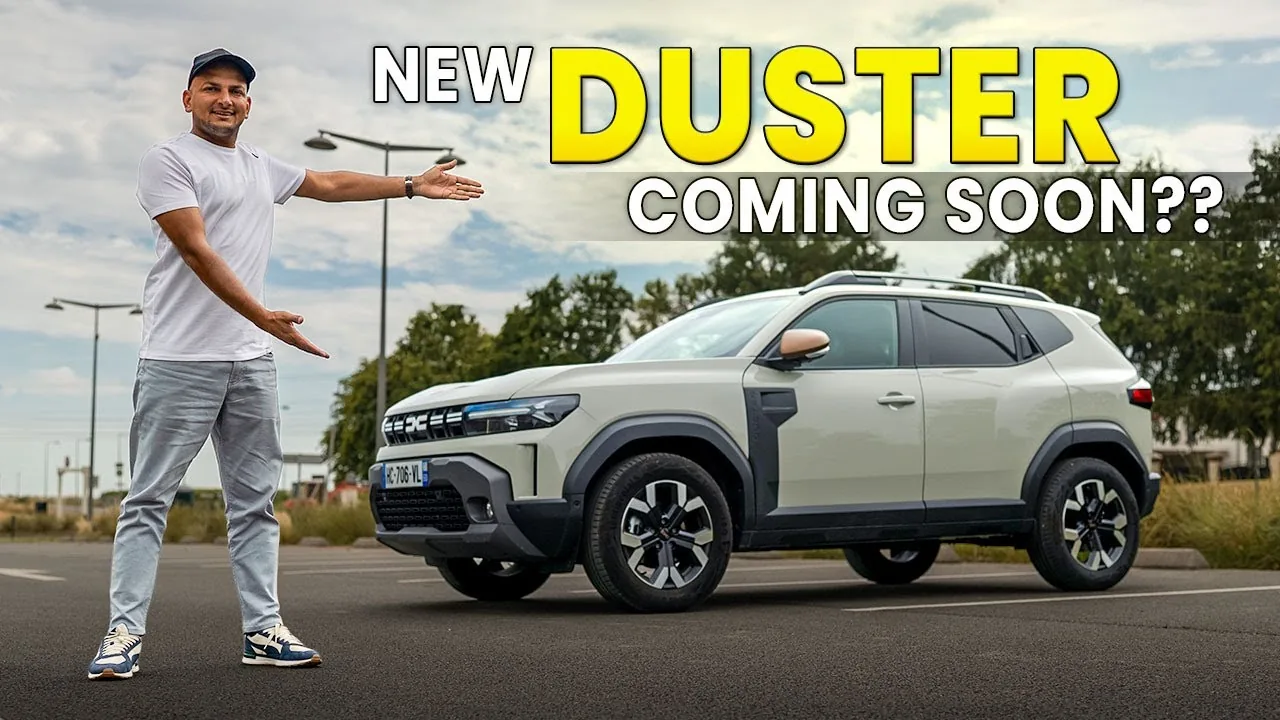
The new Duster retains the raw SUV stance of its predecessor while looking distinctly modern , V3Cars describes it as muscular with a 212 mm ground clearance, 18-inch alloys, and thick cladding front and rear. Faisal Khan notes there's no Renault logo at the front; instead, the Duster badge sits right on the grille, with full LED lighting, a shark-fin antenna, and connected LED tail lamps. The hidden rear door handles integrated into the C-pillar (Swift-style) divide opinion , Askar Guru on Vishal Ahlawat's show points out first-time passengers may struggle to locate them. Gagan Choudhary likes the overall silhouette but dislikes the cladding on the limited Iconic edition he drove, feeling the non-limited version looks cleaner; he also suggests Renault should offer the European Duster's cladding as an accessory. The Iconic green paint on the launch edition is widely praised by Motor Trend's Karthikeya Singhee. Motor Trend calls it 'handsome, strong yet modern' and notes that despite being longer on paper than a Tata Sierra (as Gagan Choudhary points out), the Duster doesn't dominate road presence the way the Kia Seltos or Sierra do.
V3Cars rates the cabin 'second only to the Seltos in this segment', citing soft leather trim, ambient lighting, and a slightly driver-tilted infotainment system that creates a premium cockpit feel. Faisal Khan highlights the 10.25-inch digital cluster, 10.1-inch touchscreen with Google Built-in (Chrome, Assistant, Maps, Play Store), 48-colour ambient lighting, panoramic sunroof, and dual-zone climate control , but flags hard plastics on the dashboard and doors, and a missing engine cover as odd cost-cutting. The six-way powered front seats have manual lumbar and ventilation (with the ventilation button 'placed out of sight', per Faisal Khan). Rear seat experience is a consistent weak point: Faisal Khan (6'2") finds knee room decent but says the fixed seatback is 'too upright', while Motor Trend's Karthikeya Singhee (5'6") says knee room is 'just about enough' sitting behind himself. Missing versus Creta/Seltos: no rear sunblinds, no boss mode, no seat memory, no HUD (Faisal Khan). Boot is 518 litres with a high loading lip and 40:60 split (Faisal Khan) , and crucially, no spare wheel, only a tyre inflator and puncture repair kit, though Faisal Khan notes space is provisioned under the boot floor to fit one.
The Duster feels rugged in a way few monocoque SUVs manage. Faisal Khan notes the doors close with a 'proper thud' and at one point he questioned whether he was driving a monocoque or a ladder-frame chassis. The underlying platform is the Renault Group Modular Platform (RGMP, per Faisal Khan); Motor Trend's Karthikeya Singhee says it has been strengthened from its CMF-B base specifically for Indian conditions. Features include six airbags, TPMS, Level 2 ADAS with 17 functions, blind-spot monitor, electrochromic mirror, and a dedicated physical switch to toggle three ADAS functions , lane departure prevention, blind-spot warning and driver monitoring alert , which V3Cars appreciates. Faisal Khan flags the absence of height-adjustable front seatbelts, rear discs (on lower variants), and a full-size spare wheel. Renault offers a 3-year / 1 lakh km standard warranty that Renault claims extends up to 7 years / 1.5 lakh km if serviced at Renault centres , Motor Trend's Karthikeya Singhee calls this a meaningful peace-of-mind factor. Gagan Choudhary notes Renault customers historically 'aren't seen stranded on roadsides', though maintenance costs (especially on the old 1.5 diesel) have run higher than Korean/Japanese rivals. Crash test rating was not available at the time of these reviews.
The flagship 1.3L four-cylinder turbo petrol , the same block co-developed with Mercedes-Benz, per Gagan Choudhary , produces 160 PS and 280 Nm (Faisal Khan quotes 163 hp). Faisal Khan recorded 0,100 km/h in 10.14 seconds on his first run with the manual, then 9.58 seconds and 10.47 seconds on subsequent runs; he attributes the variance to shift timing and high-altitude oxygen starvation during the mountain test route. He considers it 'more than a second slower' than the VW 1.5 TSI Evo in the Skoda Kushaq/VW Taigun, which he has timed at 8.88 seconds to 100 km/h. Gagan Choudhary calls it a 'gem of an engine' that 'feels amazing from 2,500 to 5,500 RPM' but notes turbo lag below 2,500 RPM is more evident in the manual; the wet-clutch DCT masks it well. The entry 1.0L turbo (100 PS / 160 Nm, shared with the Kiger/Magnite, per Faisal Khan) comes manual-only. A 1.8L hybrid (Faisal Khan details: 109 hp petrol + 49 hp drive motor + 20 hp hybrid starter generator, 1.4 kWh battery, 160 PS combined system output, 172 Nm) is promised around Diwali. No diesel confirmed at launch; Renault has indicated CNG only if demand warrants (per Faisal Khan).
Via YouTube review
This is where the Duster pulls decisively ahead. Faisal Khan declares the ride and handling balance 'absolutely unmatched... the new benchmark in the segment', noting the 1,411 kg kerb weight 'you can't feel at all' and the way the monocoque chassis 'feels built to last'. V3Cars confirms 'next to no body roll' on twisty mountain roads and a 'planted and sure-footed' feel, with steering feedback that's light at low speeds and well-weighted at higher speeds. Gagan Choudhary describes a subtle firmness at low speeds that fades over larger potholes , a deliberate trade-off for sharper handling. The EPS steering is weighted well: light at city speeds, firm on highways, with none of the old Duster's steering kickback (Gagan Choudhary). All reviewers agree the stock tyres are the weak link , Gagan Choudhary, who drove test cars on both JK Ranger and Ceat rubber, believes better tyres would unlock another level of ride quality, braking performance and cornering grip. Sharp speed breakers transmit firmness into the cabin (V3Cars also flags this), but the chassis shines once you're moving. NVH is the one soft spot , Gagan Choudhary and V3Cars both note the engine is audible at low revs and higher up the range, and Gagan Choudhary feels better sound insulation was warranted.
Faisal Khan quotes on-road Mumbai prices of ₹12.42 lakh (base) to ₹21.65 lakh (top), with the DCT commanding a ₹1.7 lakh premium over the manual and the 1.3L costing ₹1.24 lakh more than the 1.0L , which he calls 'completely worth it' for 63 additional horses. The two closest rivals are the Hyundai Creta (approx. ₹11,20 lakh) and the Kia Seltos (approx. ₹11,20.5 lakh) , both offer naturally aspirated engines, diesel options, and more established rear-seat comfort, which the Duster lacks. Gagan Choudhary calls the Duster 'perfectly priced' for the metal and feature count offered. Vishal Ahlawat's guest Askar Guru predicts aggressive pricing with a ₹9.49 lakh ex-showroom starting point for the 1.0L to pull Nexon/Brezza/XUV 3XO upgraders , noting the segment sells roughly 90,000 units a month but only about 100 of those are AWD, so dropping AWD makes commercial sense. Against the VW Taigun and Skoda Kushaq, the Duster offers similar dynamics with more features but slower straight-line pace , Faisal Khan's tested 10.14s 0,100 km/h versus 8.88s for the 1.5 TSI Evo , though Renault still offers a manual gearbox with the turbo that VW-Skoda has discontinued. Motor Trend positions it as value-competitive from the second-from-base 'Evolution' variant upwards. Renault's claimed fuel efficiency is around 18.5 kmpl (per Motor Trend), which Motor Trend calls 'in the ballpark' of other turbo-petrol rivals; Gagan Choudhary's untested estimates are 8,10 kmpl in heavy city traffic and around 16 kmpl on the highway at 80 km/h with the DCT.
"A SWOT-based verdict: brilliant 1.3L engine (a Renault-Mercedes co-developed block), segment-leading ride and chassis dynamics, but hurt by missing diesel/NA/hybrid options at launch and a cramped rear bench. Says the Duster 'challenges German cars, not Korean or Japanese ones'."
"Calls it 'easily the new segment benchmark' for dynamics, but is vocal about the missing diesel ('a diesel is a diesel is a freaking diesel') and mourns the lost AWD. Recorded 0,100 in 10.14s (best) on the manual , slower than the VW 1.5 TSI Evo, which he attributes to altitude."
"Frames it through buyer personas: a gangbuster for travellers, driving enthusiasts, value hunters, and prestige buyers; a deal-breaker for chauffeur-driven families due to tight rear space. Flags the 3+7 year extendable warranty as a genuine peace-of-mind factor."
"Rates the interior 'second only to the Seltos' in the segment, confirms segment-leading dynamics with 'next to no body roll', but notes the engine is audible at low revs and the 6-speed DCT isn't the quickest. Calls it the 'default choice' for driver-focused buyers."
"Pre-launch analysis predicting Renault will play aggressive on pricing (estimated ₹9.49 lakh starting, ex-showroom) to pull Nexon/Brezza upgraders. Notes AWD's absence is commercially sensible , barely 100 AWD units sold monthly across the entire segment."