 Image: Skoda press kit
The new 8-speed automatic transforms the 1.0 TSI's refinement and efficiency, but the well-loaded base Classic Plus is the only genuinely value-for-money variant.
The 2026 Skoda Kushaq facelift brings eight notable changes, headlined by a segment-first 8-speed Aisin torque converter automatic for the 1.0 TSI, a panoramic sunroof, rear-seat massage and a reworked AC. While reviewers are near-unanimous that the driving experience is now smoother and more efficient, V3Cars flags that only the ₹10.69 lakh Classic Plus base variant offers genuine value , higher trims are overpriced and still miss ADAS and a 360-degree camera.
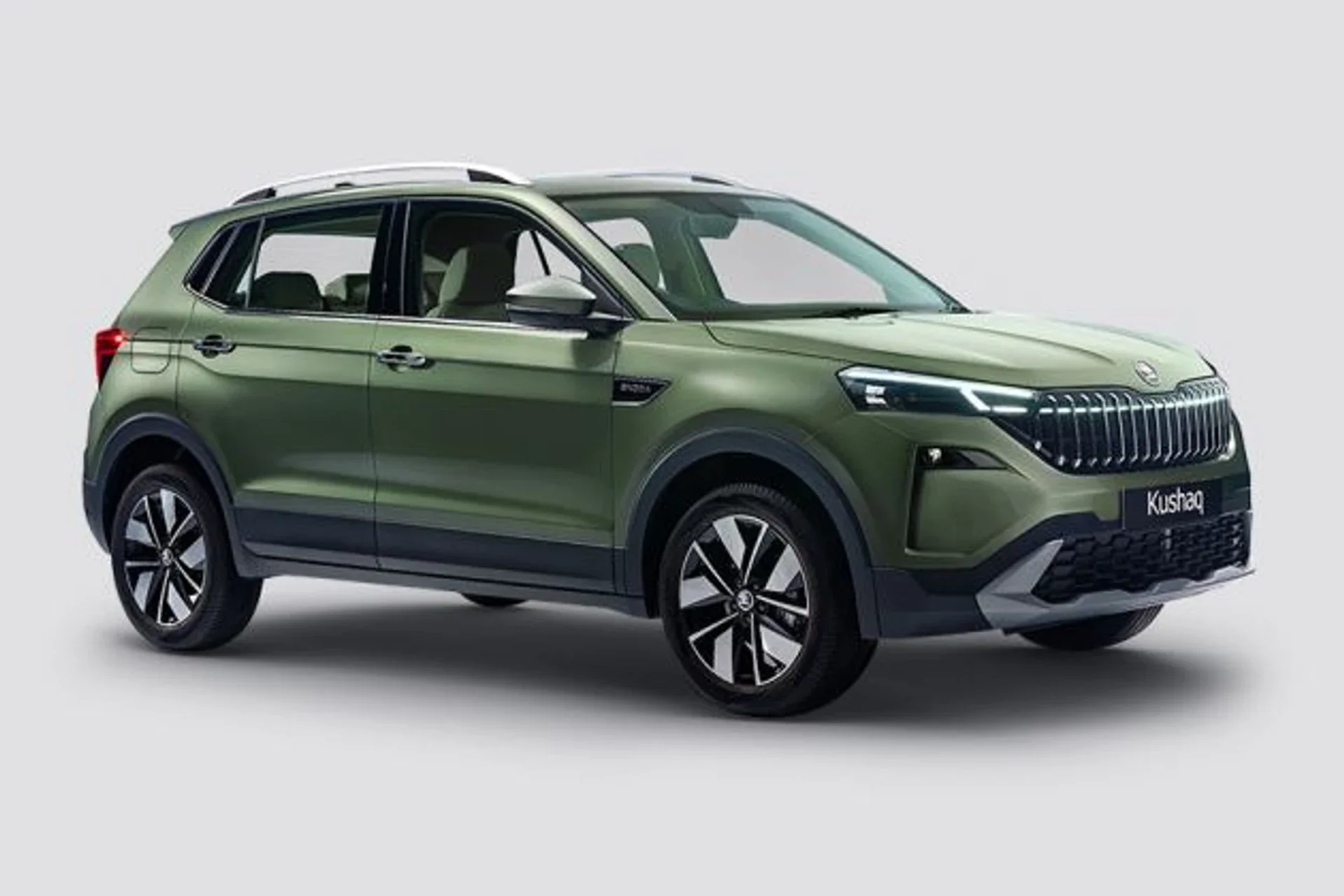
The facelift is evolutionary rather than revolutionary. Faisal Khan noted a new grille with vertical chrome ribs replacing the earlier chrome line, a connected LED DRL strip, new LED fog lamps (earlier halogens) and revised bumpers. The bonnet and sheet metal are unchanged. Faisal Khan measured the length at 'slightly more than 4.2 metres' with a 2.65 m wheelbase , once segment-best, but now shorter than the Tata Sierra's approximately 2.73 m. V3Cars pegs the width at 1760 mm and height at 1612 mm, both the lowest in the C-segment SUV category. Ground clearance is 188 mm per Faisal Khan (MotorOctane rounded to 'about 185 mm'). The Monte Carlo edition, now offered from launch (unusual for Skoda, per MotorBeam), adds gloss-black grille treatment, red accents, checkered-flag badging and black roof/ORVMs. New LED tail lamps with sequential indicators and Skoda lettering complete the rear. Eight exterior colours are on offer per V3Cars.
The dashboard architecture carries over with new trim detailing. The highlight is the new 10.25-inch fully digital instrument cluster (Faisal Khan calls it the 'global cluster' finally reaching India) and a 10.1-inch touchscreen with wireless Android Auto and Apple CarPlay, plus Google Gemini AI integration. Both front seats are six-way power-adjustable with ventilation on top variants (MotorOctane). First-in-segment rear-seat massage is offered , but only for the two outer passengers, not the middle (MotorOctane, Faisal Khan, MotorBeam). A panoramic sunroof now features, with even the base variant getting a smaller sunroof (Gagan Choudhary). Faisal Khan flagged clear omissions: no height-adjustable rear seat belts, no rear sun-blinds, one-touch power windows only on the driver side, and the boot lid is not damped. Skoda's 'simply clever' touches return , windows and sunroof can now be operated via key, and there's a dedicated physical sunroof-blind button. Boot space is 385 litres to the parcel shelf (MotorOctane, V3Cars), rising to 491 litres measured to the roof.
Build feels solid and Germanic, though Faisal Khan repeatedly noted hard plastics on the dashboard, door pads and rear trim. Soft-touch materials are limited. The Kushaq retains six airbags as standard across the range, with side and curtain airbags even on the Classic Plus base variant (V3Cars). The 1.5 TSI now gets rear disc brakes (Faisal Khan, Gagan Choudhary) , the 1.0 continues with rear drums. Front parking sensors are new (except on base), though a 360-degree camera remains absent across the range. ADAS is not offered, which MotorOctane called a 'clear miss'. MotorInc noted Skoda has historically performed well in crash tests and the facelift carries forward the same safety structure. MotorInc also highlighted Skoda's Super Care package , a 4-year/1 lakh km warranty with extended warranty and service packages, aimed at addressing the long-standing 'expensive to maintain' perception. However, MotorInc was candid that these cars still won't be 'as bulletproof and hassle-free as a Japanese one' for long-term peace-of-mind buyers.
The 1.0 TSI three-cylinder produces 110 bhp (MotorOctane) and is now paired with a new 8-speed Aisin AQ300 torque converter , first-in-segment at this price point per MotorOctane. The 6-speed manual continues. MotorOctane recorded 1500 rpm at 80 kmph in 8th gear and predicted highway mileage rising from 12-13 kmpl to 15-16 kmpl. Gagan Choudhary was more measured: at 100 kmph the rpm was 'almost the same if not higher' than the 6-speed, and the gearbox manufacturer's claimed 0.4 L/100 km improvement translates to roughly 1 kmpl in real-world gain. Where all agree: upshifts are dramatically smoother , Gagan likened light-traffic behaviour to a CVT, and MotorBeam called it 'BMW ZF level of smoothness in the mass market'. V3Cars states ARAI claimed efficiency for the 1.0 AT is now 19 kmpl. The 1.5 TSI produces 150 hp and 250 Nm, does 0-100 in under 10 seconds (Faisal Khan), with cylinder deactivation above cruising speeds and a 7-speed DSG only. MotorOctane noted the 1.5's advantage only materialises beyond 80-100 kmph.

Via YouTube review
The Kushaq's ride-handling balance is a consistent strength. MotorOctane noted it is noticeably more absorbent than the mechanically related VW Taigun on bad roads, and praised the light steering and good all-round visibility for new drivers. MotorBeam described a 'good mix between outright comfort and sporty handling' , you feel the road but potholes are absorbed without harshness, with the steering weighing up well at higher speeds and in Sport mode. MotorInc made an important distinction: the 1.5 TSI's suspension tune is noticeably better than the 1.0's, which they described as 'a bit firm and jittery and not as SUV as we would have liked' , making the 1.5 the preferable pick for chauffeur-driven buyers and long-distance travellers. MotorBeam did flag that brakes felt 'a little wooden' at speeds of 160+ kmph, lacking feel despite stopping without drama. Three drive modes (Eco, Normal, Sport) are available on the AT, with paddles holding gears up to roughly 5750 rpm.
V3Cars' variant analysis is the most damning independent assessment: the Classic Plus base variant at ₹10.69 lakh ex-showroom (₹12.69 lakh with AT) is the only variant that meets their minimum 60% value-for-money threshold. The Signature variant upgrade costs ₹3.90 lakh (MT) or ₹2.90 lakh (AT) over the base , V3Cars calls this 'illogical' given the features added. The top Prestige 1.5 TSI DSG hits ₹19.99 lakh ex-showroom, and the Monte Carlo adds ₹30,000 (1.0) or ₹20,000 (1.5) on top as a cosmetic edition. V3Cars' verdict: buy the Classic Plus or don't buy the Kushaq at all. Against rivals, the Hyundai Creta and Kia Seltos offer more equipment (ADAS, 360-degree camera, more screens) and quieter cabins at comparable prices , MotorInc specifically directs chauffeur-driven and prestige buyers to the Kia Seltos, and family buyers to the Seltos or even the Citroen Basalt. The Tata Sierra offers a wider cabin and longer 2.73 m wheelbase. MotorOctane positions the Kushaq's rivals as the Creta, Seltos and Sierra.
"Appreciates the 8-speed for long-term thinking and smoother city driving, but is cautious on the claimed efficiency gains , his own highway test showed similar rpm to the 6-speed. Now recommends the 1.0 TSI AT combo more confidently than before."
"Calls the 1.0 TSI with 8-speed AT the bigger hero of the facelift, projecting 15-16 kmpl highway efficiency. Flags ADAS omission as a clear miss and says the 1.5 TSI is only worth it for 120+ kmph buyers."
"The 8-speed gearbox is the standout , compares its smoothness to a BMW ZF unit. Calls it a driver's SUV worth picking if pricing is competitive, but notes the missing 360 camera and rear sun-blinds."
"Appreciates Skoda's attention to detail (dedicated sun-blind button, clever storage) but criticises the hard plastics and equipment gaps. Recommends the 1.5 TSI Monte Carlo as the pick, though laments the absence of a diesel."
"Uses a persona-based framework: Kushaq is a shoo-in for value, enthusiast, new-driver and safety buyers, but prestige, fuel-efficiency and peace-of-mind buyers should cross-shop the Seltos, Grand Vitara or Hyryder instead."
"Only the ₹10.69 lakh Classic Plus base variant meets their 60% VFM threshold. Higher variants are overpriced, and they explicitly do not recommend upgrading to Signature, Prestige or Monte Carlo."