Renault Duster vs
Volkswagen Taigun
Choose the Duster for ride comfort and road presence, the Taigun for driving thrills and bulletproof finish.
Most buyers decide here. Read this before anything else.
- You drive long highway stretches regularly and want a suspension that absorbs bad roads without drama.
- You have a young family and prioritise a panoramic sunroof, dual-zone climate control, and ambient lighting over razor-sharp handling.
- You live outside a metro and encounter rough village roads, speed bumps, and uneven tarmac on daily commutes.
- You want a cabin that feels genuinely premium at this price, with soft leather trim and a driver-tilted infotainment cockpit.
- You care about ground clearance and a planted, confident stance more than ultimate cornering agility.
- You are returning to the Duster nameplate and want modern tech without giving up that rugged SUV character.
- You enjoy spirited weekend drives and want an engine that rewards you when you push it, especially the 1.5 TSI.
- You prioritise build integrity above all else and want doors that close with a solidity no rival in this segment matches.
- You commute in the city daily and want a gearbox that has fixed its low-speed jerkiness with the new 8-speed torque converter.
- You plan to keep the car five-plus years and want resale value backed by Volkswagen's strong ownership reputation in India.
- You have a smaller family and rear-seat space is less critical than a tight, premium-feeling cockpit.
- You want five-star NCAP safety credentials as a non-negotiable, verified by independent global testing.
The Duster scores 8.4/10, the Taigun 7.8/10. In real life, they are built for different people.
The Duster is the clear choice here. Faisal Khan called it the new segment benchmark for ride and handling, and at triple-digit speeds its suspension composure is genuinely relaxing for all passengers. The Taigun is capable on highways but its stiffer tune means more fatigue over imperfect road surfaces on long runs.
The autoX podcast noted that the Taigun and Kushaq were always the go-to driver's SUVs in this segment, and the 1.5 TSI's performance is described as 'really good' once you drive it back to back with the 1.0. The Duster's 160 PS turbo is strong, but the Taigun's chassis balance and engine response give a sharper, more rewarding feel on curves.
The Taigun's Volkswagen badge, bulletproof build reputation, and consistent ownership scores have historically supported stronger resale values in the compact SUV segment. The new Duster is too recent to have a resale track record in India, and brand perception for Renault has lagged Volkswagen in this regard.
The Duster's wet-clutch DCT can feel jerky in crawling traffic, a known trait of this transmission type. The Taigun's new 8-speed torque converter addressed the old 6-speed's low-rev jumpiness, making it noticeably smoother in bumper-to-bumper conditions, as noted in the autoX discussion. Neither is perfect in the city, but the Taigun's gearbox update tips the balance.
Scores shown inline. "Best for" tells you who each result matters to.
| Axis | Renault Duster | Volkswagen Taigun | Best for |
|---|---|---|---|
Design |
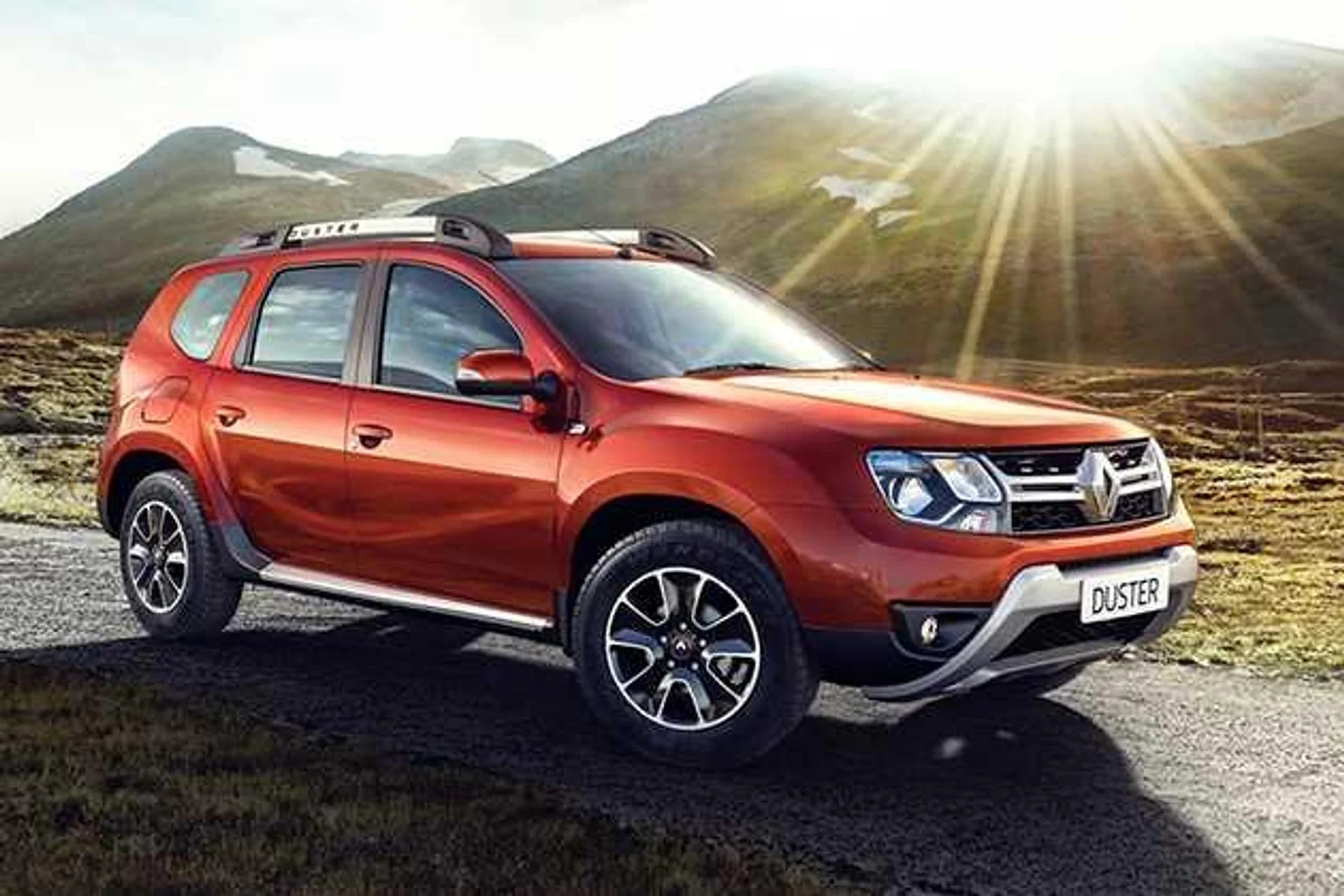
V3Cars describes the Duster as muscular, with 212 mm ground clearance, 18-inch alloys, and thick cladding that signals genuine SUV intent. Faisal Khan notes the absence of a Renault badge at the front; the Duster name sits on the grille itself, with full LED lighting and connected LED tail lamps giving it a distinctive identity. 8.0 / 10 |
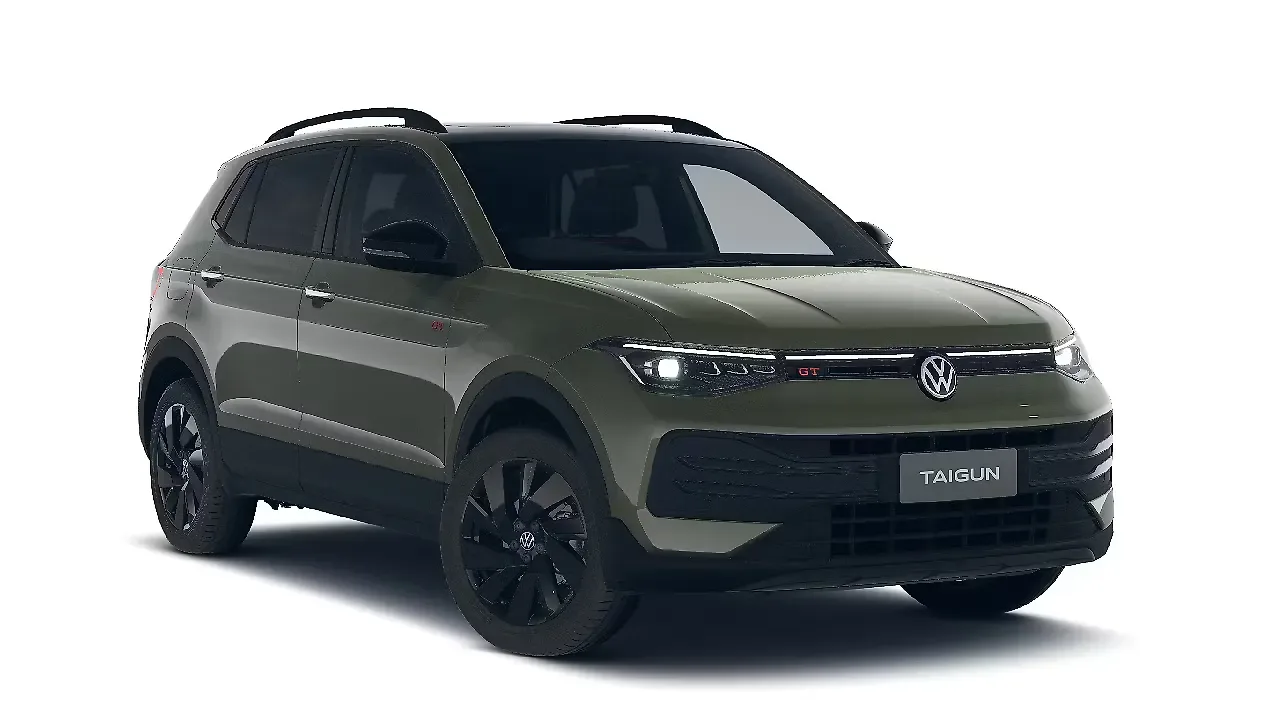
The facelift brings a connected LED light bar, an illuminated VW logo, and new headlamps with auto-levelling. The silhouette is unchanged at 4.22 metres, which keeps it looking familiar rather than bold. The autoX team noted it reads like a scaled-down Tiguan, which works for some buyers and feels derivative to others. 8.0 / 10 |
Statement SUV buyersDuster's rugged, badgeless stance is more visually distinctive at this price
|
Interior |
V3Cars rates the Duster cabin second only to the Seltos in this segment, citing soft leather trim, 48-colour ambient lighting, and a driver-tilted 10.1-inch Google Built-in touchscreen. Faisal Khan highlights the 10.25-inch digital cluster, panoramic sunroof, and dual-zone climate control as genuine premium touches. 7.5 / 10 |
The Taigun's interior is more handsome than lavish. The updated 10.25-inch digital cluster is useful and the layout is clean, but hard plastics dominate the cabin, limiting the sense of premium quality. Ventilated seats, wireless charging, and a panoramic sunroof on the top trim cover the essentials without feeling special. 7.0 / 10 |
Feature-seeking familiesDuster delivers a richer, more premium feeling cabin at comparable price points
|
Build & Safety |
The Duster's monocoque construction feels solid and Gagan Choudhary highlights the quality of materials and panel alignment. However, NCAP safety data for the new-generation Duster is not yet publicly available in India, which is a genuine gap when comparing against verified five-star rivals. 9.0 / 10 |
The Taigun holds a five-star Global NCAP rating for both adult and child occupant protection. Doors close with a heavy thud, panel gaps are tight, and six airbags, ESC, hill hold, and multi-collision braking are all standard. This is the most objectively verified safety story in the segment. 9.0 / 10 |
Safety-first buyersTaigun's five-star NCAP score is independently verified and unmatched here
|
Performance |
The 160 PS 1.3L turbo, co-developed with Mercedes-Benz per Gagan Choudhary, is strong on paper and delivers confident highway overtakes. The wet-clutch DCT shifts quickly but can feel abrupt in low-speed situations, and the absence of a diesel option removes a powertrain that many buyers in this segment actively seek. 7.5 / 10 |
The autoX podcast was clear: once you drive the 1.5 TSI back to back with the 1.0, the difference is immediately apparent. The 1.5 TSI with the 7-speed DCT is the sharper, more engaging choice, and the new 8-speed with the 1.0 TSI is now smoother and more refined than its predecessor. Two genuinely well-matched engines suit different buyer types. 8.5 / 10 |
Driving enthusiastsTaigun's 1.5 TSI offers the most rewarding performance package in this comparison
|
Ride Quality |
Faisal Khan calls it the new segment benchmark, and that assessment is broadly shared across reviewers. The Duster absorbs broken tarmac, potholes, and highway undulations with a composure that makes it feel closer to a larger SUV than a compact. It is the standout strength of this car. 9.0 / 10 |
The Taigun rides well on smooth roads but its suspension tuning prioritises handling over comfort. In city conditions with sharp speed bumps and patchy surfaces, it can feel firmer than expected. It is not uncomfortable, but it does not match the Duster's ability to isolate occupants from poor road quality. 7.5 / 10 |
Long-distance travellersDuster's segment-benchmark ride comfort transforms bad roads into manageable ones
|
Value for Money |
The Duster packs a Mercedes-co-developed turbo engine, a feature-rich cabin, and the segment's best ride quality into a competitive price. The absence of diesel and AWD options narrows its appeal, and buyers who need those capabilities will find the value calculation changes significantly. 7.5 / 10 |
The Taigun starts lower and covers a wide price range, but top variants can feel expensive relative to the cabin quality on offer. The five-star NCAP safety, proven reliability record, and strong resale values are real components of value that do not show up on a spec sheet comparison. 7.0 / 10 |
Feature maximisersDuster delivers more visible features and comfort per rupee at mid-to-top trims
|
Practicality |
The Duster's 212 mm ground clearance and confident road stance make it practical for buyers who venture off marked routes occasionally. Vishal Ahlawat notes the rear seat is tight for three adults, which limits genuine five-seat family use. Boot space is adequate but not class-leading. |
The Taigun is 4.22 metres long with a sensible cabin layout, but rear-seat space is also not its strong suit. It is best used as a four-seat car in practice. The advantage is a more proven boot and storage layout, with ergonomics that reviewers consistently describe as intuitive and well-organised. |
Four-seat urban familiesNeither excels for five adults; Taigun edges it on interior ergonomics and layout
|
The Duster scores 8.4/10 and the Taigun 7.8/10, from 11 independent creators. The overall number is only part of the story here: the dimension breakdown is where the real comparison lives.
autoX: Is the Renault Duster Better than VW Taigun & Skoda Kushaq? | Performance SUV Battle | autoX Podcast