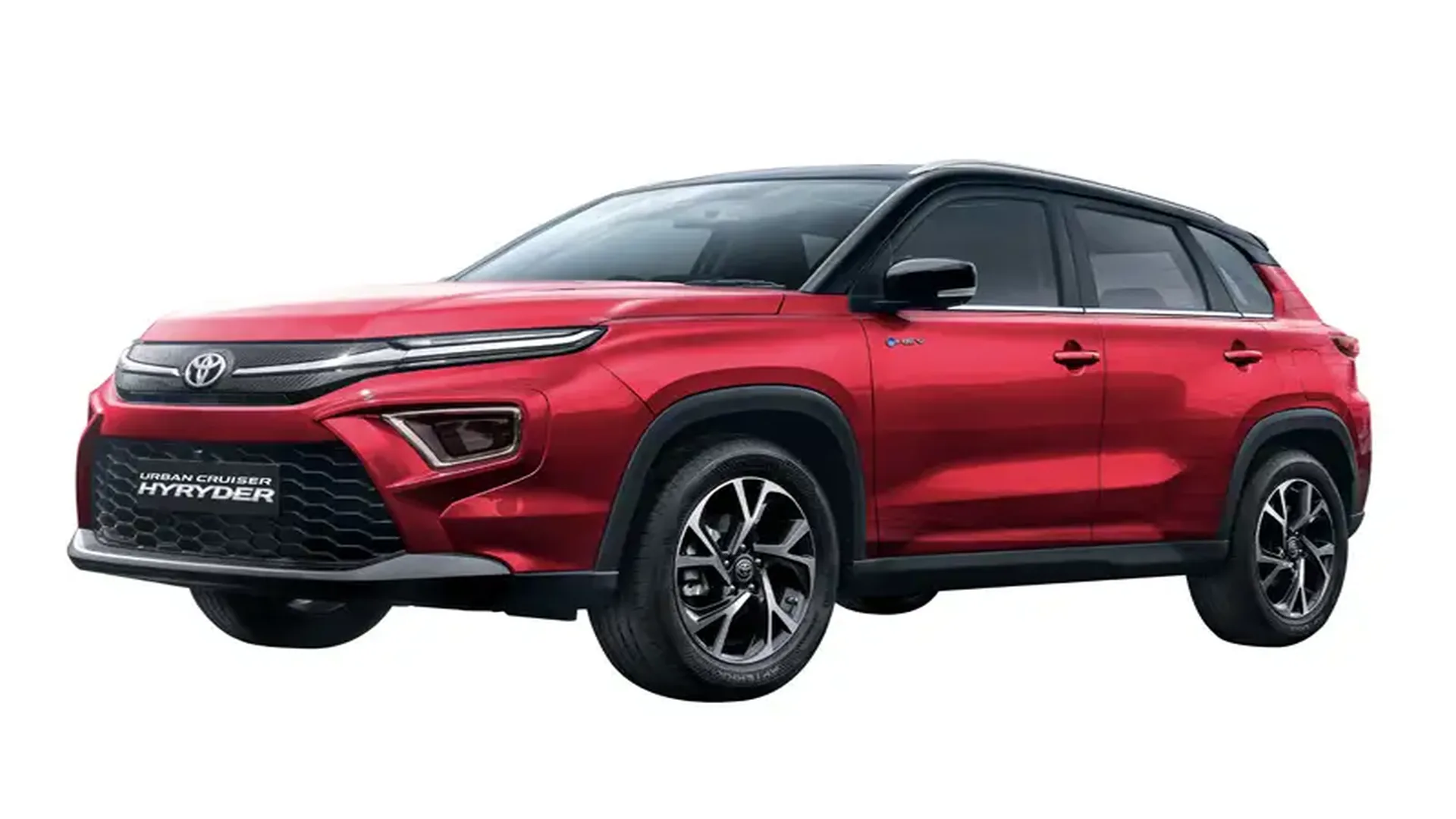
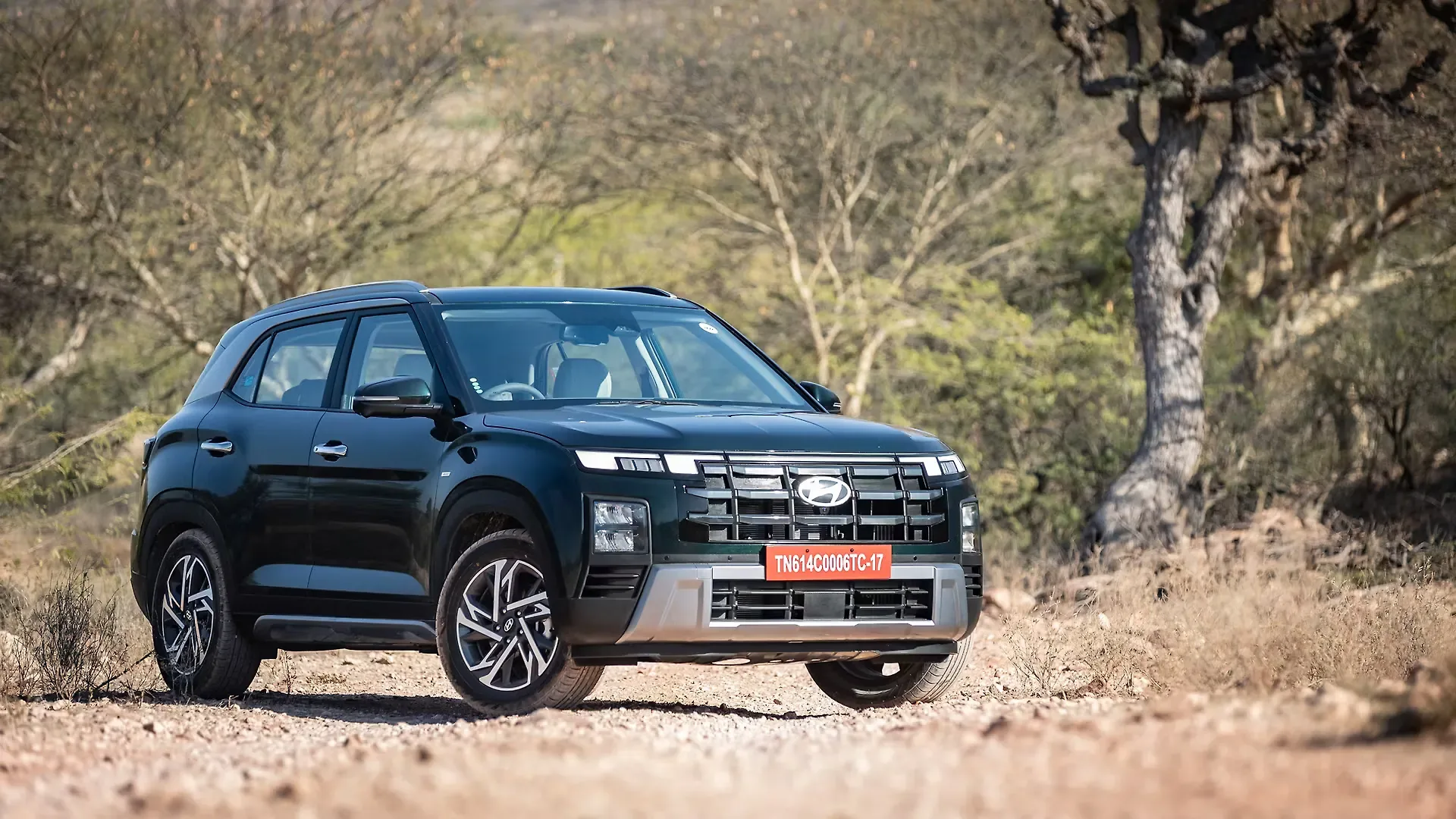
Hyundai Creta vs
Toyota Hyryder
One car buys you a feature-loaded family hauler, the other buys you a fuel bill you barely notice.
Most buyers decide here. Read this before anything else.
- You carry the family on long highway runs twice a month and want Level 2 ADAS to reduce fatigue on expressways.
- You value a genuinely modern, large-screen cabin that impresses guests and keeps your tech-savvy teenagers happy on the back seat.
- You want the flexibility to choose a turbo-petrol for spirited weekend driving or a diesel for mixed rural-highway use.
- You park in a multi-storey every day and need a 360-degree camera plus a tight, confidence-inspiring turning experience.
- You prioritise resale value and wide service network coverage across Tier 2 towns where you occasionally travel.
- You find touchscreen-heavy cars frustrating and specifically want physical climate control buttons retained in a modern dashboard.
- You clock 80-plus kilometres daily in stop-and-go city traffic and your monthly fuel bill is a genuine household concern.
- You live in a congested metro where the Hyryder slips into near-silent EV mode below 40 kmph most mornings.
- You want Toyota's legendary long-term reliability record and are happy to pay a slight premium for peace of mind at 80,000 km.
- You drive solo or with one passenger most of the time and rarely need the full boot capacity for luggage.
- You prefer calm, linear acceleration suited to navigating crowded urban roads rather than chasing quick overtakes on the highway.
- You factor in total cost of ownership over five years, where the hybrid's fuel savings can offset its higher sticker price.
The Creta scores 6.7/10, the Hyryder 6.6/10. In real life, they are built for different people.
The Hyryder's strong-hybrid system delivers a verified real-world 19-20 kmpl in urban conditions, with frequent EV-mode running keeping the engine off at crawling speeds. The Creta's 1.5 NA petrol returns closer to 13-14 kmpl in the same traffic. Over a five-year urban commute, the fuel saving is substantial enough to close the Hyryder's price gap.
The Creta turbo-petrol's 160 PS and 253 Nm provide confident triple-digit cruising, and the ADAS suite eases long expressway stints. The Hyryder's combined 114 bhp feels adequate up to 100 kmph but runs out of enthusiasm beyond that, and Faisal Khan noted acceleration becomes noticeably sluggish when fully loaded. For families who holiday on the highway regularly, the Creta is the more relaxed choice.
MotorOctane's multi-car test found the Hyryder's throw, spread, and intensity all rated highly, placing it among the segment's better headlight performers. The Creta's LEDs scored well on spread but fell short on intensity at high speeds, reducing confidence above 100 kmph on dark stretches. Buyers who regularly drive unlit state highways should note this gap.
Hyundai Creta has historically held strong resale due to its volume-seller status, wide buyer pool, and broad service availability. Toyota's hybrid badge adds a premium in the used market, particularly as fuel prices stay elevated, and buyers associate the Hyryder with lower running costs. Both cars resell well; the Hyryder may edge ahead as hybrid awareness grows among used-car buyers.
Scores shown inline. "Best for" tells you who each result matters to.
| Axis | Hyundai Creta | Toyota Hyryder | Best for |
|---|---|---|---|
Design |
The 2024 Creta facelift brings a split-lamp front with slim DRLs up top and chunky projectors below, directly inspired by the Tucson. V3Cars notes stronger road presence than before, though the polarising face divides opinion. The side profile stays conservative with clean 17-inch diamond-cut alloys on higher trims. 7.5 / 10 |
The Hyryder wears an upright SUV face with a crystal-acrylic grille, sweeping LED DRLs and a connected light bar at the rear. Namaste Car appreciates the 5.4-metre turning radius that keeps the proportions city-practical. Halogen fog lamps on lower trims feel inconsistent with the otherwise premium front treatment. 7.5 / 10 |
Style-conscious urban buyersCreta's Tucson-inspired face reads more boldly at the kerb
|
Interior |
Creta's dual curved 10.25-inch screens, flat-bottom steering and dual-zone climate with physical buttons mark a genuine generational upgrade. Ventilated front seats, a panoramic sunroof and ADAS controls all live here. Hard plastics remain on the lower door card sections, a persistent criticism across reviewers including MotorBeam. 8.0 / 10 |
The Hyryder's brown-and-black theme, 9-inch touchscreen and 7-inch TFT cluster are functional but feel a step behind segment leaders. A head-up display on top trims is a useful addition. Switchgear, window switches and the sunroof shade show Maruti cost-sharing origins that Gagan Choudhary found inconsistent with the car's pricing. 7.0 / 10 |
Feature-hungry familiesCreta's dual-screen layout and richer feature count set the cabin benchmark
|
Performance |
Three engine choices give the Creta genuine versatility. The 1.5 turbo-petrol's 160 PS and 253 Nm, paddle shifters and drive modes make it the enthusiast option in this segment. The NA petrol covers city duties quietly; the diesel handles loaded highway pulls without strain. 8.0 / 10 |
The strong-hybrid pairs an Atkinson-cycle three-cylinder with an electric motor for 114 bhp combined. City acceleration is smooth and the petrol-to-electric transition is seamless. Above 100 kmph the power deficit becomes apparent, and Faisal Khan noted the car feels taxed when carrying four adults at highway speeds. 7.0 / 10 |
Highway overtakersCreta turbo-petrol offers confident pull that the hybrid cannot match
|
Ride Quality |
The Creta handles broken urban roads with composure and soaks highway undulations without drama. Hindi Auto Reviewer found the suspension tuning well-judged for Indian conditions, absorbing sharp edges without excessive body roll. High-speed stability is confidence-inspiring, particularly in the turbo variant. 7.5 / 10 |
The Hyryder rides on a similar suspension philosophy and feels planted at city speeds. Namaste Car appreciated the controlled body movement through corners. The heavier hybrid battery pack lowers the centre of gravity slightly, contributing to a settled feel, though the difference over the Creta is marginal in real-world driving. 7.5 / 10 |
Mixed road usersBoth cars ride comparably; neither has a meaningful edge here
|
Build Quality |
Panel gaps are consistent and shut lines are tight on production models tested by MotorBeam. The underbody gets basic protection but lower door trim plastics feel hollow to the touch. Overall solidity is competitive but not class-leading. 7.0 / 10 |
Toyota's assembly standards are reflected in tight tolerances and long-term reliability data. The hybrid battery architecture adds mechanical complexity, but Toyota's track record with this powertrain internationally reduces concerns. Interior material quality is let down by Maruti-sourced switchgear that feels below the car's price point. 7.0 / 10 |
Long-term ownership buyersToyota's reliability reputation edges Hyundai's over a long ownership horizon
|
Value for Money |
The Creta's feature count per rupee is among the strongest in segment, with ADAS, dual screens and ventilated seats available at a competitive price. Three engine options let buyers pick precisely the powertrain their budget and use case demands. MotorOctane rates the overall package as hard to beat on paper. 7.5 / 10 |
The Hyryder costs slightly more upfront but the hybrid's 19-20 kmpl real-world efficiency changes the five-year ownership equation significantly. Arun Panwar calculated meaningful savings for a buyer covering 1,500 km monthly. Buyers who calculate total cost of ownership rather than sticker price will find the hybrid case genuinely compelling. 7.5 / 10 |
High-mileage commutersHyryder's fuel savings close the price gap for anyone driving over 1,200 km monthly
|
Practicality |
Boot space is generous at 433 litres with a usable, square loading floor. MotorOctane's three-adult rear-seat test confirmed adequate knee room and headroom for occupants up to six feet. The Creta's dimensions and boot make it the stronger choice for families who regularly carry luggage or airport runs. |
The Hyryder's strong-hybrid battery pack intrudes on boot space, reducing usable luggage capacity below the Creta. Rear seat space is adequate for two adults comfortably but tight for three. Namaste Car recommends the Hyryder for primarily urban buyers who rarely need maximum luggage room. |
Families and frequent travellersCreta's uncompromised boot and rear room suit larger families better
|
The Creta scores 6.7/10 and the Hyryder 6.6/10, from 8 independent creators. The overall number is only part of the story here: the dimension breakdown is where the real comparison lives.
MotorOctane: 2024 Hyundai Creta vs Seltos vs Elevate vs Hyryder vs Taigun vs Kushaq