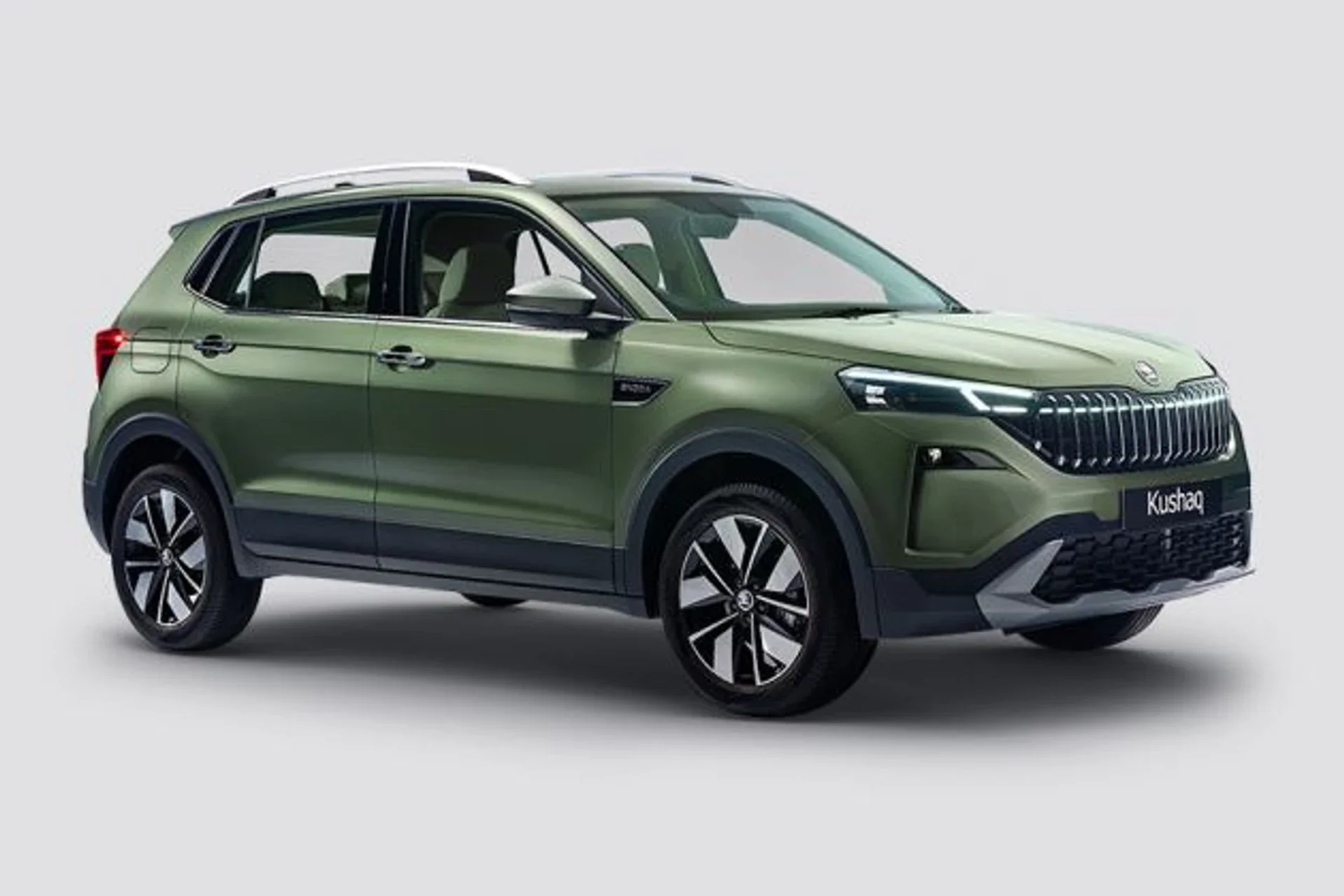
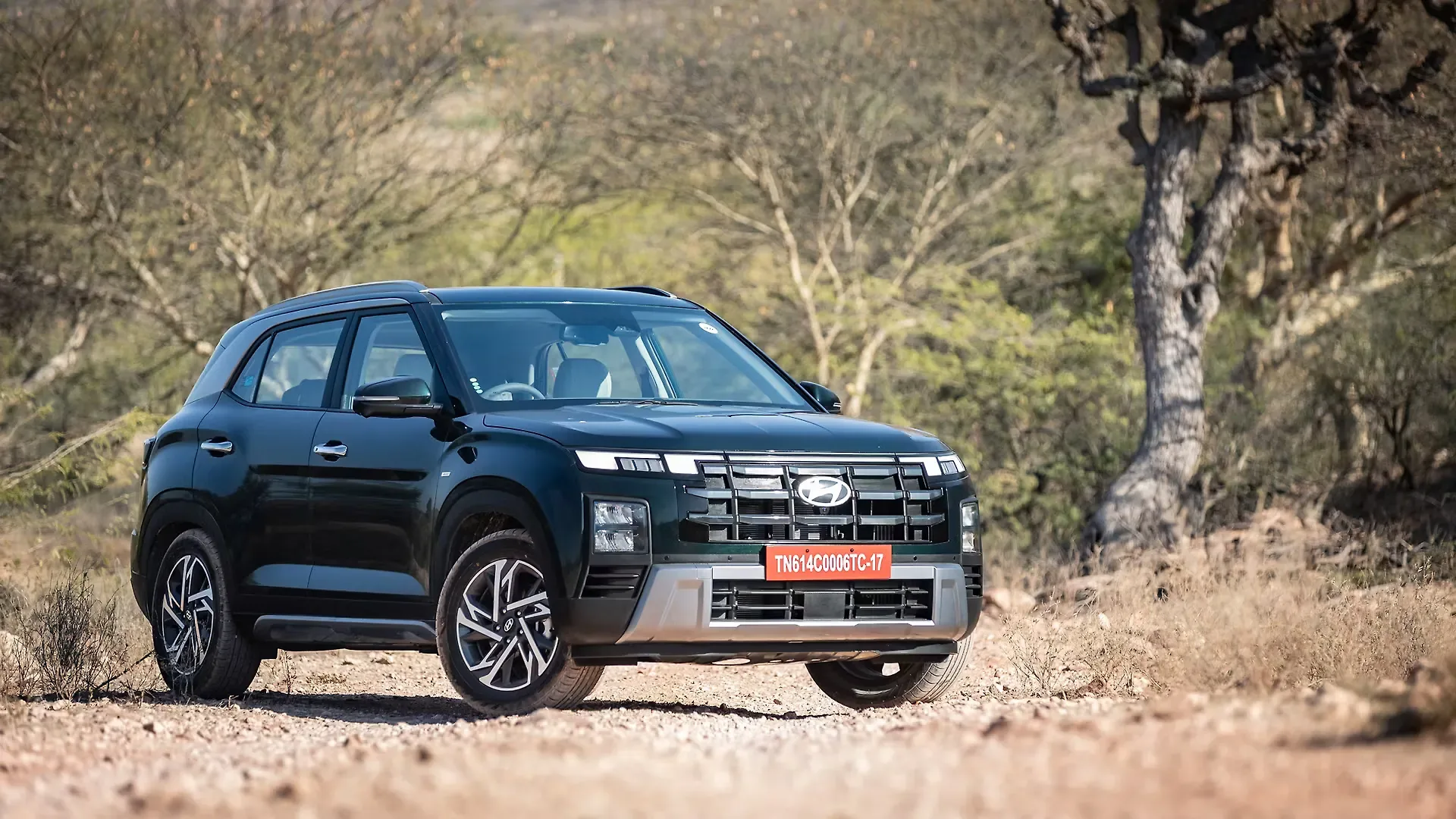
Hyundai Creta vs
Skoda Kushaq
Choose between a feature-loaded family hauler and a driver-focused European compact.
Most buyers decide here. Read this before anything else.
- You drive mostly in the city with occasional highway runs and want Level 2 ADAS as a genuine safety net for your family.
- You want three engine choices and the flexibility to pick a no-fuss NA petrol, a punchy turbo, or a clean diesel depending on your usage.
- You carry rear-seat passengers regularly and value ventilated seats, dual-zone climate, and a panoramic sunroof as everyday comforts, not weekend luxuries.
- You are not a car enthusiast and simply want something easy to live with, easy to service, and unlikely to surprise you.
- You prioritise resale value and segment recognition, knowing the Creta nameplate holds its price better than most rivals in this space.
- You want the most feature-loaded variant your budget allows without feeling like you are paying a premium for European branding.
- You commute on broken urban roads and want a car that genuinely absorbs potholes without unsettling the cabin or the passengers.
- You enjoy driving and want a naturally communicative steering, a well-sorted chassis, and a gearbox that does not second-guess your inputs.
- You value solid build quality and the feeling that body panels, door shuts, and interior surfaces will hold up through years of hard use.
- You are buying the Classic Plus variant specifically and want the new 8-speed Aisin automatic at a price that undercuts most fully-loaded competitors.
- Your household already has a highway car and you need something that performs the daily commute with refinement and fuel efficiency above all else.
- You do not need ADAS and would rather spend that money on a car with a more satisfying dynamic character and tighter build tolerances.
The Creta scores 6.7/10, the Kushaq 7.6/10. In real life, they are built for different people.
The Creta's 1.5 turbo petrol DCT delivers strong mid-range pull and cruise comfort that makes four-hour drives genuinely relaxed. The NA petrol, however, feels stretched above 120 kmph. The Kushaq 1.0 TSI with the new 8-speed Aisin is smoother at highway speeds than before, and MotorOctane noted meaningfully better refinement with the torque converter replacing the older DSG.
Reviewers consistently rate the Kushaq's suspension tuning higher for broken road conditions, absorbing sharp edges without transferring shock into the cabin. The Creta's ride is comfort-biased too, but V3Cars and MotorBeam both note it can feel a touch floaty on bad surfaces at speed. For city roads that are more crater than tarmac, the Kushaq's setup feels more composed.
The Creta's segment-leader status and Hyundai's dense service network give it a structural resale advantage that no rival in this price band consistently beats. The Kushaq holds reasonable value for a European brand but Skoda's smaller dealer footprint and historically higher service costs create hesitation in used-car buyers outside major cities.
V3Cars is explicit: the Kushaq Classic Plus at ₹10.69 lakh is the Kushaq's most honest price point, offering the new automatic, panoramic sunroof, and ventilated seats without the premium of higher trims. Above that trim, the Kushaq's value proposition weakens sharply. The Creta's mid-range SX variant delivers more technology per rupee across a wider trim ladder, making it easier to find a sweet spot.
Scores shown inline. "Best for" tells you who each result matters to.
| Axis | Hyundai Creta | Skoda Kushaq | Best for |
|---|---|---|---|
Design |
The 2024 facelift gives the Creta a Tucson-inspired split-lamp face with a connected DRL strip and assertive grille. MotorBeam notes stronger road presence than the outgoing car. Opinion divides on whether the Palisade-inspired look is bold or busy, but it reads confidently from the kerb. 7.5 / 10 |
Faisal Khan called the facelift evolutionary, noting a new vertical-rib chrome grille, connected LED DRLs, and LED fog lamps replacing halogens. The body panels are unchanged from the pre-facelift car. The Kushaq's silhouette is clean and European but does not command attention the way the Creta does. 7.5 / 10 |
Statement SUV buyersCreta reads more assertively from the kerb
|
Interior |
The curved dual-screen layout with a 10.25-inch touchscreen and 10.25-inch digital cluster is the cabin's headline. Dual-zone climate with physical buttons, ventilated front seats, and a flat-bottom steering wheel make it feel genuinely premium. Hard plastics on lower surfaces persist, but feature density is the segment's best. 8.0 / 10 |
The Kushaq gets a 10.25-inch digital cluster and a 10.1-inch touchscreen with Google Gemini AI integration. MotorOctane highlights that both front seats are six-way power-adjustable with ventilation on top variants. The dashboard architecture carries over from the pre-facelift car, which means the layout feels less fresh than the Creta's redesigned fascia. 7.5 / 10 |
Tech-forward familiesCreta packs more features per rupee across the trim ladder
|
Performance |
Three engine choices cover every buyer type. The 1.5 NA petrol suits calm city drivers; the 1.5 turbo petrol with DCT delivers 160 PS and near-2-litre performance for enthusiasts; the diesel suits high-mileage highway users. MotorBeam calls the turbo petrol the enthusiast's pick with strong mid-range pull. 8.0 / 10 |
The 1.0 TSI produces 115 PS but the new 8-speed Aisin torque converter transforms how that power reaches the road. MotorOctane notes the shift quality is smoother and more efficient than the older DSG. It is not the fastest car in the segment, but it is now one of the most refined to drive daily. 8.0 / 10 |
Outright performance seekersCreta's turbo DCT delivers more power and engine choice flexibility
|
Ride Quality |
The Creta rides comfortably on smooth roads and handles city undulations well. At higher speeds on broken surfaces, V3Cars notes a slight floatiness that can unsettle occupants. It is never uncomfortable, but it is tuned more for softness than composure under stress. 7.5 / 10 |
The Kushaq's suspension is the segment's quiet achiever. It absorbs sharp road imperfections with more control than the Creta and stays composed at speed on rough tarmac. Reviewers across MotorBeam and Gagan Choudhary consistently rate its ride as the more dynamically balanced of the two. 8.0 / 10 |
Potholed city commutersKushaq stays more composed on broken urban roads
|
Build Quality |
The Creta's build is solid for a mass-market Indian SUV but hard plastics on lower dashboard panels are a recurring reviewer note. MotorBeam and V3Cars both flag that panel fit and finish are good without being exceptional. It feels assembled well but not European-tight. 7.0 / 10 |
Build quality is the Kushaq's clearest differentiator in this comparison. Door shuts, panel gaps, and interior surface quality all reflect Skoda's European lineage. Gagan Choudhary notes the solidity you feel in everyday interactions with the car, from the door close to the seat adjustment, is a consistent highlight across long-term use. 8.0 / 10 |
Quality-conscious buyersKushaq's European build tolerances are a tangible daily advantage
|
Value for Money |
The Creta offers more features at more price points, making it easier to find a well-equipped variant without overpaying. Its service network density, strong resale, and wide engine choice amplify the ownership value case. For buyers who want the most technology per rupee, the Creta is the more consistent performer across its trim ladder. 7.5 / 10 |
V3Cars is direct: only the Classic Plus at ₹10.69 lakh offers genuine value. Higher Kushaq trims are overpriced relative to what they include, and the absence of ADAS and a 360-degree camera at those prices is a real gap. The Kushaq rewards buyers who target the base automatic trim and do not stretch further. 6.5 / 10 |
Most Indian buyersCreta delivers stronger value consistency across trims
|
Safety and Driver Technology |
Level 2 ADAS is the Creta's single biggest upgrade for 2024 and gives it a genuine safety advantage over most rivals in this price band. Lane keep assist, adaptive cruise control, and forward collision warning are standard on upper trims. For families covering long highway distances, this is a meaningful real-world differentiator. |
The 2026 Kushaq facelift does not add ADAS, and V3Cars specifically flags this as a gap at higher trim pricing. Six airbags and ESC are present, but the absence of autonomous emergency braking or lane assist leaves the Kushaq behind on active safety. For buyers who weigh safety tech heavily, this is a clear shortcoming. |
Highway family driversCreta's Level 2 ADAS is a genuine safety upgrade on long runs
|
The Creta scores 6.7/10 and the Kushaq 7.6/10, from 8 independent creators. The overall number is only part of the story here: the dimension breakdown is where the real comparison lives.
MotorOctane: Hyundai Creta vs Skoda Kushaq Comparison - Which to buy?