Skoda Kushaq vs
Renault Duster
Choose refined European driving dynamics or a rugged ride-focused SUV that reclaims its legend.
Most buyers decide here. Read this before anything else.
- You commute daily in stop-and-go city traffic and want a smooth, fuss-free automatic that sips fuel rather than gulps it.
- You have a young family and want ventilated front seats, a panoramic sunroof, and rear-seat massage on occasional weekend drives.
- You value a tightly screwed-together European-feeling cabin over a feature-count arms race.
- You are buying your first turbocharged car and want predictable, confidence-inspiring performance rather than an eager but edgy powertrain.
- You are a value buyer who can stop at the Classic Plus trim and not feel shortchanged by what is above it.
- You regularly take friends or colleagues on highway runs and want a car that feels planted and refined at triple-digit speeds.
- You live in a city where broken tarmac, speed bumps, and poorly lit roads are a daily reality and you refuse to wince at every pothole.
- You want the most powerful engine in this segment and enjoy driving with real urgency when the road opens up.
- You are a driver first and a passenger second, and you want a cockpit that wraps around you rather than a neutral family living room.
- You travel regularly to hilly terrain or semi-rural roads where ground clearance and composed handling over undulations genuinely matter.
- You want a car that looks unmistakably like an SUV from every angle, with muscular cladding and 18-inch alloys that make a statement at the kerb.
- You are buying with a five-to-seven year ownership horizon and want a Mercedes-Benz co-developed engine with a strong service network behind a returned cult nameplate.
The Kushaq scores 7.6/10, the Duster 8.4/10. In real life, they are built for different people.
The Kushaq's new 8-speed Aisin torque converter is the smoothest unit in this segment for urban crawling, with no clutch judder or hunting between gears. The Duster's wet-clutch DCT is competent but less forgiving in true bumper-to-bumper conditions. For buyers whose morning involves 45 minutes in traffic, the Kushaq wins the day.
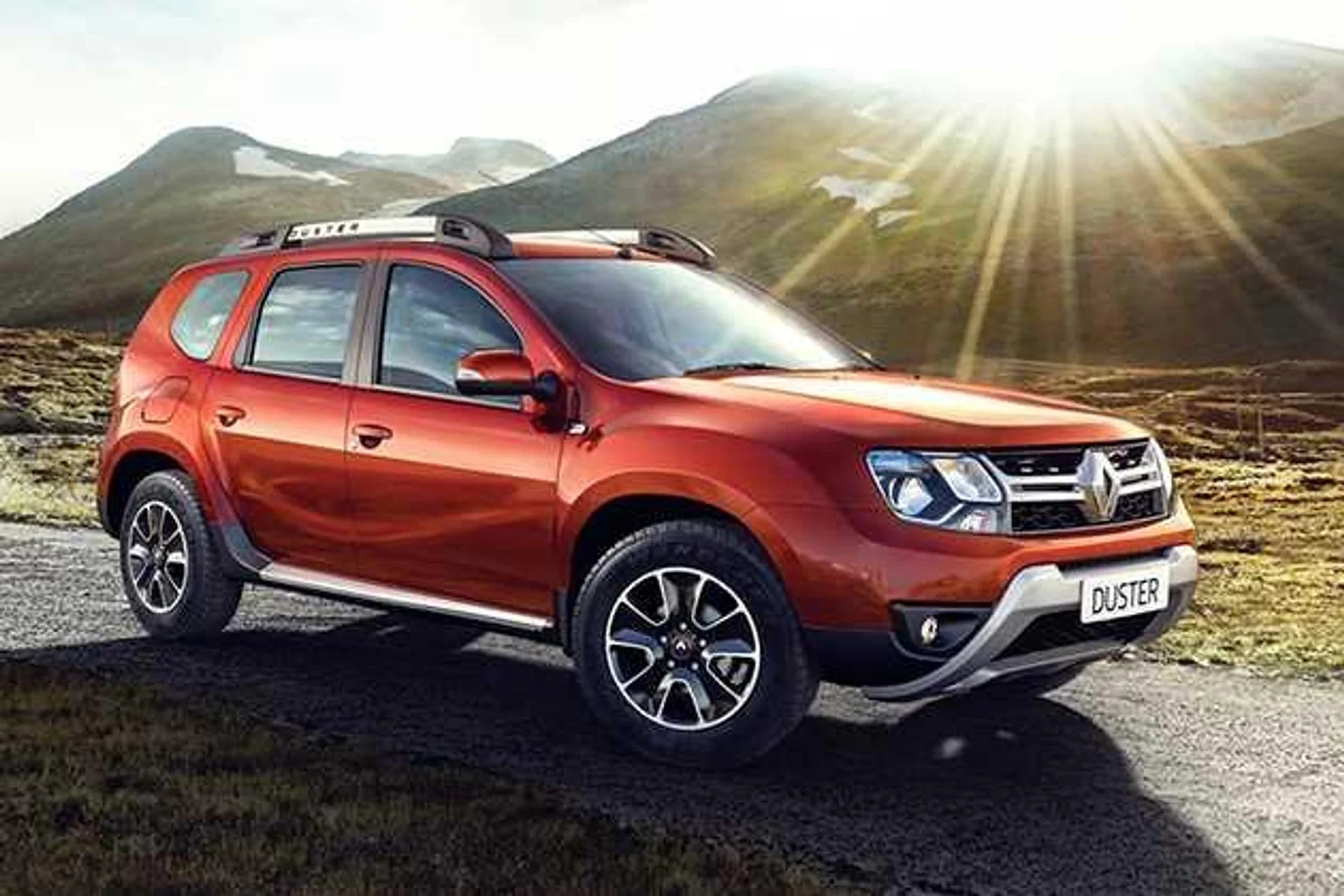
The Duster's 160 PS 1.3L turbo, co-developed with Mercedes-Benz according to Gagan Choudhary, delivers effortless overtaking muscle that the Kushaq's 115 PS 1.0 TSI simply cannot match. Faisal Khan called the Duster 'the new segment benchmark' for ride and handling, and on an undulating highway it absorbs ground imperfections while staying composed. The Kushaq is pleasant at speed but runs out of breath when you need a confident burst past a truck.
The Duster's 212 mm ground clearance, segment-leading ride quality score, and confident chassis tune make it the natural choice when roads stop being roads. The Kushaq is no weakling on broken surfaces, but its ride is tuned more for comfort on average tarmac than for absorbing sharp rural punishment. Buyers who regularly visit hill stations or venture onto unpaved tracks will feel the difference within the first kilometre.
V3Cars flags that only the Kushaq's ₹10.69 lakh Classic Plus is genuinely value-for-money, with higher trims feeling overpriced and still missing ADAS and a 360-degree camera. The Duster carries a stronger value-for-money score at 7.5 versus the Kushaq's 6.5 and packs a more powerful engine across the range. Buyers who intend to buy a mid or top trim should do the per-feature arithmetic carefully before assuming the Skoda badge justifies the premium.
Scores shown inline. "Best for" tells you who each result matters to.
| Axis | Skoda Kushaq | Renault Duster | Best for |
|---|---|---|---|
Design |
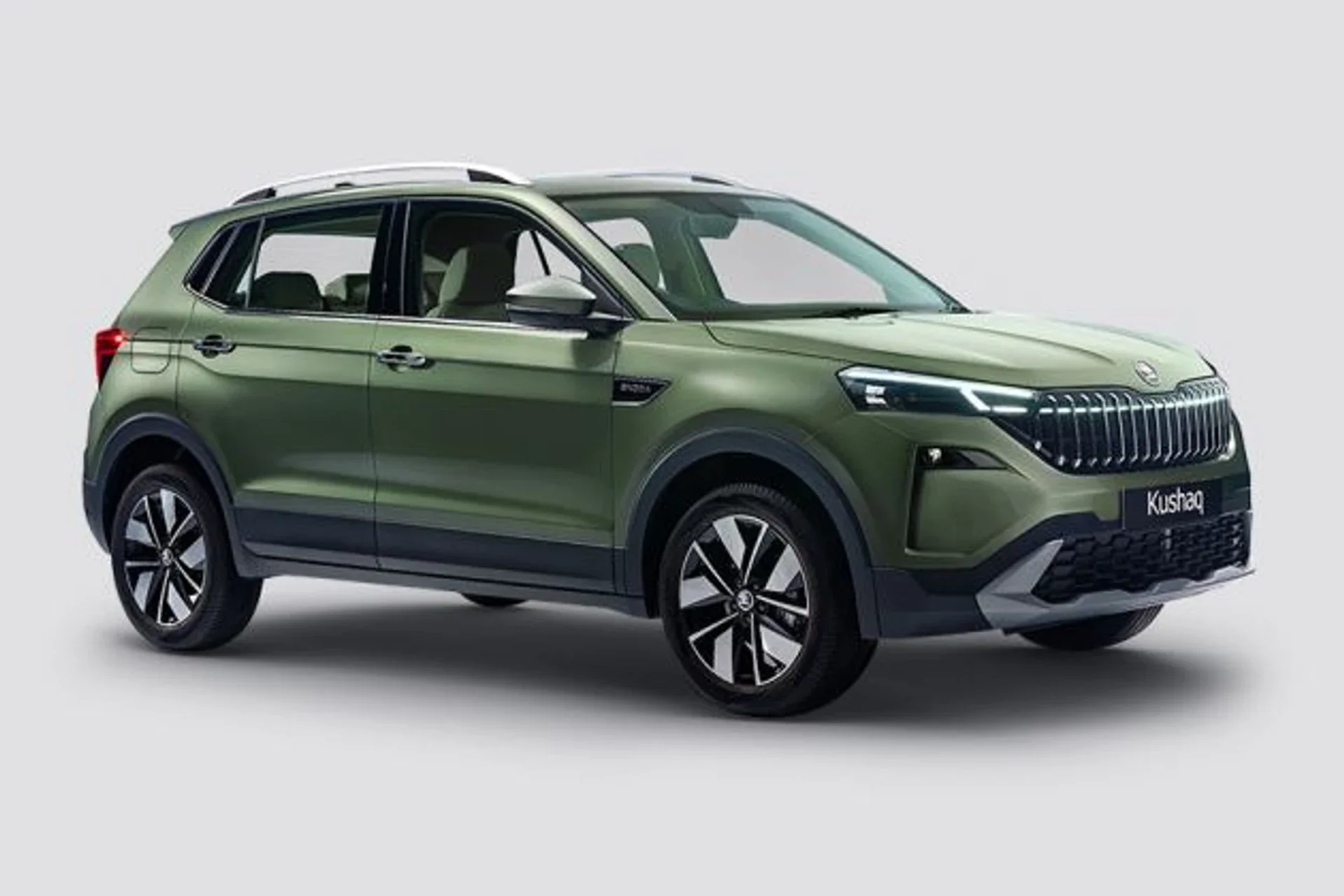
The Kushaq facelift is evolutionary. Faisal Khan noted a new grille with vertical chrome ribs, a connected LED DRL strip, new LED fog lamps replacing earlier halogens, and revised bumpers, while the bonnet and sheet metal carry over unchanged. It is a sharper, cleaner look rather than a bold new statement. 7.5 / 10 |
V3Cars describes the Duster as muscular with 212 mm ground clearance, 18-inch alloys, and thick cladding front and rear. Faisal Khan notes the Renault logo is absent at the front; the Duster badge sits on the grille itself, with full LED lighting and connected LED tail lamps. It reads as a proper SUV from every angle. 8.0 / 10 |
Buyers wanting SUV presenceDuster commands more visual authority at the kerb
|
Interior |
The Kushaq carries over its dashboard architecture with new trim detailing, a 10.25-inch digital cluster, a 10.1-inch touchscreen with wireless Android Auto and Apple CarPlay, and Google Gemini AI integration. MotorOctane highlights six-way power-adjustable front seats with ventilation on top variants, plus the new rear-seat massage feature. 7.5 / 10 |
V3Cars rates the Duster cabin second only to the Seltos in this segment, citing soft leather trim, ambient lighting, and a driver-tilted infotainment setup that creates a cockpit feel. Faisal Khan highlights 48-colour ambient lighting, dual-zone climate control, panoramic sunroof, and Google Built-in with Chrome, Assistant, Maps, and Play Store. 7.5 / 10 |
Driver-focused buyersDuster's cockpit orientation rewards the person behind the wheel
|
Performance |
The Kushaq's 1.0 TSI produces 115 PS and now pairs with the segment-first 8-speed Aisin torque converter, which reviewers are near-unanimous transforms its refinement and in-gear smoothness. It is an accomplished urban performer but modest on the highway when real passing power is needed. 8.0 / 10 |
The Duster's 1.3L turbo produces 160 PS, co-developed with Mercedes-Benz according to Gagan Choudhary, and is the most powerful engine in this segment. Paired with a wet-clutch DCT or 6-speed manual, it delivers genuine urgency on open roads that the Kushaq cannot replicate. 7.5 / 10 |
Enthusiast driversDuster's 160 PS engine is in a different league on open roads
|
Ride Quality |
The Kushaq scores 8.0 for ride quality and handles average urban and highway tarmac with composure. Its suspension tune prioritises everyday comfort and the car feels planted at speed, though sharp rural imperfections can filter through more than in the Duster. 8.0 / 10 |
Faisal Khan called the Duster the new segment benchmark for ride and handling, a verdict the 9.0 jury score reflects. With 212 mm ground clearance and a chassis tuned for varied Indian road surfaces, it absorbs broken tarmac, speed bumps, and undulations with genuine authority. 9.0 / 10 |
Rural and mixed-road usersDuster's ride benchmark status is the clearest gap between these two cars
|
Build Quality |
The Kushaq's European-origin MQB A0 IN platform delivers a tight, well-screwed-together feel that reviewers consistently praise. Panel gaps are consistent, the doors shut with a reassuring thud, and the overall structure feels solid for the price point. 8.0 / 10 |
The Duster also scores 8.0 for build quality, with V3Cars and Faisal Khan both noting robust panel cladding and a construction that feels purposeful rather than merely premium. The monocoque platform does not compromise on solidity despite the rugged exterior. 8.0 / 10 |
Quality-conscious buyersBoth score identically on build quality; the Kushaq feels European-precise, the Duster feels ruggedly solid
|
Value for Money |
V3Cars flags that only the ₹10.69 lakh Classic Plus is genuinely value-for-money on the Kushaq range. Higher trims are overpriced and still omit ADAS and a 360-degree camera, which competitors offer. The Kushaq scores 6.5 here, the lowest dimension in its jury assessment. 6.5 / 10 |
The Duster scores 7.5 for value, backed by a 160 PS engine, segment-benchmark ride, premium cabin, and a nameplate returning with clear intent. Buyers get meaningfully more performance and ride capability per rupee compared to the Kushaq's mid and upper trims. 7.5 / 10 |
Budget-aware buyersDuster delivers more usable capability per rupee across most of its range
|
Practicality |
The Kushaq's 2.65 m wheelbase was once segment-best but Faisal Khan notes it now trails newer rivals. Rear-seat space is adequate for two adults on shorter trips. The rear-seat massage feature adds comfort on long journeys even if legroom is not class-leading. |
The Duster's rear bench is described by reviewers as tight, and with a focus on driver experience over passenger accommodation, it is the less practical choice for families who regularly carry three adults in the back. Boot space and ground clearance compensate for buyers who load luggage over passengers. |
Families with rear passengersKushaq's rear seat is more accommodating for regular adult passengers
|
The Kushaq scores 7.6/10 and the Duster 8.4/10, from 8 independent creators. The overall number is only part of the story here: the dimension breakdown is where the real comparison lives.
Ask CarGuru: गड़बड़ तो दोनों ने कर दी 🔥 DUSTER vs KUSHAQ Podcast 🔥 Ask CARGURU