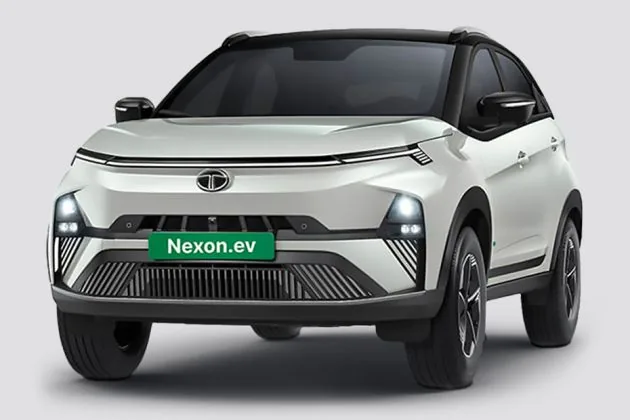
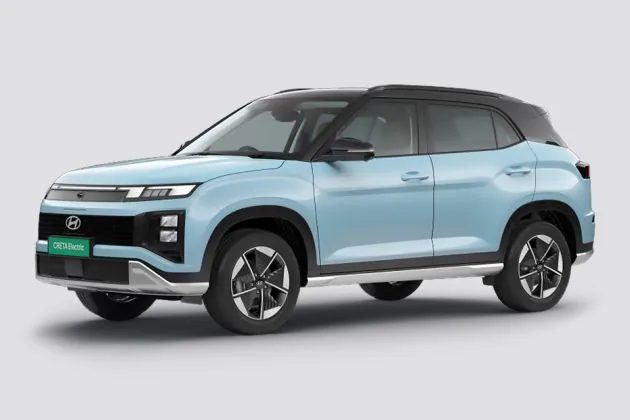
Hyundai Creta Electric vs
Tata Nexon EV
Premium ownership ecosystem versus accessible electric value: two very different promises at similar prices.
Most buyers decide here. Read this before anything else.
- You clock 400+ km highway runs regularly and cannot afford range anxiety to become a ritual.
- You want ADAS features like lane-keep assist and adaptive cruise on your daily commute and treat them as non-negotiable.
- You live in a city with variable charging infrastructure and need Hyundai's in-car payment network covering 10,000+ stations to stay sane.
- You have a young family and want the reassurance of a brand with a dense service network and proven EV reliability.
- You value a quieter, more composed cabin feel and prefer the car to stay invisible rather than attract attention.
- You are upgrading from a petrol Creta and want the transition to feel familiar, not like learning a new language.
- You are buying your first EV and the lower starting price of Rs 14.49 lakh makes the leap psychologically easier.
- You want maximum in-cabin entertainment and the 12.3-inch Arcade.EV screen with Netflix and YouTube genuinely matters to your family.
- You have a house with a home charger and the 7.2 kW AC charger bundled as standard means your car is always topped up by morning.
- You prioritise a bold, street-presence design and want younger onlookers to notice the tri-arrow signature and light bar.
- You occasionally need to power devices or appliances during camping trips and V2V capability adds real utility to your weekends.
- You are buying on a tighter budget and want every rupee to translate into features rather than brand premium.
The Creta Electric scores 7.3/10, the Nexon EV 7.8/10. In real life, they are built for different people.
The Creta Electric's 51.4 kWh pack claims 473 km ARAI and charges to 80% in around 35 minutes on a fast charger. The Nexon EV claims 465 km but takes closer to 56 minutes to hit 80% on DC. Faisal Khan noted the Creta's faster charging cadence makes it the more relaxed companion on a proper road trip.
The Nexon EV starts at Rs 14.49 lakh and bundles a 7.2 kW AC charger, six airbags, a 12.3-inch screen, and V2L as standard. The Creta Electric's equivalent equipment sits at a noticeably higher price point. V3Cars rates the Nexon EV's value proposition as one of the strongest in the segment for buyers who do not need the longer range.
Both cars handle a 60-80 km daily urban cycle without stress. The Nexon EV's bundled 7.2 kW AC charger charges its 40.5 kWh pack fully in under six hours, fitting neatly into a sleep cycle. The Creta Electric's larger pack takes longer on AC, though it offers more buffer on days when charging is delayed.
Hyundai's service network density, established EV platform, and battery warranty give the Creta Electric a structural resale advantage in most Indian cities. Mudit Bhambri pointed to Hyundai's ownership ecosystem as a key differentiator for buyers thinking beyond the first three years. Tata has improved significantly, but Hyundai's head start in EV after-sales remains a tangible edge.
Scores shown inline. "Best for" tells you who each result matters to.
| Axis | Hyundai Creta Electric | Tata Nexon EV | Best for |
|---|---|---|---|
Design |
The Creta Electric carries 32 changes over the standard Creta: a closed grille with active air flaps, pixel-pattern bumper, and connected tail lamps. Nikhil Rana called the overall look 'futuristic yet familiar,' which suits buyers who want presence without provocation. The aero 17-inch alloys complete the evolved, premium silhouette. 7.5 / 10 |
The Nexon EV facelift introduces a full-width connected LED light bar front and rear that doubles as a charging-status indicator, glowing progressively as the battery fills. V3Cars highlighted the tri-arrow signature and dual-tone body as standout elements that earn attention on city streets. It reads younger and more aggressive than the Creta. 8.0 / 10 |
Style-forward young buyersNexon's light bar and tri-arrow design generate stronger kerb presence
|
Interior |
The Creta Electric's cabin gets a free-floating centre console, NFC tap-to-start, cooled armrest storage, and dual 10.25-inch screens. Mudit Bhambri praised the shift-by-wire column selector and flat-bottom steering as genuine EV-specific upgrades rather than cosmetic changes. Touch-sensitive climate controls drew criticism for usability while driving. 8.0 / 10 |
The Nexon EV Empowered variant brings a blue-and-black leather-like interior, a 12.3-inch Arcade.EV screen running Netflix and YouTube, and a flat-bottom steering wheel. Gagan noted the larger screen is a meaningful step up from rivals and the Jio Wi-Fi dongle integration is practical for families. Storage and rear space remain slightly tighter than the Creta. 7.5 / 10 |
Tech-hungry familiesCreta's layout is more refined; Nexon's larger screen wins for entertainment
|
Performance |
The long-range Creta Electric produces 171 PS and 255 Nm, claiming 0-100 km/h in 7.9 seconds. Faisal Khan recorded 7.5 seconds on a slight downhill, with wheelspin limiting harder FWD launches. Four paddle-adjustable regen levels add driver involvement. It is the fastest Creta ever made, and that margin is genuinely felt. 8.0 / 10 |
The Nexon EV's Gen-2 motor produces 145 PS and 250 Nm, achieving 0-100 km/h in 8.9 seconds. The 20 kg lighter motor contributes to improved efficiency rather than outright pace. Car Blogger noted Sport mode sharpens throttle response meaningfully, and the 150 km/h top speed is sufficient for all legal Indian highway use. 7.5 / 10 |
Enthusiast daily driversCreta Electric's power advantage is consistent and measurable
|
Ride Quality |
The Creta Electric rides on 215/60 R17 low-rolling-resistance tyres and carries a composed, planted character across highway surfaces. V3Cars noted the suspension tune prioritises stability over softness, which means sharper urban potholes do register in the cabin. Refinement at speed is a consistent highlight across reviewer impressions. 7.0 / 10 |
The Nexon EV's ride is described as stiff at low speeds, particularly over broken urban surfaces. Gagan flagged that the facelift has not resolved this completely. At higher highway speeds the ride settles and becomes more composed, making it better suited to buyers whose primary route is a smoother highway corridor. 7.5 / 10 |
Mixed urban-highway usersCreta handles a wider variety of road surfaces with less compromise
|
Build Quality |
The Creta Electric carries Hyundai's trademark panel consistency and solid shut-line quality. Faisal Khan rated the overall fit and finish as among the best in the segment, noting the cabin materials feel durable rather than merely premium to the touch. No structural concerns have surfaced across long-term reviewer impressions. 8.0 / 10 |
The 2025 Nexon EV facelift adds six airbags and reinforced side structure, addressing a previous safety gap. However, panel-gap niggles noted by Car Blogger remain a visible reminder that Tata's assembly precision still lags Hyundai's. The reinforced structure is a genuine safety improvement, but surface-level build quality scores lower. 7.0 / 10 |
Buyers prioritising long-term solidityHyundai's panel consistency and material quality remain class benchmarks
|
Value for Money |
The Creta Electric justifies its premium through faster charging, stronger range, ADAS, and a denser ownership network. V3Cars noted that the feature-to-price equation is competitive rather than obvious value, meaning buyers pay for the ecosystem as much as the hardware. For buyers who use those features daily, the premium makes sense. 7.5 / 10 |
The Nexon EV starts at Rs 14.49 lakh and bundles a 7.2 kW AC charger, six airbags, V2L, V2V, and a 12.3-inch screen in a single package. Gagan called it the most feature-complete mass-market EV for the money. Buyers who do not need 473 km of range or ADAS will find the Nexon's value case difficult to argue against. 8.0 / 10 |
First-time EV buyersNexon delivers more hardware per rupee at every price point
|
Charging and Range |
The Creta Electric's 51.4 kWh pack claims 473 km ARAI and charges to 80% in approximately 35 minutes via DC fast charging. Hyundai's in-car payment for 10,000+ stations removes the friction of third-party apps. Faisal Khan identified this integrated network access as the Creta's single most practical daily advantage. |
The Nexon EV claims 465 km ARAI on its 40.5 kWh pack and includes V2V capability, a genuine differentiator for buyers who camp or want peer-to-peer charging. The bundled 7.2 kW AC charger is faster than what most rivals include as standard. DC charging to 80% takes around 56 minutes, which is acceptable but trails the Creta. |
Highway-frequent travellersCreta's faster DC charging and network integration reduce real-world range anxiety
|
The Creta Electric scores 7.3/10 and the Nexon EV 7.8/10, from 7 independent creators. The overall number is only part of the story here: the dimension breakdown is where the real comparison lives.
Adventure creation: nexon EV vs creta electric suv खरीदने से पहले इस वीडियो को जरूर देखे। फीचर्स, रेंज, कीमत सबकुछ