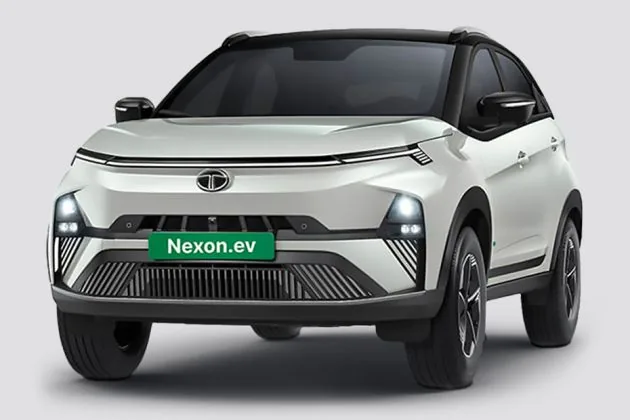
Tata Nexon EV vs
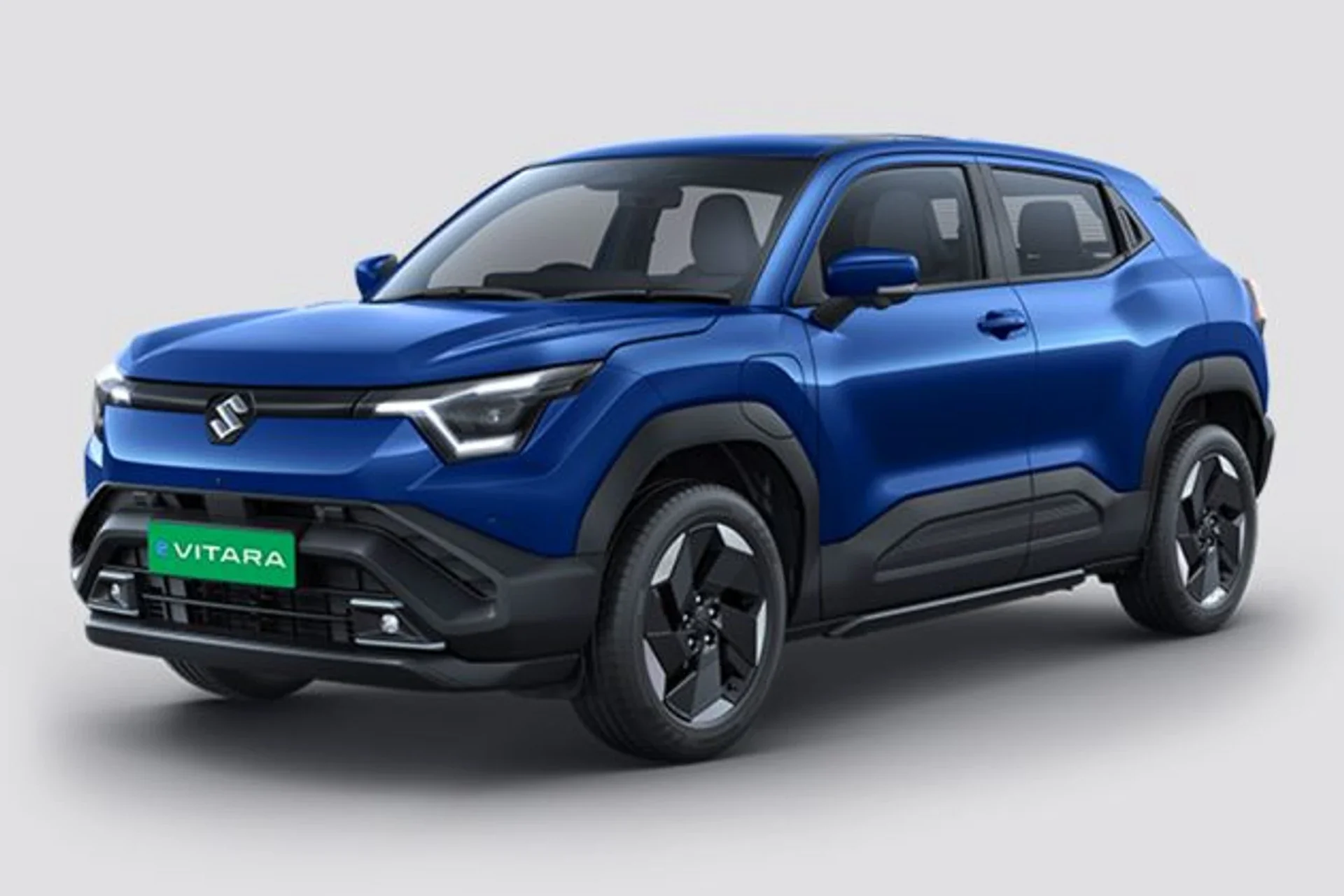
Maruti Suzuki e Vitara
A proven electric workhorse versus Maruti's ambitious but unfinished first EV bet.
Most buyers decide here. Read this before anything else.
- You charge at home overnight and want the longest possible ARAI-claimed range in this budget, without paying Creta Electric prices.
- You are a tech-forward buyer who actually uses in-car streaming and wants Netflix or YouTube working on your commute via the bundled Jio dongle.
- You live in a city with frequent power cuts and see V2L capability as a genuine household backup, not just a spec-sheet talking point.
- You have owned an EV before and understand real-world range; you want paddle-shift regen and Sport mode for occasional expressway drives.
- You are buying for a family of four and need a boot that fits a full week of groceries alongside a stroller without compromise.
- You prioritise a brand with an established EV service network across tier-2 cities where Maruti's EV infrastructure is still untested.
- You are a lifelong Maruti loyalist who trusts the brand's service reach above everything else and is willing to wait for EV-specific dealer training to mature.
- You do shorter daily runs and want the peace of mind that comes with an LFP battery chemistry, which degrades less under frequent top-up charging.
- You prioritise a cleaner, more cohesive exterior design and want your car to look distinctly modern rather than aggressively styled.
- You value NCAP safety ratings as a deciding factor and the e Vitara's 5-star Bharat NCAP result genuinely moves the needle for you.
- You are buying the 61 kWh variant and want the extra power headroom of 174 PS for confident highway overtaking on longer intercity routes.
- You are a single professional or couple without rear-passenger or boot-space demands, so the cramped rear headroom and 238-litre boot simply do not affect your use case.
The Nexon EV scores 7.8/10, the Suzuki e Vitara 6.3/10. In real life, they are built for different people.
The Nexon EV's 40.5 kWh battery and 465 km ARAI claim give it a meaningful buffer for a 200 km highway run with a single charge stop. The e Vitara's 61 kWh pack is larger on paper, but real-world highway efficiency data is still scarce given its recent launch. V3Cars rates the Nexon's long-range variant as the most capable option in its price band for exactly this use case.
Both cars support AC home charging, but the Nexon EV bundles a 7.2 kW AC charger as standard, meaning faster overnight top-ups without an additional purchase. The e Vitara's charging hardware details at the base Delta variant level remain less clearly communicated by Maruti at this stage. CAR SPAR noted in their head-to-head that the Nexon's base Creative 45 variant already comes with more bundled hardware than the e Vitara Delta at a lower price point.
The e Vitara's LFP battery chemistry handles frequent partial charges without the degradation concern that comes with NMC packs, making it a strong candidate for stop-start urban use. The Nexon EV's four regen levels via paddle shifters give the driver more control in slow traffic, which Gagan Choudhary highlighted as a genuinely useful city feature. For pure urban efficiency, this is a close call that comes down to battery chemistry preference.
The Nexon EV carries the single strongest resale argument in this segment: it is India's highest-volume mass-market EV with an established used-car ecosystem. The e Vitara is a first-generation product from a brand with zero prior EV resale history in India, which introduces genuine uncertainty at the four-year mark. Buyers who factor resale into their total cost of ownership calculation should weight this heavily.
Scores shown inline. "Best for" tells you who each result matters to.
| Axis | Tata Nexon EV | Maruti Suzuki e Vitara | Best for |
|---|---|---|---|
Design |
The Nexon EV facelift's full-width connected LED light bar doubles as a charging-status indicator, a genuinely clever functional design detail. Car Blogger noted the EV-specific air curtains and low-rolling-resistance alloys give it a purposeful rather than merely cosmetic differentiation. It is a busy design that rewards close inspection. 8.0 / 10 |
Faisal Khan rated the e Vitara among the best-looking cars Maruti has ever produced, praising its Y-shaped DRLs, hidden rear door handles, and cohesive SUV stance. The cleaner surfacing and less aggressive detailing give it broader kerb appeal. It looks more expensive than its likely price. 7.5 / 10 |
Style-conscious city buyerse Vitara's cleaner design ages better and reads more premium from the kerb
|
Interior |
The Empowered variant's 12.3-inch Arcade.EV touchscreen with built-in streaming apps and a flat-bottom steering wheel lift the cabin meaningfully. Soft-touch upper dashboard and piano-black accents add a premium feel, though ergonomic quirks and some hard plastics in the lower half remain. Gagan flagged that the larger screen alone justifies the facelift upgrade for tech users. 7.5 / 10 |
The e Vitara's cabin is the most premium Maruti has ever built on paper: dual-tone soft-touch surfaces, ventilated front seats, a panoramic roof, and 12-colour ambient lighting. Yet basic functions like seat ventilation are buried in touchscreen menus, which multiple reviewers including Amit Khare found genuinely frustrating in daily use. The hardware quality is there; the ergonomic logic is not. 6.5 / 10 |
Daily driver ease of useNexon's physical controls and logical menu structure win in stop-start city traffic
|
Performance |
The new Gen-2 motor is 20 kg lighter and pushes the Nexon EV from 0-100 km/h in 8.9 seconds despite producing 38 Nm less torque than before. Top speed rises to 150 km/h. V3Cars confirmed the Sport mode delivers a noticeably sharper throttle response that makes urban overtaking genuinely satisfying. 7.5 / 10 |
The 61 kWh e Vitara hits 0-100 km/h in 8.7 seconds, fractionally quicker than the Nexon EV on paper. However, Faisal Khan noted the delivery is smooth and linear rather than punchy, which suits relaxed cruising more than spirited driving. The 49 kWh variant at 9.6 seconds feels adequate rather than eager. 7.0 / 10 |
Drivers who enjoy the throttleNexon's Sport mode sharpness and regen paddles create a more involving drive
|
Ride Quality |
The Nexon EV absorbs broken tarmac and broken highways reasonably well at speed, but its low-speed ride over sharp edges and speed breakers remains noticeably stiff. This is a known trait across the Nexon platform. Car Blogger rated it acceptable for city use but noted it does not coddle passengers the way a premium SUV would. 7.5 / 10 |
The e Vitara's new dedicated EV platform allows for a more considered suspension tune, and early drive impressions suggest a more settled, composed ride quality at all speeds. The larger 2,700 mm wheelbase also helps absorb urban road imperfections with less vertical motion. Gagan Choudhary described the ride as one of the e Vitara's clearest strengths. 7.0 / 10 |
Families on mixed roadse Vitara's longer wheelbase and platform-fresh tune deliver more consistent comfort
|
Build Quality |
The 2025 facelift brings a reinforced side structure and six airbags as standard, which strengthens the safety case. Panel-gap inconsistencies remain a recurring criticism from reviewers and represent an unresolved issue for a car in its fourth model year. V3Cars scored it competent but not class-leading on fit and finish. 7.0 / 10 |
The e Vitara carries a 5-star Bharat NCAP rating, the strongest safety credential in this comparison. Panel consistency appears tighter based on first-drive assessments, though long-term durability data does not yet exist for this platform. Amit Khare noted that the body shell feels solid and rattle-free even on rough surfaces. 7.0 / 10 |
Safety-first familiese Vitara's 5-star NCAP score is the decisive credential for buyers prioritising occupant protection
|
Value for Money |
At ₹13.99 lakh for the base Creative 45 variant, the Nexon EV bundles a 7.2 kW AC charger, six airbags, and V2L capability at a price the e Vitara Delta cannot match. CAR SPAR's direct comparison confirmed a ₹2 lakh gap between base variants, with the Nexon offering more hardware at the lower price. The long-range variant at ₹14.49 lakh stretches that value case further. 8.0 / 10 |
The e Vitara Delta opens at ₹15.99 lakh, which is a harder ask without confirmed feature parity on charging hardware. The 61 kWh variant's LFP battery and larger pack do justify a premium for buyers who plan to keep the car long-term. Until Maruti clarifies full variant pricing and charging bundle details, the value equation remains genuinely incomplete. 6.5 / 10 |
Budget-conscious first EV buyersNexon delivers more bundled hardware per rupee at every comparable variant level
|
Real-World Range |
The 40.5 kWh long-range Nexon EV claims 465 km ARAI, with real-world figures typically landing between 300 and 350 km in mixed driving. The V2L and V2V capability adds a layer of utility that pure range numbers do not capture. Gagan confirmed the range holds well on expressways at 100 km/h with climate control running. |
The 61 kWh e Vitara's larger LFP pack should deliver stronger real-world range, though independent long-distance test data is still limited. LFP chemistry means less range anxiety around charging to 100 percent daily, a practical advantage for owners who skip overnight full charges. The 49 kWh variant is the less compelling choice if range is the primary concern. |
Long-distance EV commuterse Vitara's 61 kWh LFP pack offers more capacity and battery-longevity confidence for high-mileage users
|
The Nexon EV scores 7.8/10 and the Suzuki e Vitara 6.3/10, from 6 independent creators. The overall number is only part of the story here: the dimension breakdown is where the real comparison lives.
CAR SPAR: Maruti E Vitara Delta vs Tata Nexon EV Creative 45 ✅ Both are Awesome but should buy ?