 Image: Nissan press kit
A genuinely refined, comfortable Japanese SUV undone by missing segment-essential features and CBU pricing that will likely overshoot rivals.
The fourth-gen Nissan X-Trail arrives in India as a CBU import with a world-first variable compression turbo petrol, 20-inch wheels and a five-star Euro NCAP rating. It drives beautifully and feels solidly built, but skips ADAS, leather, ventilated seats and a powered tailgate at a price expected near Rs 35-40 lakh on-road.
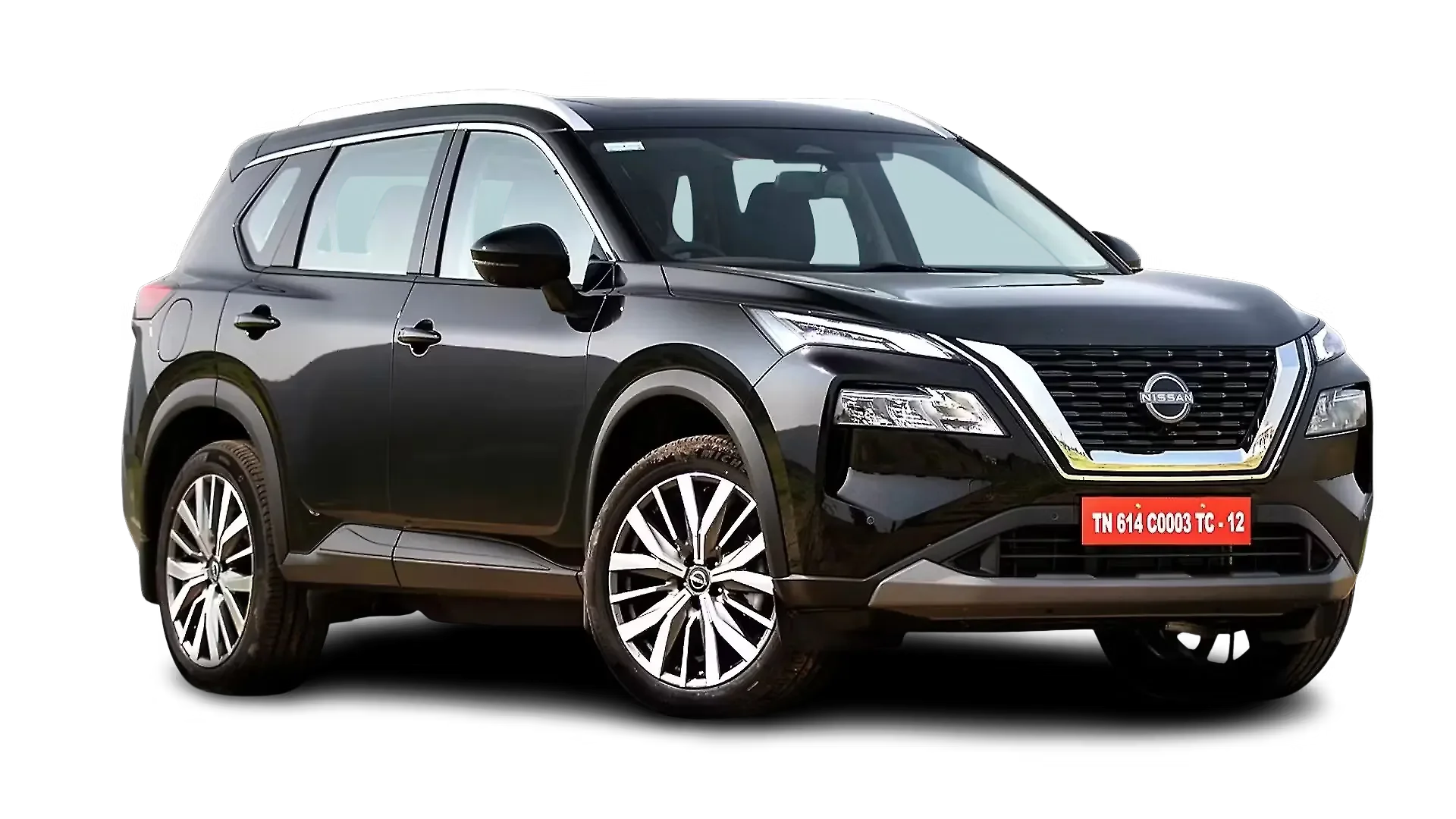
The X-Trail looks contemporary rather than aggressive, with a prominent Nissan V-motion grille, split LED headlamp setup with DRLs on top and projectors below, and clean boomerang LED tail lamps. At 4.68 metres long with a 210 mm ground clearance, it sits close to a Tata Harrier in footprint. The 20-inch diamond-cut alloys wrapped in 255/45 Michelin Primacy rubber are the largest in segment, something MotorOctane points out you usually see only on Rs 50-60 lakh cars. Roof rails, shark-fin antenna, a sizeable spoiler and a capless fuel filler add polish. The design reads urban-premium rather than rugged, closer to a Kushaq or Tiguan in attitude than the more imposing Safari or XUV700.
Inside, the cabin is driver-focused with a floating centre console, butterfly-opening gear selector, dual-zone climate with physical controls, wireless charging and a 12.3-inch digital instrument cluster with Kirico glass-textured backgrounds. Fit-finish and material quality are genuinely good. The problem is what is missing: the India-spec gets only an 8-inch touchscreen with a dated interface, fabric upholstery instead of leather, no ventilated seats, no head-up display and no panoramic sunroof on the variant shown. Front and middle-row space is generous with good headroom, knee room and a near-flat floor. The third row, as Faisal Khan notes, is effectively unusable with the second row pushed back; treat it as occasional child seating or extra boot.
This is where the CBU origin pays off. Panel gaps, door thunk, switch action and the quality of plastics on the upper dashboard and door pads feel a clear step above India-assembled rivals in the segment. The exhaust note is muted, idle vibration is essentially absent thanks to the mild-hybrid system, and NVH at highway speeds is among the best in class. Safety credentials are strong: seven airbags, VDC, traction control, hill-start assist, auto hold, TPMS, hydraulic brake assist, and a five-star rating from both Euro NCAP and ANCAP. The big omission, flagged by every reviewer, is the absence of a proper ADAS suite; only a basic forward collision warning is included, with no autonomous braking, lane keep or adaptive cruise.
The headline act is Nissan's world-first variable compression turbo: a 1.5-litre three-cylinder petrol that shifts between 8:1 for power and 14:1 for efficiency, paired to a third-gen Xtronic CVT with D-Step logic and a 12V mild-hybrid system. Output is 163 bhp and 300 Nm. On the Delhi-Mumbai Expressway the engine feels refined, quick to respond and entirely happy at triple-digit speeds, with insulation strong enough to mask just how fast you are travelling. Three drive modes (Eco, Standard, Sport) and paddle shifters are included. Rivals like the XUV700 (200 bhp) and Kodiaq (190 bhp) make more on paper, but in the real world the X-Trail rarely feels short on shove.
Ride quality is tuned for highway comfort first. Independent strut front and multilink rear suspension with twin-tube dampers keep the car composed at speed, and body control is impressive for a 1,700 kg SUV. The trade-off is the 20-inch wheels: sharper bumps and expansion joints make their way into the cabin, and MotorBeam suggests adjusting tyre pressures helps. The steering is light, easy at parking speeds but stays predictable on the highway, though it could weight up more in Sport. Body roll exists but is well checked. A 5.5-metre turning radius and 210 mm ground clearance make it usable in Indian conditions, and the brake-actuated limited-slip differential adds a layer of stability on broken surfaces.
Value is where the X-Trail stumbles. As a Japan-built CBU it carries import duties, and on-road pricing is expected between Rs 35 lakh and Rs 45 lakh depending on state. At that money, buyers cross-shop the Skoda Kodiaq, Jeep Meridian, Hyundai Tucson, Toyota Innova Hycross and even fully loaded variants of the Tata Harrier, MG Hector and Mahindra XUV700, all of which offer richer feature lists, ADAS, leather and stronger dealer networks. Nissan currently sells just one car in India, and parts availability for a CBU model is a legitimate ownership concern. The 3-year/1 lakh km warranty with prepaid maintenance up to five years and three years of roadside assistance softens the blow.
"Drives beautifully and the engine genuinely surprises; worth a test drive if budget is above Rs 35 lakh."
"A no-nonsense, properly engineered Japanese SUV for hardcore Nissan fans willing to overlook missing features."
"Comfortable and refined, but too many segment-essential features missing for the expected Rs 45-50 lakh on-road price."
"Solid fit-finish and a powerful VC-Turbo, but missing ADAS, powered tailgate and spare wheel hurt at this price."