 Image: Tata Motors press kit
Commanding road presence, plush ride and a feature-loaded cabin make the Safari a compelling flagship, provided you can live with Tata's known electronics and service quirks.
The 2024 Tata Safari doubles down on what it has always done well: imposing road presence, a plush ride and a cabin loaded with feel-good tech. Built on the Land Rover-derived OMEGA Arc platform with 5-star Global and Bharat NCAP ratings, it now adds Level 2 ADAS, a larger touchscreen, ventilated seats all round and a camera-based IRVM. Reliability of electronics and service experience remain the asterisks alongside an impressive equipment list.
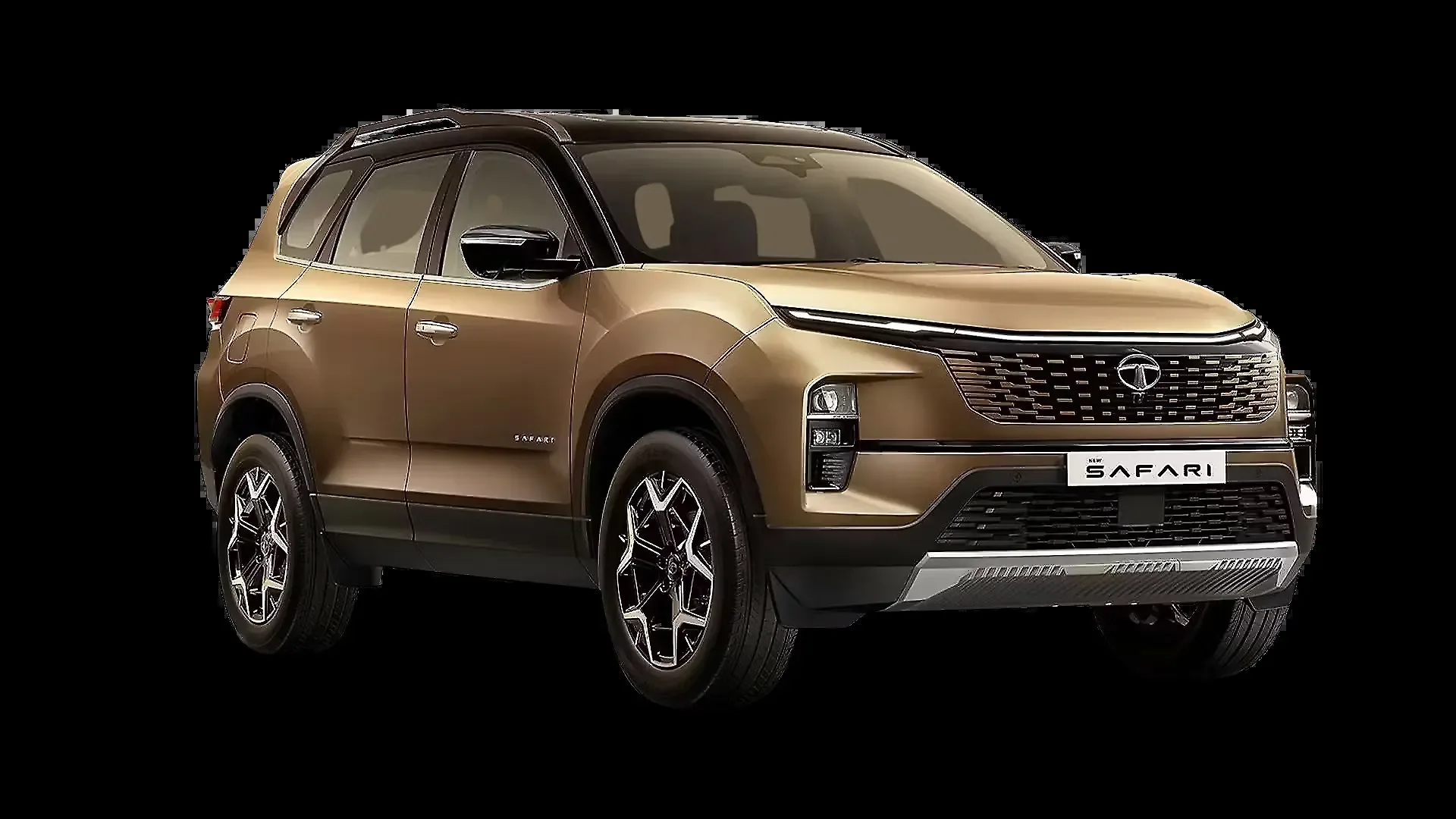
The second-generation Safari leans hard into flagship presence. At 4.66 metres long with a 2.71-metre wheelbase, it dwarfs most rivals, and the new face with connected LED DRLs, a black parametric grille and low-set projector headlamps gives it a clean, modern identity. CarWale notes how Tata has integrated the regulation-driven low headlamps neatly into the design rather than letting them disrupt the face. In profile, the stepped roof signature carries over, the flared arches with black cladding add SUV muscle, and the 19-inch alloys (first seen on the Sierra EV concept) lift the visual game considerably; 17 and 18-inch options exist on lower variants. The squared-off rear with the slim connected tail-lamps and large Safari lettering feels deliberate rather than decorative. Seven paint options, including the Stealth dark edition, give buyers room to express themselves. It is not a subtle car, but in a segment where buyers want to be seen, the Safari delivers presence by the kilo.
Inside, the Safari finally feels like a flagship. Twin 12.3-inch displays anchor the dashboard, with the new Samsung-sourced QLED touchscreen running wireless Apple CarPlay and Android Auto, Dolby Atmos, an Arcade store with Prime Video and YouTube, and Alexa-based home-to-car control. The 10-speaker JBL system is genuinely good, the panoramic sunroof is voice-controlled, and ventilated seats are now offered for both rows in the six-seat layout along with a boss mode for the left rear passenger. USB-C fast charging at up to 65W is available across all three rows, and a sliding front armrest has been added. The captain chairs are comfortable for long stints, and rear AC vents with independent fan control extend to the third row. The catch, as MotorOctane points out, is that quality is mixed: soft-touch surfaces on top, harder plastics lower down, panel gaps that catch the eye, and a touch-based climate panel without haptic feedback. The third row is strictly a two-seater with limited under-thigh support.
Underneath, the Safari is reassuringly solid. The OMEGA Arc steel platform underpins the Harrier and is related to the Land Rover D8, and crash performance backs that up with 5-star ratings from both Global NCAP and Bharat NCAP. Seven airbags, ESP with 77 functions, hill hold, hill descent, traction control and a Level 2 ADAS suite (now with intelligent speed assist) are standard on top trims. The new camera-based IRVM with built-in dashcam is a thoughtful touch, but as Gagan Choudhary documents in detail, it suffers from reflections, and the OEM mirror memory-sync logic does not always return to the set position after reverse, requiring a specific calibration ritual. Smaller electronic and ergonomic niggles, panel gaps, an inconsistent power seat, occasional screen reboots and reports of stuck horns, point to Tata's familiar Achilles heel. Owners on TeamBHP echo this: the hardware is sound, but software polish and dealer-level diagnosis still lag behind Korean and Japanese rivals.
The Safari continues with Tata's 2.0-litre Kryotec diesel producing 168 bhp and 350 Nm, paired with either a six-speed manual or a six-speed torque converter automatic; there is no AWD option, only front-wheel drive. The engine is torquey and effortless once rolling, making it a relaxed highway cruiser, but it is also the car's biggest mechanical weakness: the unit is audibly gruff at idle and under load, and tends to grow noisier with age. CarWale's verdict that it lacks the refinement of rivals' newer turbo-petrols is hard to argue with, especially when Hyundai, MG and Mahindra all offer petrol options in this class. Three drive modes (Eco, City, Sport) and three terrain modes (Normal, Rough, Wet) are on offer, along with paddle shifters that respond adequately rather than eagerly. Claimed efficiency is 14.8 kmpl for the automatic and around 16 kmpl for the manual; real-world figures hover between 11 and 14 kmpl depending on conditions.
Ride quality is where the Safari genuinely stands apart. The Land Rover-derived OMEGA Arc platform, roughly 205 mm of ground clearance and tall 245/55 R18 (or 19-inch) tyres let it ride flat over broken tarmac, expansion joints and warped concrete without sending shocks into the cabin. Speed breakers can largely be taken in stride, and Namaste Car highlights how the high seating position and clear visibility add to the sense of control. On 19-inch wheels there is a faint patter at low city speeds, which the 18-inch variant smooths out further. The new electric power steering is light and easier to manage in tight spaces than the old hydraulic unit, though it cannot fully disguise the car's 4.66-metre footprint; parking and narrow lanes still demand attention. Body control on the highway is composed, and NVH from the road and wind is well contained, though tyre and engine noise filter through more than in some German-engineered rivals.
Pricing for the diesel range starts around Rs 16.19 lakh and tops out near Rs 27.34 lakh ex-showroom, with a three-year/1 lakh km warranty and one year of complimentary iRA 2.0 connected services. For that, you get a genuinely large, 5-star-rated SUV with a feature list that reads like a luxury brochure. The catch lies in ownership: Tata service centres are often crowded, smaller niggles drive repeated visits, and resale values remain softer than the Hyundai Alcazar or segment benchmarks like the Mahindra XUV700 (see our Safari vs XUV700 comparison). Within the Tata stable, the smaller, lighter Tata Sierra now offers more modern engineering for less money in turbo-petrol form, while the Tata Harrier EV is the choice for buyers who want a cleaner, quieter flagship experience. If diesel torque, road presence and a loaded cabin matter most, the Safari still makes a strong case; just go in with eyes open about the after-sales experience.
TeamBHP's owner threads broadly mirror the editorial view: the Safari is praised for its plush ride, highway manners and equipment, but long-term posts repeatedly flag electronic gremlins, infotainment reboots and inconsistent service quality across cities. Owners who do their pre-delivery inspections thoroughly and stick with reliable dealers report the most satisfaction, while resale concerns and the absence of AWD remain common gripes in community discussions.
"Calls it a genuinely premium-feeling Tata flagship with strong road presence and a comfortable cabin, but flags the smallish Apple CarPlay window and average headlamp spread."
"Treats it as a spec-sheet champion: 5-star safety, Level 2 ADAS with 11 features, JBL audio and a panoramic sunroof make it one of the most feature-rich large SUVs at the price."
"Likes the road presence, ride and feature load, but is unsparing about reliability of electronics, the quirky camera IRVM and Tata's service reputation hurting resale."
"Rates the ride quality and design highly, but argues the gruff diesel-only line-up and no-AWD strategy leave money on the table in a segment where rivals offer turbo-petrols."