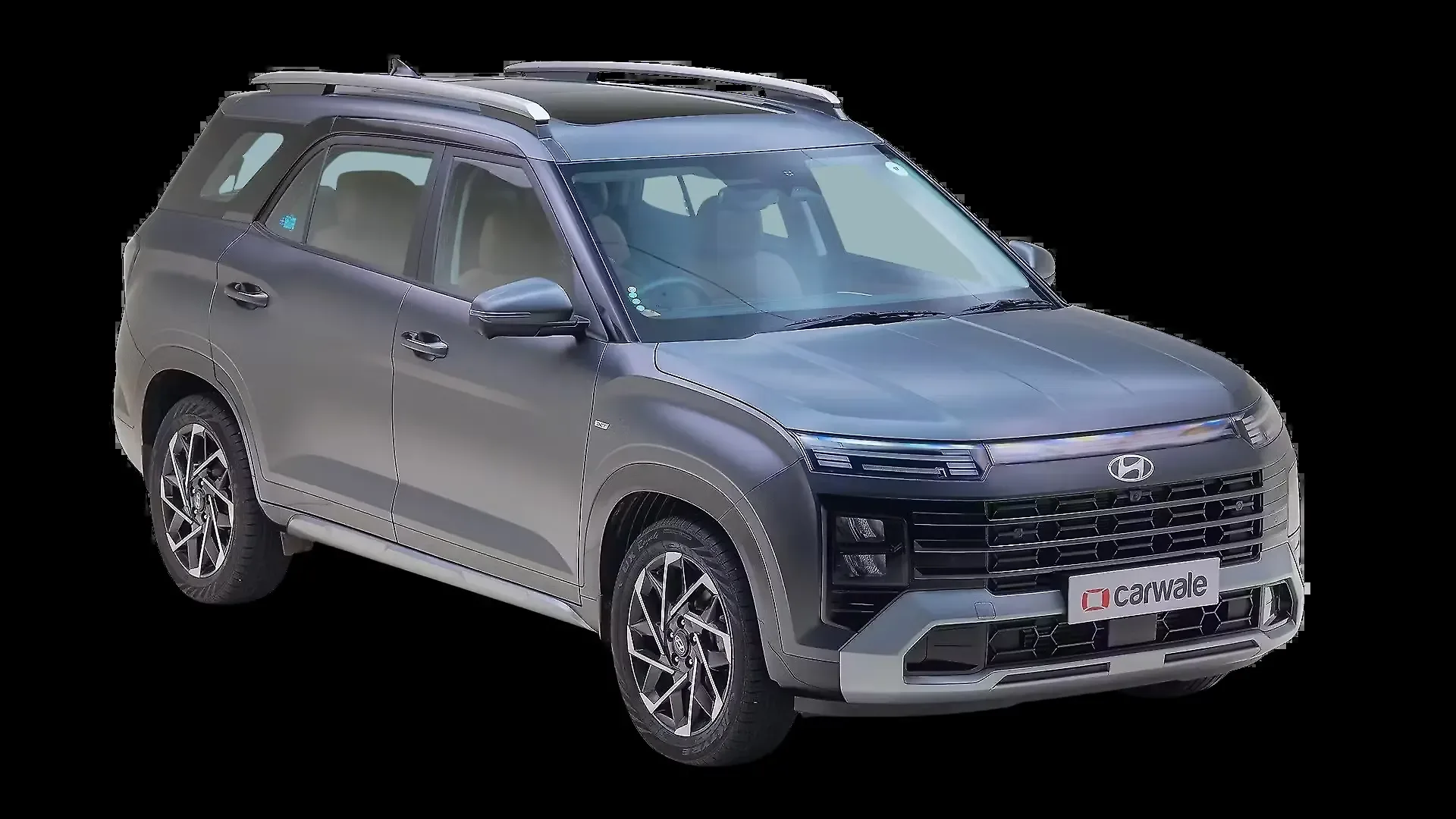
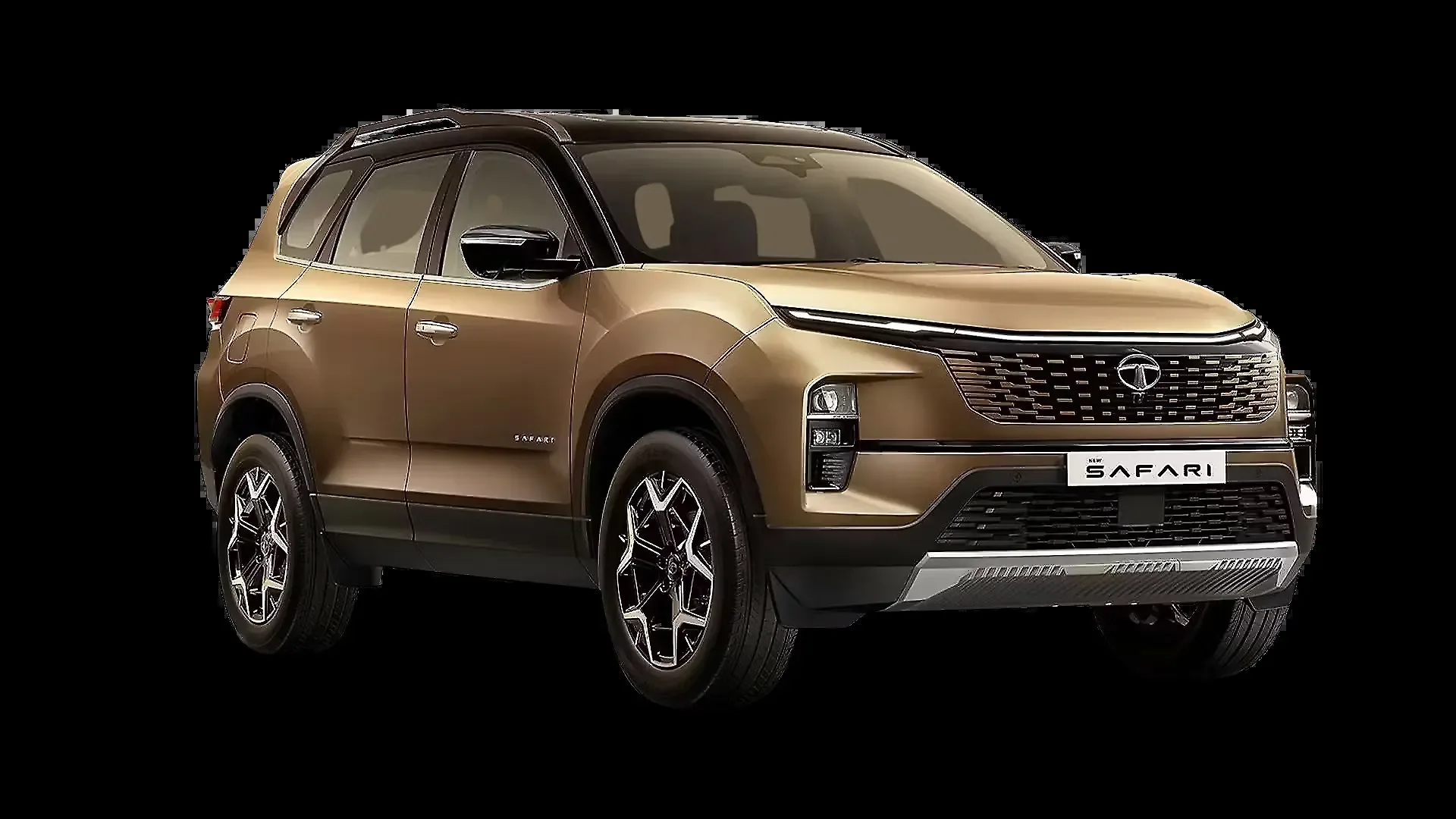
Tata Safari vs
Hyundai Alcazar
Safari brings genuine SUV mass and ride comfort; Alcazar brings a premium cabin in a tighter, more manageable footprint.
Most buyers decide here. Read this before anything else.
- You regularly carry the whole family including grandparents and need all three rows to feel genuinely usable on 300-km highway runs.
- You live on poorly maintained state highways and want a ride that absorbs broken tarmac without complaint, especially with a loaded cabin.
- You want your SUV to command the road visually and you feel more confident in a larger, heavier vehicle during overtakes and night driving.
- You are a safety-first buyer and the 5-star Global NCAP rating plus Level 2 ADAS suite gives you meaningful peace of mind.
- You do not need a petrol option and are happy with a diesel-only powertrain that delivers strong low-end torque for effortless long-distance cruising.
- You want the largest panoramic sunroof, the most immersive in-car entertainment with Dolby Atmos and a 10-speaker JBL system, and voice-controlled features as daily luxuries.
- You want the practicality of a third row for occasional guests but use the car daily in city traffic where a shorter, more nimble SUV is easier to park and filter through.
- You prioritise a premium second-row experience: your co-passengers expect ventilated captain seats with thigh support, tray tables and individual armrests on every trip.
- You want the refinement and responsiveness of a turbo-petrol DCT and find diesel gruffness or a torque converter's laziness genuinely off-putting.
- Your household includes a petrol-only preference or a driver who wants a lighter, more confident-feeling car rather than something that feels substantial at every turn.
- You value build consistency and Hyundai's wider service network, and you want fewer question marks around electronics reliability over a 5-year ownership cycle.
- Your budget sits closer to Rs 18-20 lakh and you want a feature-rich, well-finished cabin without paying for size you will rarely use.
The Safari scores 7.7/10, the Alcazar 7.0/10. In real life, they are built for different people.
The Safari's 2.71-metre wheelbase and plush suspension tuning mean rear passengers arrive noticeably less fatigued. The Alcazar's third row is functional for short stints but tight for adults beyond 90 minutes. MotorOctane's comparison notes the Safari simply feels built for this scenario in a way the Alcazar, positioned as a Creta XL, is not.
At 4.5 metres, the Alcazar is 16 cm shorter than the Safari and noticeably easier to slot into urban parking bays and navigate through congested lanes. The turbo-petrol DCT also makes stop-start traffic less tiring. Families who spend 80 percent of their mileage in the city will feel the Safari's size as a burden more than a benefit.
The Alcazar's captain chairs with ventilation, adjustable thigh support, retractable tray tables and individual armrests are genuinely class-leading for this price. The Safari offers ventilated rear seats too, but they are bench seats without the individualised comfort. If your family's daily users are the second-row passengers, the Alcazar wins this argument clearly.
The Safari carries question marks around electronics reliability and service experience that reviewers including Namaste Car flag as consistent ownership concerns. The Alcazar benefits from Hyundai's denser service network and a reputation for fewer long-term ownership surprises. On resale, the Safari's stronger road presence historically holds value well, making this effectively a tie weighted slightly by how much you travel outside metros.
Scores shown inline. "Best for" tells you who each result matters to.
| Axis | Tata Safari | Hyundai Alcazar | Best for |
|---|---|---|---|
Design |
The Safari's 4.66-metre body with connected LED DRLs and a black parametric grille reads as a full SUV statement on the road. MotorOctane notes it spreads into your face aggressively and its road presence is simply in a different size class. CarWale credits Tata for integrating the regulation-driven low headlamps cleanly without disrupting the overall silhouette. 8.2 / 10 |
The 2025 Alcazar finally has a face of its own: H-shaped DRLs, a large cascading grille, sequential indicators and 18-inch diamond-cut alloys give it genuine kerb presence. MotorOctane acknowledges the Alcazar holds its own in traffic but concedes it reads as a premium crossover rather than a commanding SUV next to the Safari. 7.5 / 10 |
Statement SUV buyersSafari's sheer size and aggressive face command more visual authority
|
Interior |
Twin 12.3-inch displays, a Samsung QLED touchscreen with Dolby Atmos, Prime Video, YouTube and a 10-speaker JBL system make the Safari feel like a flagship lounge. Voice-controlled panoramic sunroof and Alexa home-to-car integration add a layer of tech theatre that rivals struggle to match at this price. 7.5 / 10 |
The Alcazar's dual-tone tan-navy cabin with quilted leatherette, soft-touch upper dash and twin 10.25-inch screens delivers a genuinely premium first impression. The captain-seat second row with ventilation, thigh support, tray tables and individual armrests is the standout: V3Cars rates it as the most thoughtful second-row setup in the segment. 8.0 / 10 |
Second-row passengersAlcazar's captain chairs offer individualised comfort the Safari's bench cannot match
|
Performance |
The 2.0-litre Kryotec diesel produces 168 bhp and 350 Nm and is effortless once rolling, making it a relaxed highway machine. The trade-off is audible gruffness at idle and on cold starts, and there is no AWD or petrol option on the menu. 7.2 / 10 |
The 1.5-litre turbo-petrol making 160PS paired with the 7-speed DCT is the enthusiast pick. Arun Panwar notes how cleanly the engine climbs past 1500 rpm with Sport mode adding real character. The diesel variant at 116PS is more modest but suits buyers who prioritise efficiency over urgency. 7.5 / 10 |
City and highway driversAlcazar's petrol DCT is more refined and versatile across driving conditions
|
Ride Quality |
The OMEGA Arc platform with its longer wheelbase and tuned suspension absorbs broken tarmac and highway undulations with genuine composure. Gagan Choudhary singles out the Safari's ride as one of the best in its price range, particularly with a full passenger load that settles the car further. 8.3 / 10 |
The Alcazar rides acceptably well at highway speeds but multiple reviewers including MotorOctane flag a stiffness at low speeds over sharp city bumps that the Creta's shorter wheelbase handled more naturally. It is not uncomfortable, but it does not possess the Safari's magic carpet quality on bad roads. 7.0 / 10 |
Highway and rural road usersSafari's longer wheelbase and suspension tuning deliver a noticeably more composed ride
|
Build Quality |
Panel gaps are uniform and the OMEGA Arc platform lends structural solidity that is perceptible at high speeds. MotorOctane confirms panel fit on both cars is good, but the Safari's underlying platform and 5-star NCAP ratings reinforce confidence. Long-term electronics reliability remains a watch point flagged by CarWale. 6.8 / 10 |
The Alcazar's Korean assembly brings consistent panel alignment and tactile material quality throughout the cabin. Hyundai's build reputation carries fewer ownership-period question marks, and MotorOctane notes the Alcazar has no panel gap complaints at any point around the body. 7.5 / 10 |
Long-term ownership confidenceAlcazar's track record for electronics reliability and service network edges it here
|
Value for Money |
The Safari packs a 5-star safety rating, Level 2 ADAS, a premium JBL sound system, Dolby Atmos and genuinely usable three-row space into its asking price. Namaste Car notes the equipment density is hard to fault; the asterisk is whether ownership costs and service reliability deliver on the sticker-price promise. 7.3 / 10 |
The Alcazar enters at a slightly lower price point and delivers strong cabin quality, a refined powertrain and Hyundai's ownership ecosystem. V3Cars rates its value proposition as strong for buyers who actually need 6-7 seats occasionally but prioritise daily usability and ownership peace of mind over outright size. 7.5 / 10 |
Feature-per-rupee buyersNear-identical value but Alcazar's lower entry price and reliability record tip it slightly
|
Practicality |
The Safari's larger body translates to genuinely usable third-row legroom, a longer boot and a more expansive cabin overall. It is the better choice when you need all three rows occupied regularly, and its ground clearance handles poor approach roads without anxiety. |
The Alcazar's third row is best treated as occasional-use seating: adequate for children but tight for adults on trips longer than an hour. Its shorter length and tighter turning circle make it meaningfully more practical in urban environments, which is where most Indian family SUVs spend the majority of their time. |
Large families, frequent useSafari offers the only genuinely usable three-row cabin in this pairing
|
The Safari scores 7.7/10 and the Alcazar 7.0/10, from 7 independent creators. The overall number is only part of the story here: the dimension breakdown is where the real comparison lives.
MotorOctane: Tata Safari vs Hyundai Alcazar Comparison - Most Detailed Ever