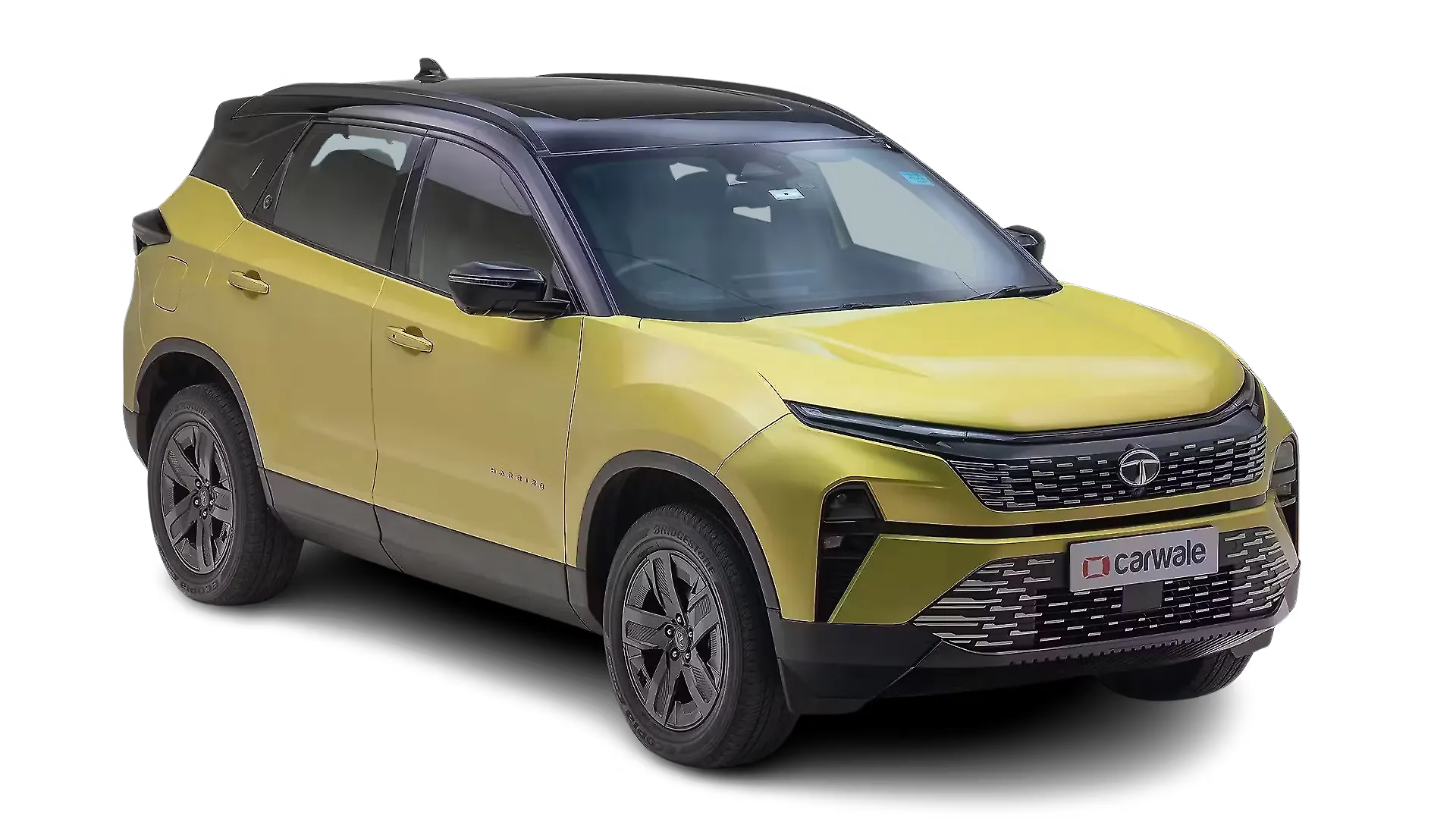
Tata Harrier vs
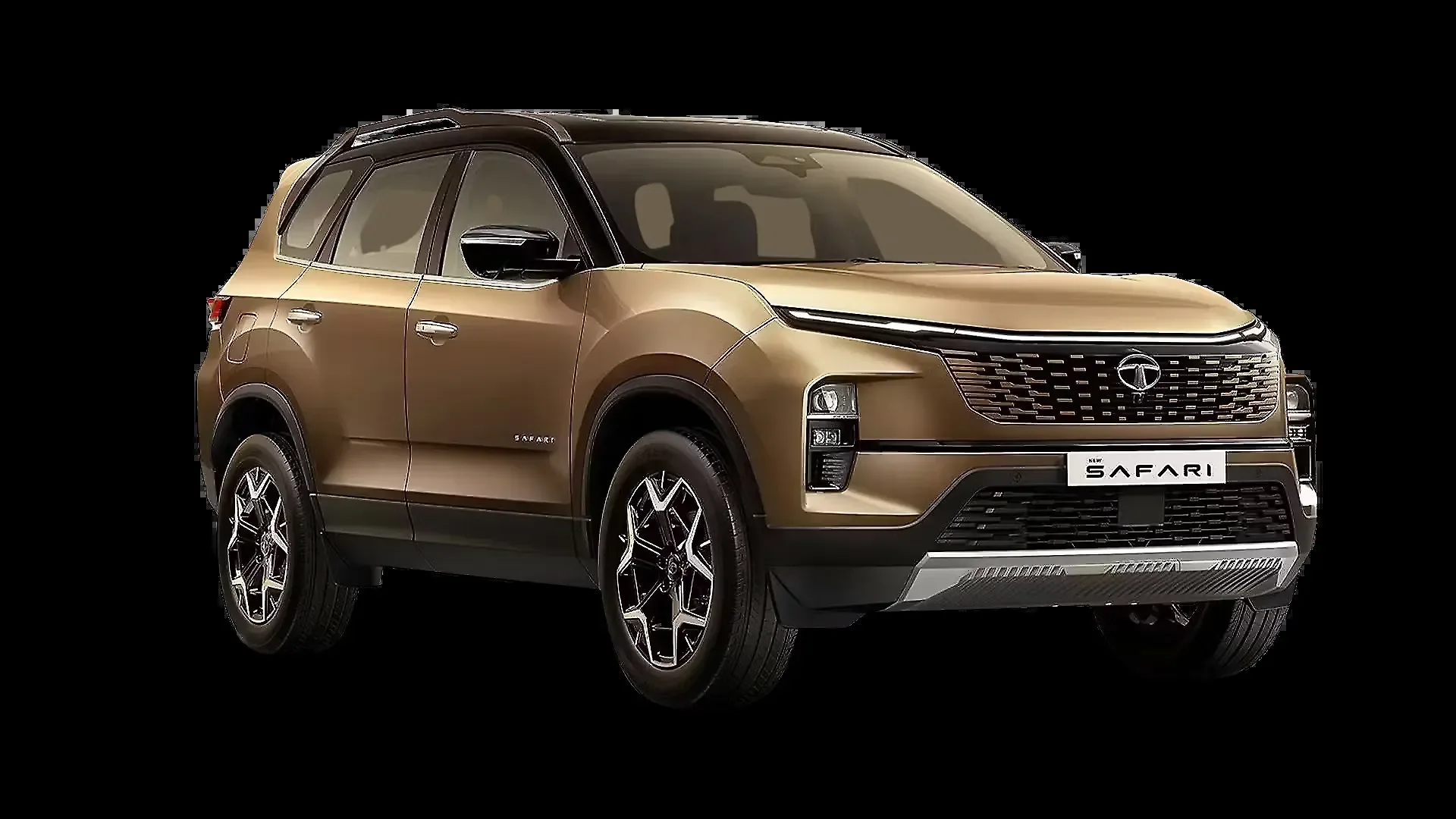
Tata Safari
Five seats and sharper dynamics versus seven seats and flagship comfort: choose your life.
Most buyers decide here. Read this before anything else.
- You drive solo or with one passenger most days and want the sharper, more involving of the two to pilot on weekend expressway runs.
- You live in a city where parking is a daily negotiation and a shorter footprint genuinely matters.
- You want the new 1.5-litre turbo-petrol and are happy to be an early adopter despite the engine's limited long-term data.
- You prioritise a sportier, more driver-focused cabin layout over maximum rear-seat real estate.
- You buy cars for design impact and think the Harrier's muscular silhouette with 19-inch wheels on the Dark edition is simply the better-looking machine.
- You are a family of four with no expectation of ever needing a third row and resent paying for space you will never use.
- You regularly ferry parents, in-laws or a third child and need a credible seven-seat layout, not a rarely-used fold-flat afterthought.
- You cover long highway stretches and want the Safari's longer wheelbase and superior ride composure to absorb fatigue on multi-hour drives.
- You want ventilated seats in all three rows, which makes a genuine difference when loading families into a hot cabin mid-summer.
- You treat your SUV as a status statement and want something that commands attention in a parking lot through sheer size and presence.
- You plan to keep the car for six or more years and want the Safari's slightly stronger resale trajectory as a flagship Tata product.
- Safety is non-negotiable and the Safari's 5-star ratings from both Global NCAP and Bharat NCAP alongside seven airbags give you documented peace of mind.
The Harrier scores 7.5/10, the Safari 7.7/10. In real life, they are built for different people.
The Safari's 2.71-metre wheelbase translates into noticeably more rear-seat legroom and a softer, more isolating ride on broken highways. MotorOctane noted the Safari irons out undulations that the Harrier transmits more directly to occupants. For a 400-kilometre family run, the Safari arrives with fewer complaints from the back row.
The Harrier is shorter and narrower, which is a practical advantage in congested city blocks and multi-storey car parks. The Safari's imposing dimensions, a genuine asset on the open road, become a mild liability when parallel parking in older city layouts. Urban daily drivers will find the Harrier less stressful to place.
Both cars share Tata's electronics architecture, and both carry risk. MotorBeam documented wireless CarPlay dropouts on the Harrier, and the Media drive fleet showed a stuck horn and rebooting screens. The Safari carries similar software caveats. Neither car earns a clean bill of health here, so this is a genuine tie with a shared asterisk.
Tata's flagship Safari has historically held value better than the Harrier in the used market, partly because buyers perceive it as the more aspirational product. The Harrier's petrol engine is new and unproven, which adds a degree of uncertainty for resale. Buyers planning a three-year ownership cycle should factor this in before choosing the Harrier.
Scores shown inline. "Best for" tells you who each result matters to.
| Axis | Tata Harrier | Tata Safari | Best for |
|---|---|---|---|
Design |
The 2025 facelift keeps the Harrier's muscular proportions and adds a connected DRL strip with welcome animation, sequential indicators and revised bumpers. Faisal Khan called the yellow accent quirky but effective, and the Dark edition with 19-inch wheels is genuinely striking. The standard 18-inch aero alloys divide opinion but the overall silhouette remains one of the segment's most cohesive. 8.0 / 10 |
At 4.66 metres the Safari uses sheer scale as a design tool. The connected LED DRLs, black parametric grille and low-set projector headlamps give it a clean flagship identity. CarWale notes how Tata integrated the regulation-driven low headlamps neatly into the face rather than letting them disrupt the design. 8.2 / 10 |
Statement SUV buyersSafari's size and upright stance reads as a flagship from any angle
|
Interior |
The Harrier's cabin takes a real step up with a 12.3-inch Samsung QLED screen, Dolby Atmos JBL audio, wireless CarPlay and Android Auto, and a camera-based IRVM that doubles as a dashcam. Ventilated front seats are electrically adjustable and 65W USB-C fast charging is available front and rear. The HVAC controls have moved to the touchscreen, which divides reviewers. 7.5 / 10 |
The Safari goes further with twin 12.3-inch displays, the same QLED touchscreen and Dolby Atmos setup, Alexa-based home-to-car control, a voice-controlled panoramic sunroof and ventilated seats across all rows. The 10-speaker JBL system is genuinely impressive. For buyers who view the cabin as a living room on wheels, the Safari's extra equipment density is hard to argue with. 7.5 / 10 |
Tech-forward familiesSafari's ventilated rear seats and twin screens justify the premium for larger groups
|
Build & Safety |
The Harrier sits on the same OMEGA Arc steel platform and carries identical crash credentials: 5-star ratings from both Global NCAP and Bharat NCAP, seven airbags, ESP and Level 2 ADAS. However, the Harrier's panel gaps are visible in places, the tailgate lacks hydraulic struts at this price point, and small trim pieces feel inconsistent across the cabin. 8.2 / 10 |
The Safari shares the OMEGA Arc platform and the same 5-star safety ratings, and its additional length and mass add a further sense of solidity. Seven airbags, ESP with 77 functions, hill hold, hill descent, traction control and Level 2 ADAS with intelligent speed assist are all present. Fit and finish still carries Tata's familiar caveats but the larger body feels more planted. 8.4 / 10 |
Safety-first familiesIdentical crash ratings, but Safari's mass and platform size edge it forward
|
Performance |
The new 1.5-litre turbo-petrol is the Harrier's headline addition for 2025, giving buyers a genuine petrol option for the first time. Reviewers found it adequately quick for urban and highway use, though long-term reliability data is still thin. The diesel continues to be the powertrain with the proven track record for this platform. 7.5 / 10 |
The Safari shares the same petrol and diesel powertrain options. Its heavier body means the petrol feels slightly less eager than in the Harrier, and the Jury's Performance score of 7.2 reflects that. MotorOctane noted both cars benefit from the new engine but the Harrier's lighter kerb weight gives it a modest but perceptible edge in real-world responsiveness. 7.2 / 10 |
Driver-focused buyersHarrier's lighter body makes the shared petrol engine feel more willing
|
Ride Quality |
The Harrier rides with genuine composure for a five-seater and handles broken urban roads without drama. Reviewers across the Media drive found it controlled and predictable. The shorter wheelbase does mean it is slightly more susceptible to sharp mid-corner bumps compared to the Safari on the same road. 8.0 / 10 |
The Safari's longer wheelbase is the single biggest contributor to its ride quality advantage. It smooths out the same broken patches that the Harrier transmits more directly, and at highway speeds the isolation is noticeably better. For buyers who spend time on rough state highways or long intercity routes, the Safari's 8.3 ride score is well earned. 8.3 / 10 |
Highway and intercity driversSafari's longer wheelbase delivers measurably better high-speed isolation
|
Value for Money |
The Harrier enters at a lower price point and delivers most of the Safari's technology in a five-seat package. For buyers who do not need the third row, the Harrier represents a sharper deal, particularly in mid-spec variants where the gap between equipment and price is most favourable. Electronics niggles remain a value risk that buyers must price in. 7.0 / 10 |
The Safari costs more but the gap narrows when you factor in the rear ventilated seats, larger body, twin displays and stronger resale trajectory. Namaste Car noted that top-spec Safari buyers are essentially getting flagship SUV features at a price that undercuts European alternatives significantly. If you use all seven seats with any regularity, the per-seat cost math favours the Safari. 7.3 / 10 |
Value-seeking five-seat buyersHarrier delivers most Safari features at a lower entry price
|
Practicality |
The Harrier's five-seat layout means a large, uninterrupted boot that MotorOctane confirmed handles luggage for four adults comfortably. Without a third row to fold or manage, the loadspace is accessible and flat. For nuclear families and frequent airport runs, this is the more practical configuration day to day. |
The Safari's seven-seat layout is its defining practical advantage, but MotorOctane was direct: with the third row raised, boot space shrinks to small-bag territory. Fold the third row and the loadspace opens up, but you then have no seating for seven. Buyers should assess honestly how often they genuinely need that third row before paying the premium. |
Growing or joint familiesSafari's third row is the only option when occasional seven-seat capacity is non-negotiable
|
The Harrier scores 7.5/10 and the Safari 7.7/10, from 8 independent creators. The overall number is only part of the story here: the dimension breakdown is where the real comparison lives.
MotorOctane: Tata Harrier Petrol & Safari Petrol LAUNCHED