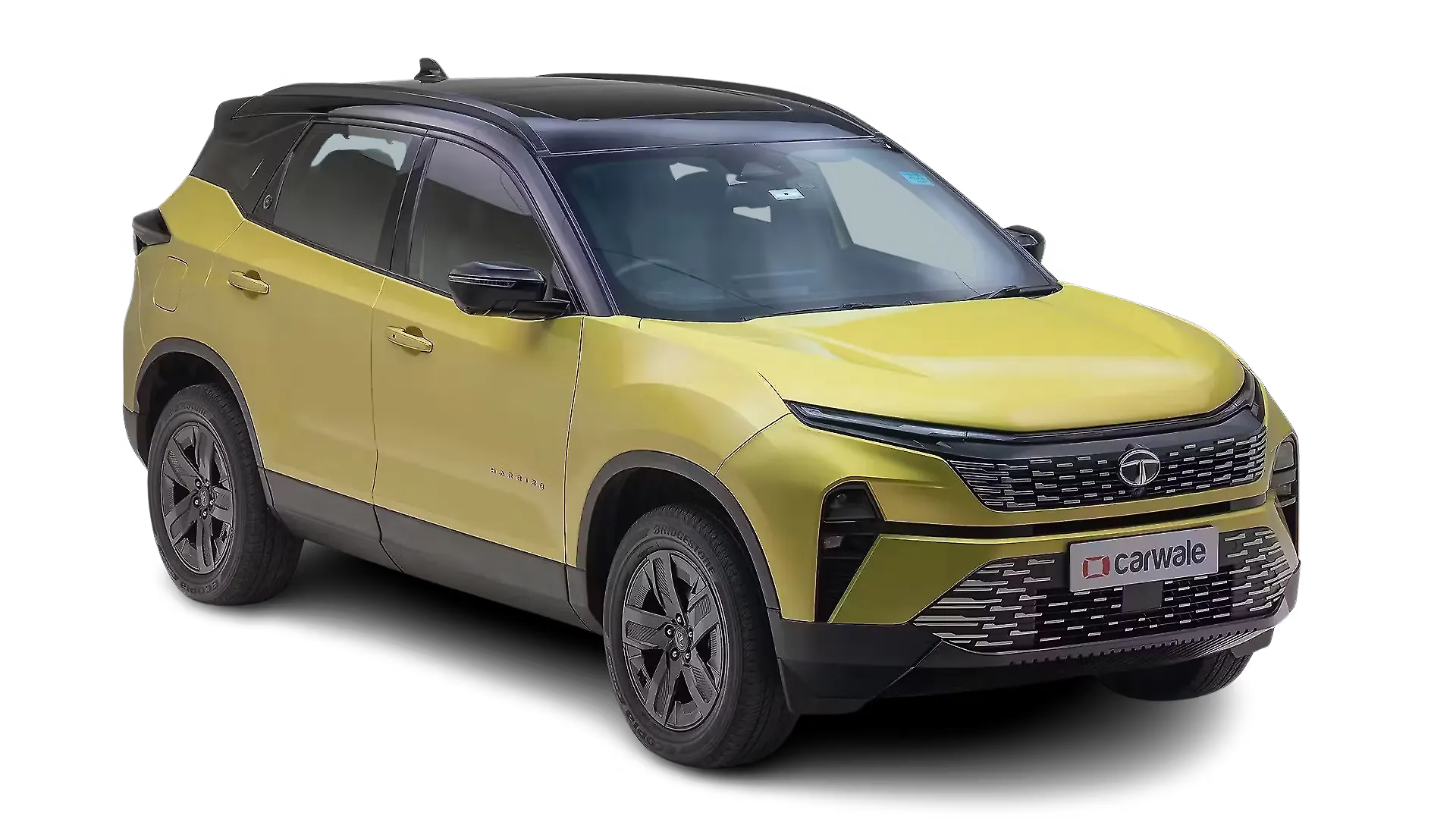
The 2025 Tata Harrier arrives with a new 1.5-litre turbo-petrol option, refreshed electronics, a 12.3-inch Samsung QLED screen and a camera-based IRVM. It looks handsome and drives with genuine composure, but recurring electronics niggles and inconsistent fit and finish keep it from being a slam-dunk recommendation.
Jury Score Breakdown
What Works
- Planted, confident ride quality on 18-inch wheels; excellent highway manners
- Genuinely premium infotainment, sound system and feature list
- Refined diesel, likeable new petrol, and a seriously quick EV variant
- Strong road presence and handsome design updates front and rear
- Harrier EV offers real all-wheel-drive capability and 400 km-plus real-world range
Watch Out For
- Persistent electronics glitches: ORVM memory, screen freezes, sticky horn, warning chimes
- Fit-and-finish inconsistencies at a price point crossing Rs. 30 lakh
- Touch-heavy HVAC and single sunroof/sunblind button are fiddly to use
- Petrol fuel economy is modest given the car's weight; no AWD on ICE variants
Design
The 2025 facelift keeps the muscular Harrier silhouette but adds a connected DRL strip with welcome animation, revised bumpers, sequential indicators and a connected tail-lamp. On the Dark and Red Dark editions the blacked-out treatment and 19-inch wheels look striking, though the standard 18-inch aero-optimised alloys divide opinion. Faisal Khan finds the yellow accent quirky but effective, and the badging is now everywhere including a lit Harrier logo on the bonnet. The EV wears the same body with subtle blue-purple shimmer paint and a cleaner grille. Road presence is genuinely SUV-like, arguably more resolved than the larger Safari in this colour. It looks less flashy than the Mahindra XEV 9e or BE 6, but that restraint is deliberate.
Interior & Features
Cabin quality has taken a real step up thanks to a 12.3-inch Samsung QLED infotainment screen with a slick UI, Dolby Atmos JBL audio, wireless Android Auto and CarPlay, and a camera-based IRVM that doubles as a dashcam. Ventilated front seats are electrically adjustable, the co-driver gets four-way power, and 65W USB-C fast charging is available front and rear. However, the HVAC controls are now touch-based, the sunroof/sunblind share one over-sensitive button, and the horn is absurdly light. Rear-seat space is adequate for five, tight for three abreast, and the middle passenger loses out on a headrest. Gagan Choudhary flags that the ORVM memory function does not reliably return to the set position after reversing, a genuine ownership irritant.
Build Quality & Technology
This is where the Harrier still trips up. Panel gaps are visible in places, the tailgate lacks hydraulic struts despite the price, and small trim pieces feel inconsistent. More worryingly, MotorBeam experienced wireless CarPlay dropouts, and across the Media drive fleet reviewers encountered a stuck horn that ran for half an hour, screens rebooting, indicator icons not lighting up, and hazard lights that flashed outside but not on the cluster. ADAS is now Level 2-ready with adaptive cruise, lane-departure warning, autonomous emergency braking, intelligent speed assist and a very good 360-degree camera. Seven airbags, ESP with 17 functions and a request-sensor NFC card round out the safety kit. The hardware is there; the software polish and QC still need one more pass.
Performance & Powertrain
Three powertrains are now on offer. The Kryotec 170 two-litre diesel makes 170 PS and 350 Nm, remains the pick for high-runners, and pairs with a six-speed manual or Aisin torque-converter automatic. The new 1.5-litre Hyperion turbo-petrol produces 170 PS and 280 Nm, feels surprisingly capable in this 1.7-tonne SUV, and the Aisin automatic shifts smoothly with only a mild second-to-third hesitation. AutoYogi notes cruising at 100 km/h sits around 1,800 rpm, so effort levels stay low. The Harrier EV is the showstopper: dual-motor AWD, over 350 bhp, 0-100 in around six seconds, and a Boost mode that genuinely shoves. Only the ICE cars lack any four-wheel-drive option, which remains a missed opportunity.
Ride Quality & Handling
This remains the Harrier's strongest suit. The Omega Arc platform, derived from Land Rover's D8, delivers a planted, composed ride that flattens out as speeds rise. Low-speed ride on 19-inch wheels can feel firm and slightly busy, which is why the 18-inch variants are the sweet spot. Body roll is well contained for a tall SUV, and the new electric power steering is light around town yet gains reasonable weight on the highway, though feedback is somewhat vague. The EV's active dampers and independent suspension take it further still, gliding over broken surfaces while remaining composed through corners. Insulation on the EV is excellent; the diesel and petrol let in more tyre and wind noise than the price tag suggests.
Price & Value
The ICE Harrier starts around Rs. 15 lakh for the base Smart and stretches to roughly Rs. 30-31 lakh ex-showroom for the fully loaded Fearless Ultra Dark diesel automatic. The petrol is expected to undercut the diesel by a small margin. That puts it in direct fire from the Mahindra XUV 7OO and Scorpio-N, both of which offer real four-wheel drive, and from Tata's own Sierra, which several reviewers argue is the smarter buy for those cross-shopping the mid variants. The Harrier EV, priced against the Mahindra BE 6 and XEV 9e, is arguably the strongest value proposition in the line-up given its dual-motor AWD, lifetime battery warranty for the first owner and 400 km-plus real-world range.
What India's Reviewers Agree On
Consensus
- Ride quality and highway composure are class-leading, with the Land Rover-derived platform feeling planted
- The new 12.3-inch Samsung QLED screen, Dolby Atmos JBL audio and feature list are genuinely premium
- The 2.0 diesel remains refined and torquey; the new 1.5 turbo-petrol is competent but not a mileage champion
- Electronics reliability, ORVM memory behaviour and small QC gaps remain a real ownership concern
- The Harrier EV's dual-motor drivetrain, off-road modes and suspension tuning stand out from EV rivals
Points of Disagreement
- Whether the new petrol makes sense: MotorBeam sees it as a smooth city option, while others argue the Sierra is a better buy at similar money
- Rear-seat comfort: some find it spacious and supportive, others flag reduced under-thigh support in the EV due to the raised floor
Individual Reviewer Verdicts
"Ankit's real-world ownership shows the Harrier as a genuinely safe, comfortable family SUV that also delivers on the aspirational front."
"The Harrier EV is a solid off-road-capable package, but India's charging infrastructure still holds back long-distance electric SUV ownership."
"The 1.5 petrol is a pleasant surprise for a 1.7-tonne SUV, but ORVM and electronics glitches remain a real irritant."
"Petrol makes sense only for low-runners; high-milers should stick with the refined and proven diesel."
"The Harrier EV is a classy, driver-focused Tata that finally rekindles the OG Safari feel, if reliability holds up."