 Image: Mahindra press kit
A genuinely ambitious born-EV with class-leading tech and strong value, but early software niggles and unproven service readiness make a 6-12 month wait the smarter call.
The Mahindra XEV 9e is India's most ambitious born-electric SUV yet, built on the new INGLO platform with BYD blade cells, three 12.3-inch screens and a 0-100 km/h time of 6.8 seconds. It packs in genuine engineering substance and a feature list that humbles cars costing twice as much, but a polarising coupe silhouette and unfinished software temper the excitement.
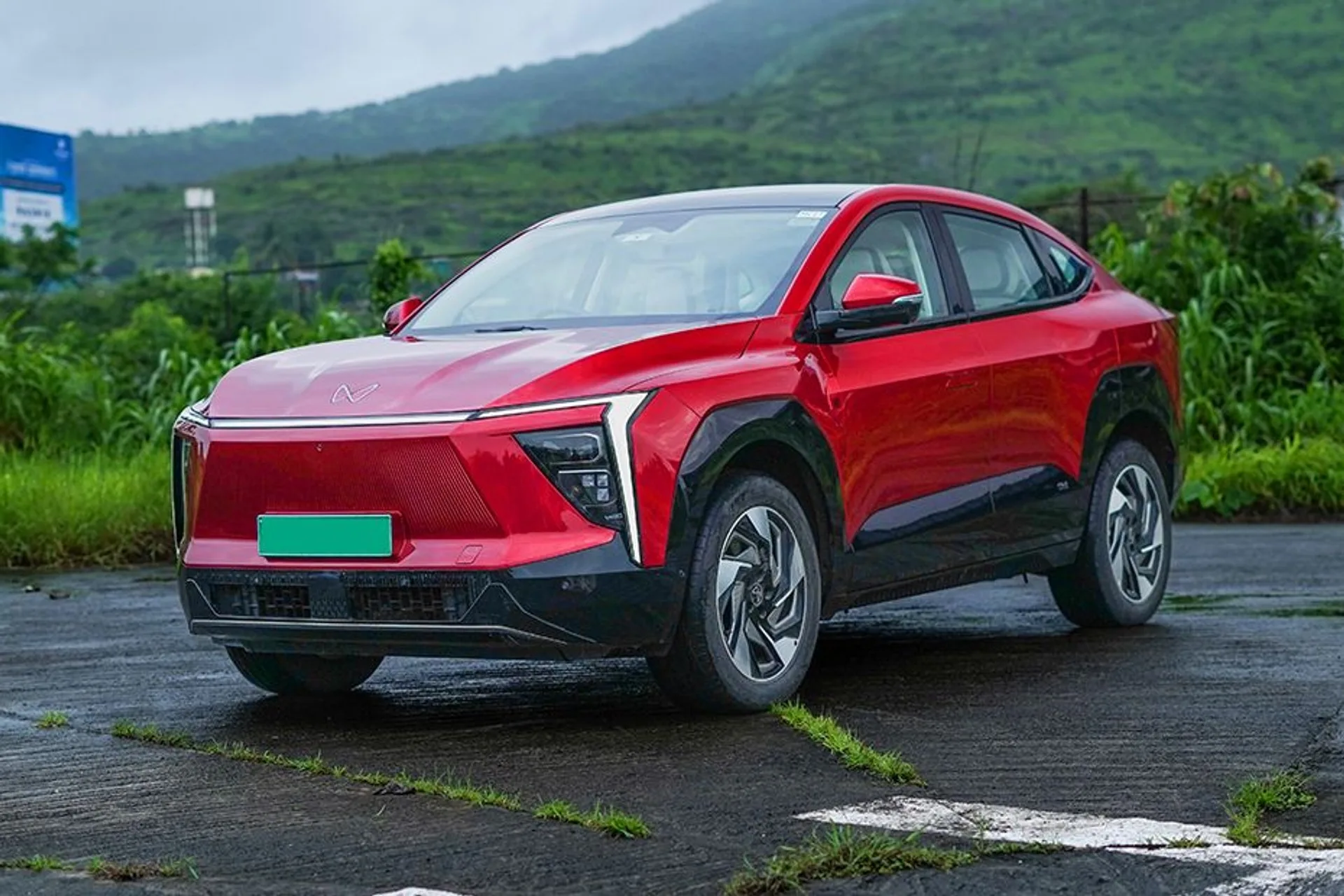
The XEV 9e wears Mahindra's most divisive design in years. The full-width LED light bar, active aero curtains, flush door handles and 19-inch wheels lend it real road presence, and the connected tail lamps with welcome animations look premium at night. The 4.8-metre length, 1.9-metre width and 218 mm ground clearance give it genuine SUV proportions, but the sloping coupe roof is where opinions fracture. Gagan Choudhary argues the rear three-quarter view looks awkward and that the BE 6e wears its radical theme more convincingly than the 9e's halfway compromise. From the front the futuristic LED signature and illuminated logo work well; from behind, the high-mounted stop lamp and quirky spoiler fight against a tail that looks heavier than it should. Aerodynamically the shape is sorted, but India has historically rejected coupe SUVs from premium German brands too. The execution is brave and the detailing is genuinely modern, yet the silhouette will divide showroom traffic in a way a more conventional shape would not.
Step inside and the XEV 9e justifies its tech-flagship billing. Three 12.3-inch screens span the dashboard, the leftmost dedicated to the front passenger for streaming, the centre running infotainment with 5G connectivity and the cluster changing graphics with drive mode. The 16-speaker Harman Kardon system with Dolby Atmos is genuinely outstanding, and AR Rahman-tuned sound profiles, ambient lighting and the Groove Me light show add theatre. Material quality is mostly good up top, but hard plastics appear lower down and the gloss-black HVAC touch panel attracts fingerprints while flexing under press. Faisal Khan flags the bigger ergonomic flaw: burying climate controls in a touch panel with no proper physical knobs is genuinely frustrating in daily use, and several buttons reset on every ignition cycle. The 6-way powered front seats with memory are comfortable, the panoramic glass roof is fixed but illuminates beautifully, and the 663-litre boot plus 150-litre frunk make the packaging genuinely usable. Coupe roofline costs rear headroom for taller occupants and the IRVM is rendered useless by the centre headrest.
Build quality sits in interesting territory. The structural engineering, the platform integrity and the way the doors thunk shut all feel a class above older Mahindras, and the high-strength bodyshell, seven airbags, five radars, six cameras and twelve ultrasonic sensors give it a genuinely modern safety hardware suite. However, fit and finish on early units is inconsistent: panel gaps vary, some plastics feel cheaper than the price warrants and one test car exhibited a suspension knock over sharp bumps that was attributed to a unit-specific issue. Software polish is the bigger worry. Screens occasionally lag, the boost button takes seconds to acknowledge inputs, the reverse camera disables itself above 20 km/h and the horn pad is too easily triggered by the lane-keep button. Mahindra's own disclaimer described the cars as prototypes running beta software, and several reviewers flagged that final retail units must iron these out. The unlimited-kilometre battery warranty for the first owner is reassuring; service network readiness for this level of EV complexity is not yet proven.
Powertrain calibration is one of the XEV 9e's strongest suits. The 79 kWh Pack 3 makes 281 bhp and 380 Nm, dispatching 0-100 km/h in 6.8 seconds, while the 59 kWh version produces 228 bhp with the same torque and clocks the same run in around 8.3 seconds. Crucially, Mahindra has resisted the temptation to make it feel violent: power delivery is linear and smooth across Range, Everyday and Race modes, with a 10-second Boost button on the steering wheel for instant overtakes. The rear-wheel-drive layout is tuned to understeer at the limit rather than oversteer, and ESP re-engages at 60 km/h regardless of driver preference. The motor is whisper-quiet, NVH is exceptional, and the brake-by-wire IBS system blends regen and friction braking smoothly. Three regen levels plus a separate one-pedal mode work well, though the one-pedal calibration could be more aggressive. Real-world range sits between 320-380 km for the 59 kWh and roughly 450 km for the 79 kWh, with hot weather and highway speeds eating noticeably into both figures.
The 9e rides on a properly engineered independent suspension, and the Pack 3's semi-active dampers reacting every 15 milliseconds deliver the best ride quality in any Mahindra to date. The car glides over broken tarmac, expansion joints and potholes with a composure that belies its 2-tonne-plus kerb weight. Pack 2 variants do without the adaptive dampers and feel noticeably busier at highway speeds, which V3Cars correctly identifies as a key reason to stretch to the higher trim. Body roll is well contained for a tall, heavy EV, the steering weights up convincingly past 60 km/h and the variable-ratio rack makes city manoeuvring effortless even though it feels too light at parking speeds. High-speed stability is excellent thanks to the low-mounted battery pack, and grip from the 245-section tyres is reassuring. The dynamics are not sports-car sharp, and you can feel the mass shift in quick direction changes, but for a family SUV of this size and weight the balance Mahindra has struck between comfort and composure is genuinely impressive.
On paper the XEV 9e is one of the most aggressively priced premium EVs in India. The Pack 2 with the 59 kWh battery starts around Rs 21.9 lakh ex-showroom and stretches to roughly Rs 30.5 lakh for the fully loaded Pack 3 with the 79 kWh battery, with the on-road Mumbai prices Faisal Khan quotes ranging from Rs 27.1 lakh to Rs 33.3 lakh. MotorOctane points out that the base variant is unusually well equipped, getting the panoramic roof, triple screens, 5G connectivity and ADAS without forcing buyers into the top trim, which is rare for Mahindra. The Pack 3 with semi-active dampers, seven airbags, five-radar ADAS, ventilated seats, head-up display and 360-degree camera is the variant most reviewers recommend if budgets allow, with the 79 kWh battery worth the additional Rs 1.87 lakh for the extra 90-120 km of real-world range. State EV subsidies and lower running costs further sweeten the proposition.
TeamBHP's community has welcomed the INGLO platform as a genuine engineering leap and praised the BYD blade-cell battery integration, while flagging concerns about Mahindra's readiness to service such complex EV hardware across its dealer network. Long-term owner reports on the sister BE 6e suggest software updates have addressed several launch-period niggles, but the forum's expert consensus still leans toward waiting six to twelve months for the first batch of recalls and OTA fixes before committing to a primary-car purchase.
"Respects Mahindra's gamble in building a born-EV from scratch and praises the powertrain calibration, but flags unfinished software, ergonomic misses and a coupe shape that doesn't quite work."
"Real-world range testing returned 354 km on the 59 kWh Pack 2 and recommends the larger 79 kWh battery and Pack 3 trim for the semi-active dampers and better long-distance usability."
"Walks through the spec sheet methodically, highlighting the BYD LFP cells, 1457-hour test programme, 16-speaker Harman Kardon audio and the genuinely premium feature distribution."
"Calls it a value-for-money flagship with class-leading ADAS hardware and praises the easy daily drivability, with Adaptive Cruise auto-lane-change working as advertised."
"Recommends waiting roughly a year for software refinement and service readiness to mature, while applauding Mahindra for making the bigger battery available even on the base variant."