Tata Harrier EV vs
Mahindra BE6
Choose between SUV muscle with lifetime warranty or concept-car drama with longer range.
Most buyers decide here. Read this before anything else.
- You have a family of four and regularly tackle weekend off-road trails or flooded monsoon roads where 600 mm wading depth and 25.3-degree approach angle matter.
- You are buying your first EV and the lifetime battery warranty is the single item that will let you sleep at night.
- You drive 80-plus km daily in mixed city and highway conditions and need a charging session to feel predictable and fast enough without being a specialist ritual.
- You want to park outside a five-star hotel and have the car read as a premium SUV, not a science project, to colleagues or clients.
- You carry passengers in the rear seat regularly and cannot compromise on rear legroom or headroom for anyone over 5 feet 10.
- You live in a city where Tata's service network is the only realistic after-sales option within a 30-minute drive of your home.
- You drive alone or with one passenger most days and the idea of a rear-wheel-drive coupe-SUV that corners sharply genuinely excites you, not just in theory.
- You do mostly highway and expressway kilometers and want 450-500 km of real-world range to make intercity trips without charging anxiety.
- Your household has a 7.2 kW home charger already installed and you treat public DC charging as an occasional top-up, not a daily dependency.
- You are under 38, park on a city street and want the car to stop traffic the way Mahindra owners report it doing, as confirmed by Manish Bhardwaj's owner Gaurav in Rajasthan where bystanders mistook it for a supercar.
- Your budget ceiling is firm at Rs 22 lakh and you want the most performance, range and feature content possible within that number.
- You prioritise driving feel and want semi-active dampers and sharp steering to reward you on an empty Sunday expressway run.
The Harrier EV scores 8.1/10, the BE6 8.6/10. In real life, they are built for different people.
The BE6's 450-500 km real-world range means most Delhi-Jaipur or Mumbai-Pune runs finish on a single charge. The Harrier EV's 380-420 km real-world range requires one planned stop on longer corridors. Both cars support 120 kW DC fast charging, and Gaurav, an owner interviewed by The Car Guide, confirmed 50 percent charge in roughly 30 minutes at an ITC Mughal charger in Agra.
The Harrier EV's QWD system pairs a front induction motor with a rear PMSM motor, and MotorBeam verified it tackling Rajmachi's off-road trail without drama. The BE6 is rear-wheel-drive only and rides lower with a coupe roofline, making it the wrong tool for broken forest roads or river crossings. On a twisty Ghats road with tarmac, the BE6's sharp steering and semi-active dampers make it the more engaging choice.
The Harrier EV's Land Rover-derived suspension absorbs broken city tarmac and speed breakers with composure, earning an 8.0 ride quality score from the jury. The BE6's semi-active dampers tune for handling sharpness and reviewers consistently flag the ride as firm, especially on rear seats over bad patches. For a driver covering potholed city roads daily with family, the Harrier EV is more forgiving.
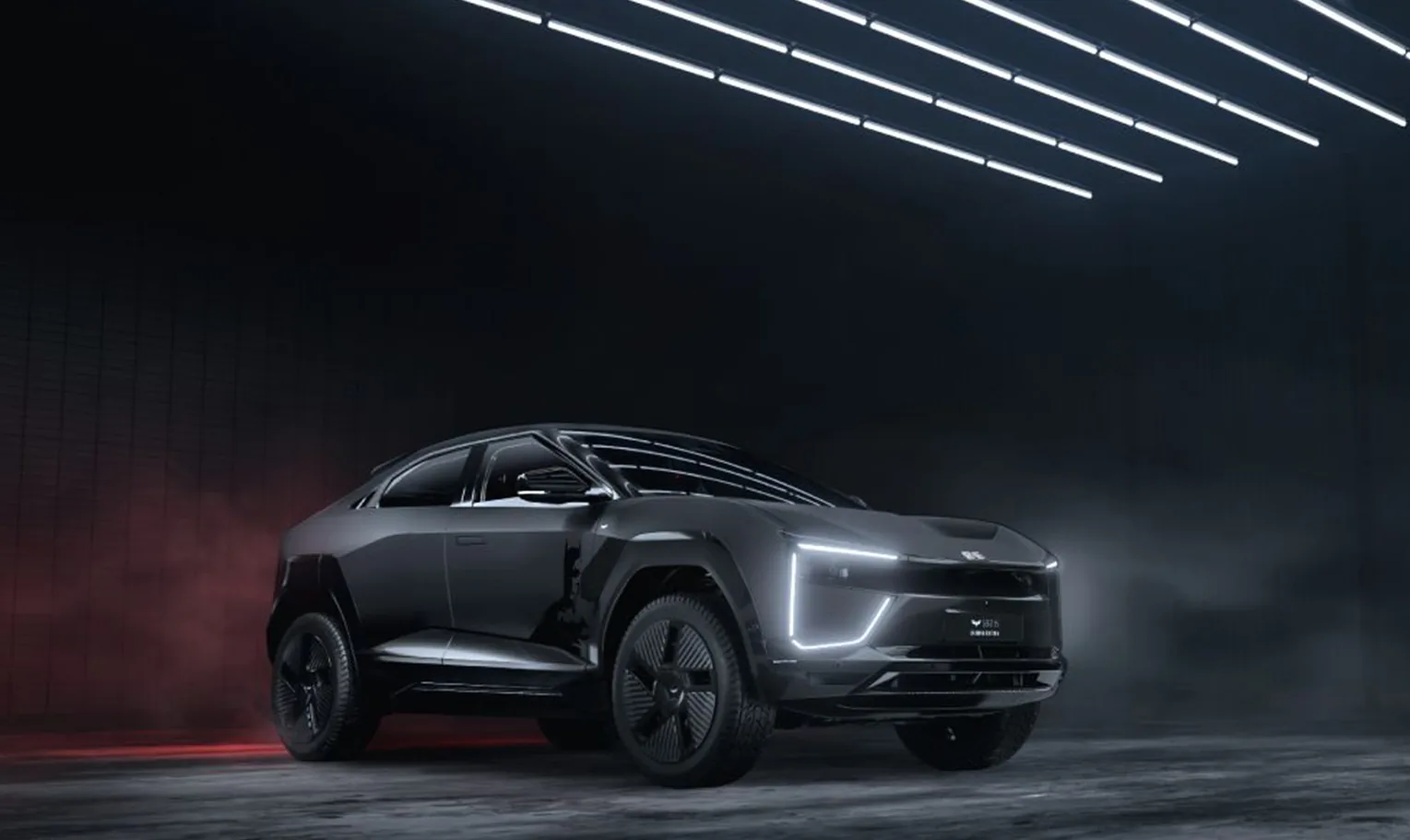
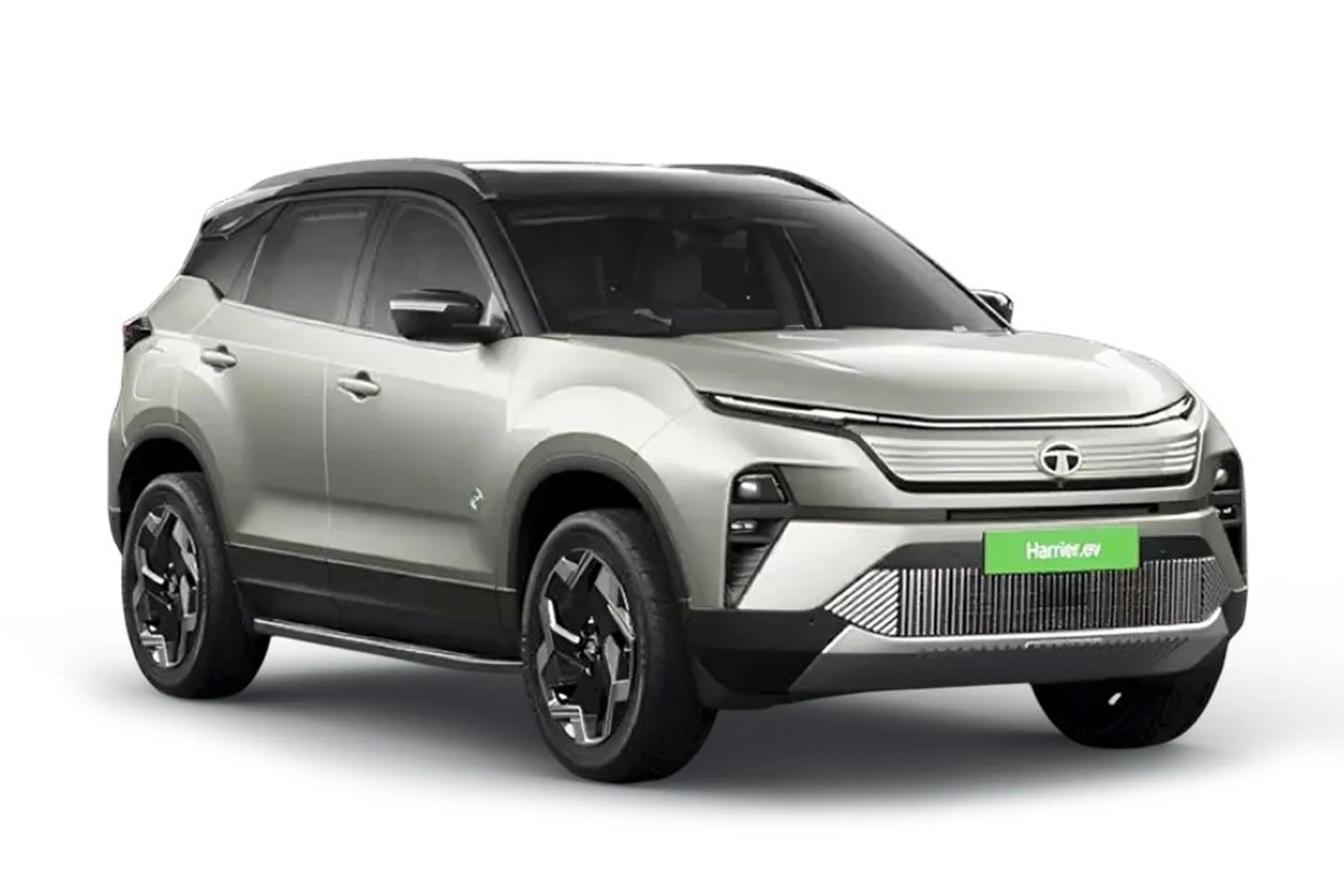
MotorOctane notes the BE6 attracts supercar-level attention at parking lots, and Faisal Khan called the design straight out of the year 2050. The Harrier EV shares its silhouette with the diesel Harrier; EV-specific tweaks like connected DRLs and aero alloys differentiate it to enthusiasts, but most bystanders will not register the change. Buyers who want the car to do the social signalling work for them without explanation should choose the BE6.
Scores shown inline. "Best for" tells you who each result matters to.
| Axis | Tata Harrier EV | Mahindra BE6 | Best for |
|---|---|---|---|
Design |
The Harrier EV plays it safe, carrying the diesel car's silhouette with a closed grille, connected LED DRLs with sequential indicators and 19-inch aero alloys. It reads as a substantial, confident SUV rather than a statement. Buyers who want presence without polarisation will find it exactly right. 7.5 / 10 |
Every reviewer agrees the BE6 looks like nothing else on Indian roads. MotorOctane reports it draws supercar-level crowds, and Faisal Khan calls it straight out of the year 2050. The aerodynamic body, flush door handles and coupe roofline make it the segment's only genuine concept-car-in-production. 9.0 / 10 |
Attention seekersBE6 stops traffic without a single word of explanation
|
Interior |
The Harrier EV's 14.53-inch Samsung NeoQLED screen earns consistent praise for UI quality, and the 10-speaker JBL system with Dolby Atmos tuning is genuinely premium. Ventilated front seats with memory and soft-touch materials throughout lift the cabin feel, though V3Cars notes rough edges in software polish. 7.5 / 10 |
The BE6 cabin is theatre: twin 12.3-inch screens, aeroplane-inspired switchgear, a thrust-lever drive selector and AR Rahman-tuned interactive ambient lighting. RushLane praises the sports-car seats and soft-touch surfaces, while MotorOctane appreciates the 16-speaker 1400W Harman Kardon system. The drama works for solo drivers; rear passengers feel the coupe roofline. 7.5 / 10 |
Tech-first driversBE6 cockpit experience is unmatched at this price
|
Performance |
The QWD Harrier EV combines a front induction motor and rear PMSM motor for 390 hp and 504 Nm. MotorBeam found the instant torque genuinely useful in Mumbai traffic and on the old Mumbai-Pune highway. The 6.3-second 0-100 km/h time is fast, and AWD traction adds real-world confidence in wet conditions. 8.5 / 10 |
The BE6 makes 282 BHP from a single rear motor, reaches 100 km/h in 6.7 seconds and steers with a sharpness that reviewers consistently describe as sports-car-like. It is slower on paper, but the low centre of gravity and rear-wheel-drive balance make fast corners genuinely rewarding in a way the Harrier EV does not attempt. 8.5 / 10 |
Drivers who cornerBE6 rewards on twisty roads; Harrier EV dominates in AWD pull
|
Ride Quality |
Land Rover-derived underpinnings give the Harrier EV a well-sorted, absorbent ride that handles Mumbai and Delhi's broken inner-city roads without drama. The jury scores it 8.0 out of 10, the strongest single score either car earns in any category. Long-distance rear-seat passengers benefit most. 8.0 / 10 |
The BE6's semi-active dampers are tuned for handling precision, and the trade-off is a firm ride that every reviewer flags. It is manageable on expressways and smooth city roads, but poor surfaces amplify the stiffness noticeably. The jury scores it 7.0, the BE6's lowest dimension score. 7.0 / 10 |
Rear-seat familiesHarrier EV cushions passengers on India's mixed road surfaces
|
Build Quality |
The Harrier EV carries Tata's 5-star Bharat NCAP rating and panel gaps that feel deliberate and controlled. The lifetime battery warranty signals confidence in long-term build integrity. Both cars score 7.5 for build here, so neither has a meaningful edge on paper. 7.5 / 10 |
The BE6 also scores 7.5 from the jury on build quality. The fit and finish impresses on first contact, and the INGLO platform is purpose-built for EVs. Mahindra's long-term service consistency remains the open question that ownership reviews have not yet fully answered at scale. 7.5 / 10 |
Long-term peace of mindHarrier EV's lifetime battery warranty tips the confidence scale
|
Value for Money |
The Harrier EV starts at Rs 21.49 lakh and stretches to Rs 28.99 lakh for the QWD variant. The lifetime battery warranty, 5-star safety rating and established Tata service network are meaningful inclusions at that price. The jury scores it 7.5 here, reflecting the premium commanded by the AWD powertrain. 7.5 / 10 |
The BE6 opens at Rs 18.90 lakh, which buys 282 BHP, 450-500 km real-world range and a segment-first interior experience. The jury scores it 8.5 for value, the highest score it earns across any dimension. For buyers who prioritise maximum capability per rupee, the BE6 is genuinely disruptive. 8.5 / 10 |
Budget-conscious buyersBE6 delivers more range and drama per lakh at entry price
|
Real-World Range |
The 75 kWh battery returns 380-420 km in mixed driving conditions, which covers most daily use and one-stop highway trips. The 120 kW DC charging ceiling means a meaningful top-up in under 40 minutes at a capable charger. It is practical rather than class-leading. |
Reviewers consistently report 450-500 km of real-world range from the BE6, and owner Gaurav confirmed the figures hold across city and highway use in The Car Guide's ownership review. For buyers anxious about charging infrastructure gaps, that buffer changes the calculus significantly. |
Intercity commutersBE6's range buffer reduces charging stops on long routes
|
The Harrier EV scores 8.1/10 and the BE6 8.6/10, from 10 independent creators. The overall number is only part of the story here: the dimension breakdown is where the real comparison lives.
The Car Guide - Rishabh Arora: Reality of Mahindra BE6 Electric SUV 🤯 Ownership Review + True Range 🔥 Better than Harrier EV ?