Hyundai Creta Electric vs
Maruti Suzuki e Vitara
Proven EV confidence versus a bold first attempt: your risk tolerance decides this.
Most buyers decide here. Read this before anything else.
- You drive 60-plus km daily and need the confidence of 473 km claimed range with a mapped charging network already in your phone.
- You are a first-time EV buyer who wants familiar Creta ownership patterns: wide service network, known resale curve, no surprises.
- You regularly carry three adults in the rear and cannot compromise on headroom or knee room for passengers over 5'10".
- You travel on highways frequently and want V2L to power a laptop, kettle, or camping gear without carrying a separate inverter.
- You value Level 2 ADAS as a genuine daily fatigue reducer on expressways, not a brochure talking point.
- You have a family with young children and want a 360-degree camera plus proven build quality to handle parking-lot life.
- You are a Maruti loyalist who trusts the brand's service depth above all else and are willing to wait for launch pricing to validate the bet.
- You prioritise passive safety above everything: the e Vitara's 5-star Bharat NCAP rating is the most reassuring number in this segment.
- You park in a tight urban basement daily and appreciate a slightly cleaner exterior design that draws fewer fingerprints and dings.
- You are a single owner or couple who rarely uses the boot for more than grocery runs, making the 238-litre compromise tolerable.
- You want the larger 61 kWh battery's theoretical range advantage if Maruti prices it below the Creta Electric's long-range variant.
- You are a tech-curious buyer who is comfortable adapting to a new infotainment logic and expects software updates to smooth early rough edges.
The Creta Electric scores 7.3/10, the Suzuki e Vitara 6.3/10. In real life, they are built for different people.
The Creta Electric's 51.4 kWh pack and Hyundai's in-car payment access to 10,000-plus chargers makes long-distance planning straightforward. Faisal Khan noted the charging network integration as a genuine ownership differentiator. The e Vitara's 61 kWh pack offers range on paper, but charging infrastructure support is unproven at launch.
The Creta Electric's boot figure comfortably swallows two large suitcases alongside cabin bags. The e Vitara's 238-litre boot is a hard constraint: reviewers consistently flagged it as the car's single biggest real-world weakness. If you regularly travel with more than carry-on luggage, this is not a close call.
Both cars recover energy through paddle-adjustable regen and handle urban driving smoothly. The e Vitara's linear throttle response suits cautious city drivers, while the Creta Electric's stronger off-the-line punch suits those used to urgent lane changes. The e Vitara's touchscreen-dependent controls become a genuine distraction in traffic; Mudit Bhambri flagged the buried seat ventilation menu as an irritant.
Creta carries one of India's strongest resale curves in any powertrain, and the Electric version inherits that brand equity with the added assurance of Hyundai's battery warranty. The e Vitara enters the used market as an unknown quantity: Maruti's service network is an asset, but first-generation EV resale from any brand carries uncertainty. V3 Cars rates the Creta Electric's ownership proposition as a key scoring factor.
Scores shown inline. "Best for" tells you who each result matters to.
| Axis | Hyundai Creta Electric | Maruti Suzuki e Vitara | Best for |
|---|---|---|---|
Design |
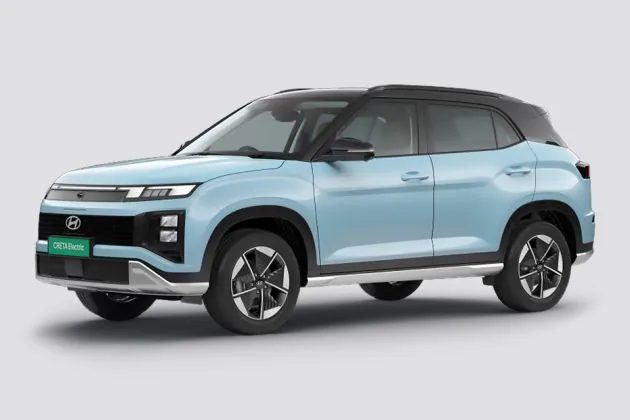
The Creta Electric is unmistakably a Creta, updated with a closed pixel-pattern grille, active air flaps, and aero 17-inch alloys. Connected tail lamps and six pixel reverse lights modernise the rear without abandoning brand identity. Nikhil Rana noted the 32 changes land it firmly in EV territory without alienating existing Creta buyers. 7.5 / 10 |
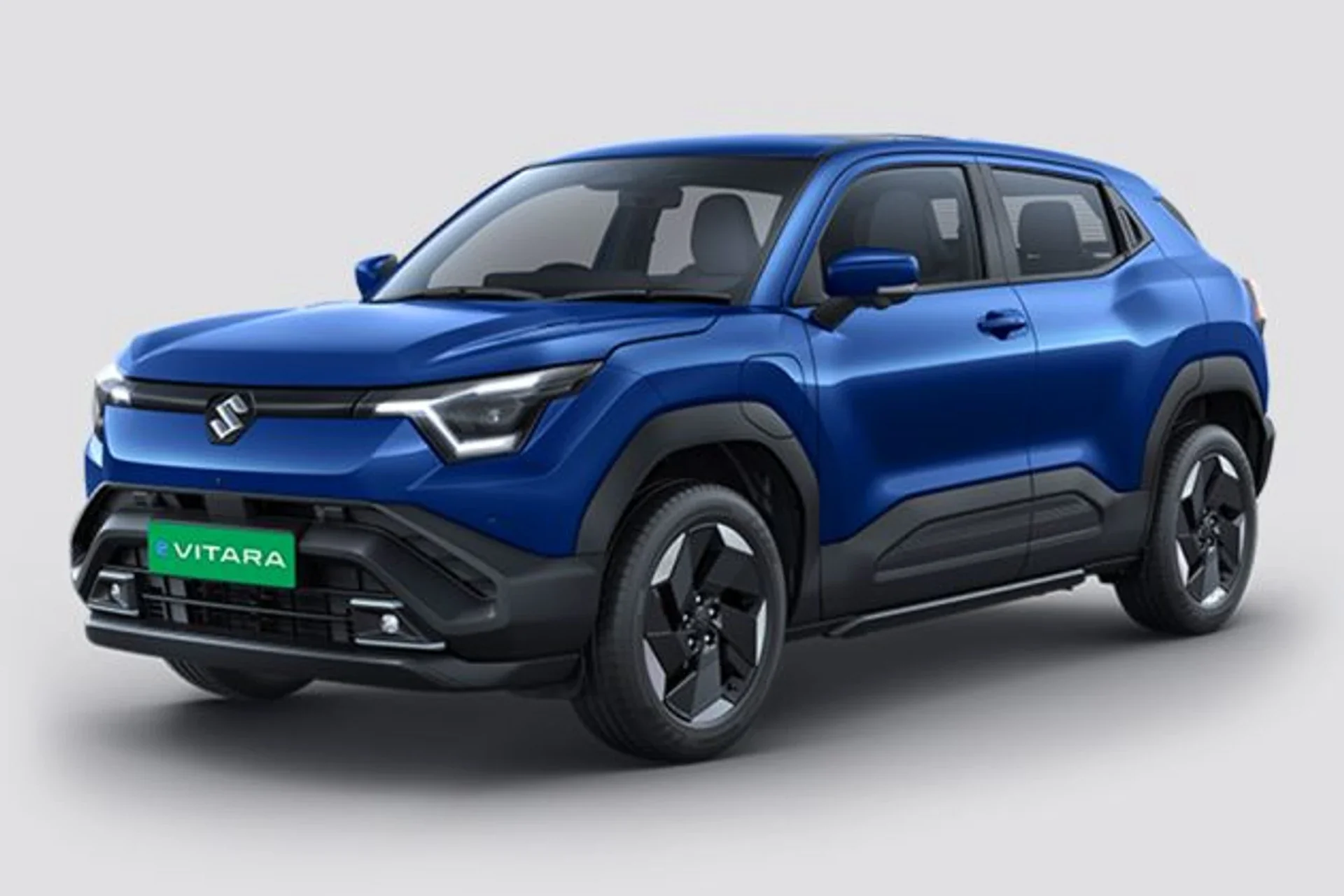
The e Vitara wears the cleanest design Maruti has produced in years: Y-shaped DRLs, split LEDs, hidden rear door handles, and body cladding that makes the battery pack disappear visually. Faisal Khan rates it among the sharpest-looking cars in the segment. It feels designed from scratch rather than adapted. 7.5 / 10 |
Design-led buyerse Vitara's cohesive, purpose-built EV stance reads fresher at the kerb
|
Interior |
The Creta Electric cabin upgrades meaningfully over the ICE version: NFC tap-to-start, cooled armrest storage, flat-bottom steering, and shift-by-wire free up console space. Dual 10.25-inch screens and touch-sensitive dual-zone climate are well-integrated. Mudit Bhambri highlighted the wireless charging pad placement as genuinely practical. 8.0 / 10 |
Maruti's most premium interior yet uses soft-touch materials, 12-colour ambient lighting, ventilated seats, and a fixed panoramic roof. But the execution undermines the ambition: basic functions require menu navigation, and Amit Khare specifically called out seat ventilation buried multiple taps deep. Premium materials cannot compensate for poor ergonomic logic. 6.5 / 10 |
Daily driver familiesCreta Electric's controls stay intuitive when fatigued or distracted
|
Performance |
The 171 PS long-range Creta Electric claims 0-100 in 7.9 seconds. One reviewer clocked 7.5 seconds on a slight downhill, confirming the number is honest. Four paddle-adjustable regen levels and a predictable FWD chassis make it fast and manageable. 8.0 / 10 |
The e Vitara's 174 PS top variant claims 8.7 seconds to 100 km/h. In practice it drives smoothly and linearly rather than with urgency, which suits cautious drivers but disappoints those expecting EV shove. India does not receive the 181 PS AWD variant, which limits the performance ceiling. 7.0 / 10 |
Performance-minded buyersCreta Electric delivers a sharper, more satisfying real-world punch
|
Ride Quality |
The Creta Electric rides on 215/60 R17 low-rolling-resistance tyres with tuning calibrated for the added battery weight. Reviewers describe it as composed on broken urban surfaces but not plush. V3 Cars scores ride quality as the car's weakest dimension relative to its overall package. 7.0 / 10 |
The e Vitara's new dedicated EV platform and 2,700 mm wheelbase give the suspension geometry more scope to absorb impacts cleanly. Early drive impressions describe a smooth, settled character that complements its linear performance. Both cars sit in the same competent-but-not-exceptional tier for this segment. 7.0 / 10 |
Comfort-focused buyersBoth are comparable; e Vitara's longer wheelbase gives a slight edge on stability
|
Build Quality |
Hyundai's global manufacturing standards and the Creta's long production history translate into tight panel gaps and materials that hold up over years of use. The front-mounted charging port is the one build concern reviewers flag: a front-end collision could damage it. Overall, the Creta Electric's build consistency is a known quantity. 8.0 / 10 |
The e Vitara carries a 5-star Bharat NCAP rating, which is its strongest build quality credential. Maruti's domestic manufacturing quality has improved substantially, but the e Vitara is a first-generation product on a new platform. Early long-term durability data simply does not exist yet. 7.0 / 10 |
Risk-averse buyersCreta Electric's proven production record reduces first-year ownership uncertainty
|
Value for Money |
The Creta Electric's pricing is on the market, its feature list is extensive, and the ownership equation includes Hyundai's battery warranty and mapped charging network. Faisal Khan described the charging network integration as value that does not appear on a spec sheet. You know exactly what you are buying. 7.5 / 10 |
The e Vitara's value case is structurally incomplete: pricing remains unannounced. If Maruti prices the 61 kWh variant below the Creta Electric's long-range trim, the calculus shifts. Until that number is public, buyers are evaluating a product without its most important data point. Gagan Choudhary recommended waiting for launch details before committing. 6.5 / 10 |
Buyers deciding nowCreta Electric offers a complete, auditable value proposition today
|
Real-World Range |
The 51.4 kWh long-range variant claims 473 km and integrates with 10,000-plus chargers via in-car payment. The 42 kWh standard-range claims 390 km, sufficient for most urban buyers. Reviewers confirm real-world numbers land within a reasonable margin of claimed figures under mixed conditions. |
The 61 kWh e Vitara claims a longer theoretical range than the Creta Electric's long-range pack, which is a genuine advantage if validated in Indian conditions. However, real-world range data from independent reviewers does not yet exist, and charging network support for the e Vitara is unestablished. The number on the brochure needs mileage behind it. |
Long-distance EV usersCreta Electric's range is proven and its charging network is already working
|
The Creta Electric scores 7.3/10 and the Suzuki e Vitara 6.3/10, from 6 independent creators. The overall number is only part of the story here: the dimension breakdown is where the real comparison lives.