 Image: Citroen press kit
A mechanically excellent, comfortable coupe-SUV let down by a thin feature list, weak brand pull, and patchy dealer network.
The Citroen Basalt is a coupe-SUV that gets the fundamentals brilliantly right: a punchy 1.2 turbo-petrol, class-leading ride comfort, and a genuinely spacious cabin. But it arrives in a feature-obsessed market missing a sunroof, sliding rear seat, and the aspirational polish Indian buyers now expect below Rs 15 lakh.
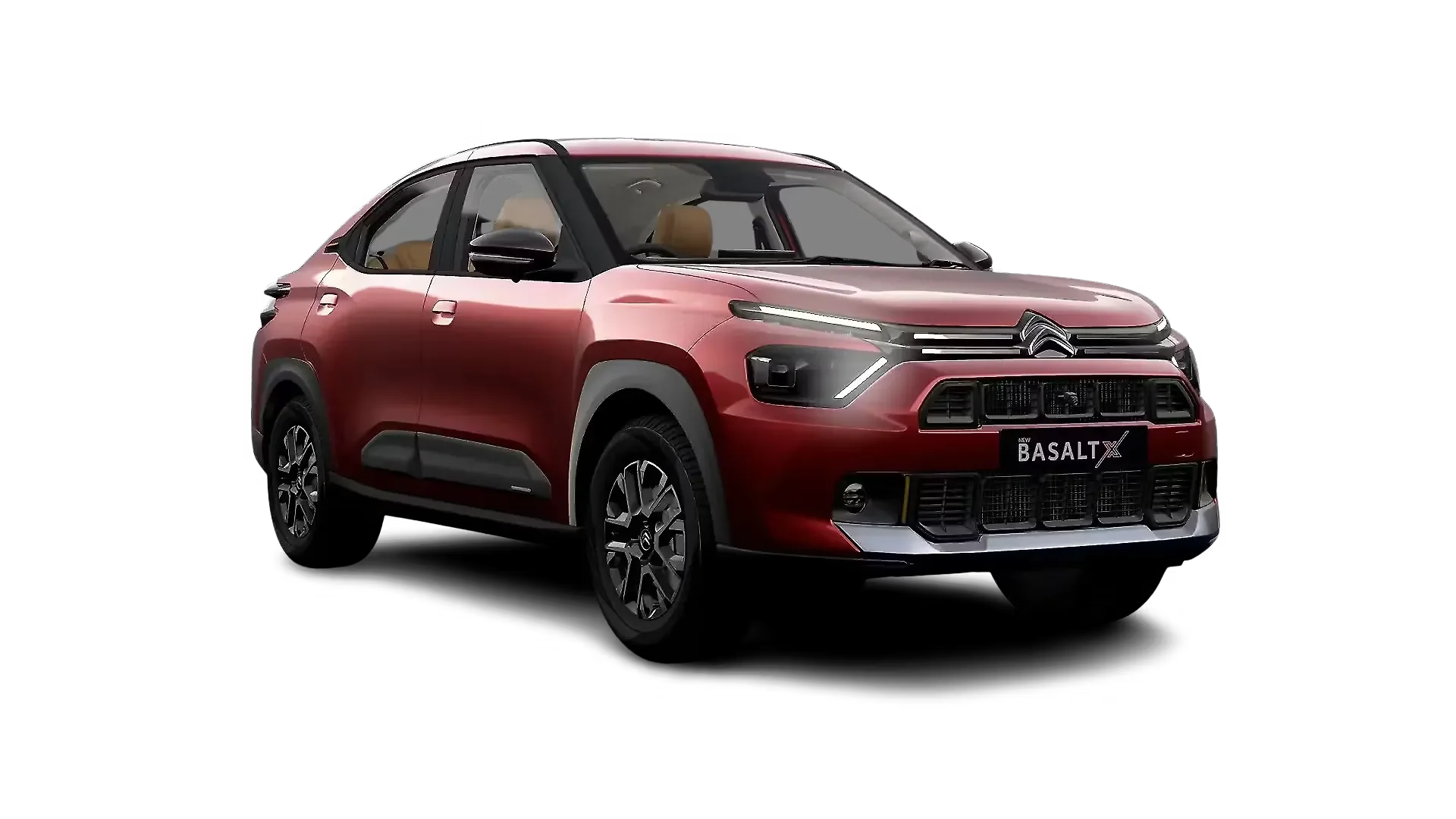
The Basalt wears its coupe-SUV silhouette better than most, drawing cleanly from the C5 Aircross without looking derivative. At 4.3 metres it is longer than any sub-4 SUV yet the 16-inch wheels look a size too small inside those chunky arches, a point Gagan Choudhary flags repeatedly. LED projector headlamps, LED DRLs and jewel-effect tail lamps lift the front and rear, but halogen fog lamps and bulb-type indicators betray the price target. The flap-type door handles and exposed metal keyhole divide opinion: functionally fine, visually dated. The dealer-fit 360-degree camera modules protrude awkwardly from the grille and boot lip, looking like an afterthought. Overall the design lands as distinctive and handsome, particularly in dual-tone, without ever feeling flashy enough to pull showroom footfall on looks alone.
Inside, the updated X trim finally feels its price with a redesigned dashboard, ambient lighting, leatherette upholstery and ventilated front seats. The 10.2-inch infotainment is easy to use with wireless Android Auto and CarPlay, and the 7-inch digital cluster is clean if unspectacular. Rear space is a genuine highlight, the three-step adjustable under-thigh cushion is unique in the segment, and headroom holds up for most despite the sloping roof. The gripes are specific: bezels around both screens are too thick, exposed screws are visible, the AC vent plastics feel budget, there is no sunroof, no tilt-and-telescopic steering, the rear bench does not split or slide, and only the driver window is one-touch down but never up. The 360-camera feed is grainy and eats a small portion of the screen.
Structurally the Basalt feels solid, backed by a 360-degree protection body shell and six airbags standard, ABS with EBD, ESP, hill hold and TPMS. Panel gaps are consistent and the doors shut with a reassuring thud. Where it stumbles is perceived quality: hard plastics on the AC vents, thin door pads, visible screws around the touchscreen, a basic manual day-night IRVM, and the halogen cabin lamps mixed with LED exteriors. V3Cars notes the headlamp throw is adequate for city use but lacks depth on unlit highways, and there are no auto headlamps or follow-me-home function. The dealer-fit 360 camera is the biggest fit-and-finish letdown, with visible wiring and modules that look aftermarket. It is honestly built rather than richly finished.
The 1.2-litre three-cylinder turbo-petrol is the car's beating heart. It makes 110 PS and 205 Nm with the 6-speed torque converter, or 190 Nm with the 6-speed manual, and a naturally aspirated 82 PS 1.2 is offered lower down. MotorBeam rates it among the more responsive units in the segment; the engine pulls cleanly from low revs, cruises relaxed at 120 km/h, and pairs well with the torque converter once you adapt to a slightly sharp initial throttle. The manual's clutch is snappy and shifts less slick, so the automatic is the one to have. Real-world efficiency sits at 8-10 km/l in city traffic with the automatic and 14-15 km/l on the highway. Braking is soft and spongy, and rear drums instead of discs is a genuine miss.
This is where the Basalt genuinely leads its class. The MacPherson front and twist-beam rear are tuned for Indian roads, absorbing broken tarmac, expansion joints and mid-corner ruts with a plushness that puts it closer to a Skoda-VW comfort tune than anything at this price. Namaste Car describes the low-speed compliance as flying-carpet-like, and the 16-inch wheels with taller sidewalls help. Body roll is present if pushed but the car never loses composure. The electric steering is light but weights up predictably and inspires confidence at highway speeds, though feedback is modest. NVH is well controlled with the Basalt slightly quieter in the back than the mechanically related Aircross. Ground clearance is adequate rather than SUV-generous, and the low-hanging exhaust is worth watching over tall speed breakers.
The Basalt X ranges from roughly Rs 9.33 lakh to Rs 15.55 lakh on-road in Mumbai for the top turbo automatic. Judged purely on engineering per rupee, it is strong value: a genuine turbo automatic, huge boot, comfortable ride and six airbags for the money. The problem is the neighbourhood. At the top-end price, a Hyundai Creta automatic, Kia Seltos, Tata Nexon or Mahindra XUV 3XO all offer sunroofs, larger screens, ADAS on some trims, and far denser dealer networks. Citroen's 85-odd dealerships and low brand awareness mean resale and service confidence lag. If you value mechanicals over features and can live with sparse aftersales, the Basalt is honest value. Most Indian buyers, unfortunately, shop the spec sheet first.
"A genuinely good no-nonsense car priced sensibly, but stuck in a market obsessed with features it does not offer."
"The X updates close the hygiene gap enough that buyers should shortlist it, though small niggles like the 360 cam integration remain."
"Flying-carpet ride, class-leading rear thigh support, and a proven PSA turbo engine make it a comfort-first pick."
"Fantastic to drive with a punchy engine and plush ride, but missing sunroof, drive modes and consistent brand support."
"Night-drive experience is only just okay: mixed LED-halogen lighting, no ambient light, and a grainy reverse camera feed."