Maruti Swift vs
Hyundai i20
Swift wins on economy and agility; i20 wins on features and engine range.
Most buyers decide here. Read this before anything else.
- You commute 60-plus kilometres daily and fuel bills genuinely stress your monthly budget.
- You live in a congested city where a compact footprint and light steering make parking feel effortless rather than anxious.
- You are a first-time car buyer who wants a trusted service network within five kilometres of almost any Indian town.
- You carry two adults regularly and occasional rear passengers who are not tall adults.
- You prioritise a smooth, absorbent ride on broken city roads over a sporty steering feel.
- You want six airbags as standard without stretching to a higher trim level.
- You want a turbo-petrol engine that lets you merge confidently on expressways without dropping two gears.
- You spend long hours inside the car and a larger 10.25-inch screen and digital cluster genuinely matter to your daily experience.
- You regularly carry three adults in the rear seat and need the extra cabin width and headroom the i20 provides.
- You are considering the N Line and want a car with genuine enthusiast credibility, not just sporty styling.
- You are buying your second car and find the Swift's interior materials a step below what you now expect.
- You want three engine options including a turbo-petrol and an iMT gearbox to match your specific driving style.
The Swift scores 6.7/10, the i20 6.6/10. In real life, they are built for different people.
The Swift's Z12E three-cylinder delivers strong low-end pull that makes stop-start traffic genuinely effortless, and its smaller footprint simplifies lane changes. Faisal Khan noted the new engine's city tractability is a clear improvement over the outgoing K12. The i20's 1.2L NA engine is smooth but needs to be revved past 3,000 rpm to feel willing, which tires quickly in crawling traffic.
The i20 turbo-petrol's 118 BHP and 172 Nm make triple-digit cruising relaxed and overtaking decisive. MotorOctane noted the DCT's mid-range punch is strong and 0-100 kmph is claimed at 9.9 seconds. The Swift's 81 BHP engine loses its composure past 100 kmph, and Namaste Car flagged that the top-end zing of the old K12 simply is not there anymore.
The Swift's starting price of Rs 6.49 lakh undercuts the i20 meaningfully, and Maruti's resale dominance in the Indian used-car market is well documented across reviewers. MotorBeam consistently notes Maruti models hold value better than Korean competitors in the sub-10-lakh segment. The i20's sharper pricing climb on higher trims compounds its total ownership cost over five years.
The i20's wider cabin and larger glass area make rear passengers noticeably more comfortable on longer journeys. The head-to-head space comparison by The Car Guide confirmed the i20 provides more knee room and headroom for taller rear occupants. The Swift's rear bench suits two adults comfortably but a third passenger on a long drive will feel the pinch.
Scores shown inline. "Best for" tells you who each result matters to.
| Axis | Maruti Swift | Hyundai i20 | Best for |
|---|---|---|---|
Design |
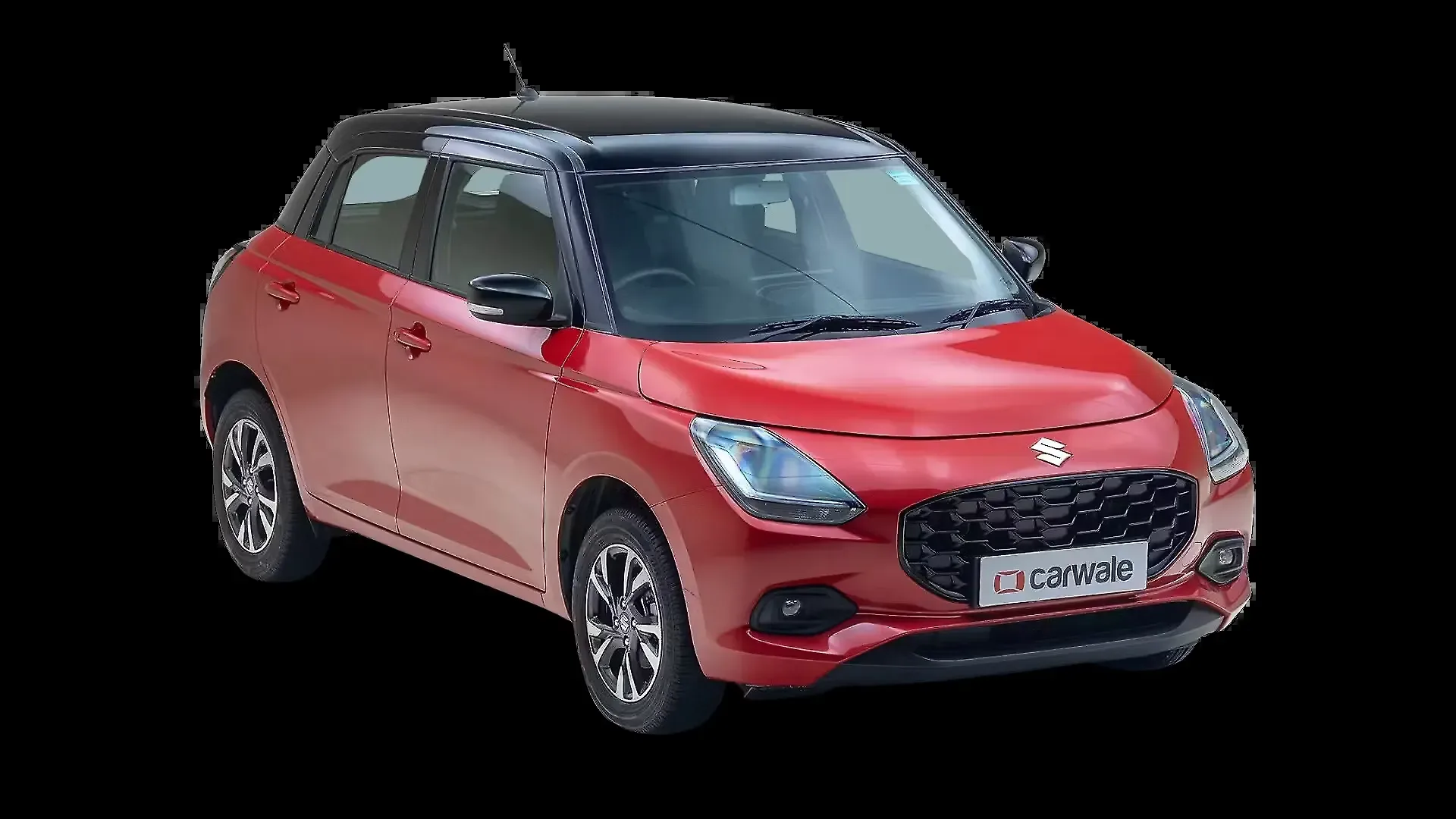
The fourth-gen Swift keeps its signature bonnet wrap but adds smoked LED projectors with boomerang DRLs and a piano-black grille. Faisal Khan flagged that fog lamps and indicators remain halogen, which feels like a missed opportunity at this price. The overall look is evolutionary and familiar rather than bold. 7.5 / 10 |
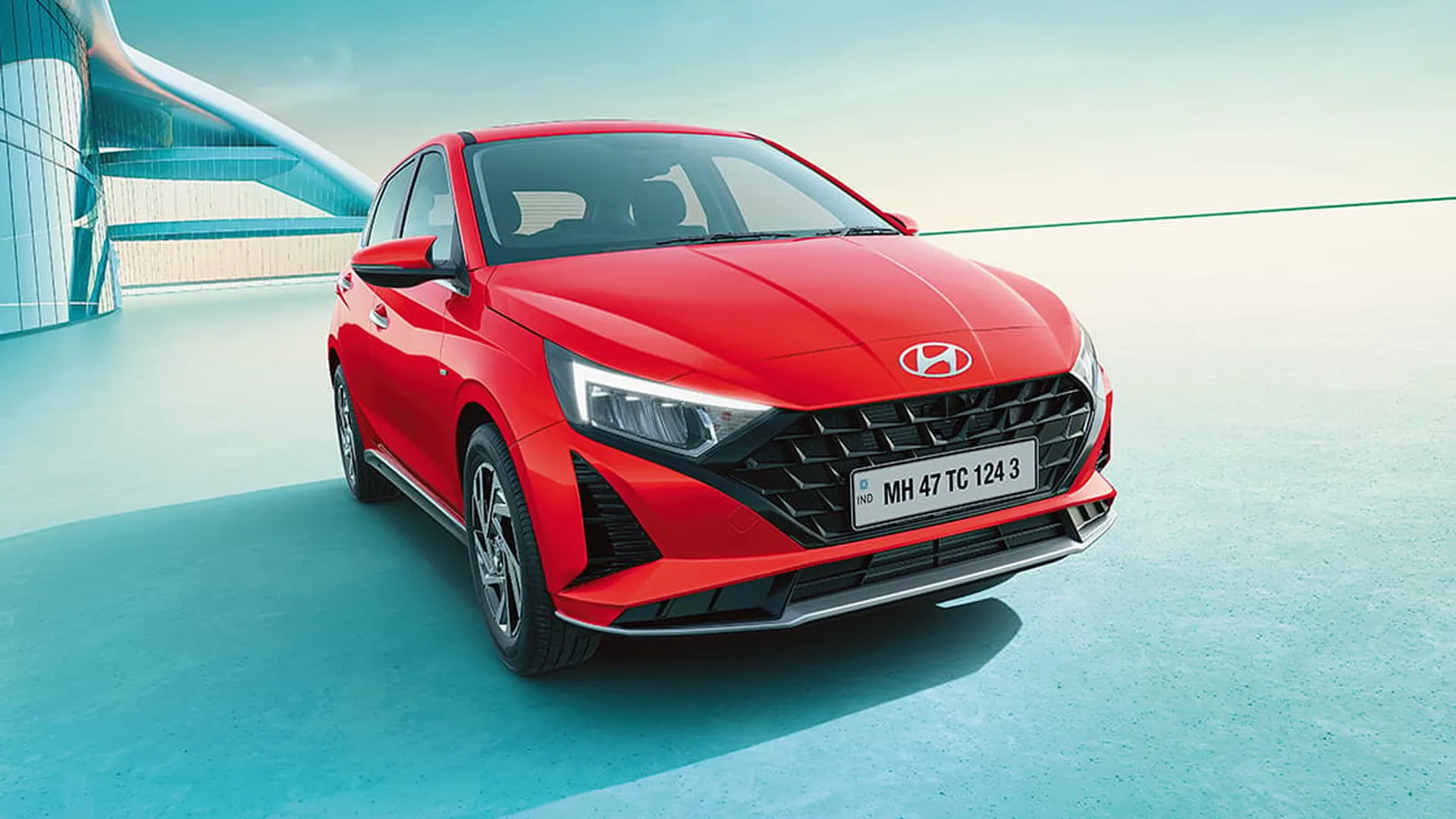
The i20 leads with a parametric jewel grille, projector LED headlamps and sharp character lines that give it real urban road presence. MotorBeam notes the Z-shaped LED tail-lamps divide opinion, but the front end is widely praised as the strongest design in the segment. The 16-inch diamond-cut alloys on top trims reinforce the premium positioning. 8.0 / 10 |
Style-conscious urban buyersi20 commands more kerb presence and visual freshness
|
Interior |
The Swift borrows its dashboard layout from the Baleno and Brezza, with a 9-inch SmartPlay Pro+ touchscreen, wireless Android Auto and Apple CarPlay, and a six-speaker Arkamys system. A wireless charger and automatic climate control are present on higher trims. The material quality is adequate for the price but feels a clear step below the i20. 7.0 / 10 |
The i20 pairs a 10.25-inch touchscreen with a full digital instrument cluster, and turbo variants add red ambient lighting that lifts the cabin mood significantly. Gagan Choudhary consistently flags hard plastics on the door pads as a disappointment given the asking price. Ergonomics are sound and outward visibility is excellent thanks to a generous glass area. 7.5 / 10 |
Tech-forward daily driversLarger screen and digital cluster justify the premium
|
Performance |
The new 81 BHP, 112 Nm Z12E three-cylinder prioritises city usability over outright performance. Low and mid-range response is genuinely improved over the old K12, but Namaste Car confirms the top-end excitement is gone and the engine feels stretched on fast expressways. It suits relaxed urban driving rather than keen drivers. 7.0 / 10 |
Three engines give the i20 genuine breadth. The 1.0L turbo petrol with 118 BHP is the segment's most complete performance package, with strong mid-range punch and a quick-shifting 7-speed DCT. MotorOctane notes initial DCT response from standstill can feel laggy, but once rolling the turbo rewards confident throttle inputs in a way the Swift simply cannot match. 7.5 / 10 |
Expressway commuters and enthusiastsTurbo i20 pulls cleanly at speed where Swift runs out of breath
|
Ride Quality |
The Swift's suspension tune is one of its strongest suits and a clear improvement over the previous generation. MotorBeam noted the new setup absorbs broken city roads and sharp undulations with a plushness that surprises for this segment. At highway speeds it stays composed without feeling floaty. 8.0 / 10 |
The i20 matches the Swift closely on ride quality, with a well-damped setup that suits long-distance comfort. Arun Panwar praised the balance between body control and absorption on broken surfaces. At higher speeds the i20 feels slightly more planted due to its wider track and heavier body. 8.0 / 10 |
Pothole-heavy city commutersBoth absorb city roads well; Swift edges for low-speed comfort
|
Build Quality |
The Swift's panel gaps are tight and consistent, and Faisal Khan noted the body feels solid for its weight class. Door shut quality is acceptable but not class-leading. Interior plastics are functional rather than premium, which is expected at the Swift's entry price point. 7.5 / 10 |
The i20 presents well from outside with solid panel alignment and good paint depth on most trims. Gagan Choudhary's repeated criticism of hard door-pad plastics inside prevents it from feeling truly premium despite the higher price. Overall assembly quality is on par with the Swift rather than clearly above it. 7.5 / 10 |
Buyers prioritising exterior solidityNeither dominates; both deliver class-appropriate build
|
Value for Money |
The Swift starts at Rs 6.49 lakh and tops out at Rs 9.64 lakh, with six airbags standard across all variants. Maruti's service network and low maintenance costs make the total ownership equation compelling. MotorBeam rates the Swift's value proposition as one of the strongest in the segment given what each rupee delivers. 7.5 / 10 |
The i20's pricing has crept up sharply and the turbo-DCT variant crosses Rs 12 lakh on road in most cities, making it a different conversation altogether. The base 1.2L i20 competes closer to the Swift on price but lacks the turbo engine that justifies the premium. Faisal Khan noted the feature-to-price ratio is good but the i20 demands you spend more to get the best of it. 7.0 / 10 |
Budget-conscious buyersSwift delivers more per rupee across its entire price range
|
Practicality |
The Swift is compact enough to slot into tight urban parking with ease, but rear seat space is adequate rather than generous for three adults. Boot space is modest and suits daily grocery runs rather than family holiday luggage. Its light controls reduce fatigue on long city days. |
The i20 offers noticeably more rear headroom and knee room, confirmed by The Car Guide's space comparison. Three adults fit in the rear without the discomfort that creeps in on the Swift. The larger boot and wider doors make child seat installation and loading easier, which matters for young families. |
Families with rear passengersi20's extra cabin space is tangible on longer journeys
|
The Swift scores 6.7/10 and the i20 6.6/10, from 8 independent creators. The overall number is only part of the story here: the dimension breakdown is where the real comparison lives.
The Car Guide - Rishabh Arora: Hyundai i20 vs Maruti Swift : Space Comparison | Best Hatchback of 2020 ?🔥