 Image: Hyundai press kit
A feature-rich, well-engineered premium hatchback that justifies its price for buyers who value equipment, refinement, and a polished driving experience.
The third-generation Hyundai i20 is the most feature-loaded premium hatchback in India, offering three engines, a polished cabin and class-leading equipment. Pricing has crept up sharply, but the i20 remains a sensible choice for buyers wanting a comfortable, well-equipped daily driver. The N Line variant adds genuine sporty appeal for enthusiasts.
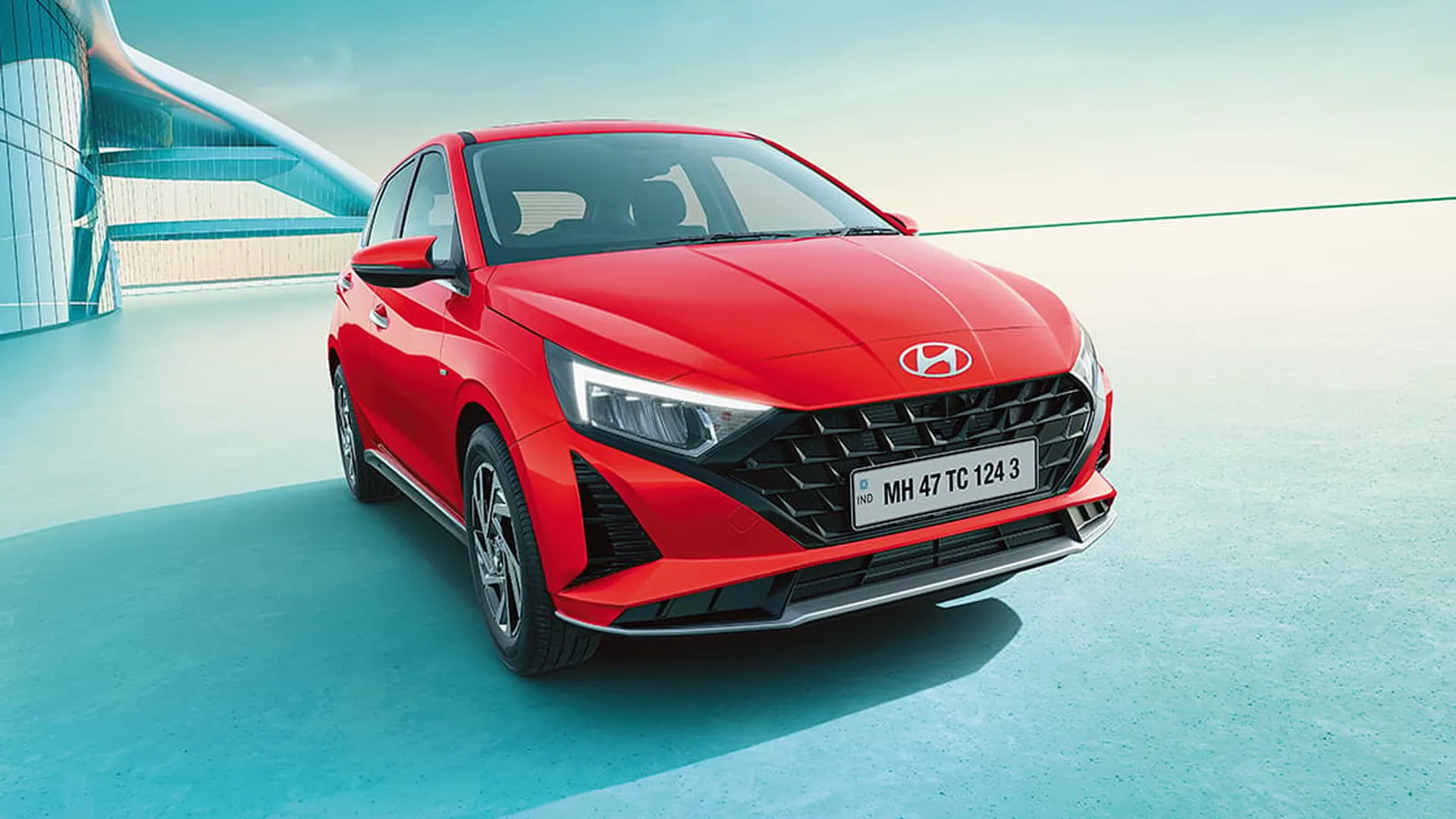
The i20's design splits opinion but rarely bores. The front is the strongest angle: projector LED headlamps, a parametric jewel grille and sculpted bumpers give it real road presence. The profile is clean, with a sharp character line and 16-inch diamond-cut alloys on top trims. The rear, with its Z-shaped LED tail-lamps connected by a chrome strip, is where MotorBeam notes opinion divides, working better in darker shades than lighter ones. The N Line takes things further with red accents, twin exhaust tips, rear disc brakes and a sportier bumper. At 3,995 mm it stays sub-4m, but a 10 mm longer wheelbase and 41 mm extra width make it visually wider than its predecessor. Dual-tone options add appeal.
The cabin is a mixed bag of polish and penny-pinching. The dashboard layout is modern, anchored by a 10.25-inch touchscreen and a digital instrument cluster, with red ambient lighting on turbo variants lifting the mood. Ergonomics are sound, the steering is shared with the Venue and Creta, and outward visibility is excellent thanks to large glass area. The grumble, voiced consistently by Gagan Choudhary, is the absence of any soft-touch material on a car that now crosses ₹11 lakh; hard plastics dominate the dashboard and door pads. Front seats offer good bolstering and under-thigh support, but the rear bench, while wider than before, sits low with limited under-thigh support. Three adults fit, but two plus a child is more realistic for long drives.
Build quality feels solid, with consistent panel gaps, even paint and a reassuring thunk to the doors. Hyundai claims increased high-strength steel usage in the body shell. The feature list is genuinely class-leading: 10.25-inch HD touchscreen with wireless Android Auto and Apple CarPlay, 7-speaker Bose audio with subwoofer, voice commands, wireless charging with cooling, electric sunroof, automatic climate control, cruise control, drive modes, and Bluelink connected car tech with 60+ features. Safety includes six airbags, ESC, VSM, hill-start assist, TPMS and a rear camera on top trims. Notable omissions: ventilated seats, auto-dimming IRVM and a diesel automatic. The infotainment lacks a physical volume knob, requiring touchscreen inputs that distract while driving.
Three engines cover most use cases. The 1.0L turbo petrol with 118 BHP and 172 Nm is the enthusiast's pick, pairing with a 7-speed DCT or 6-speed iMT; mid-range punch is strong, 0-100 kmph is claimed at 9.9 seconds, and the DCT shifts smoothly though initial response from standstill can feel laggy. The 1.2L NA petrol with 87 BHP is refined and city-friendly but needs to be revved hard above 3,000 rpm for overtakes. The 1.5L diesel with 99 BHP and 240 Nm, only with manual, is the long-distance champion: torque-rich, surprisingly refined for a diesel, and capable of 20+ kmpl on highways. Real-world economy ranges from 12-14 kmpl for the turbo petrol to 18-20 kmpl for the diesel.
The third-gen i20 is the most composed yet. Suspension tuning is firmer than before, but Hyundai has avoided crashiness; the car absorbs broken urban surfaces well and settles quickly over expansion joints. High-speed stability is genuinely impressive for a hatchback, with body roll well controlled through corners. The steering is light at city speeds, weighs up modestly on highways, and is precise enough though feedback at the centre remains vague. The N Line, as Faisal Khan notes, gets 30% stiffer dampers, sharper handling and rear discs, but pays for it with a stiffer ride that crashes over bad roads. Standard cars strike a better daily-driver balance. NVH levels are good overall, though tyre noise filters in over coarse surfaces.
Value is where the i20 stumbles. Priced from ₹6.80 lakh to ₹11.18 lakh ex-showroom, the top Asta(O) DCT pushes on-road costs near ₹14.5 lakh, uncomfortably close to compact sedans. The base-to-top spread of nearly ₹6 lakh is steep for a hatchback. The sweet spot is the mid-spec Sportz turbo, which offers most features without crossing into sedan territory. Compared to the Maruti Baleno, the i20 charges a premium for its richer feature list and more polished engineering; against the Tata Altroz, it counters with better engines and infotainment. Buyers wanting a proven city runabout could save with the 1.2L petrol, while high-mileage users should still grab the diesel before it disappears. Long-term running costs remain reasonable.
TeamBHP's review highlights solid build, class-leading features and a polished engine line-up, but flags the absence of soft-touch materials and the steep top-variant pricing. The community recommends the mid-spec Sportz turbo as the value sweet spot.
Read full forum review →"A well-rounded premium hatchback let down only by hard plastics and steep top-trim pricing."
"The N Line nails the sporty-yet-practical brief, but a manual gearbox option would have made it perfect."
"The 1.4 diesel Sportz is a frugal, well-equipped mid-variant though it misses several top-trim features."
"After three months of long-term use, the 1.2 petrol proved refined, light to drive and cheap to maintain."
"A huge step up from the older car with class-leading features, but top variants could have been priced lower."
"Feature-loaded N Line variant brings genuine sporty cues and safety kit to the premium hatchback segment."
"Modern design, premium cabin and a strong DCT make it one of the best-equipped hatchbacks on sale."
"The N Line is the perfect family car for the closet enthusiast, blending practicality with genuine driving appeal."