Maruti Baleno vs
Hyundai i20
One car saves you money; the other spends it justifying every rupee.
Most buyers decide here. Read this before anything else.
- You commute daily in stop-and-go traffic and want the lowest running cost without sacrificing comfort.
- You are buying your first car and want Maruti's nationwide service network as a safety net.
- You have a family of four and need rear-seat legroom that does not punish adult passengers.
- You want automatic convenience on a budget and the new AMT suits your relaxed driving style.
- You prefer a car that disappears into the background rather than inviting opinions at every parking lot.
- You plan to sell in four or five years and want resale value that holds without effort.
- You want the most feature-packed cabin in the segment and are willing to pay a Rs 1-2 lakh premium for it.
- You drive on expressways regularly and want the turbo-petrol's confident mid-range punch for overtaking.
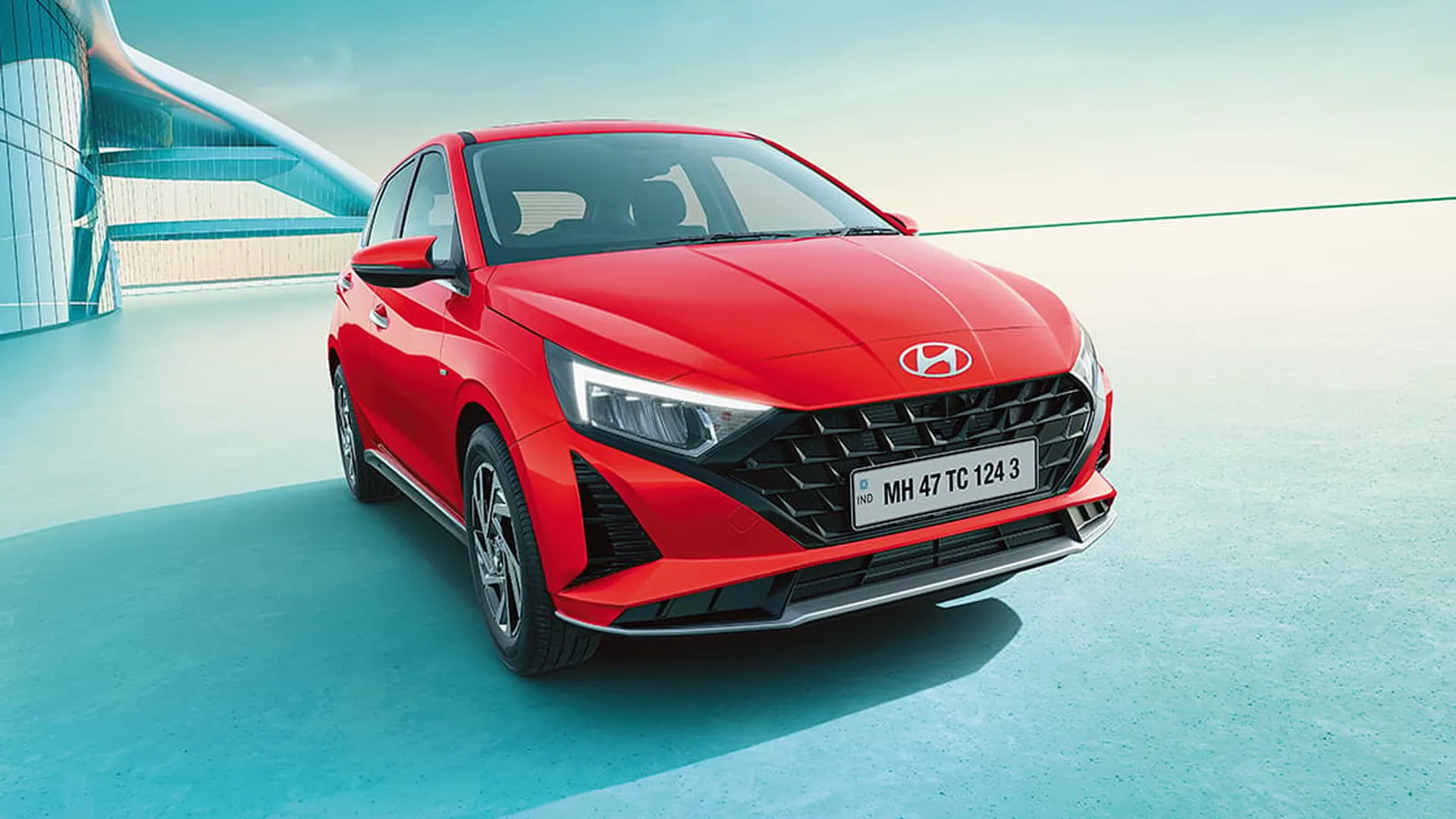
- You care about how your car looks from the kerb and want a design that still turns heads three years on.
- You are an enthusiast on a hatchback budget and the N Line's chassis tuning genuinely matters to you.
- You want a 10.25-inch touchscreen and a fully digital instrument cluster as daily-use tools, not optional extras.
- You are comfortable paying higher EMIs because the cabin quality and equipment justify the ownership pride.
The Baleno scores 7.2/10, the i20 6.6/10. In real life, they are built for different people.
The Baleno's 1.2-litre DualJet engine is the most refined naturally aspirated motor in this segment, and idle start-stop keeps fuel bills low in crawling traffic. The i20's 1.2-litre NA option is similarly smooth but runs out of breath below 3,000 rpm, making constant gear changes tiring. Gagan Choudhary noted the Baleno feels effortless in the city precisely because it never demands you work the engine.
The i20 turbo-petrol's 118 BHP and 172 Nm make highway driving a different experience entirely: a short prod delivers immediate surge that the Baleno's 90 PS simply cannot match. MotorOctane's comparison confirmed the 7-speed DCT shifts cleanly at speed, though initial standstill response can feel laggy in urban bursts. Buyers who cover 500-plus kilometres on weekends will feel the difference every time they pull out to overtake.
Maruti's resale dominance is not a myth: independent data consistently shows Baleno variants retaining 60-65 percent value at the four-year mark, outperforming most Korean rivals. The i20 holds reasonably well but pricing that starts higher means the absolute resale sum feels closer than the percentage gap suggests. For buyers who treat their car as a depreciating asset to be replaced, the Baleno is the rational choice.
The i20 wins this without much debate: a 10.25-inch touchscreen, digital cluster, red ambient lighting on turbo trims and a genuinely modern dashboard layout set it apart. Arun Panwar noted that the Baleno's new blue-insert dashboard is a real improvement but still reads as functional rather than aspirational next to the i20. If you spend two hours a day inside your car, that perceived quality gap matters more than any spec sheet.
Scores shown inline. "Best for" tells you who each result matters to.
| Axis | Maruti Baleno | Hyundai i20 | Best for |
|---|---|---|---|
Design |
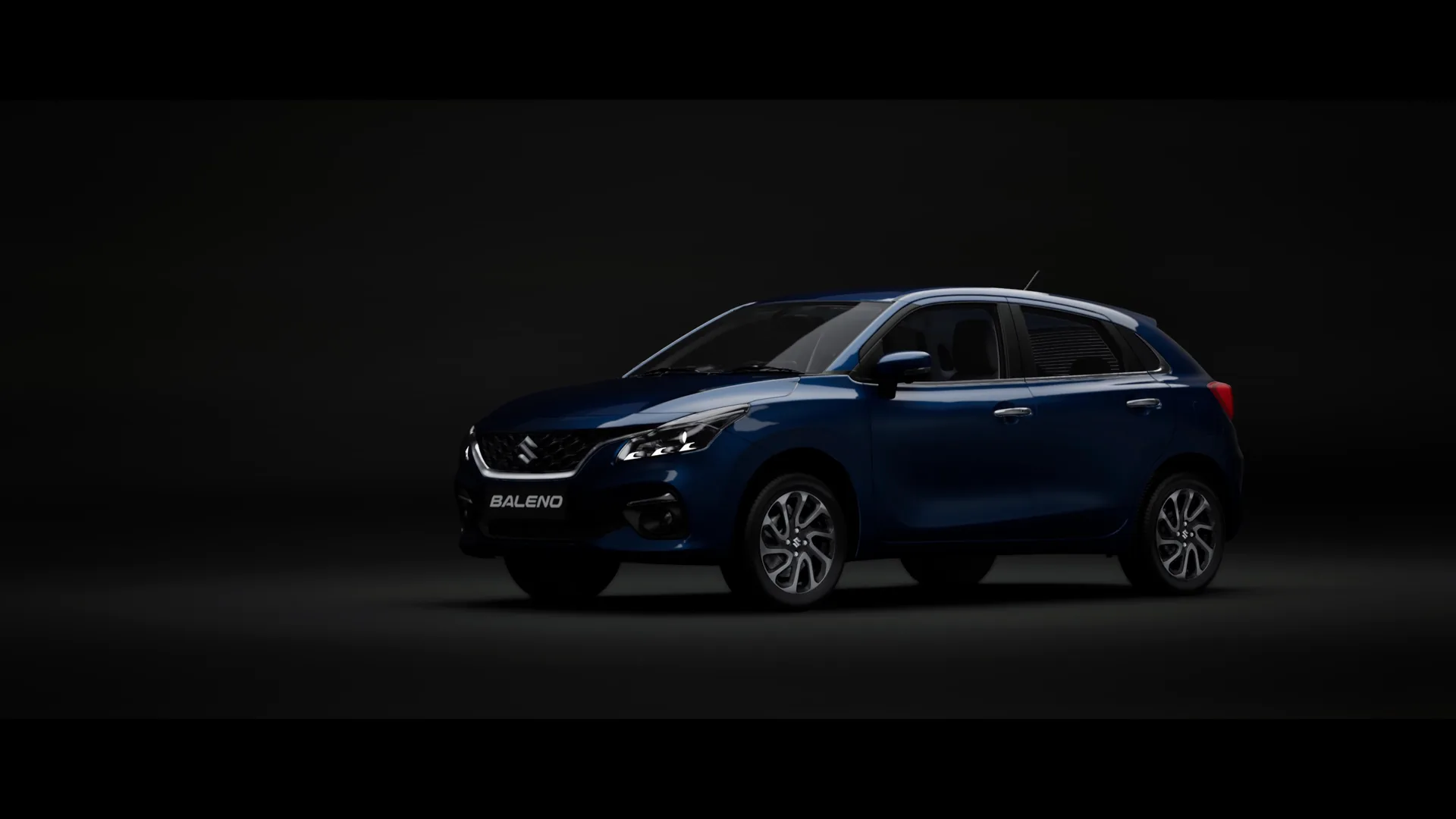
The facelifted Baleno's ice-cube DRL signature and LED projector headlamps with cornering function sharpen the front end noticeably. The profile and rear remain familiar, which reads as restrained to some and stale to others. Namaste Car described the overall package as 'cleaner and more confident' without being dramatically different. 7.5 / 10 |
The i20's parametric jewel grille and sculpted front end give it genuine road presence that MotorOctane called the most eye-catching in the segment. The rear divides opinion: Z-shaped LED tail-lamps connected by a chrome strip work in some colours and feel busy in others. Paint quality across shades is a consistent highlight, with MotorOctane noting the gloss finish is the best of the class. 8.0 / 10 |
Style-conscious urban buyersi20 reads more confidently from the kerb in any colour
|
Interior |
The new dashboard with its blue insert and leatherette door touches is a genuine step up. The 9-inch SmartPlay Pro+ supports wireless CarPlay and Android Auto, and the Arkamys-tuned six-speaker system is noticeably better than before. The overall cabin still feels functional rather than premium, and hard plastics appear in places rivals have addressed. 7.0 / 10 |
A 10.25-inch touchscreen, fully digital instrument cluster and red ambient lighting on turbo variants create an interior that feels a segment above. Gagan Choudhary flagged hard plastics on the lower dashboard as a consistent gripe, a reminder that Hyundai has not eliminated penny-pinching entirely. Ergonomics are sound and outward visibility is excellent thanks to a large glass area. 7.5 / 10 |
Tech-forward daily driversi20's screen and cluster combo justifies its price premium inside
|
Performance |
The 1.2-litre DualJet's 90 PS leads naturally aspirated rivals in this segment, and four-cylinder smoothness is its clearest advantage over three-cylinder alternatives. The new 5-speed AMT is a practical city tool, though it lacks the seamlessness of a DCT at higher speeds. Refinement is the headline: NVH at idle and through the mid-range is excellent by class standards. 7.5 / 10 |
Three engine options give the i20 real breadth. The 1.0-litre turbo petrol with 118 BHP and 172 Nm is the standout, with MotorOctane confirming a 0-100 kmph claim of 9.9 seconds via the 7-speed DCT. The 1.2-litre NA serves city buyers adequately but needs revving hard above 3,000 rpm to feel alive, which erodes the refinement advantage. 7.5 / 10 |
Highway and enthusiast driversi20 turbo's mid-range punch has no equivalent in the Baleno lineup
|
Ride Quality |
The Baleno's suspension tuning is deliberately comfort-first, absorbing broken city roads and highway undulations without fuss. Biturbo Media noted it remains planted at triple-digit speeds without feeling floaty. Ground clearance sits in the 165-170 mm range, adequate for most Indian road conditions. 8.0 / 10 |
The i20 matches the Baleno's ride quality score directly: the suspension soaks up urban imperfections well and highway composure is strong. MotorOctane confirmed ground clearance is broadly similar across all three segment rivals, dispelling any perception of the i20 riding higher. The turbo variant's slightly firmer tune is noticeable but never harsh. 8.0 / 10 |
Families on mixed roadsBoth absorb Indian roads equally well; ride quality is a genuine tie
|
Build Quality |
Maruti claims structural improvements on the facelift, and panel gaps are tight in person. The bonnet insulation is present, helping suppress engine noise into the cabin, a point MotorOctane specifically tested and confirmed. The overall body feel is solid if not class-leading. 7.0 / 10 |
The i20's paint quality is the segment's best according to MotorOctane, and the body panels feel reassuringly dense. However, MotorOctane's bonnet insulation test revealed it is missing on the i20, allowing slightly more engine noise into the cabin compared to the Baleno and Altroz. The gap is not dramatic but it is real. 7.5 / 10 |
NVH-sensitive buyersBaleno's bonnet insulation keeps the cabin noticeably quieter
|
Value for Money |
The Baleno's pricing, Maruti's service network density and strong resale value form a value proposition that is hard to argue against. The new AMT brings automatic convenience at a price point the i20 cannot match with comparable equipment. Independent reviewers consistently flag it as the most sensible rupee-per-kilometre choice in the segment. 8.0 / 10 |
The i20's pricing has crept up sharply with each update, and top trims now enter crossover territory. The equipment list justifies some of that premium, but buyers paying peak i20 money should genuinely cross-shop the Venue. Faisal Khan acknowledged the i20 delivers on its promise but noted that value perception weakens as you move up the trim ladder. 7.0 / 10 |
Budget-conscious buyersBaleno's total cost of ownership is lower across every trim comparison
|
Practicality |
Rear-seat legroom is generous for this class, and the Baleno accommodates three adults in the back without forcing the middle passenger into a punishment crouch. Boot space is adequate for a weekly family shop. The light kerb weight and tight turning radius make parking in dense urban areas noticeably easier. |
The i20 offers comparable rear-seat space, and the large glass area improves the sense of airiness for rear passengers. MotorOctane tested three-abreast seating across segment rivals and found all three broadly workable. The i20's boot is competitive but not class-leading, and its slightly larger footprint can feel unwieldy in tight city parking. |
Urban families of fourBaleno's lighter weight and tighter turning circle suit dense city use
|
The Baleno scores 7.2/10 and the i20 6.6/10, from 10 independent creators. The overall number is only part of the story here: the dimension breakdown is where the real comparison lives.
MotorOctane: 2022 Maruti Baleno vs Tata ALTROZ vs Hyundai i20 - MAHA COMPARISON