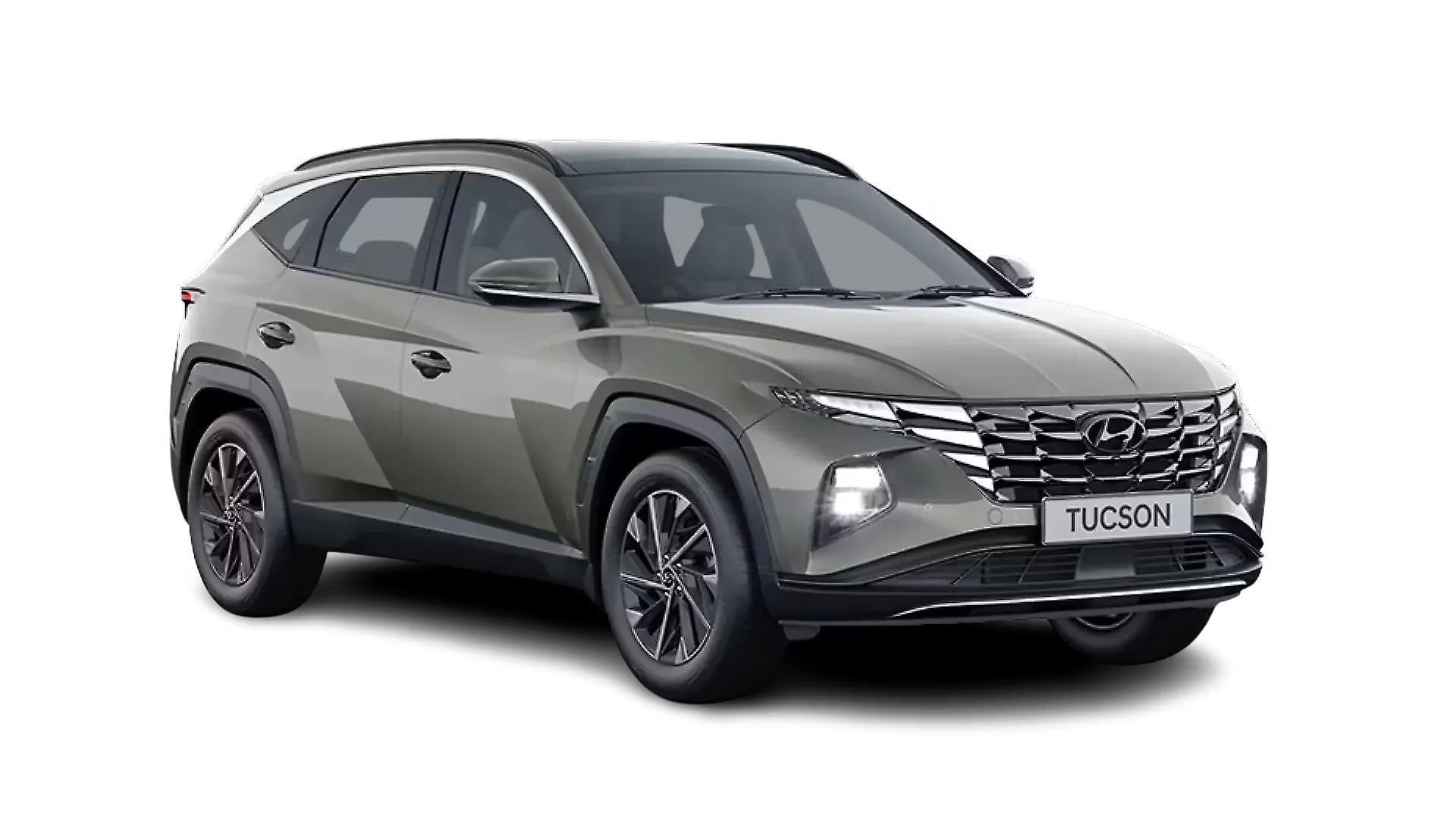
 Image: Hyundai press kit
A genuinely premium, well-built SUV that justifies its price for buyers wanting comfort, AWD capability and Hyundai's feature-rich package.
The 2026 Hyundai Tucson is a premium D-segment SUV that punches above expectations on cabin quality, ride comfort and feature count. The 2.0L diesel with 8-speed AT and AWD is the pick of the range, while the petrol stays adequate but uninspiring. At ₹29-35 lakh, it asks for a stretch but rewards with genuine global-product polish.
The Tucson carries genuine road presence without resorting to gimmicks. The parametric grille hides the LED DRLs until you switch on the lights, at which point they emerge as part of the mesh pattern: a signature trick that still impresses. Proportions are well managed despite the long wheelbase, and the 18-inch alloys fill the arches cleanly. Faisal Khan notes the international model's short-wheelbase version is 75 mm shorter, but India gets the longer car. Sharp creases, functional air curtains, hidden rear wiper and a full-width LED tail-light strip pull the design together. It looks expensive from every angle, which matters at this price point and helps the Tucson feel distinct from the smaller Creta sitting below it.
The cabin is where the Tucson earns its premium tag. Twin 10.25-inch curved displays sit on a redesigned dashboard, and Hyundai has wisely kept physical buttons for climate and audio. Materials are properly upholstered, the steering feels Genesis-grade, and ventilated front seats with 10-way power adjust come standard on top variants. Storage is well thought out: a usable centre console gap, wireless charger, multiple USB-C ports. Rear-seat space is generous with reclining seatbacks, sunshades, rear AC vents and heated outer seats in some markets. The 620L boot is large, with a powered tailgate and 40:20:40 split. Namaste Car points out the absence of a 360-degree camera in the international car; India gets it. Quality is a clear step above the Creta.
Build quality is where the Tucson feels most expensive. Panel gaps are tight, switchgear has weight, the doors thud shut with conviction, and the cabin plastics feel global-grade rather than India-spec. The infotainment is genuinely slick now, with wireless Apple CarPlay and Android Auto, faster graphics, and a usable split-screen mode. Level 2 ADAS includes forward collision avoidance, blind-spot monitor, lane-keep assist, smart cruise and rear cross-traffic alert. Six airbags, electronic parking brake, TPMS, 360-degree camera, ventilated seats, panoramic sunroof and an Infinity sound system feature on top trims. The new electric architecture for the infotainment system is a meaningful upgrade. There is little to fault here for buyers expecting a premium global product.
The 2.0L CRDi diesel produces 186 hp and 416 Nm, now paired with a new 8-speed torque-converter automatic and Hyundai's HTRAC AWD. Power delivery is linear, turbo lag is well contained, and the gearbox responds intelligently without hunting. NVH is genuinely impressive: the diesel clatter audible at the bonnet barely filters into the cabin. The 2.0L naturally-aspirated petrol with 156 hp and 192 Nm is adequate for city use but feels underpowered for highway overtakes and the car's price. MotorBeam expects roughly 12-13 km/l from the diesel. Globally, hybrid and plug-in hybrid options exist, with the PHEV doing 0-100 in 7.9 seconds, but India misses out. For Indian buyers the diesel AWD is the clear pick.
Suspension tuning leans towards comfort, and it works. Small road imperfections are filtered out cleanly, larger speed breakers absorbed without crashing through, and high-speed stability is reassuring thanks to the 235/55 R18 rubber. Gagan Choudhary observes minimal body roll for an SUV of this size, though the car will lean if pushed hard. Sound insulation is genuinely premium-grade. The chief complaint is the brake pedal: initial bite feels hard and inconsistent, requiring acclimatisation in stop-go traffic, though stopping power itself is strong. Ground clearance is adequate rather than generous, so very rough rural roads will demand care. Steering is light at city speeds and weights up acceptably on the highway, though feedback remains modest.
On-road pricing lands in the ₹29-35 lakh range for top variants, with the diesel AWD Signature commanding the top end. That is a significant step over a fully-loaded Creta and asks the buyer to value the larger footprint, AWD capability, premium cabin and refinement on top. There are few direct rivals at this point: most buyers cross-shop the Jeep Meridian, MG Gloster or step up to the Toyota Fortuner for body-on-frame ability. As V3Cars notes, the petrol is harder to justify; the diesel AWD is where the Tucson makes its case. For someone wanting a genuine premium monocoque SUV without going German, it represents fair value despite the missing hybrid option.
"Diesel is the clear pick for performance and efficiency; petrol is just about satisfactory for normal driving."
"Diesel offers a more exciting, refined experience; petrol works for relaxed city driving but lacks character."
"Feature-loaded with HTRAC AWD, Level 2 ADAS and a genuinely premium cabin that justifies the segment-topping price."
"Strong on comfort, refinement and presence, but limited rivals at this price point narrow the cross-shopping pool."
"A globally polished product that finally feels worth the Tucson badge in India, especially in diesel AWD trim."