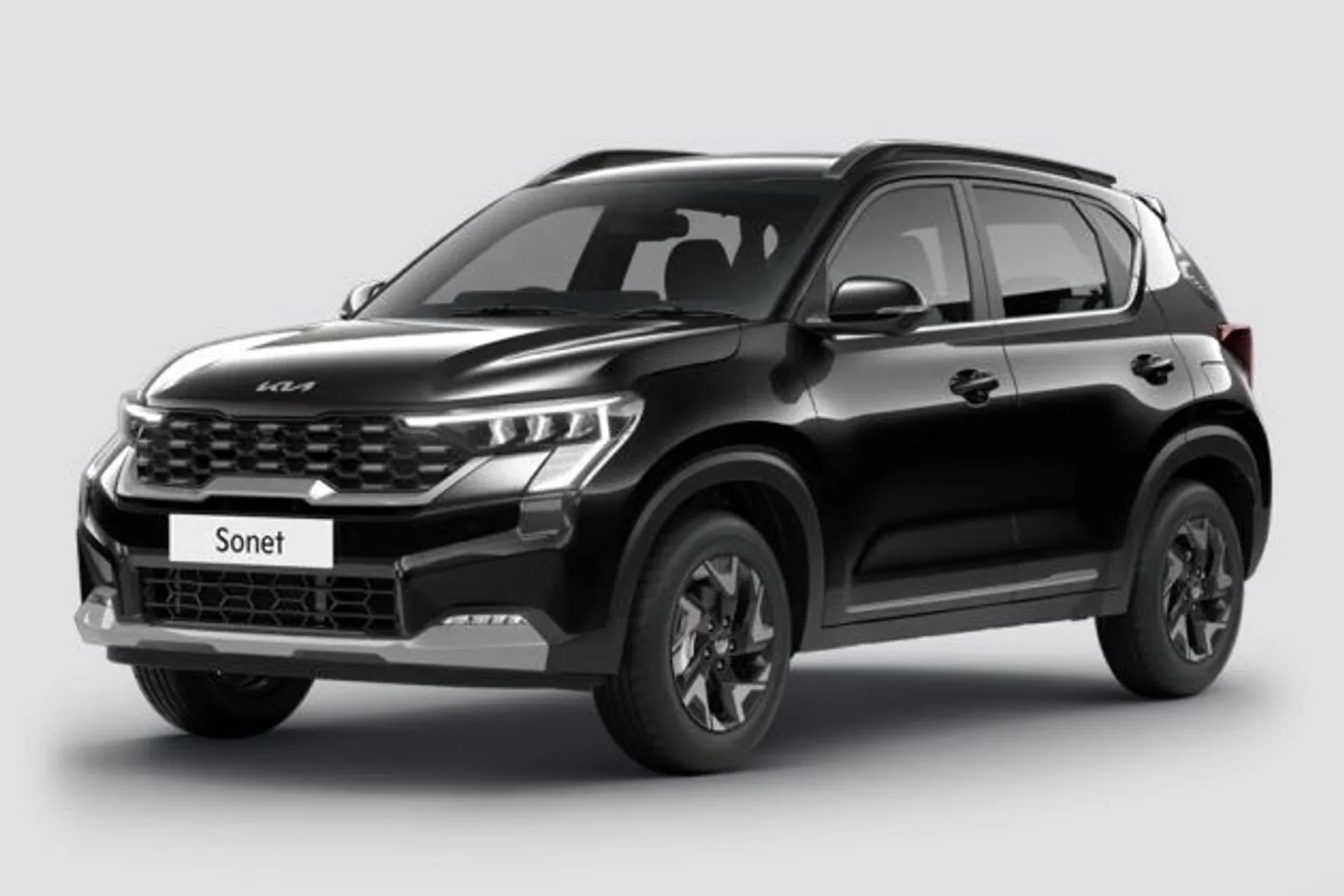
Kia Sonet vs
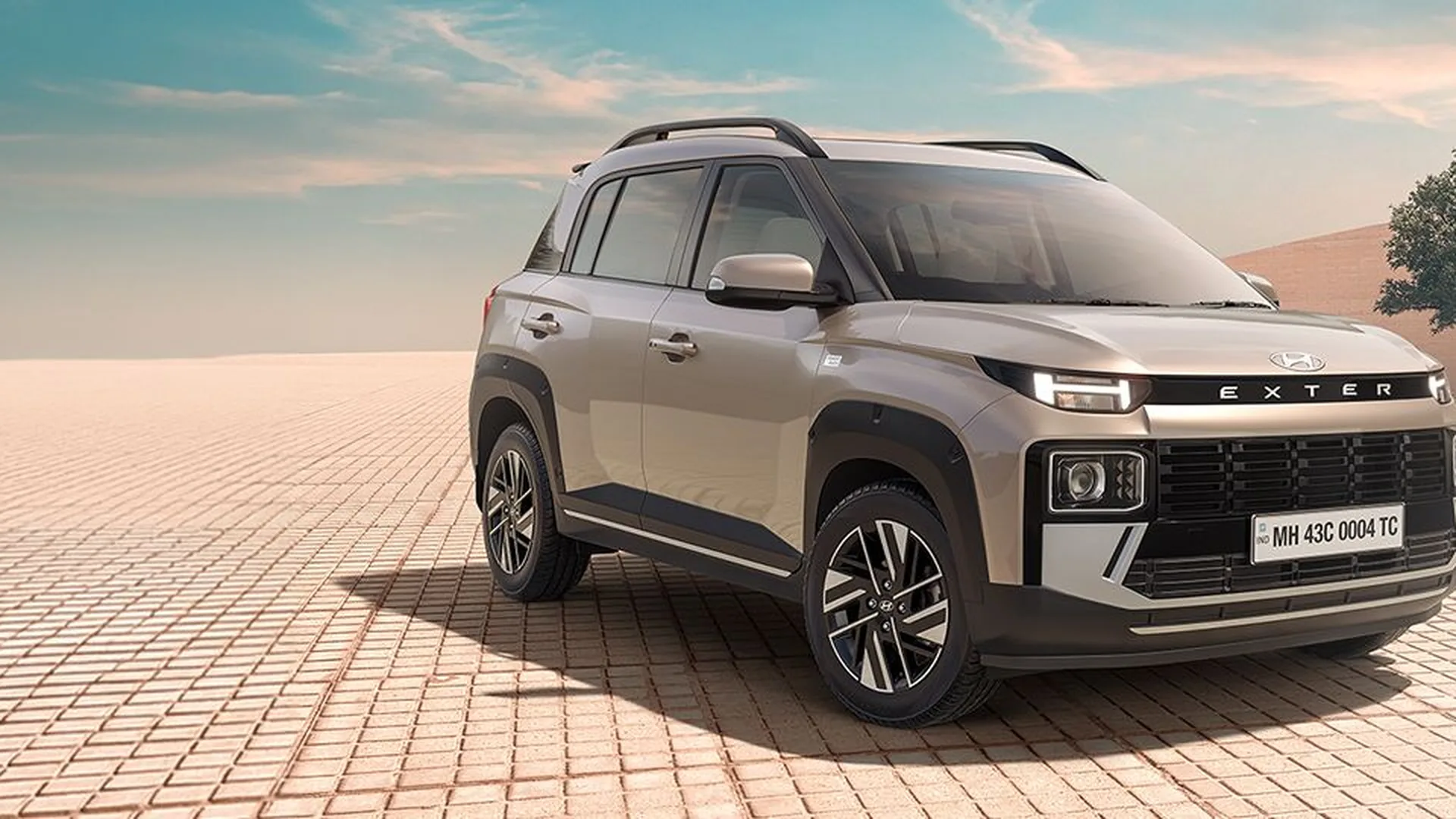
Hyundai Exter
The Sonet rewards drivers who want more car; the Exter rewards buyers who want less stress.
Most buyers decide here. Read this before anything else.
- You commute on expressways at least twice a week and want a car that feels planted above 100 kmph.
- You drive alone or with one passenger and want the sharper, more connected steering to be part of every commute.
- You are comparing top-spec variants and the 7-speed DCT with paddle shifters genuinely excites you.
- You want a diesel option because your annual mileage crosses 20,000 km and running costs matter more than sticker price.
- You work in an industry where the car parked outside signals something, and the Sonet's bold facelift nose reads premium at the kerb.
- You plan to keep the car for 5-plus years and want ADAS, a larger digital cockpit, and features that will not feel dated quickly.
- You park in a tight housing society basement daily and need a genuinely compact footprint that causes no anxiety.
- You drive mostly within city limits and want a refined, unhurried engine that never demands attention.
- You are a first-time car buyer and the Exter's lower entry price, six standard airbags, and standard dashcam make the decision feel safe and complete.
- You carry rear passengers regularly on short trips and value the taller roofline and upright seating that gives the back bench genuine headroom.
- You want the CNG option to slash fuel costs in a city with good CNG infrastructure, without sacrificing a four-cylinder layout.
- You hate complexity; the Exter's simpler powertrain menu, lighter controls, and familiar Hyundai after-sales network reduce ownership friction.
The Sonet scores 7.5/10, the Exter 6.9/10. In real life, they are built for different people.
The Sonet's 1.0 T-GDi DCT pulls cleanly through overtaking manoeuvres and the chassis stays composed on fast sweepers. The Exter's 83 PS motor takes roughly 12.6 seconds to 100 kmph in manual trim and feels breathless when pressed. MotorBeam noted the Sonet's Sport mode delivers genuinely quick paddle-shift response, a quality the Exter simply cannot match.
The Exter's 1.2-litre petrol idles so quietly it can feel stalled, and its light controls make bumper-to-bumper traffic genuinely effortless. The Sonet's DCT can feel slightly jerky at very low speeds in heavy congestion. For a buyer whose entire life is one long traffic jam, the Exter's refinement and smaller turning circle are real advantages.
Kia's resale trajectory in India has strengthened considerably on the back of Seltos and Sonet demand, and the facelift's added ADAS and feature density should hold value in the used-car market. The Exter is newer to the segment and its resale data is still thin, though Hyundai's network and brand trust are strong floors. Namaste Car flagged variant choice on the Sonet as critical, since mid-spec trims hold value better than loaded top variants priced near Creta territory.
The Exter sits taller and its upright cabin gives rear passengers genuine headroom, but the Sonet's longer wheelbase delivers noticeably more legroom for adult rear occupants. The Exter's 83-litre boot advantage over its rivals helps with luggage, but the Sonet's cabin quality and refinement at sustained highway speeds make a long trip feel less tiring for everyone on board.
Scores shown inline. "Best for" tells you who each result matters to.
| Axis | Kia Sonet | Hyundai Exter | Best for |
|---|---|---|---|
Design |
The 2025 facelift brings Kia's newer family face: vertical LED indicators, a slimmer grille, and squared-off LED headlight clusters that give the Sonet an almost monolithic, retro-modern look. Biturbo Media notes the design grows on you in person far more than in launch photos, with bold shoulder lines that read muscular despite the compact footprint. 7.8 / 10 |
The Exter wears H-shaped DRLs and tail-lamps, a shimmering grille insert, and pronounced wheel cladding that lend genuine SUV stance. Faisal Khan notes the body cladding lacks visual symmetry at certain angles, which slightly undermines an otherwise bold street presence. 7.5 / 10 |
Style-forward urban buyersSonet's facelift reads more purposeful and resolved from the kerb
|
Interior |
A 10.25-inch touchscreen paired with an equally large 10.25-inch digital cluster anchors the Sonet's cockpit. Physical shortcut keys, real climate knobs, and a rotary gear selector lift everyday usability well above segment norms. Material quality is class-leading for the sub-4m space. 7.7 / 10 |
The Exter's dashboard borrows heavily from the Grand i10 Nios but adds body-colour vent accents, leatherette steering, contrast stitching, and an illuminated USB port. Fit and finish lead the micro-SUV segment. The 8-inch screen is competent but feels modest next to the Sonet's dual-screen setup. 7.8 / 10 |
Tech-hungry daily commutersSonet's dual-screen cockpit sets a standard the Exter cannot match
|
Performance |
Three powertrain options give the Sonet genuine flexibility: a 1.2 NA petrol for budget buyers, the 1.0 T-GDi DCT for drivers, and a 1.5 diesel for high-mileage users. The turbo-DCT combination is the pick; MotorBeam describes the RPM needle climbing eagerly with paddle-shift response that is genuinely quick. 8.0 / 10 |
A single 1.2-litre petrol producing 83 PS is the Exter's only fuel option, paired with a 5-speed manual or AMT. The engine is refined and clean in city use, but 0-100 kmph in roughly 12.6 seconds manual and 13.5 seconds AMT leaves little margin for confident overtaking on two-lane highways. 6.8 / 10 |
Drivers and highway usersSonet's turbo-DCT combo is in a different performance class entirely
|
Ride Quality |
The Sonet's suspension tune absorbs broken urban tarmac respectably and remains composed at highway speeds, where the larger 15-inch tyres and longer wheelbase contribute real stability. The ride is firm rather than plush, which suits spirited drivers but may fatigue rear passengers on very long trips. 7.8 / 10 |
The Exter's tall-SUV stance and 185 mm ground clearance help it absorb speed bumps and potholed lanes without drama. The trade-off is a slightly bouncy character at higher speeds that the Grand i10 Nios platform was never tuned to suppress. Within city limits, the ride is comfortable and stress-free. 7.5 / 10 |
Mixed-use city and highwaySonet handles the full range of Indian roads with greater composure
|
Build Quality |
Panel gaps are consistent and the Sonet's doors close with a reassuring thud that projects solidity above its segment. Biturbo Media and MotorBeam both highlight the cabin's hard-plastic use on lower panels as the only visible cost-saving measure in an otherwise well-assembled package. 8.0 / 10 |
The Exter impresses with tight panel fit and material selection that genuinely leads the micro-SUV class. The leatherette-wrapped steering and contrast stitching feel deliberate rather than decorative. It does not feel like a budget car inside, which is a meaningful achievement at its price point. 7.5 / 10 |
Budget-conscious quality seekersExter punches above its weight at entry-level prices; Sonet leads at higher trims
|
Value for Money |
The Sonet's mid-spec turbo-petrol variants offer the best value equation: strong performance, a feature-rich cabin, and a reasonable price gap from the Creta. Top variants tip past Rs. 14 lakh and require careful justification. Namaste Car recommends treating the Sonet's variant ladder as a key buying decision. 7.2 / 10 |
Starting at Rs. 7.13 lakh with six airbags, a sunroof, and a dashcam already in the mix, the Exter's value proposition at entry and mid-level trims is hard to argue against. CarLane24's comparison noted a roughly Rs. 52,000 price gap at equivalent base variants, a meaningful saving for a first-time buyer. 7.5 / 10 |
First-time and budget buyersExter delivers a safer, fuller package at lower price points
|
Practicality |
The Sonet's longer wheelbase provides noticeably more rear legroom than the Exter, and its 15-inch wheels and higher ground clearance handle varied terrain without compromise. The boot is adequately sized for weekend luggage, though not segment-leading. |
The Exter's taller roofline creates genuine rear headroom that suits urban families doing short hops. CarLane24 highlighted 83 litres of additional boot space over rivals at the same variant level, making it a practical city car for buyers who carry more than they drive far. |
City families and short-trip usersExter's taller cabin and boot edge suit urban multi-passenger use
|
The Sonet scores 7.5/10 and the Exter 6.9/10, from 7 independent creators. The overall number is only part of the story here: the dimension breakdown is where the real comparison lives.
CarLane24: Hyundai Exter S vs Sonet HTE || hyundai exeter vs kia sonet which is better - Comparison