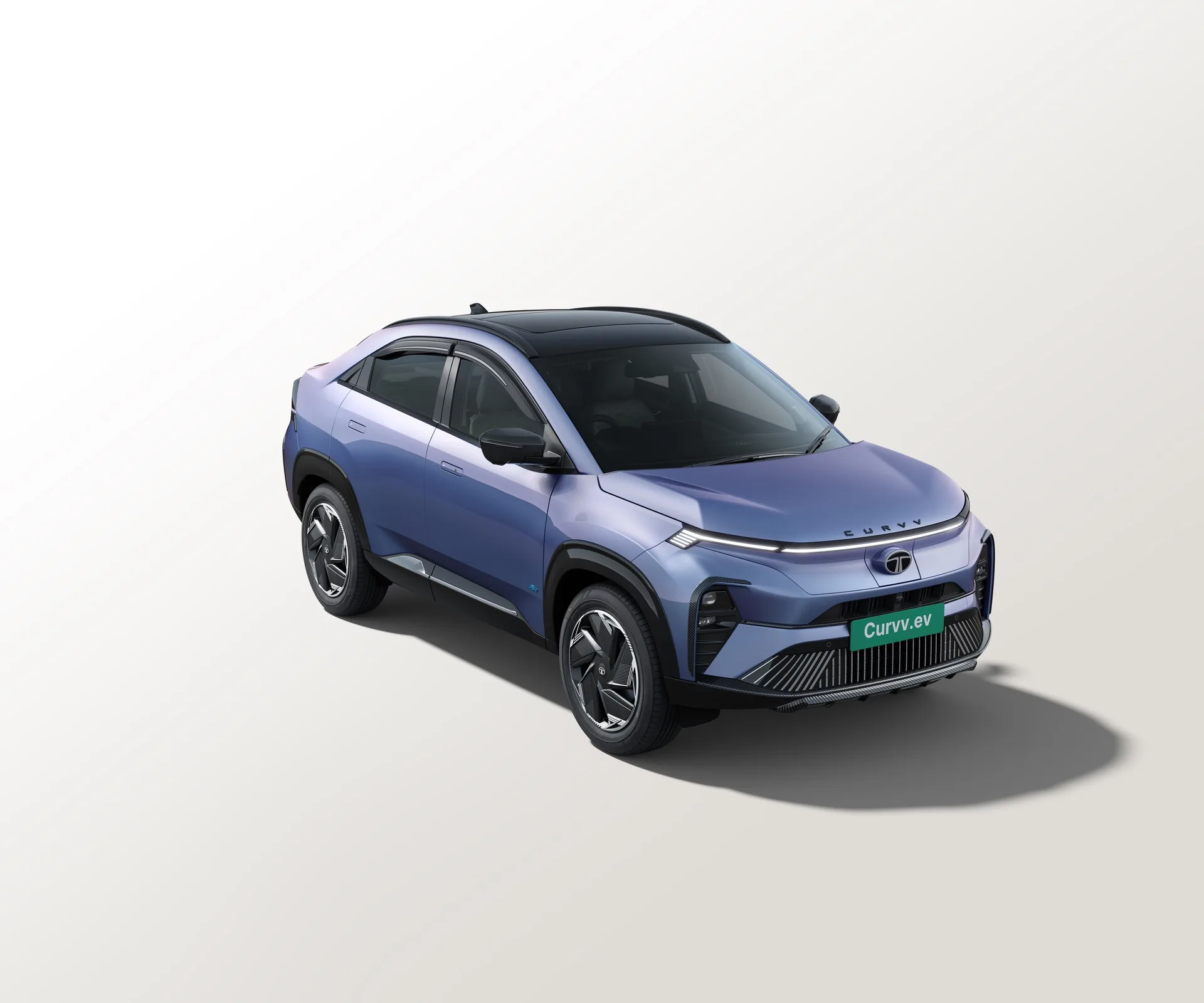
Tata Curvv EV vs
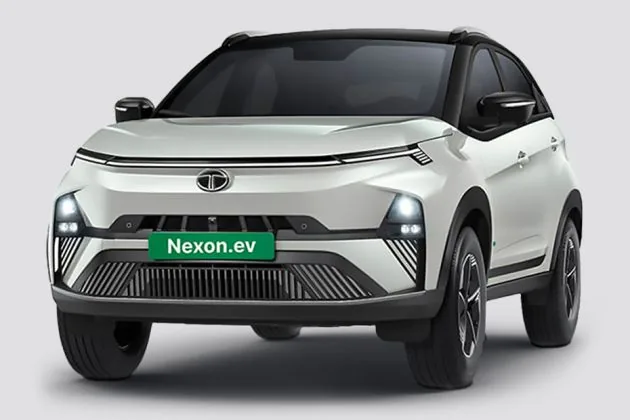
Tata Nexon EV
Choose between a bolder, longer-range statement car and a smarter, safer everyday EV.
Most buyers decide here. Read this before anything else.
- You commute 80-plus km daily and want the confidence of a genuine long-range battery without range anxiety on inter-city weekends.
- You are a design-conscious buyer who wants your car to turn heads in a parking lot full of identical compact SUVs.
- You live in a metro apartment and have access to a DC fast charger nearby, making the Curvv's 70 kW charging speed a practical advantage.
- You are upgrading from a Nexon EV and want meaningfully more space for growing children or elderly passengers on the rear bench.
- You prioritise value at the top trim and are happy to overlook some interior originality in exchange for a larger battery at a competitive price.
- You want Sport mode acceleration that genuinely surprises passengers, and the occasional wheelspin moment matters to your driving identity.
- You want the lowest possible entry price into a reliable, well-rounded electric car and Rs 14.49 lakh is a real ceiling for your budget.
- You have elderly parents or young children who need an upright, easy-entry SUV silhouette rather than a raked coupe roofline.
- You frequently park in tight urban spaces and want a shorter footprint that feels nimble in stop-and-go traffic every single day.
- You value safety equipment and the Nexon EV's reinforced side structure and six airbags give you measurable peace of mind.
- You plan a camping trip or power cut emergency and the V2L and V2V capability means your car doubles as a portable power bank.
- You stream content on long charging stops and the Arcade.EV suite with Netflix and YouTube on a 12.3-inch screen genuinely matters to your family.
The Curvv EV scores 7.4/10, the Nexon EV 7.8/10. In real life, they are built for different people.
The Curvv EV's 55 kWh battery claims 585 km ARAI and Gagan Choudhary's real-world range test confirmed a meaningful buffer over the Nexon EV's 40.5 kWh pack. The Curvv also accepts up to 70 kW DC charging versus the Nexon EV's 50 kW ceiling, so pit stops are shorter. For buyers who regularly push past 300 km in a single day, the Curvv removes a layer of planning that the Nexon EV still requires.
The Nexon EV's smaller footprint genuinely helps in congested city lanes and cramped basement parking lots. Its upright roofline also makes loading children and groceries faster than squeezing items under the Curvv's raked rear. Gagan Choudhary noted that the price overlap between top Nexon EV trims and entry Curvv trims makes the Nexon the sharper urban value pick.
The Nexon EV's V2L and V2V capability lets you power appliances or charge another EV from the car's battery, a feature the Curvv EV does not offer at launch. For buyers in cities with unreliable power supply or those who weekend in remote areas, this is a tangible lifestyle advantage. The Curvv offers no equivalent function at its current price points.
The Nexon EV scores 7.0 on Build Quality versus the Curvv's 6.5, and reviewers including V3Cars flag panel-gap niggles on both, but the Curvv inherits additional concerns around a newer, less-tested platform. The Nexon EV has a longer sales history and a proven service network, which typically supports resale value better. Buyers who change cars every three to four years carry less risk with the Nexon EV.
Scores shown inline. "Best for" tells you who each result matters to.
| Axis | Tata Curvv EV | Tata Nexon EV | Best for |
|---|---|---|---|
Design |
The Curvv EV is India's first mainstream coupe-SUV, and the raked roofline, connected LED tail lamps and integrated spoiler earn genuine attention. The front borrows heavily from the Nexon, but the rear three-quarter is where, as reviewers noted, the design earns its keep. It is a polarising silhouette that rewards buyers who want to stand out. 8.0 / 10 |
The 2025 Nexon EV facelift introduces a full-width connected LED light bar front and rear that doubles as a charging-status indicator, a genuinely clever detail. The profile is sharper than before and the air curtain bumper signals EV intent without shouting. It reads more confident and resolved than the previous generation at the kerb. 8.0 / 10 |
Style-first buyersCurvv's coupe roofline is the bolder statement in any parking lot
|
Interior |
The Curvv EV's cabin is essentially a Nexon EV interior in slightly upgraded clothes, with a shared dashboard, AC controls, door pads and wireless charger. The 12.3-inch Harman touchscreen and 10.25-inch cluster are crisp, and the four-spoke Harrier-style steering wheel adds a premium touch. Buyers upgrading from a Nexon EV will feel immediately at home, which is either reassuring or disappointing depending on expectations. 7.0 / 10 |
The Nexon EV Empowered variant brings a blue-and-black leather-like dashboard, piano-black accents and a flat-bottom steering wheel that feels genuinely fresh. The new 12.3-inch Arcade.EV touchscreen running Netflix, YouTube and games sets a new benchmark for in-car entertainment in this segment. Ergonomic quirks remain, but the overall execution feels more considered than the Curvv's shared architecture. 7.5 / 10 |
Tech and comfort buyersNexon EV's Arcade.EV suite and fresher cabin theme edge it for daily comfort
|
Performance |
The 55 kWh Curvv EV makes 167 PS and 215 Nm, hitting 0 to 100 kmph in a claimed 8.6 seconds. Sport mode delivers genuine urgency, and traction control visibly struggles to contain wheelspin off the line. For a family SUV, it feels meaningfully quick in real-world overtaking situations. 7.5 / 10 |
The Nexon EV's Gen-2 motor produces 145 PS and 250 Nm, and despite losing 38 Nm versus its predecessor, the 20 kg lighter motor helps it reach 100 kmph in 8.9 seconds, quicker than the outgoing car. Top speed rises to 150 kmph. Three drive modes and paddle-shifted regen add driver engagement that the numbers alone do not capture. 7.5 / 10 |
Spirited daily driversCurvv's higher peak power and quicker claimed sprint time give it the performance edge
|
Ride Quality |
The Curvv EV rides on a longer wheelbase than the Nexon EV, and reviewers found it composed on expressways and manageable on broken city roads. The additional weight of the larger battery helps settle the car over sharp edges. It is not plush, but it is competent for most Indian road conditions. 7.5 / 10 |
The Nexon EV's ride is firm at low speeds, a criticism that V3Cars and Car Blogger both flag as a persistent trait. On highways it settles well, but urban potholes at low speed transmit more than buyers expect from a family car. The stiffer setup does help body control, but it asks for a trade-off in comfort that some passengers will notice. 7.5 / 10 |
Highway commutersCurvv's longer wheelbase and added mass give it a calmer highway gait
|
Build Quality |
The Curvv EV scores 6.5 on Build Quality, the weakest dimension in its Jury profile. Reviewers note panel-gap inconsistencies and the shared interior architecture means quality concerns familiar from the Nexon EV carry over. It is not a car that feels fragile, but it does not inspire the confidence its price tag might suggest. 6.5 / 10 |
The Nexon EV facelift scores 7.0 on Build Quality, with a reinforced side structure and six airbags now standard. Panel-gap niggles persist, as Car Blogger noted, but the overall assembly feels tighter than the Curvv on the reviewers' assessment. The longer production history also means Tata has had more time to iron out early build issues. 7.0 / 10 |
Cautious long-term ownersNexon EV's higher build score and proven production maturity reduce ownership risk
|
Value for Money |
Starting at Rs 17.49 lakh and topping out near Rs 22 lakh, the Curvv EV delivers a larger battery, faster charging and a distinctive body style for the premium over the Nexon EV. Gagan Choudhary highlighted that the price bands overlap, making the Curvv a genuine consideration for buyers who would otherwise top-spec the Nexon. The value equation is strong if range and style are your priorities. 8.0 / 10 |
At Rs 14.49 lakh to start, the Nexon EV undercuts the Curvv by a meaningful margin and bundles a 7.2 kW AC charger, V2L capability and Arcade.EV as standard on key trims. For buyers not needing the larger battery, the Nexon EV delivers more usable technology per rupee. It remains India's most feature-dense mass-market EV at its price point. 8.0 / 10 |
Budget-conscious EV buyersNexon EV's lower entry price and richer feature bundling deliver stronger rupee-per-feature value
|
Real-World Range |
The 55 kWh Curvv EV claims 585 km ARAI and Gagan Choudhary's instrumented real-world test confirmed strong range in mixed driving. The 70 kW DC charging capability means top-ups from low charge levels are faster than anything the Nexon EV can match. For buyers who regularly travel inter-city, the Curvv's range buffer removes the planning anxiety that smaller-battery EVs create. |
The Nexon EV's 40.5 kWh battery claims 465 km ARAI, and real-world figures are adequate for urban buyers who charge overnight at home. The 50 kW DC charging ceiling is a step behind the Curvv, but for drivers covering under 60 km daily the distinction is academic. V2L and V2V add a functional dimension to the battery that pure range numbers do not reflect. |
Inter-city EV travellersCurvv's larger battery and faster charging make longer trips less stressful
|
The Curvv EV scores 7.4/10 and the Nexon EV 7.8/10, from 7 independent creators. The overall number is only part of the story here: the dimension breakdown is where the real comparison lives.
Gagan Choudhary: Tata Curvv EV vs Nexon.ev Range, Features, Space Comparison | Gagan Choudhary