 Image: Porsche press kit
The benchmark driver's SUV in its class, provided you accept its sport-first ride and pay heavily for kit rivals include as standard.
The 2026 Porsche Macan arrives in India as two distinct cars: a facelifted petrol on the outgoing platform and an all-new EV on the PPE architecture. Both prioritise driving engagement above everything, with the EV variant emerging as the most credible electric SUV to drive enthusiastically. The catch is CBU pricing, a long options list and a cabin that puts the driver first and rear passengers a distant second.
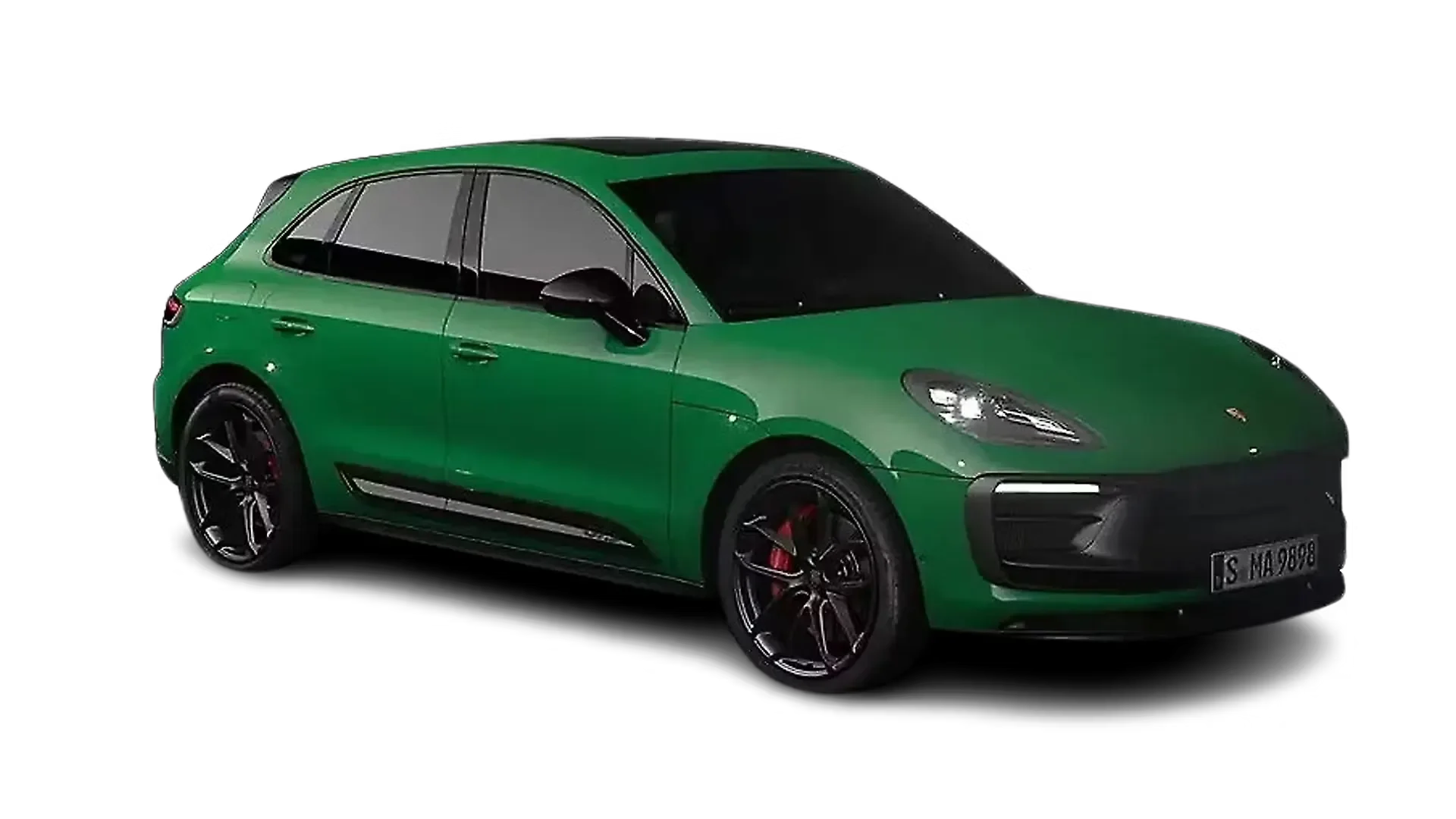
The facelifted petrol Macan sticks to evolutionary cues: revised bumpers, a 3D-effect light bar at the rear, active grille shutters and standard 19-inch wheels (255/55 R19 staggered). The electric Macan, on the PPE platform, moves the game on with split headlamps, frameless doors, a 90-litre frunk and an active rear spoiler. Drag has been obsessively engineered, including air-blade vents Porsche says were tuned at the Weissach wind tunnel. The petrol is 4.7m long with 202mm fixed ground clearance on steel springs; the EV gets adaptive air suspension as standard on Turbo. Wheel options stretch to 22 inches on the EV with 285/40 front and 325/35 rear rubber. Both look unmistakably Porsche, the EV simply looks newer.
The cabin is where the Macan splits in two. The petrol carries over a driver-focused dash with a 10.9-inch screen, haptic centre console buttons and the analogue-feel Sport Chrono clock; it lacks push-button start, wireless charging, ventilated seats and Android Auto. The EV moves to a curved driver display, a passenger touchscreen that blanks out from the driver's angle, an 11kW wireless phone charger and AR head-up display. Material quality, switch damping and stitching are class-leading in both. Rear space is the weak link: the sloping roofline eats headroom, under-thigh support is short and even the EV, the largest Macan yet, is no match for an X5 or GLE on space. As Faisal Khan notes, every cabin decision is driver-centric, rear passengers are an afterthought.
Fit and finish are a clear step above the BMW X3, Audi Q5 and Mercedes GLC, the segment below it sits in by price. Panel gaps, the weighted feel of door shuts, the knurled metal HVAC knobs, the haptic buttons with their distinct tactile click: all of it reinforces the price. Safety kit includes the full airbag count, ESC with Porsche Stability Management, ABS, traction control, ISOFIX, tyre pressure monitoring and lane departure warning. The petrol misses ADAS features that have become standard on cheaper rivals; the EV adds 360-degree camera and more driver assists but still trails the X5 on Level 2 functions. The Bose 14-speaker 710W system is optional, as is the panoramic sunroof at roughly Rs 2.7 lakh extra.
The base petrol uses a 2.0L turbo-four making 261hp and 400Nm, good for 0-100 km/h in 6.4 seconds (6.2 with Sport Chrono launch control) and 232 km/h top speed. The 2.9L twin-turbo V6 in the S delivers 380hp, while the GTS pushes 440hp and 4.3 seconds to 100. The 7-speed PDK dual-clutch is razor-sharp. The Macan EV Turbo is the headline: 857hp normally, 1,156hp on launch, 0-100 in 2.5 seconds, claimed dual-motor AWD with active rear torque vectoring. As MotorOctane confirms, the EV reframes what an SUV in this price bracket can do. Real-world EV range sits around 450-480 km against a 600 km claim. Petrol fuel economy lands at 7-12 km/l.
Handling is where the Macan justifies its badge. Body roll is essentially absent, the steering is heavy at parking speeds but unmatched for precision once moving, and the rear-biased AWD lets the front axle focus purely on turn-in. The petrol on steel springs rides firm over expansion joints and broken patches, a deliberate sport bias rather than a flaw. The EV's standard adaptive air suspension on the Turbo, with separately controllable pitch and roll compensation, is a revelation: it stays flat in corners yet absorbs most urban abuse. Brake feel is strong, especially with the optional carbon-ceramics. High-speed stability is exceptional. As Gagan Choudhary observes, this is the closest an electric SUV has come to feeling genuinely Porsche through a series of corners.
Pricing is the Macan's hardest sell. The base petrol starts around Rs 98 lakh ex-showroom, the S near Rs 1.61 crore and the GTS at Rs 1.73 crore, all CBU. The Macan EV ranges from roughly Rs 1.3 crore to Rs 1.8 crore as tested. That places the petrol Macan around Rs 15 lakh above locally-assembled rivals like the BMW X3 and X5, Audi Q5 and Q7, and the Volvo XC90, all of which offer more standard kit. Porsche's options list is famously aggressive: beige interior, sunroof, larger wheels, sport exhaust, air suspension on lower trims, even key colour can be charged for. The justification has to come from the drive, the brand and the configurability, not the value equation.
"A detailed spec walkthrough confirming the facelift is incremental on hardware but meaningful on cabin tech and safety kit."
"Praises the PDK gearbox and Sport Chrono package as the features that elevate the Macan above its German rivals."
"The Macan EV completely changed his mind on electric SUVs; calls it the most fun driver's car at this price."
"Track time confirms the Macan inherits 911-grade chassis composure, the best-handling SUV he has driven."