 Image: Volvo press kit
A genuinely safe, understated luxury seven-seater for buyers who prioritise comfort and substance over the badge appeal of the three Germans.
The 2026 Volvo XC90 facelift arrives as a Rs 1 crore (ex-showroom) seven-seater that doubles down on Scandinavian understatement, class-leading safety and ride comfort rather than chasing the road presence of its German rivals. A 250 hp 2.0-litre mild-hybrid petrol, four-corner air suspension and a 19-speaker Bowers & Wilkins setup headline the package.
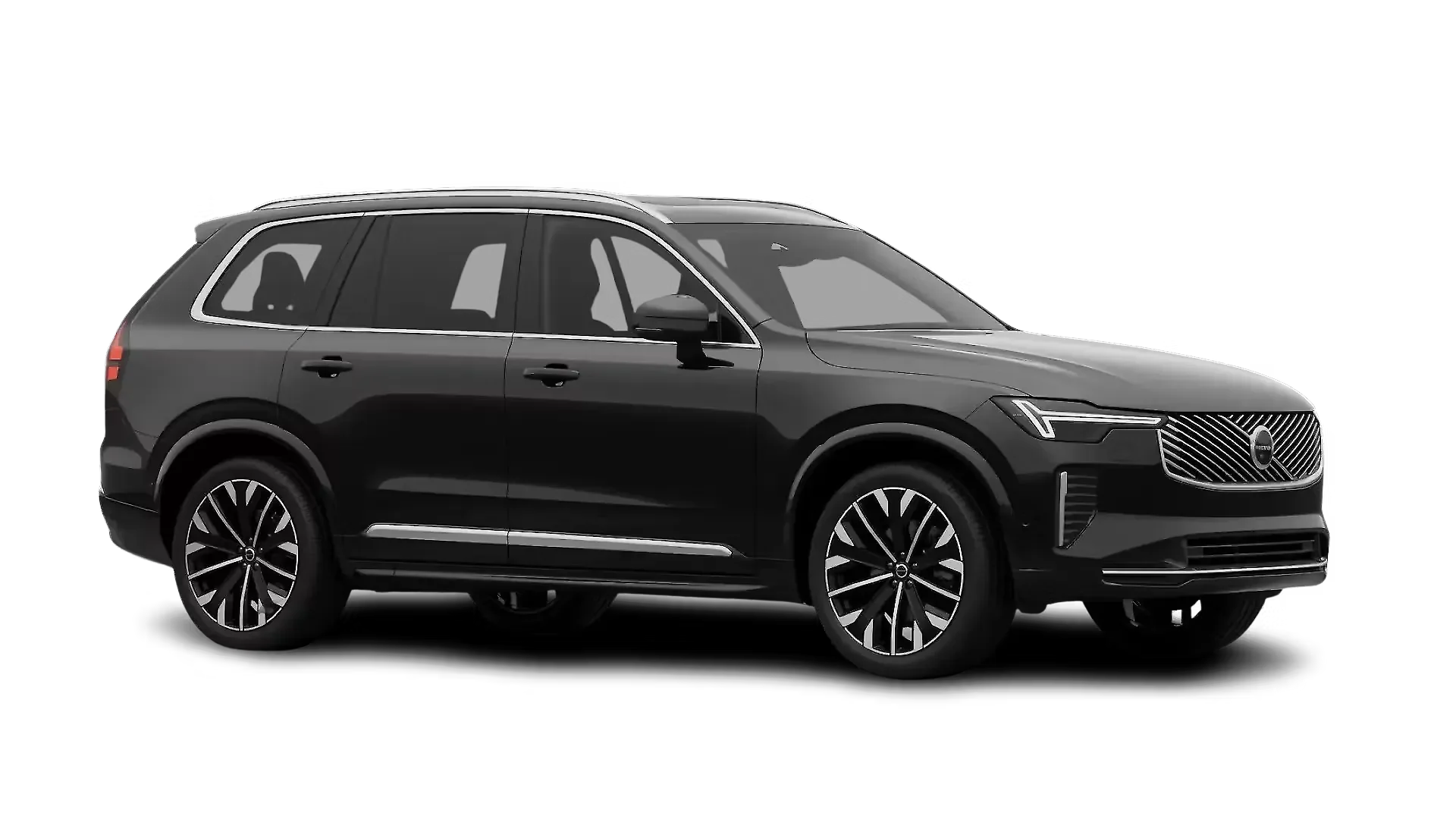
The XC90 facelift sticks to Volvo's confident, understated playbook rather than chasing visual drama. At 4.9 metres long, 2.0 metres wide and 1.7 metres tall, it is sized like a proper seven-seater without feeling oversized in traffic. The updated bumper, graphical grille, T-shaped Thor's Hammer LED matrix headlamps and 20-inch five-spoke black diamond-cut alloys do the heavy lifting. Ground clearance is a usable 267 mm. Six exterior colours are offered including Onyx Black and Crystal White Pearl. As MotorOctane points out, this is deliberately not a status-symbol design: buyers who want to slip under the radar will appreciate it, but anyone cross-shopping the BMW X5 or Audi Q7 for road presence will find it conservative.
The cabin is where the XC90 earns its money. Fine Nappa leather (Blond, Charcoal or Cardamom Brown), open-pore ash or driftwood inlays and a leather-wrapped dashboard set a calm, properly Scandinavian tone. Front seats are power-adjustable with memory, ventilation, heating, massage and lumbar support; the third row is genuinely usable with dedicated AC vents, USB-C ports and reading lights. A panoramic sunroof, four-zone climate control, air purifier with PM 2.5 sensor and a 14,410-watt 19-speaker Bowers & Wilkins system (the same brand fitted to top-tier aircraft) round things off. The main friction, as Gagan Choudhary notes on Volvo's newer interfaces, is the touchscreen-led control philosophy: most functions live inside the 11.2-inch Google-powered display, which demands a learning curve.
Fit and finish is uniformly excellent: doors shut with a solid thunk, panel gaps are tight and even the recycled materials Volvo uses on its newer EVs feel properly assembled. Safety hardware is comprehensive: 7 airbags, pilot assist, front collision mitigation, blind-spot intervention, oncoming lane mitigation, lane-keep assist, 360-degree camera, hill descent control, and a double-locking system that prevents the car being opened from inside if a window is broken. Euro NCAP and US NHTSA both award five stars, and IIHS rates it Good. The XC90 is locally assembled in India alongside markets in Sweden and Malaysia. The Volvo Cars app handles remote pre-conditioning, locking and status, and a 5-year digital services package is included.
Under the bonnet sits a 2.0-litre four-cylinder turbo-petrol with a 48-volt mild-hybrid system, producing 250 hp and 360 Nm, paired to an Aisin 8-speed automatic and all-wheel drive. The 0-100 km/h sprint is dispatched in 7.7 seconds with top speed capped at 180 km/h. Volvo's philosophy, as MotorBeam observes, is deliberate: rather than chasing the six-cylinder outputs of the X5 or Q7, the brand delivers enough performance for confident overtaking and effortless highway cruising. Power delivery is linear with a brief hesitation under hard throttle before the turbo wakes up. The mild-hybrid keeps stop-start smooth and aids low-speed creep. Claimed efficiency is around 12 km/l from the 71-litre tank.
Ride quality is the XC90's standout dynamic trait. The four-corner air suspension monitors road conditions 500 times per second and continuously adjusts damping, soaking up broken Indian tarmac with composure that the conventionally-sprung X5 cannot match. At low speeds the cabin feels genuinely isolated; at highway pace the body stays flat and stable. The 20-inch wheels on 275/45 Michelin Pilot Sport 4 SUV tyres do introduce some firmness over sharp expansion joints, but never crash through. Steering is light and accuracy-led rather than feel-led, which suits the car's character: this is a long-distance cruiser, not a corner-carver. The 12-metre turning circle is manageable, and the active chassis automatically lowers ride height at the boot for easier loading.
At Rs 1 crore ex-showroom for the sole B5 Ultra petrol variant, the XC90 sits in serious company. The BMW X5, Audi Q7 and Mercedes-Benz GLS all bring six-cylinder engines, stronger brand pull and arguably better road presence. What the Volvo counters with is genuine seven-seat usability, the best safety credentials in the segment, a truly compliant air-suspension ride and standout audio. Buyers cross-shopping the Volvo XC60 at around Rs 84 lakh should note the XC90 adds a usable third row, air suspension and a vastly better stereo for the extra spend. If badge prestige and outright performance top your list, the Germans win. If substance, safety and comfort matter more, the XC90 makes a quietly compelling case.
"A safety-loaded, feature-rich seven-seater at Rs 1 crore with class-leading air suspension and a Bowers & Wilkins setup."
"Not a face-value car but a substance-first one; ideal for buyers wanting comfort and sukoon over flash."
"Volvo refuses to chase German power figures; pick this for understated styling and genuine safety, not status."
"Mature Volvo ADAS calibration and Google-powered interface work well, but the touchscreen demands a learning curve."
"Linear performance, supple ride and clever turbo-lag tech make this a relaxed long-distance luxury cruiser."