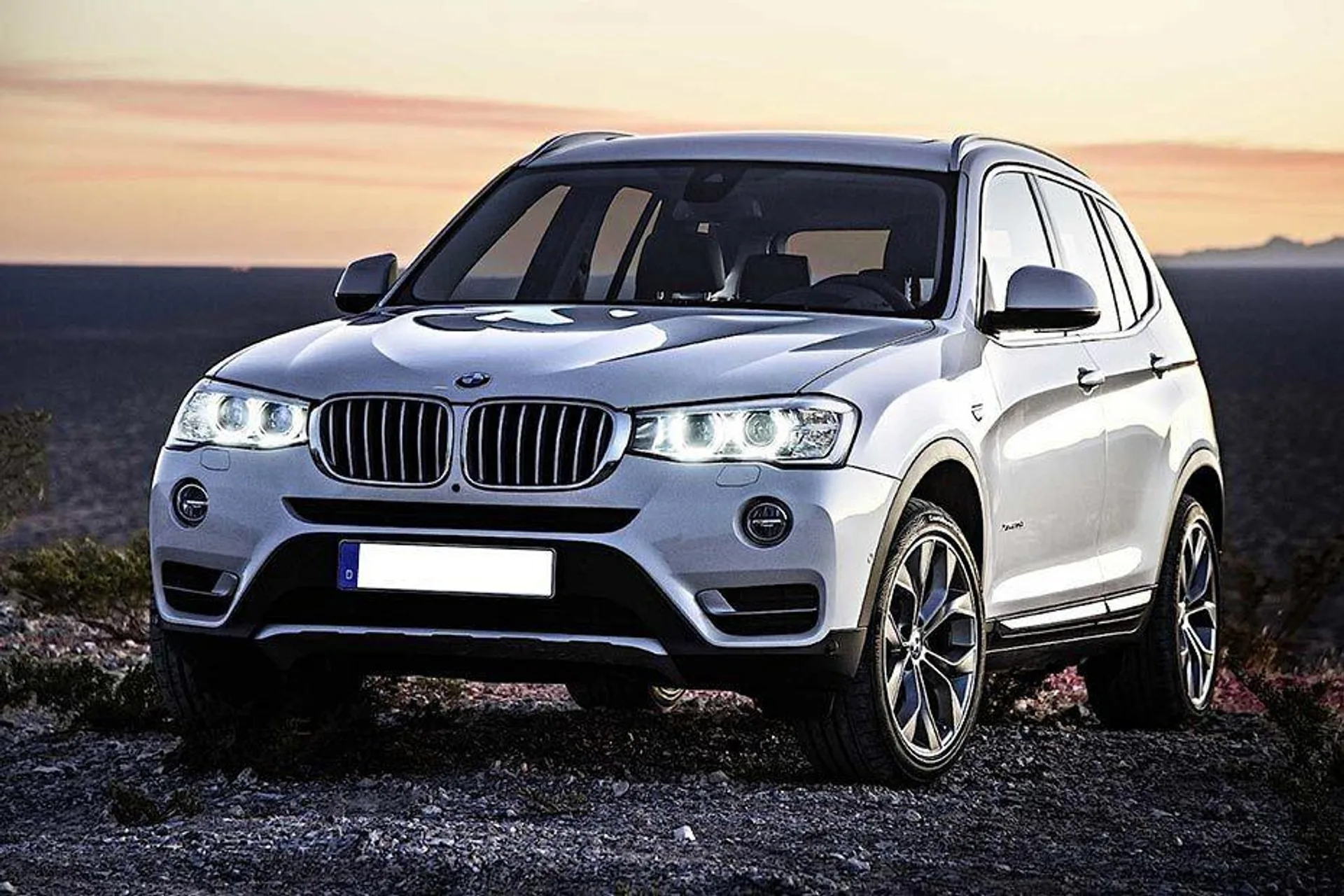
 Image: BMW press kit
Class-leading driving dynamics, refined diesel and excellent ADAS make the X3 the segment benchmark, despite a cumbersome touchscreen-heavy cabin and steep pricing.
The fourth-generation BMW X3 (G45) arrives longer, wider and softer than before, with a 2.0L diesel and two petrol tunes, all mild-hybrid assisted. It sets a new ride and handling benchmark for the segment, but BMW's screen-everything cabin philosophy is divisive at this price.
The G45 X3 is 4.76m long, 1.92m wide and rides on a 2.86m wheelbase, longer and wider than the outgoing car but lower. The illuminated kidney grille, L-shaped adaptive LED headlamps and flush door handles modernise the silhouette, though the sloping roofline gives it an almost station-wagon stance from certain angles. Faisal Khan notes the design photographs poorly but works in person, especially at night when the grille pulses and the M logo projects onto the floor. The M Sport Pro adds blacked-out trim, red brake calipers and a staggered 20-inch wheel setup (255/45 front, 285/40 rear). Against the Mercedes-Benz GLC it looks more athletic; against the Volvo XC60, more aggressive. Five exterior colours are offered in India.
The cabin is where the X3 polarises. A 12.3-inch driver display and 14.9-inch curved touchscreen running iDrive OS9 dominate the dashboard, supported by crystal-cut ambient lighting in 15 colours, a 1.8m fixed panoramic roof and 100% vegan upholstery. Quality is excellent where hands fall, the Harman Kardon 15-speaker 750W system is superb, and the AR navigation projected onto the head-up display is genuinely class-leading. The problem: too many functions live inside menus. Seat ventilation, AC airflow direction and even headlight controls require taps rather than buttons, the gear lever has been replaced by a small toggle, and the glovebox is so small the owner's manual lives in the boot. Rear knee room is adequate, the centre tunnel hump is large.
Doors shut with a reassuring thud and the M Sport seats with adjustable bolsters and lumbar are excellent for long drives. However, MotorBeam highlights that lower-dash plastics and certain trim panels feel flimsy for a car at this price, and one fuse-box flap was found open from the factory. Safety is comprehensive: eight airbags, Euro NCAP five stars, 360-degree cameras with a wash function on each lens, reversing assistant that retraces 50m, and what reviewers unanimously call the best-calibrated ADAS in the segment, intervening only when needed. Blind-spot view alert is a notable omission. The drive recorder uses all four exterior cameras plus an interior selfie camera, doubling as a sophisticated dashcam system.
Three engines are offered, all 2.0L four-cylinder units with 48V mild-hybrid assistance adding roughly 15hp and 25Nm. The B47 diesel (197hp, 400Nm) is the pick: tested 0-100 km/h in 7.4-7.67 seconds against a 7.7-second claim, with turbo lag well contained by the electric boost and exceptional refinement despite no bonnet insulation. The base 20i petrol makes 190hp/310Nm, while the new 30i M Sport Pro tested by MotorBeam pushes 258hp and 400Nm for a 6.3-second 0-100 run. The ZF 8-speed torque converter is quick and smooth, paddle shifts hold gears, and a 10-second boost paddle adds urgency. Power delivery is flat rather than dramatic, but the rear-biased xDrive AWD makes every input feel sharp and deliberate.
This is where the new X3 truly moves the segment forward. Adaptive dampers paired with conventional tubeless tyres (the old run-flats are gone) deliver a low-speed ride that genuinely glides over broken urban surfaces, with only occasional thump from the low-profile rubber. High-speed composure is sure-footed, body roll is well contained, and the 50:50 weight distribution makes corner entry instinctive. The steering is light at parking speeds but loads up beautifully with feedback when pushed. Namaste Car points out six drive modes (Personal, Efficient, Comfort, Sport, Relax, Expressive) each altering damping and display layout. The car has been deliberately softened versus the previous generation, which purists may lament but most buyers will welcome on Indian roads.
Ex-showroom pricing starts at around Rs 71.2 lakh for the 20i petrol and Rs 73 lakh for the 20d diesel, with the new 30i M Sport Pro at roughly Rs 76 lakh ex-showroom. On-road Mumbai for the diesel M Sport tested touches Rs 94 lakh, roughly Rs 1 lakh above the equivalent GLC diesel and similar to the outgoing Audi Q5 top variant. That is a steep 15-20% jump over the previous generation. Against the Mercedes-Benz GLC the X3 is the sharper driver's choice; against the Volvo XC60 it offers more dynamic appeal; against the BMW X5 it remains the more sensible, manageable size. The petrol 20i is hard to justify given the diesel's superior refinement, torque and 17 km/l claim.
"Loves the car but cannot live with the touchscreen-everything cabin; calls the diesel faster than BMW claims."
"Detailed walkaround highlighting segment-leading dimensions, six drive modes, eight airbags and the largest panoramic roof in class."
"The 30i M Sport Pro adds genuine punch and visual aggression, making it the pick for enthusiasts wanting practicality plus pace."