 Image: Mercedes-Benz press kit
A more mature, tech-laden GLC that nails luxury and refinement, though the stiffer low-speed ride and missing keyless entry sting at this price.
The second-generation Mercedes-Benz GLC arrives in India as a larger, more feature-loaded SUV with a C-Class-inspired cabin, a 48V mild-hybrid petrol and a punchier diesel. It is the most comfort-and-tech-oriented choice in its segment, though Mercedes has chosen to skip air suspension and some basic conveniences for the Indian market.
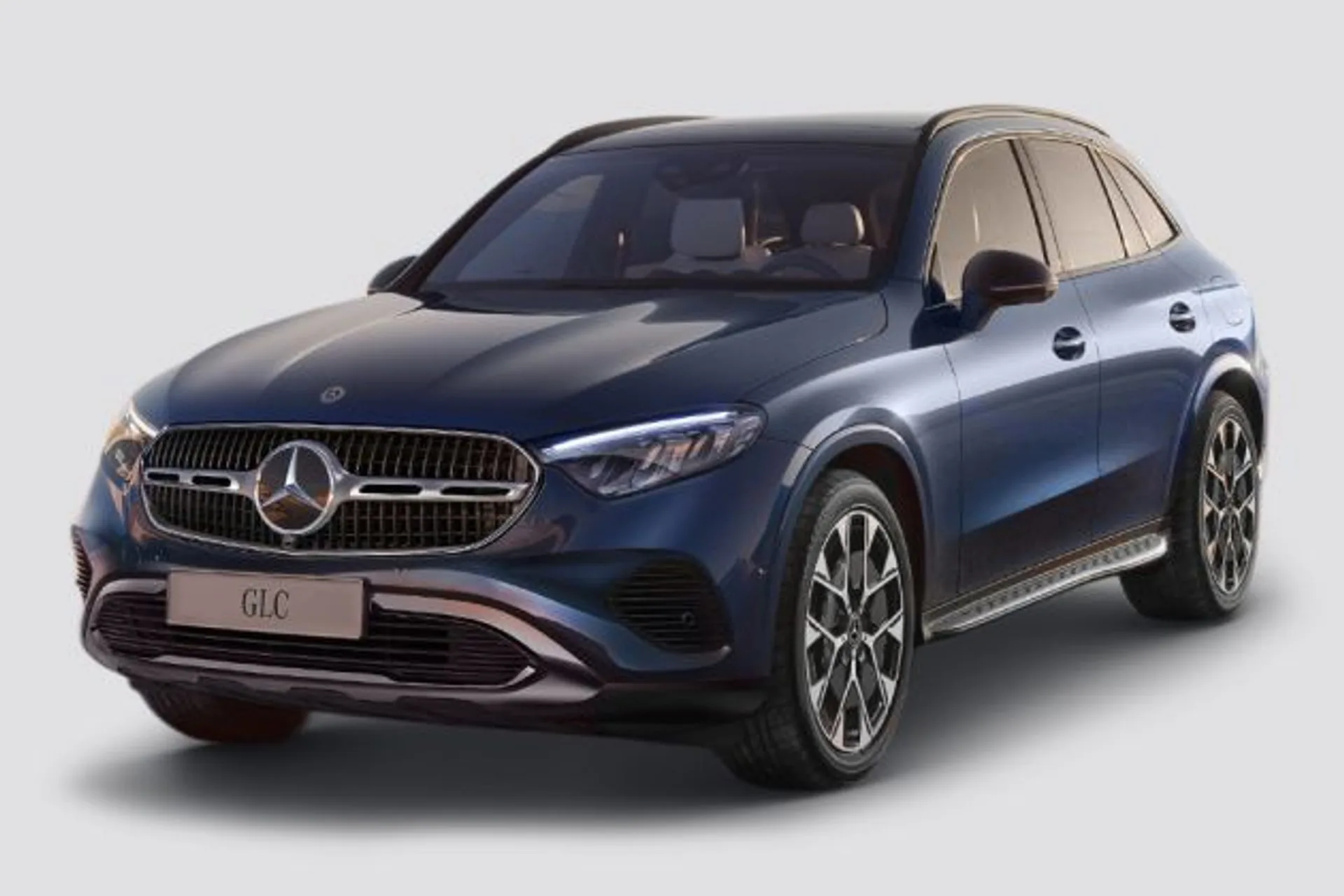
The new GLC grows in every direction: length crosses 4.7 metres, the wheelbase stretches to nearly 2.9 metres, and ground clearance is up 20mm over the global car. The Avantgarde trim tested wears LED High Performance headlamps, 19-inch alloys on 235/55 Continentals, and a signature grille hiding the ADAS radar. Faisal Khan flags the fake exhaust tips and dummy air-curtain inserts as unbecoming for the price. The AMG Line styling pack adds proper functional vents. The running boards look smart but are too narrow to be useful and tend to dirty trousers in the monsoon. Overall the design reads as evolutionary, unmistakably a GLC, with sharper detailing on the tail lamps and integrated Mercedes lettering on wipers and reflectors.
The cabin is where the GLC justifies its price. The dashboard is lifted almost wholesale from the C-Class, with an 11.9-inch portrait touchscreen tilted six degrees toward the driver, a 12.3-inch instrument cluster with multiple themes including a dedicated off-road display, and 64-colour ambient lighting that extends into the doors. Material quality, stitching and the turbine-style AC vents feel a class above. The Burmester 710W 15-speaker system is the segment benchmark for audio. Front seats get memory, heating, lumbar adjust and electric thigh extension. Rear space is adequate for two adults under six feet, but the reclined backrest angle and average under-thigh support make longer journeys less comfortable than a C-Class sedan. Boot is 620 litres, up 70 litres, with a 40:20:40 split.
Fit and finish are excellent inside, but there are odd omissions. There is no keyless entry and no request sensors on the door handles, both baffling for a car expected to retail above Rs 80 lakh. The paddle shifters are plastic rather than aluminium. Traction control can only be disabled by digging through touchscreen menus. The wireless charging pad hides the phone so you cannot see charging status. On the plus side, you get seven airbags including a knee bag, a 360-degree camera with a transparent bonnet view that genuinely helps off-road, biometric fingerprint profiles for up to seven users, MBUX with OTA updates, wireless Apple CarPlay and Android Auto, and the first NTG7 implementation in a Mercedes SUV in India.
India gets two engines, both with 48V mild-hybrid assistance via an integrated starter generator that adds 23hp and 200Nm of momentary boost. The GLC 300 petrol now makes 258hp and 400Nm from its 2.0-litre turbo, paired with the 9G-Tronic and 4MATIC all-wheel drive, doing 0-100 km/h in 6.2 seconds. The diesel produces 197hp and 440Nm and is the easier daily companion thanks to better low-end torque, completing the same run in around eight seconds with a claimed 18-19 km/l. Petrol returns a claimed 14.7 km/l, with real-world figures of 10-11 km/l in the city and around 14 km/l on the highway. The gearbox is smooth and intelligent, the engine quiet under cruise and only mildly vocal when pushed hard.
The GLC has been stiffened by around 15 percent for sharper body control, and on Indian roads this shows up as a busy low-speed ride that thuds over expansion joints and sharp ruts. Air suspension and rear-wheel steering, available globally, are not offered here, which Gagan Choudhary points out is the single biggest dynamic compromise. Above 60 km/h the ride settles, the cabin gets impressively quiet thanks to foam-filled body cavities, and high-speed stability is excellent. The steering is light and quick, easy in traffic but short on weight and feedback for enthusiastic driving. Handling is composed with well-contained body roll, but this is clearly tuned for luxury rather than the sharper BMW X3. Brakes are strong and progressive, with a useful auto-hold function.
The petrol GLC 300 is expected to retail around Rs 80 lakh on-road in Mumbai, with the diesel near Rs 85 lakh, broadly matching the BMW X3 at Rs 82-85 lakh and undercutting the Porsche Macan. MotorOctane pegs the EMI at Rs 1-1.25 lakh per month depending on tenure. For buyers prioritising cabin luxury, audio and ride comfort, the GLC makes a strong case over the sportier X3 and the upcoming new Audi Q5. The diesel is the smarter long-term pick: better torque, around 18-19 km/l claimed, and lower CO2 emissions than the petrol. The lack of air suspension, ADAS depth and keyless entry hurt the value equation, but residuals and Mercedes service reach remain segment strengths.
"Drives better than before with a more mature cabin, but missing keyless entry at this price is shocking."
"Comfort-and-tech focused SUV that nails refinement, though stiffer suspension noise and limited ADAS are real gaps."
"Feature-rich package with 5-star safety, panoramic sunroof and strong connected-car tech justifies the premium ask."
"Interior premium-ness and ride comfort are class-leading; pick this over X3 if luxury matters more than handling."
"Used 2020 GLCs at Rs 59-62 lakh make a strong case; diesel 4MATIC is the smarter long-term buy."
"Fills the gap between GLA and GLE neatly; practical, spacious, with sharp handling and strong dynamics."