 Image: Audi press kit
The all-new generation lands in India only in 2026, and the current Q5 remains a competent but feature-light buy against the BMW X3 and Mercedes-Benz GLC.
The Audi Q5 remains one of the most driver-focused mid-luxury SUVs under Rs 1 crore, blending a refined 2.0 TFSI petrol with a well-built, quiet cabin. The all-new generation arrives in India only in 2026, promising bigger screens, mild-hybrid tech and air suspension, but the current car already offers strong value if you can live without ventilated seats and ADAS.
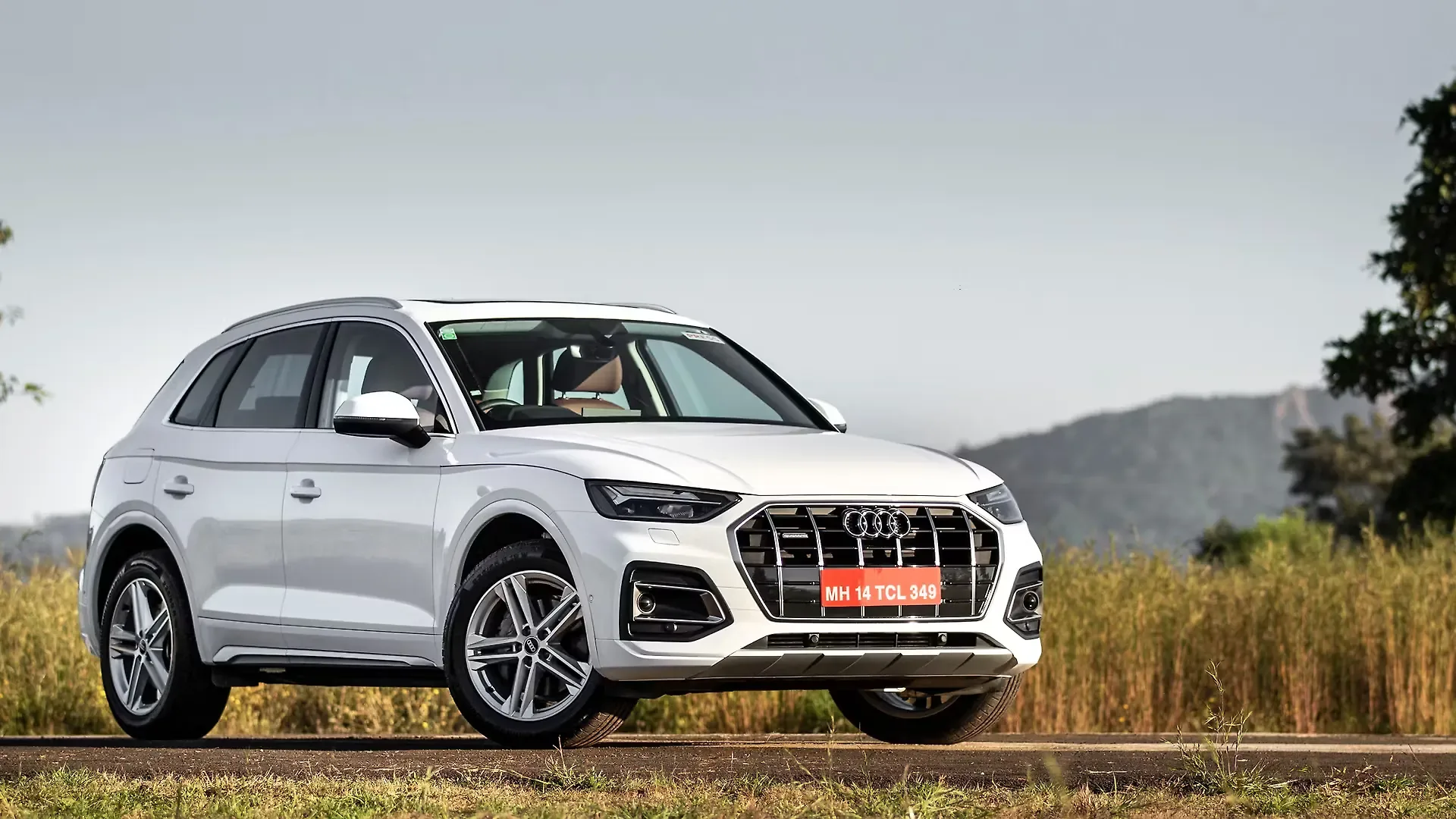
The current Q5 wears Audi's familiar upright SUV stance with the single-frame octagonal grille, sharp LED headlamps and the Q7-influenced front, finished here in a bold limited-edition black styling package. At 4.7 metres long and roughly 1,900 kg, it looks more athletic than the outgoing car without abandoning the family resemblance. The incoming new-generation model, previewed by MotorOctane in Spain, keeps the recognisable side profile but adds a new rear with dual functional exhausts, sharper lighting signatures and 18 to 21-inch wheel options. Car Blog India rates it as visually sportier than the BMW X3 and Mercedes-Benz GLC. It is restrained rather than flashy, which suits buyers wanting presence without theatre.
Inside, the current India-spec Q5 leans understated for a Rs 70 lakh car: a 10-inch MMI screen without touch, a 12.3-inch Virtual Cockpit, three-zone climate control and physical buttons for AC and drive modes. V3Cars found the cabin grew on them over a month, praising the ergonomics, the 19-speaker Bang & Olufsen system and the lack of rattles on a 33,000 km test car. The next-gen car moves to twin panoramic screens totalling around 25 inches plus an optional passenger display, but keeps real AC vents and a physical volume knob. Front seats are wide and supportive; the rear offers good knee and headroom but the large central tunnel limits it to two adults. Boot space is 520 litres, expanding to 1,520 with the seats folded.
Build quality is where the Q5 quietly wins. Even on a heavily used media car past 33,000 km, V3Cars reported zero rattles, tight panel gaps and consistently good material feel. Switchgear has the damped, precise action Audi is known for, and the doors shut with reassuring weight. Safety kit on the current car includes eight airbags, ESP, hill-hold assist, a 360-degree camera, tyre pressure monitoring and ISOFIX, and the previous generation earned IIHS Top Safety Pick. The big India omission is ADAS: Audi has consciously held it back because European calibration suits Indian traffic poorly, though Namaste Car notes lane-keep and adaptive cruise could arrive selectively. Blind-spot monitoring is the most-missed feature at this price.
The 2.0 TFSI petrol is the heart of the Q5's appeal. In current India trim it produces 265 PS and 370 Nm, mated to a 7-speed dual-clutch and quattro all-wheel drive, good for 0-100 km/h in 6.1 seconds and a 240 km/h top speed. The new-gen car continues with a 2.0 turbo petrol producing around 200 bhp, with a mild-hybrid system adding low-speed boost. MotorOctane, after driving it across Spanish city streets and highways, rates it the most engaging of the Q5, X3 and GLC trio, noting that BMW has softened the X3 while the GLC is powerful but not a driver's car. Throttle response is linear, the gearbox intuitive, and refinement is such that you rarely realise the engine is on.
Ride quality splits opinion. The current car on 19-inch wheels and 235/55 tyres feels firm at crawling speeds over sharp speed breakers, with limited rebound travel, but settles quickly and feels planted at city and highway pace. V3Cars found 32 PSI the sweet spot for daily comfort. The optional damper control offers Comfort and Dynamic settings, and the new generation adds full air suspension with ride-height adjustment, which should resolve most low-speed complaints. Body roll is well controlled, the electromechanical steering is light but accurate, and braking inspires confidence with intuitive auto-hold. Cabin noise isolation is genuinely a notch above mass-market cars and competitive with offerings a segment above, which makes long highway runs noticeably less tiring.
Pricing is the current Q5's quiet trump card. The range opens around Rs 65 lakh ex-showroom and the top Technology variant lands near Rs 70.8 lakh, with regular dealer discounts narrowing the on-road gap further. That undercuts the BMW X3 and Mercedes-Benz GLC on a like-for-like basis while offering the strongest powertrain of the three. Buyers stretching for the Q7 or stepping down to the Q3 should weigh whether the Q5's size and driver focus matter more than features. The catch: real-world economy sits at around 10 km/l, ventilated seats and blind-spot monitoring are absent, and the new generation is barely a year away. For buyers who must transact now, the discount-led pricing makes it competitive; everyone else should wait.
"Of the Q5, X3 and GLC, the Q5 is now the most fun, youthful and best-packaged driver's choice."
"Lives with the car for a month, rates cabin quietness and seats highly but flags missing blind-spot monitoring and ventilated seats."
"Praises the upright SUV stance, refined diesel torque from 1,750 rpm and real-world 12.5 km/l on mixed driving."
"Detailed walkaround confirms 265 PS, 6.1s 0-100, 520-litre boot and the 19-speaker Bang & Olufsen as standout kit."
"Highlights the adaptive damper setup and chassis composure as the Q5's clearest advantage over softer German rivals."
"Brief Dubai ownership snapshot, useful only as confirmation that long-term reliability concerns are minimal abroad."