Skoda Kushaq vs
Volkswagen Taigun
Kushaq rewards feature-seekers on a budget; Taigun rewards drivers who want more engine.
Most buyers decide here. Read this before anything else.
- You want a panoramic sunroof and rear-seat massage without crossing ₹15 lakh and the Kushaq Classic Plus delivers exactly that.
- You do most of your driving in the city and prefer a smooth, relaxed automatic over a performance-tuned one.
- You have a young family and appreciate ventilated front seats and a rear AC vent rework that actually cools faster.
- You are a tech-first buyer drawn to the Google Gemini AI integration and the new global digital instrument cluster.
- You stretch your budget carefully and the ₹10.69 lakh Classic Plus base variant represents the value ceiling you need.
- You find the Taigun's slightly firmer low-speed ride uncomfortable on your daily pothole-heavy commute route.
- You drive on highways every weekend and the 1.5 TSI with 150 PS and Active Cylinder Technology is the engine you have been waiting for.
- You want the segment's most confidence-inspiring build quality and a five-star Global NCAP rating gives you real peace of mind.
- You take mountain or ghat roads regularly and want the sharper steering and planted dynamics that Taigun reviewers consistently praise.
- You care about resale value and the Volkswagen badge historically holds better at the three-year mark in metros.
- You are upgrading from a premium hatchback and the Taigun's handsome, uncluttered cabin feels like a natural step up rather than a feature overload.
- You want both engine options available and the 1.5 TSI DSG combination is simply not offered in the Kushaq lineup at all.
The Kushaq scores 7.6/10, the Taigun 7.8/10. In real life, they are built for different people.
The Taigun's 1.5 TSI with 150 PS and 250 Nm pulls overtakes with genuine reserve, and Active Cylinder Technology keeps fuel consumption honest on long stretches. The Kushaq tops out at 115 PS on the 1.0 TSI; the new 8-speed Aisin makes it smoother but not meaningfully faster. Drivers who regularly use expressways will feel the Taigun's upper-end breathing room.
The Kushaq scores 8.0 for ride quality versus the Taigun's 7.5, and reviewers consistently note the Kushaq absorbs sharp urban bumps with more composure at low speeds. MotorOctane's multi-car comparison placed both cars on the same platform but found Kushaq's tuning softer in stop-start traffic. For a buyer covering 40 kilometres of city roads daily, that difference is felt every morning.
Both cars share the MQB-A0-IN platform and similar service networks, so depreciation curves are close. The Taigun scores a 7.0 for value versus Kushaq's 6.5, partly because its pricing ladder is more consistent. V3Cars specifically flags that Kushaq's higher trims are overpriced relative to what they offer, which can hurt perceived value at resale if a buyer overspent on trim.
Kushaq brings a panoramic sunroof and rear-seat massage that make the cabin feel like a genuine road-trip partner for passengers. Taigun counters with the more powerful 1.5 TSI that handles loaded-car gradients more easily, and its firmer chassis feels more settled on winding ghats according to Faisal Khan's drive notes. The answer here splits cleanly between passenger comfort and driver control.
Scores shown inline. "Best for" tells you who each result matters to.
| Axis | Skoda Kushaq | Volkswagen Taigun | Best for |
|---|---|---|---|
Design |
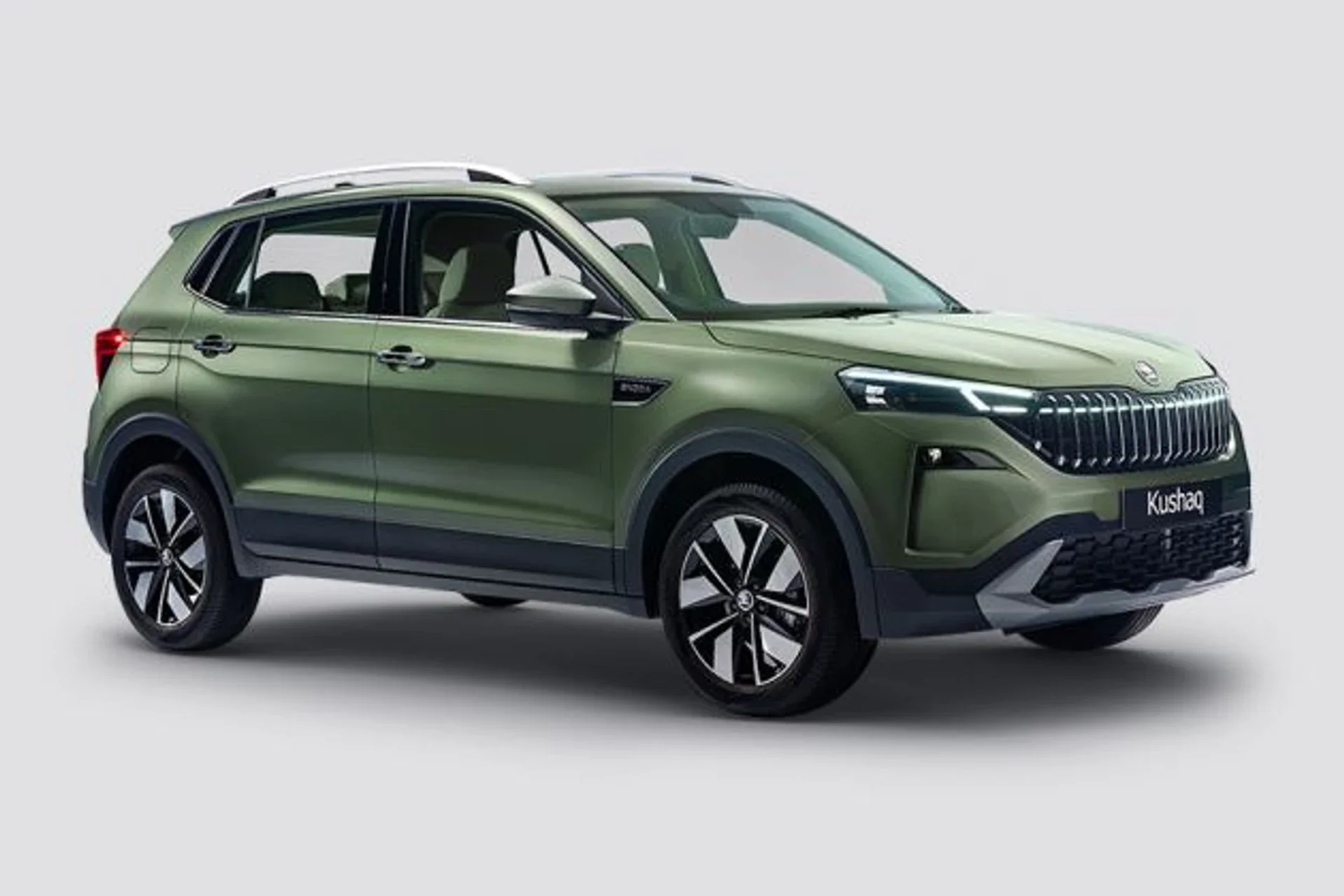
The facelift gives the Kushaq a connected LED DRL strip, new vertical chrome-rib grille and revised bumpers. Faisal Khan confirmed the bonnet and sheet metal are unchanged, so the update reads as a refresh rather than a redesign. It scores 7.5 for design, respectable but conservative. 7.5 / 10 |
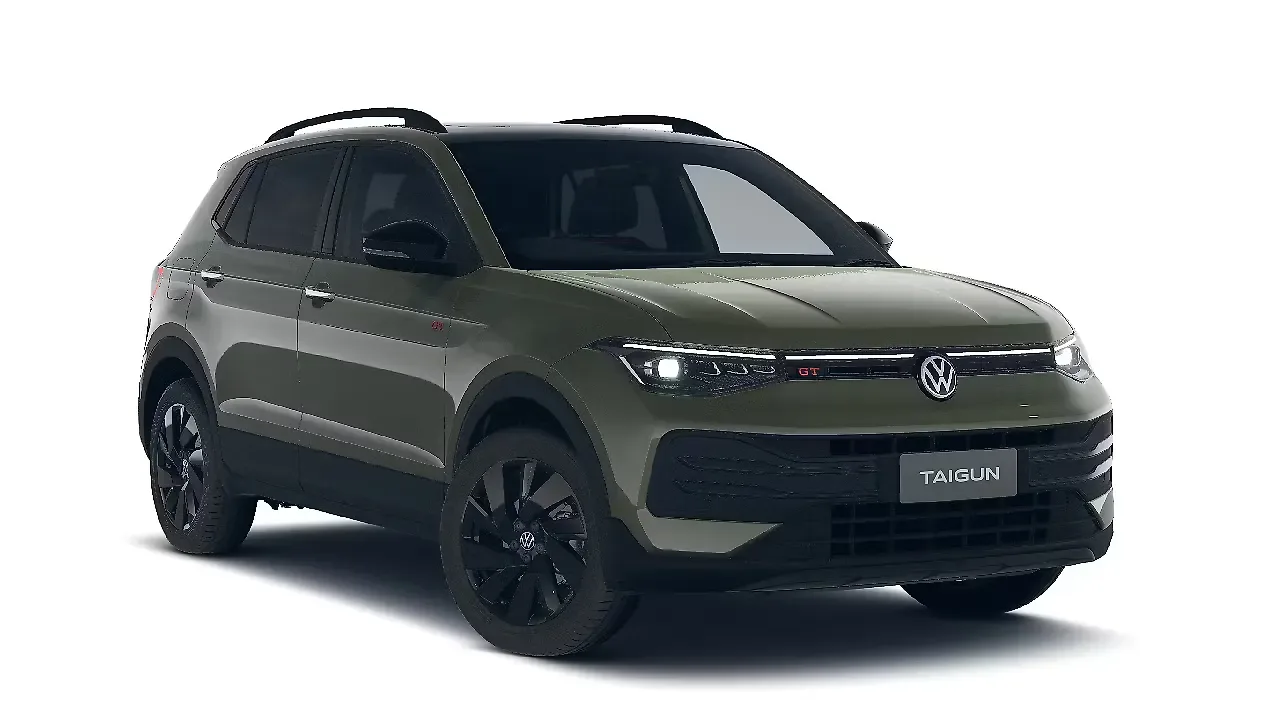
The Taigun gets a connected LED light bar, an illuminated VW logo and new headlamps with integrated all-weather lights replacing fog lamps. The silhouette is unchanged at 4.22 metres but the front end looks sharper and more premium. Reviewers consistently rate the Taigun's facelift as the bolder visual step, earning it an 8.0 for design. 8.0 / 10 |
Style-conscious buyersTaigun's illuminated logo and integrated lighting read more premium at the kerb
|
Interior |
Kushaq scores 7.5 for interior and earns it with substance: the new 10.25-inch digital cluster, 10.1-inch touchscreen with Google Gemini AI, six-way power front seats with ventilation, rear-seat massage and wireless charging. MotorOctane noted the rear seat experience is noticeably elevated by the massage function on longer drives. 7.5 / 10 |
The Taigun scores 7.0 for interior. The 10.25-inch digital cluster with reworked menus is genuinely useful, and ventilated front seats and wireless charging cover the essentials. Hard plastics dominate the cabin, and reviewers note the interior feels handsome rather than lavish compared to feature-loaded rivals. 7.0 / 10 |
Rear-seat passengersKushaq's massage function and reworked AC make the back row meaningfully more comfortable
|
Performance |
The Kushaq's 1.0 TSI produces 115 PS and 178 Nm, now paired with the new 8-speed Aisin torque converter. Reviewers are near-unanimous that the gearbox transforms refinement and real-world efficiency. It scores 8.0 for performance, strong for a three-cylinder, but limited to one engine option. 8.0 / 10 |
The Taigun offers the same 1.0 TSI plus a 1.5 TSI EVO making 150 PS and 250 Nm with a seven-speed DSG and Active Cylinder Technology. It scores 8.5 for performance. The 1.5 TSI is the segment's most complete engine package and the reason driving enthusiasts consistently choose the Taigun over its platform sibling. 8.5 / 10 |
Enthusiast drivers1.5 TSI DSG is simply unavailable in the Kushaq lineup
|
Ride Quality |
Kushaq scores 8.0 for ride quality, the highest individual dimension score it earns. The suspension tuning prioritises low-speed absorption, and reviewers consistently find it more forgiving on broken urban surfaces than its platform sibling. For city-heavy buyers, this difference is tangible rather than theoretical. 8.0 / 10 |
Taigun scores 7.5 for ride quality. The firmer setup pays dividends on highways and winding roads, where the chassis feels planted and composed. In dense city traffic over sharp bumps, that same firmness becomes a minor drawback that several reviewers flag as the car's primary urban compromise. 7.5 / 10 |
City commutersKushaq's softer tune absorbs daily urban punishment more gracefully
|
Build Quality |
Kushaq scores 8.0 for build quality, benefiting from the same MQB-A0-IN platform discipline that made Skoda's India reputation. Panel gaps are tight and the doors shut with the solidity buyers expect from a European-origin architecture. 8.0 / 10 |
Taigun also scores 8.0 for build quality and adds a five-star Global NCAP rating that Kushaq currently does not match. That safety credential matters to buyers who want independent crash-test validation alongside the in-hand solidity. Both cars are genuinely well-built; the Taigun has the certification to prove it. 8.0 / 10 |
Safety-first familiesFive-star Global NCAP rating gives Taigun an independent safety edge
|
Value for Money |
Kushaq scores 6.5 for value and the number is honest. V3Cars is direct: only the ₹10.69 lakh Classic Plus variant is genuinely value-for-money; higher trims are overpriced and still miss ADAS and a 360-degree camera. Buyers who stretch into upper variants pay premium money for a features list that does not justify the gap. 6.5 / 10 |
Taigun scores 7.0 for value. Priced from around ₹13 lakh, it is not cheap, but the pricing ladder is more internally consistent and the five-star safety rating plus the 1.5 TSI option mean buyers get meaningful differentiation as they move up. The value equation holds better across the range. 7.0 / 10 |
Budget-aware buyersTaigun's value holds across trims; Kushaq's best deal sits only at the base
|
Practicality |
Faisal Khan measured the Kushaq at slightly over 4.2 metres with a 2.65 metre wheelbase, once segment-best but now among several similar-sized rivals. The panoramic sunroof and rear-seat massage add comfort practicality for passengers, and the reworked AC is a genuine improvement for Indian summer conditions. |
The Taigun shares almost identical exterior dimensions at 4.22 metres. MotorOctane's multi-car test examined rear-seat three-abreast space across the segment and found both cars comparable but neither class-leading. Boot space and cabin layout are near-identical, making practicality a genuine tie between these platform siblings. |
Families needing comfortKushaq's massage and improved AC tilt rear-seat comfort in its favour
|
The Kushaq scores 7.6/10 and the Taigun 7.8/10, from 11 independent creators. The overall number is only part of the story here: the dimension breakdown is where the real comparison lives.
MotorOctane: 2024 Hyundai Creta vs Seltos vs Elevate vs Hyryder vs Taigun vs Kushaq