 Image: Mercedes-Benz press kit
Made-in-India assembly, genuine 500km-plus real-world range and S-Class luxury justify the ₹1.55 crore ask for buyers wanting a future-forward flagship.
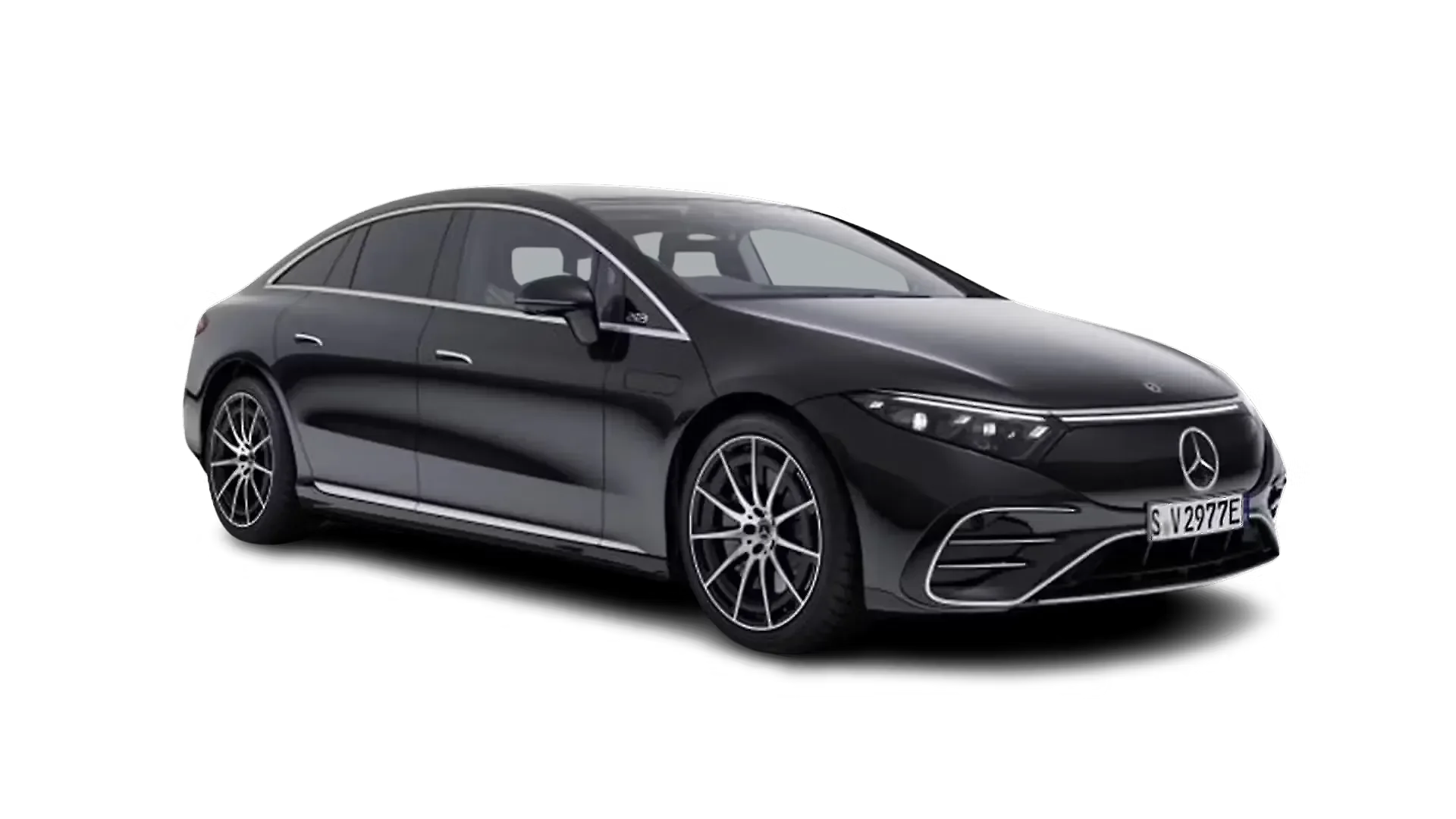
The Mercedes-Benz EQS 580 is now assembled in India, dropping the ex-showroom price to ₹1.55 crore, undercutting even the base S-Class. With a 107.8 kWh battery, 523 bhp, 855 Nm, all-wheel drive and a claimed WLTP range north of 800 km, it positions itself as the most usable luxury EV flagship on sale here.
The EQS wears Mercedes' 'sensual purity' EV design language with a closed grille, frameless doors and a coupe-like silhouette that delivers a record-low 0.20 drag coefficient, the slipperiest production car in the world. Digital Light headlamps with 1.3 million micro-mirrors per side throw a 650-metre beam and incorporate adaptive high-beam that selectively dims around oncoming vehicles. India gets 20-inch alloys wrapped in 255/45 rubber, sensible for our roads even if the global 21 and 22-inch options look sharper. The 5.2-metre length and stretched 3.2-metre wheelbase give it presence, while logo projection from the ORVMs and flush door handles add theatre. It looks distinctly futuristic rather than a re-skinned S-Class, which buyers will either love or find too anonymous.
The cabin is where the EQS earns its money. Three screens span the dashboard with the 17.7-inch central display flanked by 12.3-inch units, and the front passenger gets their own infotainment that dims via infrared cameras if the driver glances over. Biometric facial recognition loads personal profiles automatically. Front seats offer adjustable side bolsters, massage, ventilation and memory, and reviewers unanimously rate them best-in-class. Burmester's 15-speaker system, frameless doors and ambient lighting that turns red on blind-spot warnings reinforce the luxury brief. The catch sits in the rear: no massage seats, weaker under-thigh support, no manual sunblinds (only privacy glass) and noticeably fewer features than an S-Class. For a chauffeur-driven flagship at this price, that is a real omission.
Fit and finish meet Mercedes flagship standards, with Nappa leather, real wood trim and tight panel gaps throughout. Safety is comprehensive: nine airbags, 360-degree camera, Driving Assistance Package Plus with active lane keep, blind-spot monitoring, collision avoidance and Pre-Safe side-impact protection. The HEPA 14 cabin filter scrubs incoming air, and the bonnet is sealed for owner safety given the high-voltage architecture; washer fluid fills via a separate flap and service is every two years or 30,000 km. The 107.8 kWh battery carries an eight-year warranty, with three years on the car itself. Quirks include no spare tyre, no frunk, and the missing rear sunblinds. Boot space is a usable 610 litres, though access via the charging cable storage is fiddly.
The single-motor-per-axle setup produces 523 bhp and 855 Nm through 4Matic all-wheel drive, with 0-100 km/h dispatched in roughly 4 seconds. What stands out, as Gagan Choudhary notes, is how un-EV the delivery feels: power is metered linearly rather than slamming you into the seat, deliberately tuned to mimic a large-capacity ICE. Buyers wanting the full EV rush should look at the AMG EQS 53 at ₹2.45 crore which adds over 200 bhp. Regen is intelligent, reading topography and traffic via the front camera and radar to pre-empt deceleration. The one weak link is brake pedal feel: the handover from regen to hydraulic braking is non-linear and takes acclimatisation, though stopping power and stability under hard braking are not in question.
Airmatic air suspension is the EQS's party trick. Small road imperfections are filtered out almost entirely and the cabin stays remarkably isolated even when the suspension does work over larger inputs. The GPS-based height memory is genuinely useful: mark a speed breaker near your home once and the car raises itself automatically on every approach, lifting up to 25 mm. Rear-wheel steering tightens the 11.9-metre turning radius at low speeds and aids stability at highway pace, though it does lend the dynamics a slightly artificial feel through corners. This is not a car you hustle: the steering is accurate but the 2.6-tonne kerb weight and chauffeur-focused tuning mean it prefers a relaxed pace. Compared to the more driver-focused Porsche Taycan, the EQS is unapologetically a luxury cruiser.
At ₹1.55 crore ex-showroom, the made-in-India EQS 580 sits roughly ₹5 lakh below the base S-Class, helped by the 5 percent EV GST slab versus 28 percent on ICE. The first 500 customers get rear-axle steering thrown in. Against the imported AMG EQS 53 at ₹2.45 crore, the standard car looks like the smarter buy for chauffeur-driven owners. The honest counter-argument: the S-Class offers a more luxurious rear cabin for similar money, so the EQS only makes sense if you specifically want an EV flagship with proven 500+ km range. Within the luxury EV segment, the Porsche Taycan is more driver-focused and the Audi e-tron GT more compact; neither offers this combination of range, rear space and India-specific tuning.
"The EQS 580 delivers a claimed 857 km WLTP range and charges 10-80 percent in around 31 minutes on a 200 kW DC charger."
"The EQS already shows strong used-market demand at around ₹90 lakh for a 2024 example with under 10,000 km on the clock."
"The AMG EQS 53 4Matic+ at ₹2.45 crore adds 762 bhp and 3.4-second pace but loses the standard car's value equation."
"Gesture-based ORVM control, adjustable seat bolsters and GPS-linked ride height represent genuine innovations that should trickle to mass-market cars."