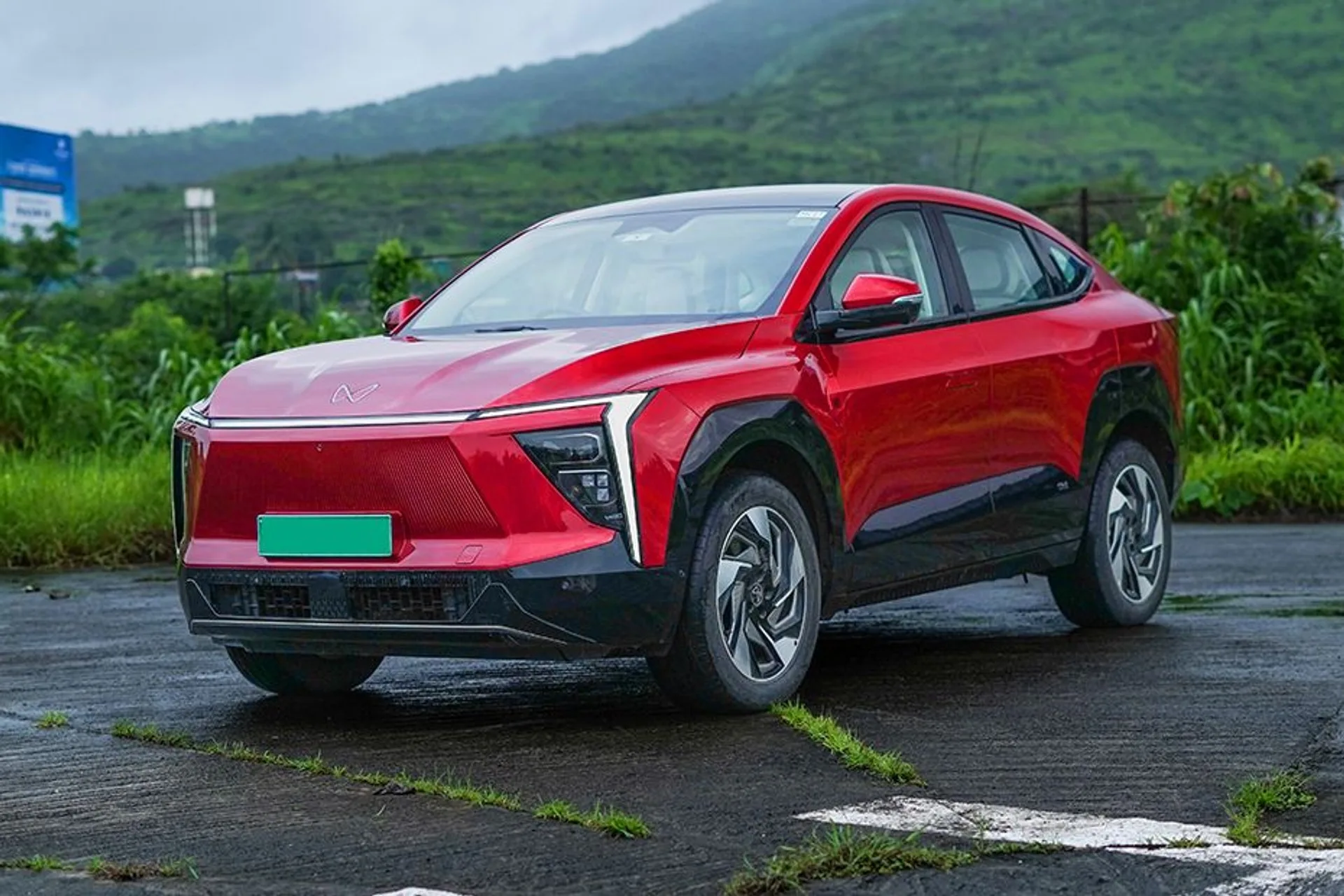
Mahindra XEV 9e vs
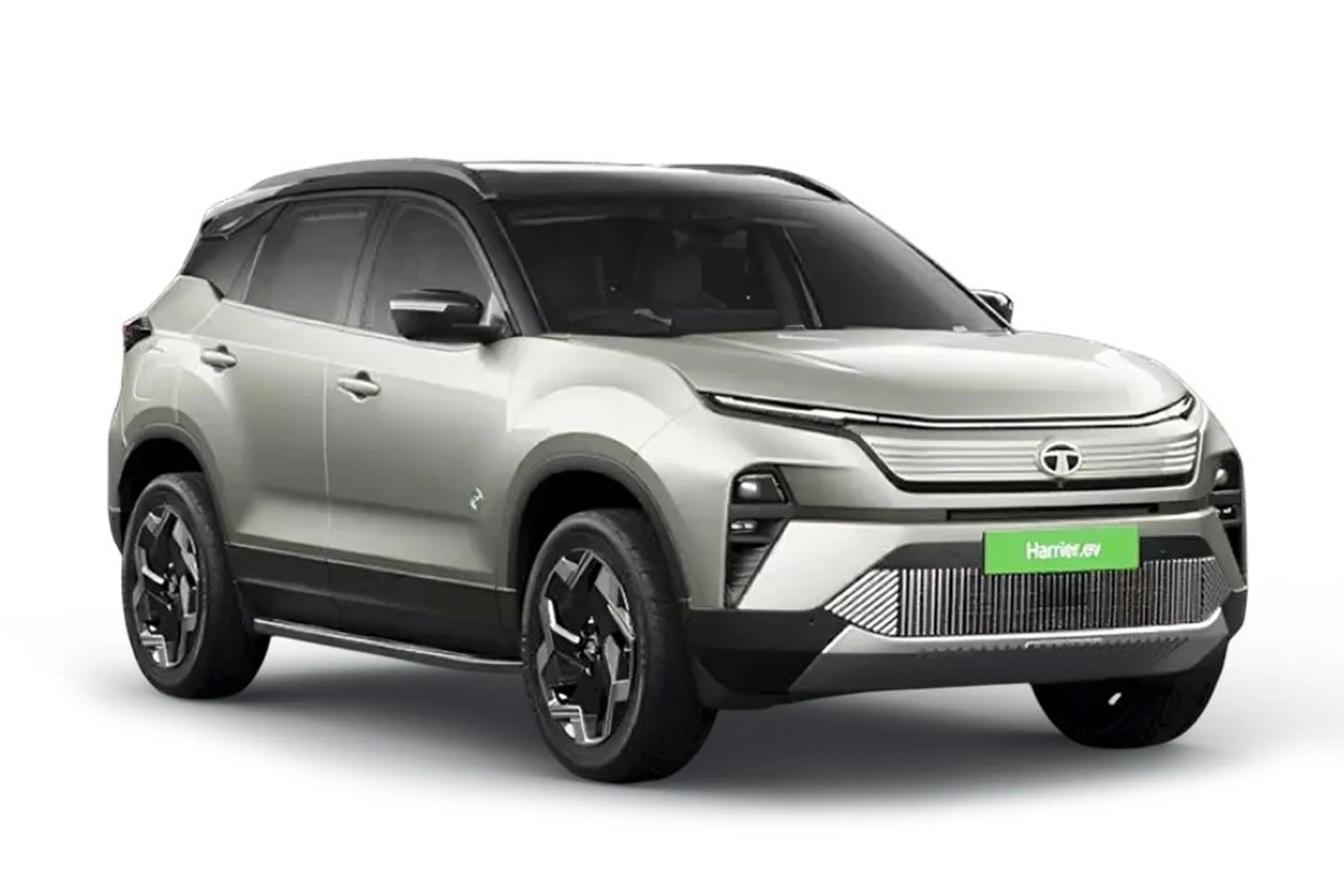
Tata Harrier EV
A tech-forward coupe-SUV versus a proven family SUV that happens to go electric.
Most buyers decide here. Read this before anything else.
- You work in tech or design and want your car to signal that identity from the driveway outward.
- You have a dedicated home charger and treat long highway runs as occasional, not weekly.
- You sit in the front most of the time and want a cockpit that genuinely feels like the future.
- You have two adults or small children in the rear and the coupe roofline does not concern you.
- You want a car that draws attention at every traffic light and enjoy explaining what it is.
- You prioritise software features and a flagship audio system over outright off-road credibility.
- You regularly carry three adults in the rear and need everyone to arrive comfortable and uncontorted.
- You live near the hills or take weekend drives on broken roads where SUV composure matters more than speed.
- You do annual highway trips of 500-plus km and want the confidence of a 5-star safety rating and proven underpinnings.
- You value a car that looks like a serious SUV to your family and colleagues, not a conversation-starter.
- You might sell the car in three to four years and want a nameplate with established resale recognition.
- You want Quad Wheel Drive for monsoon confidence or light trail use without buying a dedicated off-roader.
The XEV 9e scores 7.8/10, the Harrier EV 8.1/10. In real life, they are built for different people.
The XEV 9e's sloping roofline means rear passengers over 5 feet 10 inches feel the ceiling. The Harrier EV's upright SUV silhouette gives a genuinely relaxed rear cabin for four adults across hundreds of kilometres. MotorOctane confirmed rear ingress and headroom are meaningfully better in the Harrier during their 50-test comparison.
The Harrier EV's QWD system delivers 504 Nm across both axles, and MotorBeam found it tackled Rajmachi's trail without drama. The XEV 9e's 281 bhp rear-drive setup is quicker in a straight line at 6.8 seconds to 100, but the Harrier's all-wheel traction and higher approach angle of 25.3 degrees give it the edge on mixed terrain.
The XEV 9e's 663-litre boot is class-leading, and MotorOctane called its frunk opening hydraulic and genuinely usable. The Harrier EV's boot is smaller by comparison, though it compensates with a digital rear-view mirror that maintains rear visibility. For grocery runs and airport pickups, the 9e simply carries more.
The Harrier nameplate has years of brand equity, a 5-star Bharat NCAP rating and a lifetime battery warranty from Tata. The XEV 9e is newer, built on a purpose-made INGLO platform with BYD blade cells, but Mahindra's EV resale curve is still unproven. Buyers who plan to sell within four years carry less risk with the Harrier.
Scores shown inline. "Best for" tells you who each result matters to.
| Axis | Mahindra XEV 9e | Tata Harrier EV | Best for |
|---|---|---|---|
Design |
The XEV 9e divides opinion sharply. Full-width LED bars, active aero curtains and flush handles make it look like nothing else on Indian roads. Namaste Car noted the connected tail lamp animations are genuinely premium at night, but the coupe roofline remains the single biggest reason buyers walk away. 7.0 / 10 |
The Harrier EV plays the long game visually, wearing a familiar SUV silhouette with EV-specific closed grille and 19-inch aero alloys. V3Cars rated it a confident 7.5, calling the design mature rather than exciting. It reads as a serious SUV first, an EV second. 7.5 / 10 |
Statement-makersXEV 9e turns more heads and rewards those who want design to be a talking point
|
Interior |
Three 12.3-inch screens dominate the 9e's cabin, with the leftmost dedicated to front-passenger streaming. The 16-speaker Harman Kardon system with Dolby Atmos drew consistent praise, and Faisal Khan called the ambient lighting execution genuinely upmarket. Software bugs remain a work in progress. 8.0 / 10 |
The Harrier EV's 14.53-inch Samsung NeoQLED screen earns specific praise for UI quality and colour accuracy. A 10-speaker JBL system, ventilated memory seats and soft-touch surfaces throughout make the cabin feel resolved and complete from day one. Gagan Choudhary noted the interior feels ready, not beta. 7.5 / 10 |
Tech enthusiastsXEV 9e's three-screen setup and Atmos audio set a new benchmark for the price
|
Performance |
The 79 kWh Pack 3 produces 281 bhp and 380 Nm, reaching 100 km/h in 6.8 seconds. MotorOctane praised the linear power delivery across Range, Everyday and Race modes, noting Mahindra resisted making it feel violent. The rear-drive-only setup is smooth but limits traction on loose surfaces. 8.0 / 10 |
The QWD variant pairs front and rear motors for 390 hp and 504 Nm, clocking 0-100 km/h in 6.3 seconds. MotorBeam found the instant torque genuinely useful in Mumbai traffic and on the old Pune highway. The all-wheel system adds real-world confidence that the sprint figure alone does not capture. 8.5 / 10 |
All-surface driversHarrier EV's QWD delivers more usable performance across more conditions
|
Ride Quality |
The INGLO platform gives the XEV 9e a composed highway ride, rated 7.5 by the jury. Namaste Car found it settled at speed but noted the suspension can feel firm over sharp city bumps at low speeds. The 218 mm ground clearance handles most Indian road conditions without drama. 7.5 / 10 |
The Harrier EV's Land Rover-derived underpinnings translate into a noticeably cushioned ride, earning an 8.0 jury score. Biturbo Media found it absorbed broken village roads and highway expansion joints with equal composure. For buyers who prioritise daily comfort over dynamic sharpness, this is the stronger choice. 8.0 / 10 |
Comfort seekersHarrier EV's heritage suspension tuning delivers a more consistently pliant ride
|
Build Quality |
MotorOctane's paint thickness test recorded an average of 224 microns on the XEV 9e, a reasonable figure for the segment but noticeably thinner than its rival. Panel gaps are tight and the INGLO platform feels structural, though jury reviewers collectively rated build quality at 7.0, flagging early software instability. 7.0 / 10 |
The Harrier EV measured 277 microns average paint thickness in MotorOctane's test, a class-leading figure for an Indian SUV at this price. The 5-star Bharat NCAP rating and Land Rover-lineage chassis reinforce the sense of structural integrity. V3Cars and MotorBeam both rated build quality at 7.5. 7.5 / 10 |
Long-term ownershipHarrier EV's paint depth and crash rating signal better long-haul durability
|
Value for Money |
The XEV 9e starts at a competitive price for the tech it delivers: three screens, Dolby Atmos audio, 5G connectivity and a 79 kWh BYD blade cell pack in one package. The jury rated it 8.0 for value, reflecting genuine feature-per-rupee leadership even against cars at twice the price. 8.0 / 10 |
The Harrier EV is priced from Rs 21.49 lakh to Rs 28.99 lakh ex-showroom, with a lifetime battery warranty and 5-star safety rating included. The jury rated it 7.5 for value. It costs less to enter and offers more proven long-term ownership confidence, even if the feature count is slightly lower. 7.5 / 10 |
Feature huntersXEV 9e packs more hardware per rupee at equivalent trim levels
|
Real-World Range |
The 79 kWh Pack 3 is rated for 656 km MIDC, but real-world mixed driving brings that closer to 450-500 km for most reviewers. The XEV 9e supports faster DC charging speeds, making longer trips more manageable when chargers are available. The 59 kWh version trims range meaningfully and is best treated as a city car. |
The 75 kWh Harrier EV delivers 380-420 km in real mixed driving, with DC charging capped at 120 kW. For most Indian buyers who drive under 80 km daily, this is more than adequate. The lifetime battery warranty removes long-term range anxiety about cell degradation, which is a genuine ownership reassurance. |
Urban daily usersBoth cover daily use easily; XEV 9e has a longer highway ceiling for occasional big trips
|
The XEV 9e scores 7.8/10 and the Harrier EV 8.1/10, from 7 independent creators. The overall number is only part of the story here: the dimension breakdown is where the real comparison lives.
MotorOctane: Mahindra XEV9e vs Tata Harrier EV - COMPARISON