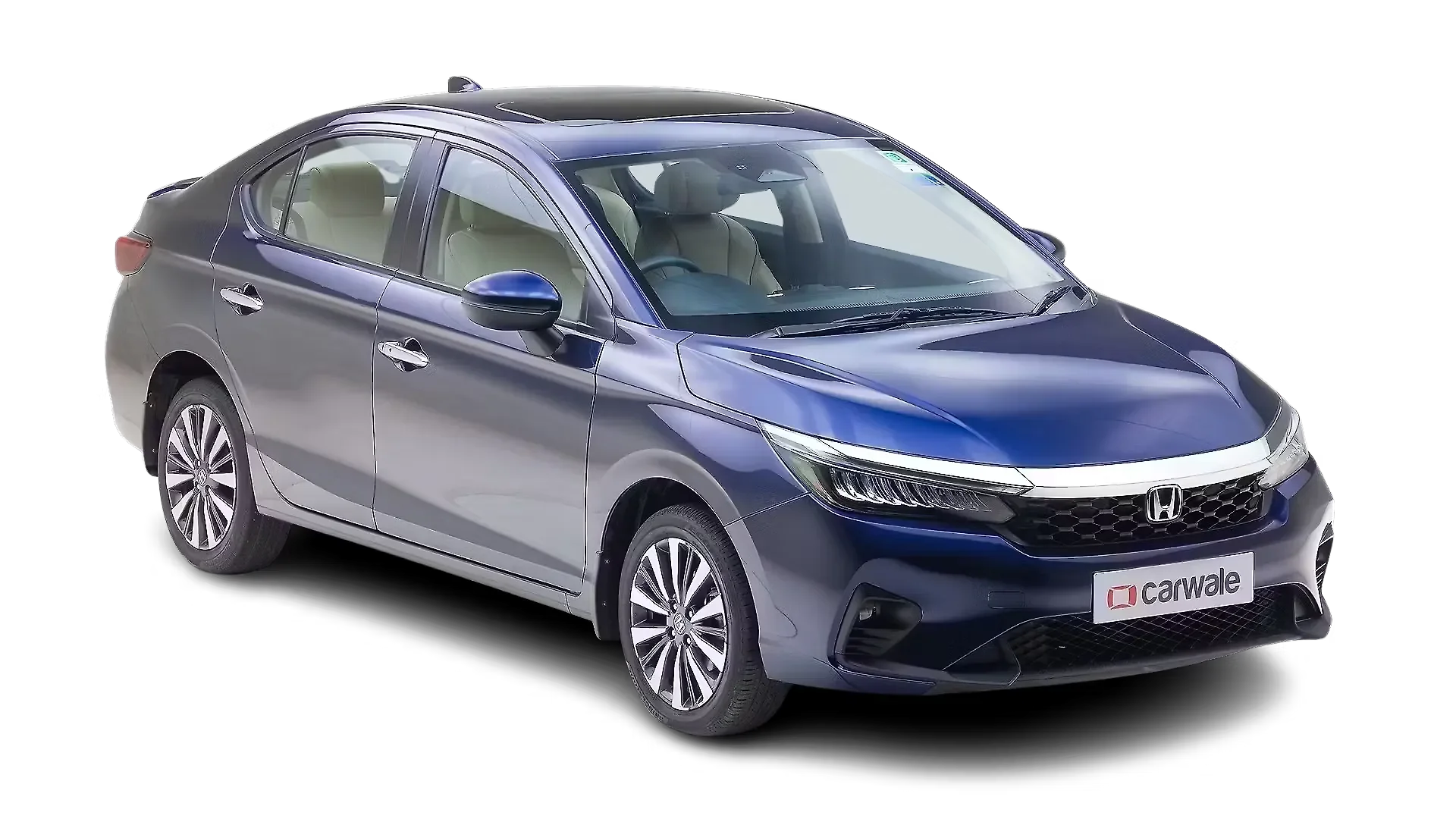
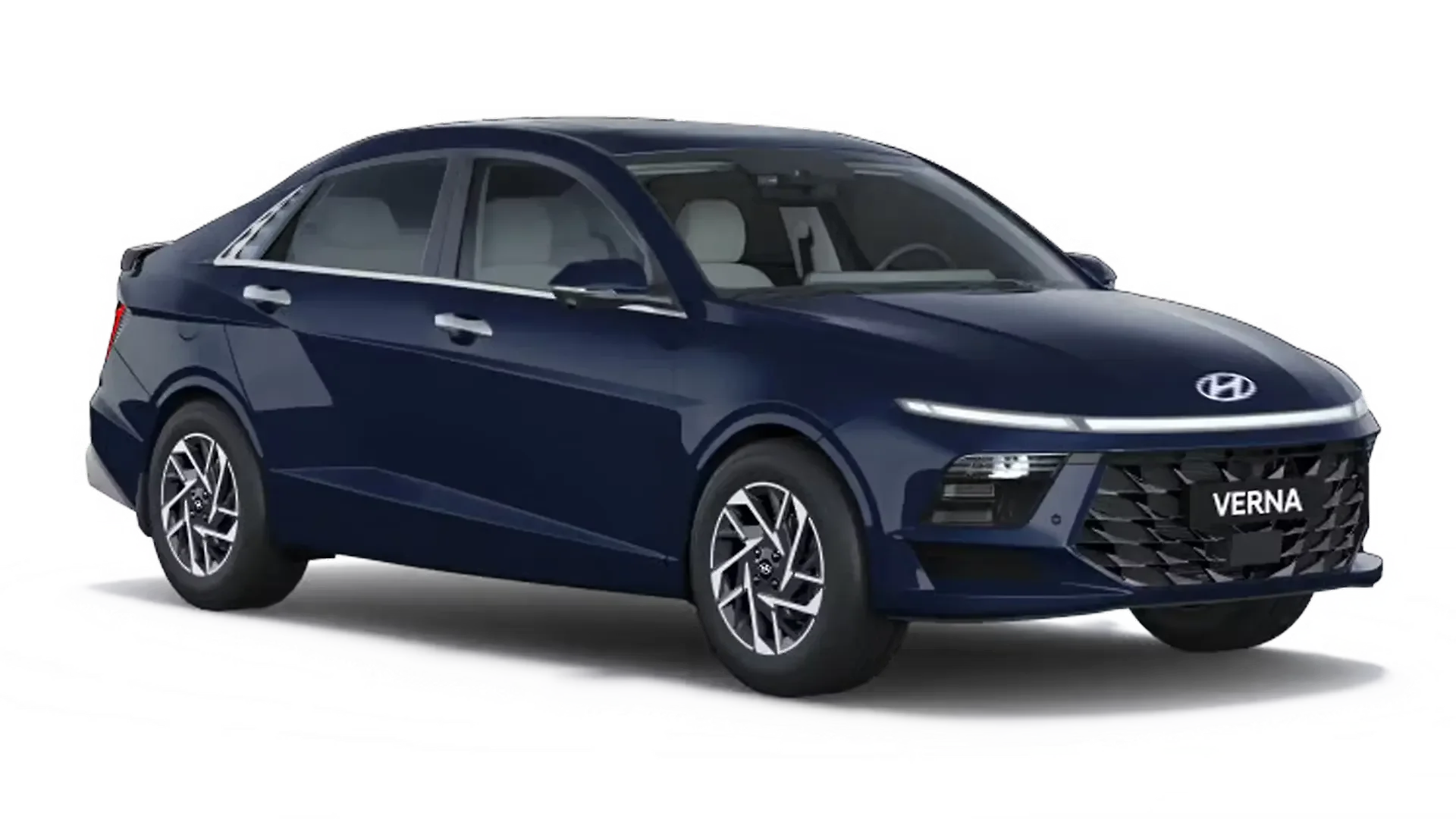
Hyundai Verna vs
Honda City 2024
The Verna seduces with tech and punch; the City earns loyalty through refinement and ride.
Most buyers decide here. Read this before anything else.
- You drive solo or with one passenger most days and want the quickest, most entertaining petrol sedan in the segment without paying SUV money.
- You work in tech or finance and judge a car's interior the way you judge a phone: more screens, more ambient glow, more wow factor for passengers.
- Your household has two incomes, no kids yet, and you want the car to feel like a reward every morning rather than sensible transport.
- You cover 1,500-plus km a month on expressways and the 160 PS turbo's highway overtaking confidence genuinely matters to your commute.
- You are buying your first sedan upgrade from a hatchback and want a spec sheet that wins every parking-lot conversation.
- You are comfortable with a firmer rear suspension trade-off because most of your driving is on well-maintained city roads or highways.
- You run a family of four on roads that range from smooth expressways to potholed inner-city lanes, and rear passenger comfort is non-negotiable.
- You log high annual mileage and want an engine with a proven long-term reliability record that Honda dealerships across India can service without drama.
- You or a family member is a nervous highway driver and Honda Sensing ADAS, available from lower variants, is the single feature that tips the decision.
- You plan to keep the car for seven or more years and want resale value that holds steadily rather than a design that may age controversially.
- You are a driving enthusiast who prefers a high-revving naturally aspirated engine with a clean manual gearbox over a turbo with a dual-clutch.
- You find the Verna's styling polarising and want a sedan that reads confidently and universally from the kerb without demanding an opinion.
The Verna scores 7.7/10, the City 2024 7.6/10. In real life, they are built for different people.
The City's rear suspension absorbs broken tarmac with composure that multiple reviewers flagged as a clear segment lead. Namaste Car specifically noted rear occupants feel far less fatigued on Mumbai-style roads in the City. The Verna's firmer tune rewards driving dynamics but transfers more shock to rear seats on bad surfaces.
The Verna's 160 PS turbo dispatches 0-100 in 8.1 seconds and pulls cleanly from 80 km/h in top gear. Faisal Khan noted the DCT has become smoother and quicker than before, making merges and overtakes feel effortless. The City's i-VTEC is willing and refined but its 121 PS cap means longer overtaking windows at triple-digit speeds.
Honda Sensing on the City facelift includes lane-keep assist, adaptive cruise and collision mitigation, and is now available from lower variants. The Verna offers ADAS too, and Faisal Khan confirmed it gets a radar panel in addition to a camera. The City's advantage is pricing ADAS into reach for more buyers, not the technology itself.
The Honda City carries a long-standing reputation for stable resale in the Indian used-car market, driven by consistent styling and strong service trust. The Verna's fastback silhouette is polarising by the reviewers' own admission, and divisive design historically softens used-car demand faster. For buyers who plan to upgrade in four years, the City's residual value track record is the safer assumption.
Scores shown inline. "Best for" tells you who each result matters to.
| Axis | Hyundai Verna | Honda City 2024 | Best for |
|---|---|---|---|
Design |
The Verna's fastback silhouette, full-width DRL bar and crushed-glass tail-lamp create strong visual drama. Faisal Khan called it a love-it-or-hate-it design, noting the front and rear feel like two different cars joined at the B-pillar. Buyers who like bold statements will find it striking; those wanting universal appeal may hesitate. 7.5 / 10 |
The facelift's mesh grille, revised bumpers and Sporty trim's dual-tone alloys give the City a sharper, more confident face. Faisal Khan said the City looks better at the front and is more universally accepted. It is not as visually dramatic as the Verna but reads cleanly from every angle. 7.5 / 10 |
Design-conscious young buyersVerna's bold styling rewards those who want their sedan noticed
|
Interior |
Dual 10.25-inch screens, ambient lighting woven into the dashboard and a twin-spoke steering wheel create a lounge-like atmosphere that feels genuinely class-above. Fit and finish are typical Hyundai: among the best in segment. Hard plastics on the lower half and satin-silver buttons that attract fingerprints are the only credible complaints. 8.0 / 10 |
The City's horizontal dashboard is clean and ergonomically considered, with one of the segment's most natural driving positions. The facelift adds wireless CarPlay and Android Auto and improved screen resolution. Gagan Choudhary noted the layout feels mature and uncluttered, but the part-digital cluster and 8-inch screen feel conservative against the Verna's dual setup. 7.5 / 10 |
Tech-forward urban professionalsVerna's dual-screen cockpit feels a full generation ahead
|
Performance |
The 160 PS turbo-DCT combination covers 0-100 in 8.1 seconds with strong mid-range pull. MotorBeam noted the DCT prioritises efficiency over aggression off the line, making it feel measured rather than raw. The 115 PS NA petrol with CVT suits buyers who want relaxed city driving without the turbo's running-cost overhead. 8.0 / 10 |
The 121 PS i-VTEC is a Honda hallmark: smooth, linear and willing to spin cleanly to a 7,000 rpm redline. The six-speed manual is the enthusiast pick, and Rakshit Hirani highlighted the engine's genuinely enjoyable top-end note as something the Verna's turbo cannot replicate in character. The CVT dulls that enthusiasm but remains adequately competent. 7.5 / 10 |
Driver seeking straight-line paceVerna's turbo offers a clear performance advantage in real-world overtaking
|
Ride Quality |
The Verna's suspension tune is biased toward body control and flat cornering. It rewards the driver but transmits more harshness to rear occupants on broken city roads. Namaste Car flagged the firm rear setup as the single biggest drawback for families who regularly carry passengers. 7.0 / 10 |
The City absorbs potholes and undulations with composure that multiple reviewers consistently rate as the segment benchmark. Rear passengers notice the difference immediately on real Indian roads. Gagan Choudhary noted it remains one of the most comfortable sedans to be driven in, not just to drive. 8.5 / 10 |
Families on mixed-quality roadsCity's rear suspension compliance is the clear segment leader
|
Build Quality |
Hyundai's panel gaps and surface finishes are tight and consistent. The Verna feels well assembled throughout, and the interior plastics match or exceed segment norms. Faisal Khan noted the Verna's engine feels slightly more present to the touch, which some read as character and others as refinement lacking. 7.5 / 10 |
The City's solidity is a point of pride across reviewers. Faisal Khan observed that Honda has avoided cost-cutting at the front end, and the overall feel is of a car built to last rather than impress on first contact. Long-term ownership stories consistently back this perception. 8.0 / 10 |
Long-term ownership buyersCity's build reputation holds stronger over high-mileage years
|
Value for Money |
The Verna's feature density at its price points is genuinely difficult to argue against: ADAS, dual screens, a ventilated front seat and a turbo engine in one package. Faisal Khan noted the top turbo-DCT variant costs Rs 1.62 lakh more than the equivalent City automatic, a premium that the spec sheet largely justifies. 7.5 / 10 |
The City's starting price of Rs 13.59 lakh undercuts the Verna's Rs 12.93 lakh entry only slightly, but mid-range variants offer ADAS, wireless connectivity and a proven powertrain at accessible prices. For buyers who do not need the turbo, the City delivers more per rupee of total ownership cost including service and fuel. 7.5 / 10 |
Mileage-conscious practical buyersCity's lower running costs and service network improve long-term value
|
Practicality |
The Verna's fastback roofline looks dramatic but slightly compromises rear headroom for taller passengers. Boot space remains competitive for the segment. The wide stance and shrunken glasshouse reduce outward visibility, which urban parking in tight spaces can expose. |
The City's three-box proportions and upright roofline preserve rear headroom and a comfortable seating position for three adults. Ingress and egress feel natural. Namaste Car noted that as a family car for daily use, the City's interior packaging remains among the most thoughtfully considered in the segment. |
Families needing rear-seat spaceCity's upright cabin packaging serves four adults more comfortably
|
The Verna scores 7.7/10 and the City 2024 7.6/10, from 7 independent creators. The overall number is only part of the story here: the dimension breakdown is where the real comparison lives.
Faisal Khan: Hyundai Verna vs Honda City - Which Is The Best Sedan? | Faisal Khan