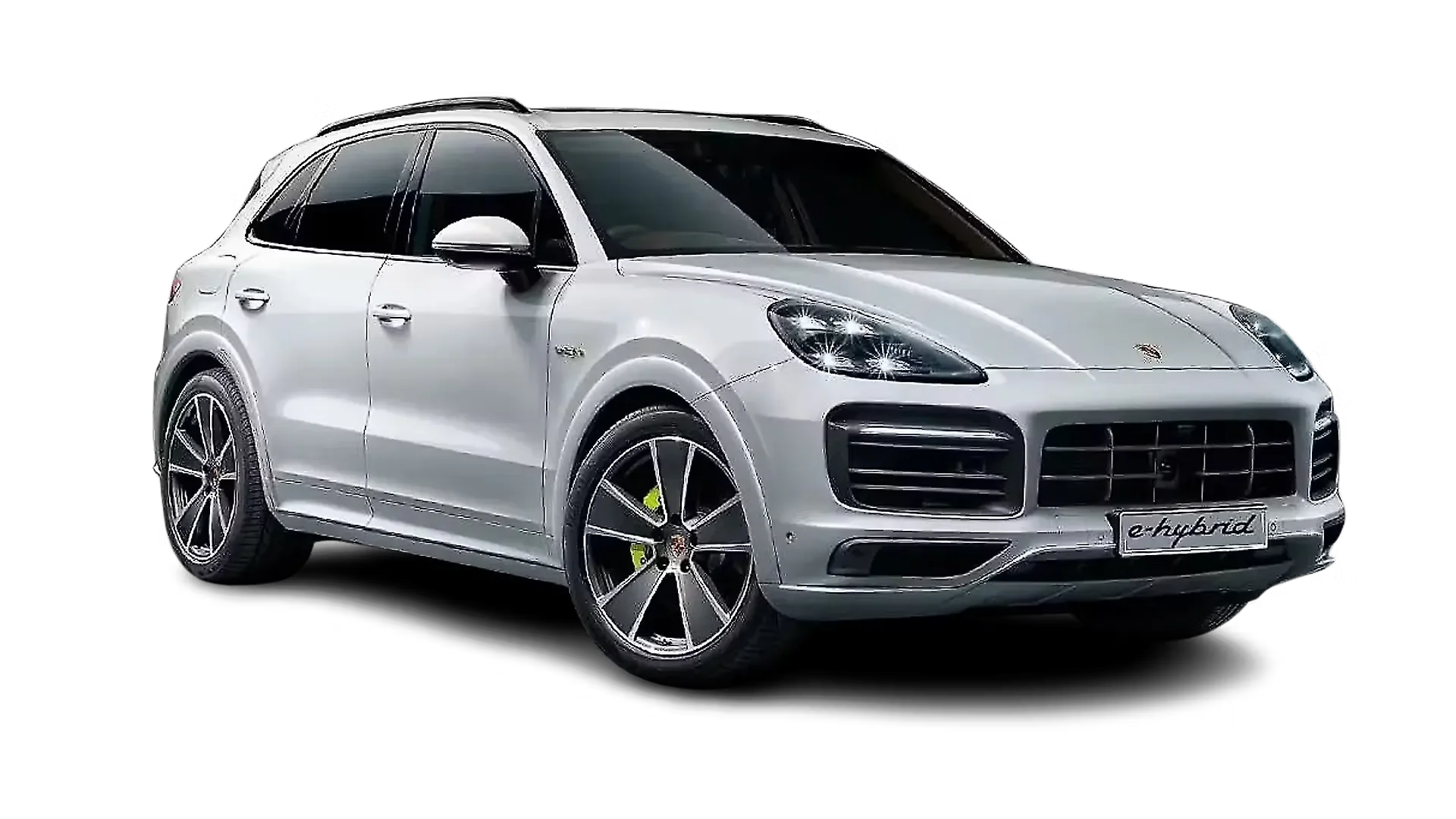
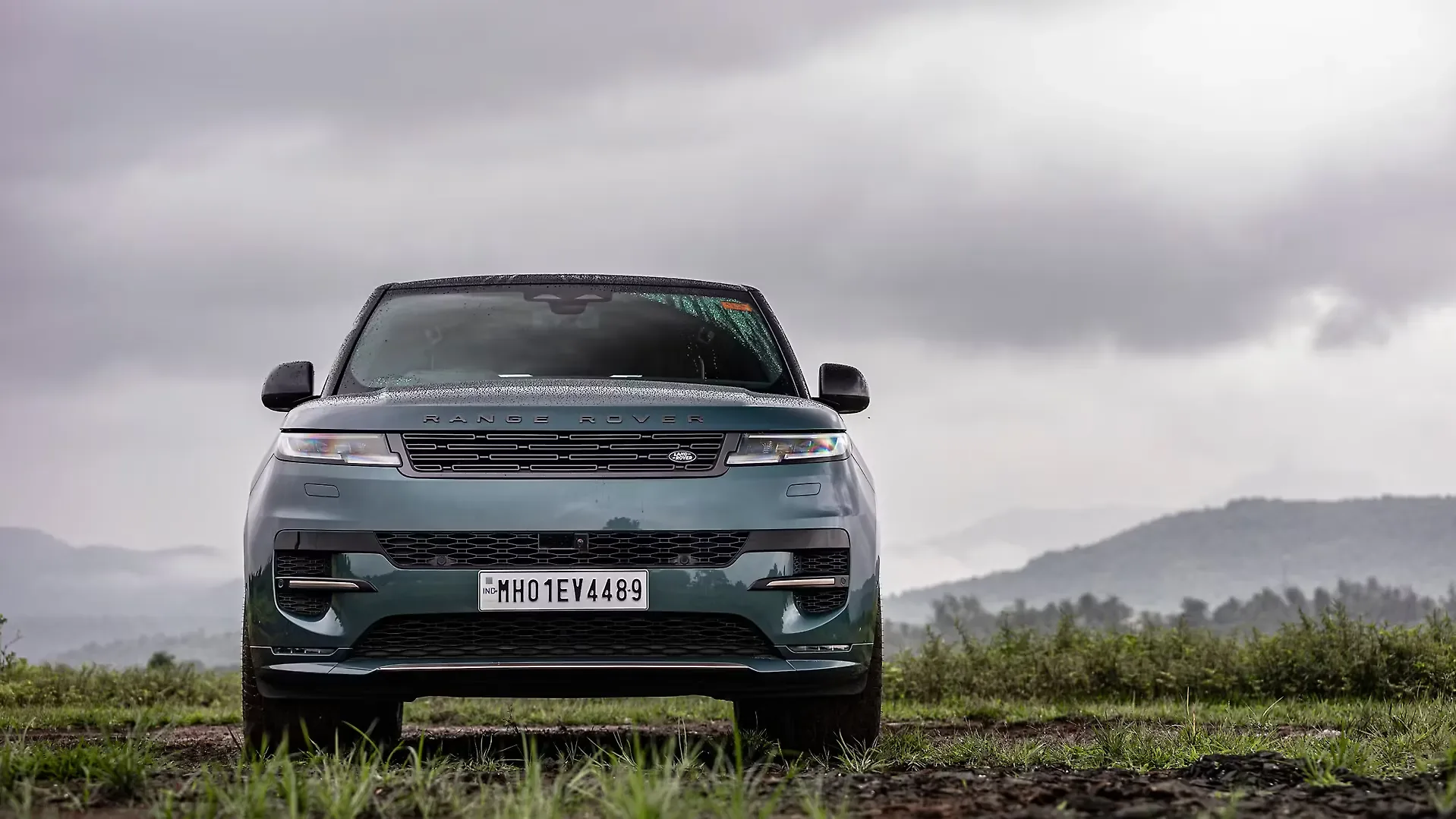
Range Rover Sport vs
Porsche Cayenne
One car coddles you in British luxury; the other makes you a better driver.
Most buyers decide here. Read this before anything else.
- You cover 800-plus kilometres on highway runs every month and want diesel torque, genuine off-road ability, and a cabin that feels like a moving hotel room.
- You have a family that treats long trips as events, and the rear-seat massage, refrigerated cubby, and panoramic roof matter as much as the 0-100 time.
- You want the Range Rover badge and silhouette but find the full-size model too large and too detached from the road.
- You are considering a PHEV because your office commute is under 100 kilometres and you want to run electric most mornings without range anxiety on weekends.
- You value a full-size 22-inch spare tyre and Terrain Response 2 because your weekends occasionally involve unpaved forest roads or flooded village tracks.
- You entertain clients in the car and need a rear seat that impresses on its own terms, not just as an afterthought to the driver's seat.
- You have driven sports cars your whole life and refuse to accept that buying an SUV means giving up steering feel, body control, or a proper exhaust note.
- You drive mountain passes or ghat roads regularly and want a car that shrinks around you rather than one you have to manage.
- You are considering the GTS specifically because a V8 with 500 hp and a theatrical soundtrack is a non-negotiable part of the purchase, not a bonus.
- You are looking at the Turbo Electric and want the fastest accelerating SUV on sale in India without the complexity of a combustion engine.
- You configure cars obsessively and enjoy building a car from a long option list, knowing each addition is genuinely engineering-led rather than cosmetic.
- You want the SUV that will be sharper and more rewarding on an empty Sunday morning road than any other car in this price bracket.
The Range Rover Sport scores 8.4/10, the Cayenne 8.6/10. In real life, they are built for different people.
The Sport's D350 diesel delivers 700 Nm from 1,500 rpm, making it effortless in traffic and genuinely rapid on the expressway. The Cayenne V6 petrol is smoother at low speeds but demands more revs to feel alive. Namaste Car noted the Sport's air suspension irons out city broken patches more forgivingly than the Cayenne's sportier default tune.
The Cayenne GTS with its V8 and rear-axle steering corners with a precision that surprises passengers who expected an SUV. Gagan Choudhary described the Cayenne as feeling genuinely car-like through direction changes, a quality the Sport cannot fully match despite its 20mm lower stance. The Sport is capable and enjoyable, but the Cayenne is the one you will choose when the road gets interesting.
Auto Express ran both cars around Croft circuit and the Cayenne Turbo posted a 1:41, calling it 'the car to beat in this segment.' The Range Rover Sport SVR has 542 hp against the Cayenne Turbo's 514 hp, but the Cayenne's dual-clutch gearbox and lower kerb weight gave it a decisive edge in lap time. For owners who attend track days, the Cayenne is the rational and the emotional choice.
The Sport's boot is larger and it offers a full-size spare, rear-seat ventilation, massage, and a refrigerated cubby as standard on higher trims. The Cayenne's rear seats are well-finished but feel slightly more driver-centric in their ergonomic focus. Biturbo Media highlighted the Sport's rear cabin as feeling genuinely lounge-like on long runs, a quality that matters when two adults and two children share six hours on a highway.
Scores shown inline. "Best for" tells you who each result matters to.
| Axis | Range Rover Sport | Porsche Cayenne | Best for |
|---|---|---|---|
Design |
The Sport wears the full minimalist Range Rover vocabulary: clamshell bonnet, flush pop-out handles, floating roof and hidden wipers on a taut body sitting 20mm lower than the full-size model. Ashwin Singh Takiar called it 'instantly recognisable without being flashy,' which captures how it works at a kerb. The 22-inch wheels and slim LED eyebrow signature give it a planted, architectural presence. 8.5 / 10 |
The Cayenne stretches to 4.9 metres but its sloping roofline and tightly drawn surfaces make it read as smaller and more athletic than its dimensions suggest. HD Matrix LEDs, active aero flaps, and the GTS's blacked-out badging sharpen the stance. MotorBeam noted it looks purposeful rather than imposing, which suits buyers who want performance signalled subtly rather than announced loudly. 8.0 / 10 |
Statement-makersSport's minimalist Range Rover identity commands a room the Cayenne does not
|
Interior |
The Sport's cabin is its strongest argument: 13.1-inch curved Pivi Pro screen, 13.7-inch driver display, forged carbon and semi-aniline leather, 22-way front seats with massage and ventilation. On SV trims, the Body and Soul audio-haptic seat backrest is a genuine differentiator. Namaste Car rated the rear seat experience as matching dedicated executive saloons in comfort. 8.5 / 10 |
The Cayenne's interior is tighter and more tactile: the click of Porsche switchgear, Alcantara headlining on the GTS, and a clever palm rest below the touchscreen reduce input errors while moving. The optional passenger display adds utility but costs Rs 1.5 to 1.64 lakh extra. MotoWagon observed that every surface feels deliberately engineered, not just premium for its own sake. 8.5 / 10 |
Rear-seat passengersSport's lounge-quality rear cabin sets the standard at this price
|
Performance |
Four powertrains span diesel efficiency to V8 theatre. The D350 hits 100 kmph in 5.9 seconds with 700 Nm of diesel torque. The SV's BMW-sourced 4.4-litre twin-turbo V8 produces 626 hp and a 3.9-second century sprint. MotorOctane called the diesel the sweet spot for Indian conditions, refined and effortlessly fast across all speeds. 8.5 / 10 |
The Cayenne Turbo Electric produces up to 1,156 hp and covers 0-100 in 2.5 seconds using an 800V architecture. The GTS V8 delivers 500 hp, a 4-second century sprint, and a genuinely theatrical exhaust note. Gagan Choudhary described the GTS as the first SUV that made him forget he was not driving a sports car. The performance envelope is wider and more dramatic across every variant. 9.0 / 10 |
Performance buyersCayenne's GTS and Turbo Electric have no equivalent in the Sport's range
|
Ride Quality |
Air suspension is standard on the Sport and tuned to prioritise comfort over body control. On poor surfaces and broken urban roads, it absorbs impacts with a composure that few SUVs at any price match. Faisal Khan noted the Sport felt planted and hushed on patchy highway surfaces where rivals fidgeted noticeably. 7.5 / 10 |
The Cayenne's air suspension delivers a firmer, more controlled ride that rewards smooth roads and penalises bad ones. In Comfort mode it is acceptable in the city; in Sport it becomes genuinely stiff on broken tarmac. MotoWagon noted the trade-off is intentional: the Cayenne is tuned for handling first, and ride quality is the cost of that priority. 8.0 / 10 |
Long-distance comfortSport's suspension tune handles India's patchy roads more gracefully
|
Build Quality |
The Sport scores 7.5 for build, reflecting panel fits and material execution that are excellent but carry the historical caveat around Jaguar Land Rover reliability. Biturbo Media praised the solidity of the cabin assembly and door shut quality as a clear improvement over the outgoing L494 generation. 7.5 / 10 |
The Cayenne earns 8.5 from the jury, the highest build score in this comparison. Porsche's assembly consistency, the tactile precision of its controls, and the durability track record of the platform give buyers confidence that the car will feel the same in five years. MotorBeam rated fit and finish as benchmark quality for a performance SUV. 8.5 / 10 |
Long-term ownershipCayenne's Porsche build consistency and reliability record justify the edge
|
Value for Money |
The Sport starts at Rs 1.47 crore and includes more equipment as standard than the Cayenne at a comparable price point. Rear-seat ventilation, massage, a full-size spare, and Terrain Response 2 do not require option-list navigation. Namaste Car noted it feels like a complete car out of the showroom rather than a base for costly additions. 7.0 / 10 |
The Cayenne starts near Rs 1 crore but the option list is where Porsche recovers margin aggressively. The passenger screen costs Rs 1.5 lakh extra; preferred paint, sport exhausts and interior packages push the GTS past Rs 2.44 crore on-road. Gagan Choudhary warned that a well-specced Cayenne costs significantly more than its sticker suggests. 7.0 / 10 |
Budget-conscious buyersSport delivers more standard equipment for equivalent total spend
|
Off-Road and Practicality |
Terrain Response 2, a full-size 22-inch spare, and optional air suspension with raised ride height make the Sport a credible off-roader by luxury SUV standards. It is the only car in this comparison that can genuinely traverse flooded village roads or rocky forest trails without compromising its road behaviour. Ashwin Singh Takiar called it the most versatile vehicle in its price bracket. |
The Cayenne offers optional off-road modes and raised suspension but is fundamentally engineered around on-road dynamics. It handles loose gravel and mild trails competently, but no reviewer positions it as a serious off-road tool. Its five-seat practicality and boot space are class-appropriate rather than class-leading. |
Adventure-oriented familiesSport's off-road capability and spare tyre are genuine, not cosmetic
|
The Range Rover Sport scores 8.4/10 and the Cayenne 8.6/10, from 9 independent creators. The overall number is only part of the story here: the dimension breakdown is where the real comparison lives.
Auto Express: Range Rover Sport SVR vs Porsche Cayenne Turbo track battle