 Image: Land Rover press kit
A genuinely desirable luxury SUV that drives better than the full-size Range Rover and undercuts the SV-spec rivals, provided you accept JLR's software niggles and CBU pricing.
The third-generation Range Rover Sport (L461) brings Range Rover styling and luxury into a sharper, more driver-focused package. With prices from Rs 1.47 crore ex-showroom to nearly Rs 3 crore for the SV, it offers diesel, mild-hybrid petrol, PHEV and V8 options. It is the luxury-SUV sweet spot: more involving than the full-size Range Rover, more refined than a Defender.
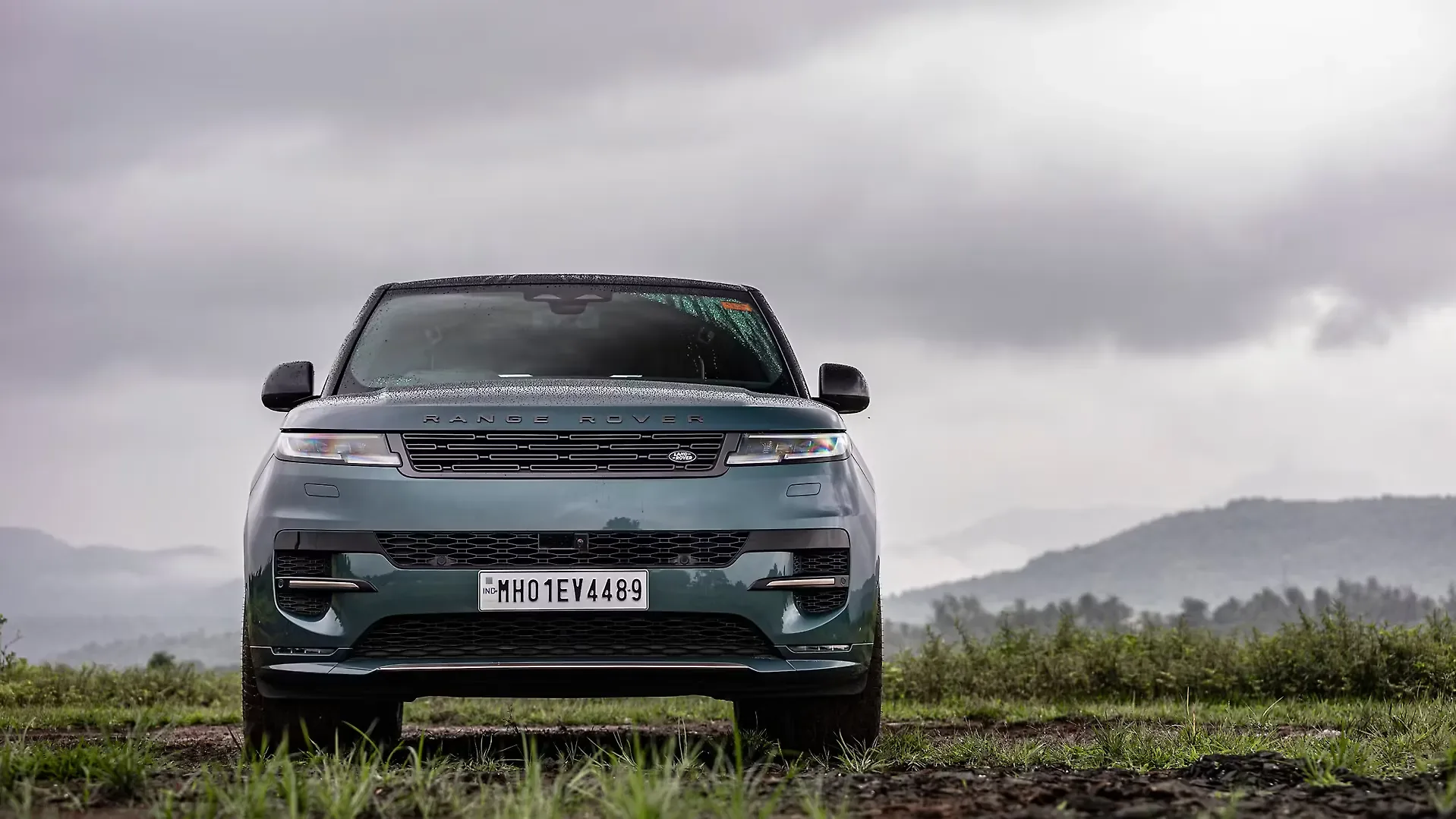
The Sport carries the minimalist Range Rover language into a tauter, 20mm-lower body. Clamshell bonnet, hidden wipers, flush pop-out handles and the floating roof are all present, with slimmer matrix LED headlamps and an eyebrow indicator signature. At nearly 5 metres long on a 3-metre wheelbase, it sits on standard 22-inch wheels (21 and 23 optional) and gets a full-size 22-inch spare, a rarity at this price. Side gills are decorative now, a deliberate nod to heritage. As Faisal Khan notes, dynamic indicators are missing front and rear, which feels like an odd omission. Against the Porsche Cayenne it looks more imposing; against the Mercedes-Benz GLS, more athletic. Thirty-one paint options plus SVO bespoke routes keep individuality intact.
The cabin is where the Sport justifies its sticker. A 13.1-inch curved Pivi Pro touchscreen, 13.7-inch driver display and head-up display anchor a dashboard finished in forged carbon, Alcantara and semi-aniline leather. Front seats offer up to 22-way adjustment with heating, ventilation, massage and, on the SV, Body and Soul audio-haptic tech built into the backrest. A refrigerated centre cubby, wireless charging, four-zone climate with PM2.5 filtration and a 29-speaker, 1,430-watt Meridian Signature system are highlights. Rear passengers get reclining seats, heating, ventilation, a panoramic roof and laptop-grade USB-C charging, though the executive-class rear of the long-wheelbase Range Rover is absent. The manual rear sunblind and fiddly hidden USB ports are odd misses at this price.
Fit and finish inside is excellent: soft-close doors, illuminated metal scuff plates, the heritage sliding armrest, and tactile knurled controls all feel built to last. Terrain Response 2 with auto mode, configurable off-road launch, wade sensing, transparent bonnet camera and a clear-sight rear-view mirror genuinely add value. ADAS includes adaptive cruise, lane keep, self-park and a phenomenal 3D camera system. The flip side, as the TeamBHP-style long-term picture from Ashwin Singh Takiar shows, is JLR's well-known software fragility: random error messages, occasional 4-Low engagement issues, minor door-card rattles after a year. Hardware is robust, software is hit and miss. A first service can cost around Rs 65,000 and insurance renewals run Rs 1.5-2.5 lakh.
Four powertrains are offered in India. The D350 3.0-litre inline-six diesel makes 345hp and 700Nm, hits 100kmph in 5.9 seconds and is the sweet spot: torquey from 1,500rpm, refined, and well-suited to long-distance Indian use. The 3.0-litre mild-hybrid petrol makes 394hp, the P460 PHEV adds 117km of electric range, and the BMW-sourced 4.4-litre twin-turbo V8 in the SV produces 626hp with a 3.9-second 0-100kmph time. As Faisal Khan points out, the ZF 8-speed is slightly lazy in Comfort but sharpens in Sport with the paddles. All variants run permanent AWD with an electronic active rear differential. The diesel is the rational choice; the V8 the emotional one. Both feel quick despite the 2,400kg-plus kerb weight.
The 6D Dynamics air suspension with switchable-volume air springs is the Sport's party trick, keeping pitch and roll in check while delivering a pliant ride on access height. Ground clearance ranges from 216mm to 281mm, with 900mm wade depth, so genuine off-road ability is intact. On 22-inch wheels the initial ride is firm over sharp expansion joints, and Faisal Khan flags audible thump on broken tarmac. Steering is heavier and more communicative than the full-size Range Rover, the body is 35% stiffer, and the Sport sits 20mm lower, so it changes direction with real intent. It is not as sharp as a Porsche Cayenne or BMW X5, but it is the most engaging Range Rover short of the SV.
Pricing starts at Rs 1.47 crore ex-showroom for the diesel Dynamic SE and climbs to roughly Rs 2.22 crore for the top diesel, with the SV Edition Two at around Rs 2.98 crore ex-showroom. Two variants, Dynamic SE and HSE, are now CKD-assembled in India; Autobiography, SV and most petrols arrive CBU, which inflates pricing sharply. The locally-built Mercedes-Benz GLS and BMW X5 undercut it significantly, and the Porsche Cayenne offers sharper dynamics for similar money. But the Range Rover Sport is the only one with this combination of design desirability, true off-road ability and badge gravitas. Step up to the full-size Range Rover only if you intend to be chauffeured.
"The cabin tech, from dual fridges to the rear suite seats and motorised everything, is in a different league at this price."
"If you want to be driven, buy the full Range Rover; if you want to drive, the Sport is the right call."
"The D350 diesel is a gem, but CBU taxation makes this 2.2 crore Sport hard to justify against locally-built rivals."
"Sits in the rare space where it is both a believable luxury limo and a properly capable off-roader."
"Two years of ownership: hardware bulletproof, software glitchy, running costs steep. Buy a V8 if you can stretch."
"Specification spread, from D350 diesel to 626hp SV with Body and Soul seats, is unmatched at this price."
"Low-km used Autobiography examples make the Sport accessible without the new-car CBU premium."