 Image: Land Rover press kit
If your budget stretches past two crore and you want the most complete luxury SUV experience in India, nothing matches the Range Rover.
The 2026 Range Rover is India's definitive ultra-luxury SUV: a 5.2-metre, made-in-India flagship that pairs commanding road presence with cabin theatre rivalling an S-Class. Prices start around Rs 2.36 crore ex-showroom and stretch past Rs 4.60 crore for the LWB Autobiography, and the only real rival is the Mercedes S-Class.
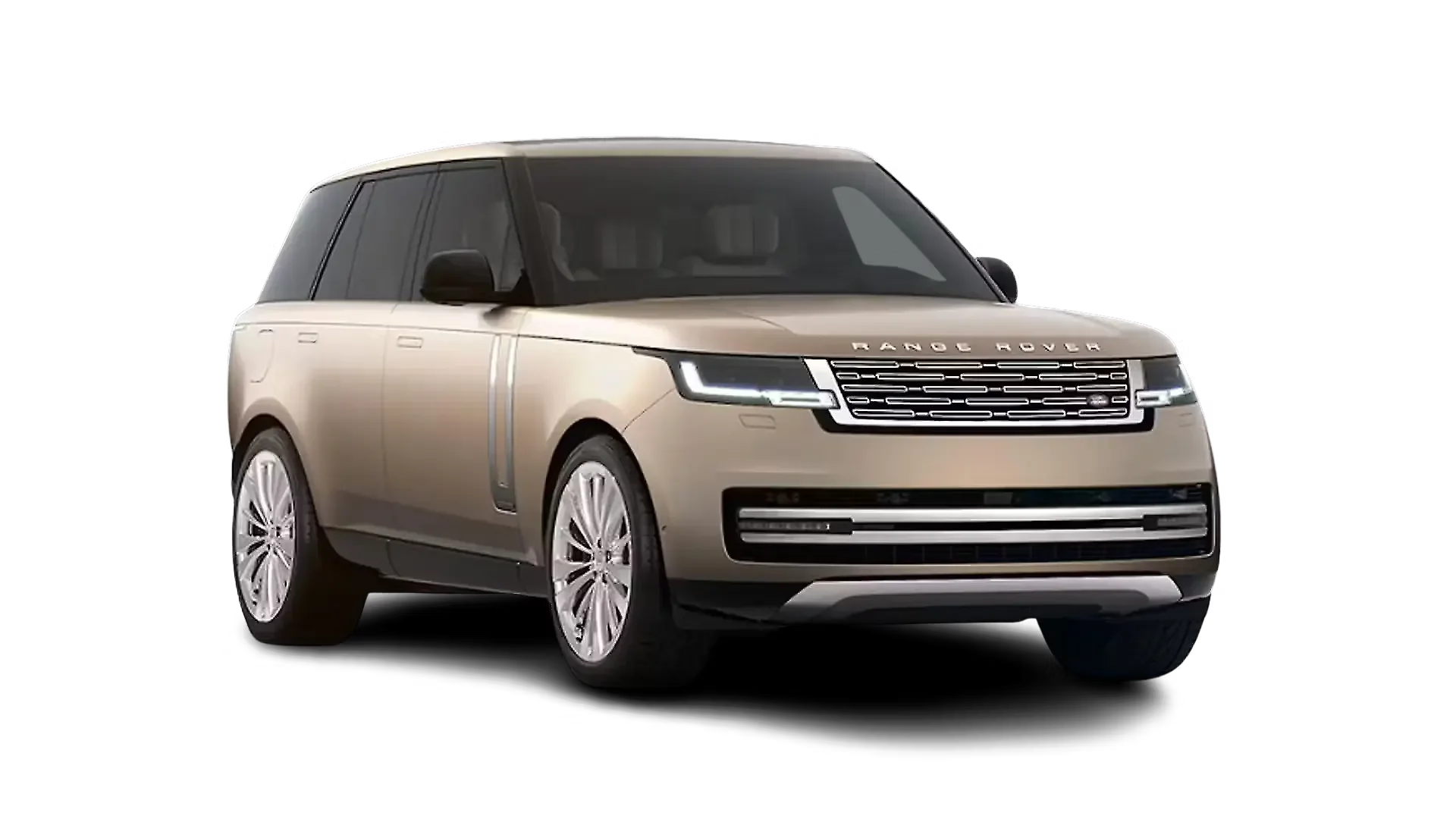
Five generations in 54 years tells you everything: the Range Rover evolves, never reinvents. The 2026 model retains the floating roof, clamshell bonnet, split tailgate and flush deployable door handles, but tightens every line. At 5.2 metres long with 22-inch alloys, it matches an S-Class or A8 L in footprint while sitting far taller. Pixel LED Matrix headlamps with animated indicators, a fully hidden rear wiper and tail lamps that vanish when off lend genuine theatre. Namaste Car counts 31 exterior colour options through the SV Bespoke programme. The shark-fin antenna hides a ClearSight rear camera, the cabin gets acoustic laminated glass for silence, and the 0.30 drag coefficient is exceptional for something this tall. It is the rare design that ages into icon status rather than out of fashion.
The cabin is where the Range Rover earns its price. Front seats offer 24-way adjustment with hot-stone massage, heating, ventilation and four-way lumbar, while the rear Executive Class seats recline fully, deploy a footrest, drop the front passenger seat forward and lower the headrest automatically. There are two refrigerated compartments, an electrically deployable cupholder, two 11.4-inch rear touchscreens with HDMI, wireless headphones, four-zone climate, and a panoramic sunroof with electric blind. The 13.1-inch Pivi Pro screen is crisp but absorbs almost every control: AC, terrain modes, ambient lighting. Faisal Khan's point lands here, hunting through menus while reversing to turn down the AC is genuinely frustrating. The tailgate Event Suite, with deployable cushions, speakers and dimmable lighting, turns the boot into a lounge. No cabin under Rs 5 crore feels more special.
Switchgear, leather, veneers and metal trim all feel a generation ahead of what JLR offered five years ago. Doors close with intelligent power assist and soft-close, the deployable handles motor flush, and even the cupholders rise electrically. Safety hardware covers six airbags, 3D surround camera, driver condition monitoring, hill descent control, dynamic stability control and a Euro NCAP five-star rating for the global model. Biturbo Media flags the broader concern: an electronics-heavy car this complex puts real demand on every system, and JLR's reliability reputation has not fully shaken its past. The made-in-India assembly should help parts availability, but buyers outside Delhi, Mumbai, Bengaluru or Hyderabad should think carefully about service reach before signing.
India gets a 3.0-litre inline-six in two flavours: the P400 petrol with 394hp and 550Nm doing 0-100 in 5.7 seconds, and the D350 diesel with 345hp and 700Nm hitting 100 in 6.1 seconds. Both run 48V mild-hybrid tech and a ZF 8-speed automatic shared with the Defender. The diesel is the sensible pick, returning a real-world 10-13 kmpl against a 80-litre tank, while the petrol struggles to crack double digits. As MotorOctane notes, this is not a sports SUV; the throttle is deliberately relaxed, body roll is present despite adaptive dampers, and the experience is about effortless cruising rather than corner carving. A plug-in hybrid sits in the global range but is not the volume play in India.
Air suspension is the headline act, adjusting between 205mm and 294mm of ground clearance and dropping 50mm at standstill for easier ingress. The Range Rover floats over broken Indian tarmac in a way no rival manages, the cabin staying eerily quiet thanks to acoustic laminated glass and active noise cancellation through the headrest speakers. Four-wheel steering, a first for the nameplate, turns the rear wheels up to 7 degrees and shrinks the 11.5-metre turning circle meaningfully in tight Indian lanes. High-speed stability is rock-solid; body roll exists but is well controlled for a 2.5-tonne SUV sitting this tall. Off-road, Terrain Response 2, low range, locking differential and 900mm wading capacity mean the standard-wheelbase car will go further than 99% of owners ever will.
Prices start at Rs 2.36 crore ex-showroom and climb past Rs 4.60 crore for the LWB Autobiography tested here, with the SV variants pushing higher still. That is roughly half the cost of a long-wheelbase Mercedes-Maybach S-Class while delivering an arguably superior rear-seat experience, plus genuine off-road ability no sedan can offer. The 50% increase in body rigidity, four-wheel steering, twin 11.4-inch rear screens, Meridian 35-speaker system and tailgate Event Suite are unmatched at any price point. Resale is among the strongest in the segment. The catch is running cost: insurance, service intervals and tyre replacement on 22-inch rubber are eye-watering, and JLR's patchy network outside metros adds friction. For the right buyer, the Range Rover remains the most complete luxury SUV money can buy in India.
"The cabin packs more motorised luxury features than most cars costing twice as much, every detail has been overengineered."
"This or the S-Class is the choice if you have all the money; comfort and class are unmatched but service network worries remain."
"Beautiful car but burying climate and drive modes inside the touchscreen is a regressive step that hurts usability and safety."
"The Range Rover's rear-seat lounge experience genuinely rivals an S-Class while offering SUV practicality no sedan can match."
"A boss car in the truest sense, engineered with love across five generations and still without a direct rival."
"Used Range Rovers in good condition offer a smarter route in: 2019-2020 cars at Rs 80 lakh to Rs 2.4 crore."
"Aspirational badge appeal remains the single biggest reason buyers stretch their budgets to own one."