Tata Punch EV vs
Tata Tiago EV
One buys you city freedom on a tight budget; the other buys you a real EV life.
Most buyers decide here. Read this before anything else.
- You drive 60-80 km daily and want the peace of mind that a full charge will last two days without anxiety.
- You have a family of four and need the extra headroom and crossover stance for school runs and weekend drives.
- You own a home charger or have access to workplace charging, making the Punch EV's larger battery genuinely useful.
- You value features like ventilated seats, a 360-degree camera and blind-view monitors and refuse to compromise on them.
- You occasionally take highway trips and need a car that can cruise at 100 kmph without running out of breath.
- You want a car built on a dedicated EV platform and believe the Gen 2 architecture will age better over five years.
- You cover 40-50 km daily in stop-and-go city traffic and charge every night without fail.
- You are buying your first car and the Rs 8-9 lakh entry price is what makes EV ownership finally possible for you.
- You live in a metro with short, predictable commutes and the idea of Rs 1 per km running cost is the main draw.
- You park in tight lanes and a smaller hatchback footprint genuinely matters for your daily life.
- You are a single professional or a couple without children, and the Tiago's cabin space comfortably covers your needs.
- You are willing to skip highway driving entirely and treat this as a dedicated city commuter with very low running costs.
The Punch EV scores 7.4/10, the Tiago EV 5.7/10. In real life, they are built for different people.
The Punch EV's 122 PS motor keeps pulls confidently past 100 kmph and is limited to 140 kmph, making highway overtakes feel relaxed. The Tiago EV runs out of breath near 113-115 kmph, which MotorBerg noted feels slower than even the Tigor EV on open roads. For anyone who values highway confidence, the Punch EV is the only sensible choice here.
Both cars deliver instant torque off the line and feel brisk in urban traffic. MotorBerg confirmed that in Sport mode both feel like a different car entirely, and in normal mode both handle AC-on city driving without complaint. The Tiago EV's smaller size and lower price make it the sharper tool for this specific job.
The Tiago EV starts near Rs 8 lakh and delivers running costs of roughly Rs 1-1.2 per km, making it the most affordable path into EV ownership in India. The Punch EV long range starts near Rs 13 lakh, a meaningful gap that takes years of fuel savings to recover. Buyers for whom the upfront number is the deciding factor will find the Tiago EV far easier to justify.
The Punch EV is built on Tata's Gen 2 acti.ev pure-EV architecture, which Tata claims offers better waterproofing, dust sealing and efficiency compared to the converted platform under the Tiago EV. Arun Panwar noted that niggling quality issues still exist on the Punch EV, but the underlying platform is newer and should age more gracefully. The Tiago EV's converted platform is a known quantity but also a dated one.
Scores shown inline. "Best for" tells you who each result matters to.
| Axis | Tata Punch EV | Tata Tiago EV | Best for |
|---|---|---|---|
Design |
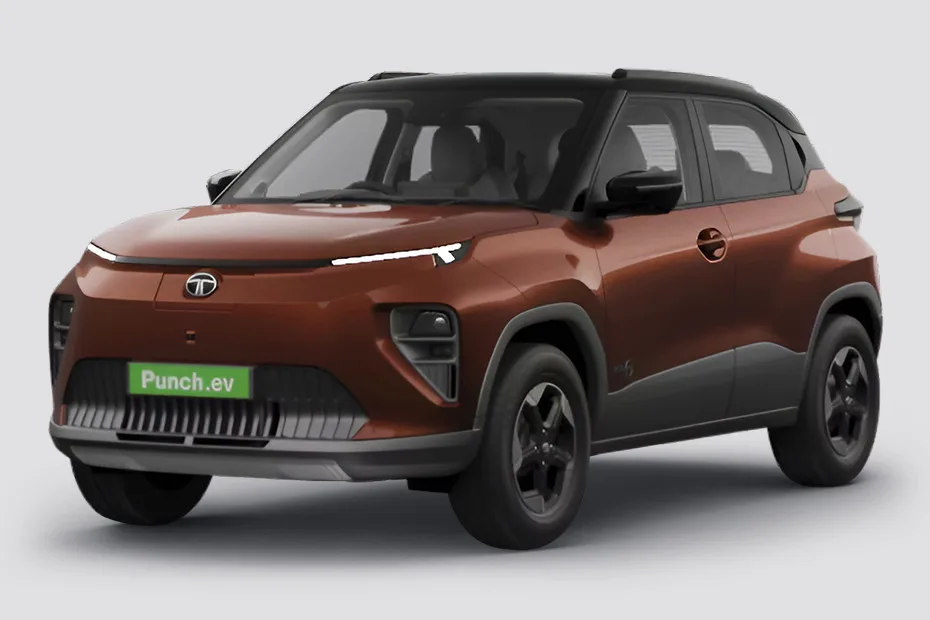
The Punch EV carries a purposeful closed-off grille, sequential DRLs and diamond-cut 16-inch alloys that read as a proper small crossover. At 3.8 m with 190 mm ground clearance, it has genuine road presence. Namaste Car noted the near-90-degree door opening is a thoughtful touch for tight Indian parking lots. 7.5 / 10 |
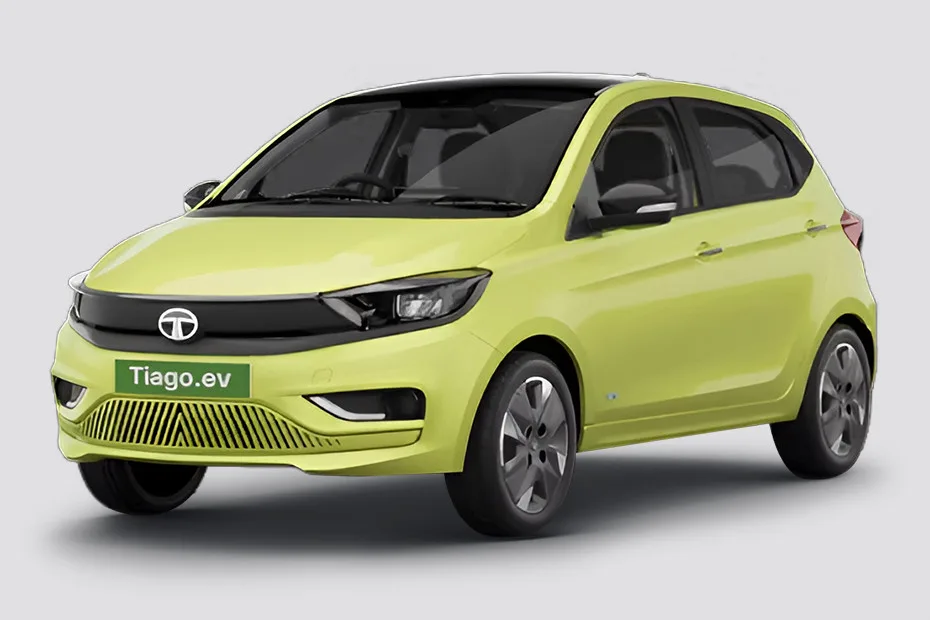
The 2025 Tiago EV gets sequential LED DRLs, a restyled bumper and door-placed EV badges, but the 14-inch steel wheels with caps look underdressed. Gagan Choudhary flagged that halogen indicators sit alongside LED headlamps, which feels like an obvious cost-cut at this price. 7.0 / 10 |
Style-conscious buyersPunch EV reads as a proper small SUV from the kerb
|
Interior |
Twin 10.25-inch screens, ventilated front seats, a wireless charger, a 65W USB-C port and an electronic parking brake with auto-hold make the Punch EV cabin feel genuinely upmarket. Faisal Khan called the feature list embarrassing for cars twice the price, though he also flagged awkward switch placement and patchy trim fit. 7.5 / 10 |
The Tiago EV's 10.25-inch screen, digital cluster and illuminated steering wheel are welcome additions, but the cabin stops there. Sachinn Rose pointed out the absence of auto-dimming IRVM and rear armrest as noticeable omissions, and the grey-black plastics feel budget at close range. 6.5 / 10 |
Feature-hungry familiesPunch EV packs significantly more usable cabin tech
|
Performance |
The Punch EV long range makes 122 PS and 190 Nm, reaching 100 kmph in around 9.5 seconds and cruising confidently to its 140 kmph limiter. Three drive modes sharpen or soften the response meaningfully. The standard range 82 PS version is best avoided, as Arun Panwar noted it broadly mirrors the petrol Punch. 7.5 / 10 |
The Tiago EV long range produces 74-75 bhp and 114 Nm, reaching 100 kmph in roughly 12.5 seconds in Sport mode. MotorBerg confirmed the instant torque feels brisk off the line in city traffic, but the car runs out of energy above 100 kmph and tops out near 113-115 kmph, a real limitation on any open road. 6.5 / 10 |
Drivers needing highway pacePunch EV long range is in a different performance class
|
Ride Quality |
The Punch EV rides on a dedicated EV platform with tuning optimised for the battery weight, and reviewers including Gagan Choudhary found it composed over broken city roads and comfortable on highways. The 195-section tyres on 16-inch wheels absorb impacts without drama. 8.0 / 10 |
The Tiago EV's ride quality is a consistent highlight across all six reviewers. EV Gyan noted the suspension tuning feels well-sorted for Indian roads, absorbing potholes and speed breakers without unsettling passengers. For a budget hatchback, the ride refinement is genuinely impressive. 7.5 / 10 |
Comfort-focused commutersBoth ride well; Tiago EV punches above its price here
|
Build Quality |
The Gen 2 acti.ev platform brings improved structural rigidity and better sealing, but Faisal Khan and Namaste Car both flagged inconsistent panel gaps and a few cheap-feeling interior touches that undercut the premium aspirations. The bones are good; the finish needs work. 6.5 / 10 |
The Tiago EV benefits from years of production maturity on the same platform, and Shyam Arora noted the body panels feel tight and the doors shut with a solid thud. It does not feel like a rushed product. The converted platform is older but the build execution is more consistent than the Punch EV at this stage. 7.0 / 10 |
Buyers prioritising fit and finishTiago EV's longer production run shows in panel consistency
|
Value for Money |
At Rs 13 lakh plus for the long range variant, the Punch EV asks a significant premium, but the feature count, platform modernity and performance make a reasonable case. CLASSIC GEARS noted that no petrol car near this price matches its equipment list. The value equation works best if you actually use the range and features. 7.5 / 10 |
The Tiago EV starts near Rs 8 lakh, but EV Gyan and MotorBerg both cautioned that the value calculation only holds if your daily running is high enough to recover the premium over the petrol Tiago. Shyam Arora was blunt: at low mileage, the petrol Tiago is the smarter buy. The EV badge alone does not justify the price. 6.0 / 10 |
High-mileage city commutersTiago EV's Rs 1/km running cost needs heavy daily use to make sense
|
Real-World Range |
The 40 kWh long range Punch EV claims 421 km and MotorBerg found user reports clustering around 250-300 km in real conditions, which is strong for the segment. The 30 kWh version claims 315 km with proportionally lower real-world numbers. Either way, most owners will comfortably cover two days of city driving on one charge. |
The Tiago EV long range claims 315 km but delivers 170-200 km in real urban use, which is enough for a predictable city commute but nothing more. EV Gyan confirmed that highway driving shrinks this further and makes range anxiety a genuine concern. This car rewards disciplined, short-distance urban use and punishes spontaneous long runs. |
Buyers with unpredictable daily distancesPunch EV long range removes the mental arithmetic of range planning
|
The Punch EV scores 7.4/10 and the Tiago EV 5.7/10, from 10 independent creators. The overall number is only part of the story here: the dimension breakdown is where the real comparison lives.
MotorBerg: Tata Punch Ev Vs Tiago Ev 2025 - Is EV worth it? | Tata Punch Ev Base Model 2025 | Tata Tiago Ev xt