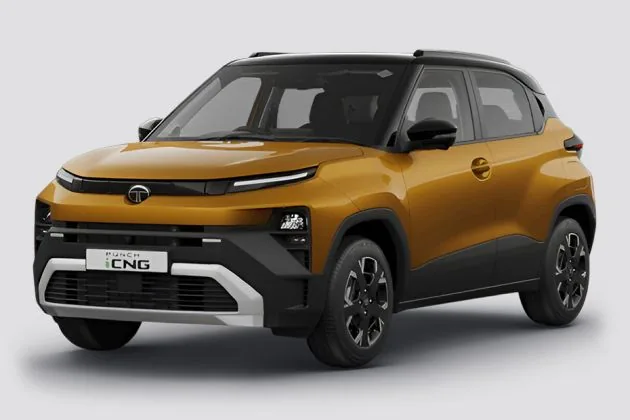
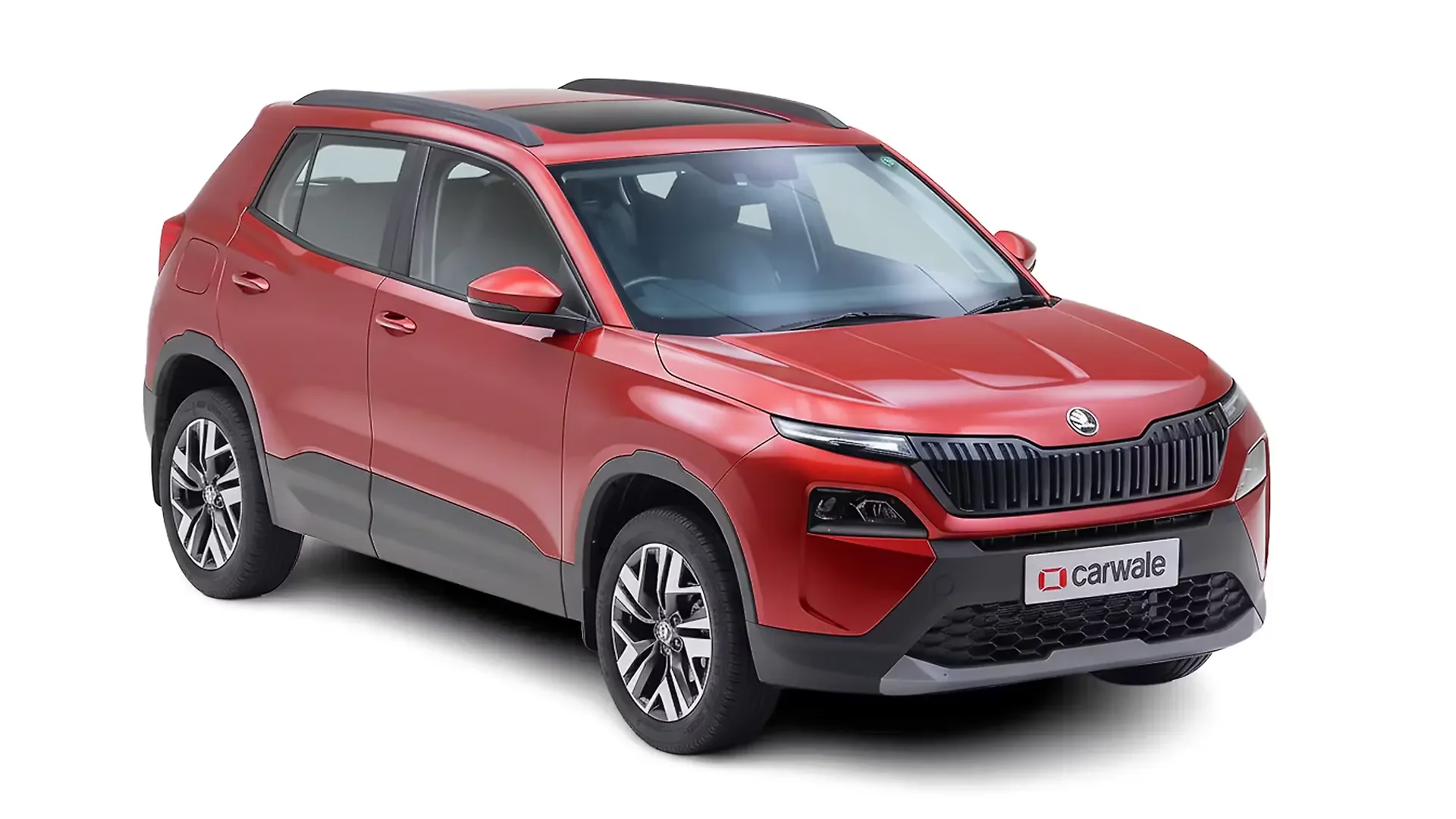
Skoda Kylaq vs
Tata Punch
A driver's compact SUV against a value-packed urban runabout with broader powertrain choices.
Most buyers decide here. Read this before anything else.
- You drive 80-plus kilometres a day on highways and want a car that feels planted and composed at triple-digit speeds.
- You have two kids and a large family, and a 446-litre boot is not a luxury but a weekly necessity.
- You value long-term reliability and want a car that holds its resale value without any active effort on your part.
- You prioritise driving feel and want steering that actually communicates what the front wheels are doing.
- You want German build solidity, tight panel gaps and doors that shut with authority, and you are willing to pay a slight premium for it.
- You are buying your first automatic and want a torque-converter gearbox that does not hunt or hesitate in city crawl.
- You live in a Tier-2 city, cover 15,000-plus kilometres a year, and running costs matter more than driving dynamics.
- Your household needs CNG flexibility and you want the only sub-4m SUV that pairs an automatic gearbox with CNG.
- You park in a tight cooperative housing society and the Punch's 3876mm footprint makes urban manoeuvring genuinely easier.
- You want a 360-degree camera as a daily tool and cannot justify stepping up to a larger car to get it.
- You are a first-time car buyer with a Rs 6-8 lakh budget and want 5-star NCAP safety without stretching.
- You frequently navigate broken village roads and want the extra ground clearance confidence the Punch's 193mm provides.
The Kylaq scores 8.4/10, the Punch 7.7/10. In real life, they are built for different people.
The Kylaq's MQB A0 IN platform keeps it settled and quiet on broken expressway surfaces, and the 446-litre boot swallows luggage that would overflow the Punch's 366-litre tub. The Punch's 120 PS turbo is willing, but reviewers note the gearbox hesitates under hard passing loads. For a five-hour drive, the Kylaq is the more relaxed choice.
The Punch's CNG-plus-AMT combination is an industry first and cuts per-kilometre costs dramatically in city stop-start traffic. The Kylaq has no CNG option and its TSI petrol, while efficient, cannot match CNG running economics. Antique Auto Car specifically highlights this as a major structural advantage for the Punch in high-mileage urban use.
The Punch is 119mm shorter and 41mm narrower than the Kylaq, which translates into noticeably easier threading through Mumbai or Delhi parking structures. The Punch's wide-opening doors are a double-edged sword here: great for getting children in, but a liability when the next car is six inches away. Overall, the Punch's smaller footprint wins in dense urban environments.
The Kylaq's electronic differential lock, disc brakes on all corners and weight-balanced MQB chassis give it a composure on switchbacks that the Punch cannot match. MotorOctane and Biturbo Media both flag the eDiff as genuinely rare in this segment and not just a spec-sheet item. The Punch is capable, but it was engineered for confidence, not enthusiasm.
Scores shown inline. "Best for" tells you who each result matters to.
| Axis | Skoda Kylaq | Tata Punch | Best for |
|---|---|---|---|
Design |
The Kylaq wears Skoda's new split-headlamp language with restrained surfacing and 17-inch alloys on top trims. Biturbo Media argues the clean, uncluttered proportions will age better than busier rivals. The compact square tail lamps draw Audi Q2 comparisons, which is no bad thing at this price. 8.0 / 10 |
The 2026 Punch facelift brings a Nexon-inspired face with slim LED DRLs, vertically stacked headlights and a connected rear LED strip that stretches the full tailgate width. It looks noticeably more modern than the outgoing car. Some reviewers note the new rear makes it look less distinctively Tata, but the overall stance is fresher and more assertive. 8.0 / 10 |
Mature, understated buyersKylaq's restrained design ages more gracefully
|
Interior |
The Kylaq's cabin is well-laid-out with a crisp digital cluster, responsive touchscreen and wide ventilated front seats with six-way power adjust for both driver and co-passenger, rare at this price. Rear knee room is adequate for passengers under 5'10". MotorBeam notes the two-spoke steering and German-feel switchgear lift perceived quality above segment norms. 7.0 / 10 |
The Punch facelift gets a 10.25-inch touchscreen, a 7-inch digital cluster and a flat-bottom steering wheel that meaningfully lift cabin ambience. Front seats gain extended under-thigh support, a real improvement flagged by taller reviewers. Wireless Android Auto and Apple CarPlay are standard, though hard plastics dominate and the roof liner feels flimsy under pressure. 7.5 / 10 |
Front-seat comfort seekersKylaq's ventilated seats and power adjust edge it
|
Build & Safety |
The Kylaq's doors thud shut with a weight that reinforces its 5-star Bharat NCAP rating. Six airbags come standard across the entire range, and the electronic differential lock and brake disc wiping are safety-adjacent features with no equivalent in the Punch. Panel gaps are tight and the structure feels notably more substantial than the price suggests. 9.2 / 10 |
The Punch carries a 5-star Bharat NCAP rating with six airbags standard, which is commendable and non-negotiable for safety-first buyers. Reviewers flagged minor fit-and-finish inconsistencies including a fuel lid that did not close on its own on one CNG tester, and hard plastics that creak when pressed. The safety floor is high; the execution polish is not always consistent. 8.8 / 10 |
Safety-conscious familiesKylaq's tighter build and eDiff add a margin above five stars
|
Performance |
The Kylaq's 1.0L TSI produces 115 PS and 178 Nm, and the torque-converter automatic is smooth in city traffic with no hunting. MotorInc notes the TSI's linear power delivery makes it feel quicker than the numbers suggest, especially in the 60-100 kmph range. The absence of a naturally aspirated or CNG option narrows its buyer funnel but sharpens its focus. 8.0 / 10 |
The Punch turbo's 120 PS and 170 Nm is the strongest engine in this comparison on paper, but Faisal Khan and others note the six-speed manual gearbox feels notchy and the turbo variant does not yet offer an automatic. The 88 PS naturally aspirated engine is adequate for city use, and the CNG variant trades performance for running-cost gains that matter in high-mileage ownership. 7.0 / 10 |
Enthusiast daily driversKylaq's polished TSI-plus-auto combo feels more complete
|
Ride Quality |
The MQB A0 IN platform gives the Kylaq a composure on broken roads that reviewers consistently describe as segment-best. It absorbs sharp-edged potholes without crashing through, and body roll is well-controlled for a sub-4m SUV. MotorOctane highlights the suspension tuning as a clear generational step above older Skoda India products. 8.5 / 10 |
The Punch rides adequately for its segment, with 193mm of ground clearance offering genuine confidence on village roads and broken surfaces. It is not harsh, but reviewers note it can feel jiggly over sharp mid-corner bumps compared to the Kylaq. For pure city use the difference is small; on mixed highway and pothole roads it becomes more apparent. 7.5 / 10 |
Mixed road condition commutersKylaq's MQB platform absorbs imperfections more fluently
|
Value for Money |
Starting at Rs 9.15 lakh, the Kylaq prices itself above the base Punch but buys you a significantly more polished product. The 446-litre boot, eDiff, ventilated seats and 5-star safety at a lower entry point than most European SUVs make the proposition genuinely strong. MotorBeam notes the gap between what Skoda charges and what it delivers is smaller here than anywhere else in the brand's Indian lineup. 7.5 / 10 |
The Punch starts at Rs 5.59 lakh and tops out at Rs 12.23 lakh for the CNG AMT, covering a wider range of budgets than the Kylaq. The 360-degree camera, CNG powertrain, and five-speed AMT availability across lower trims mean buyers get tangible, usable features at each price point. V3 Cars rates it as the stronger value choice for buyers who prioritise feature density over driving refinement. 8.0 / 10 |
Budget-stretching feature huntersPunch delivers more features per rupee at lower trim levels
|
Practicality |
The Kylaq's 446-litre boot is the largest in its segment and a decisive advantage for families who travel. The longer 3995mm body and 2566mm wheelbase free up rear legroom that genuinely accommodates three adults. The lack of a 360-degree camera is a real-world omission that some urban buyers will notice daily. |
The Punch's 366-litre boot is smaller but its 193mm ground clearance and compact footprint make it more versatile on bad roads and in tight urban parking. The 360-degree camera aids daily parking in a way that no specification sheet can fully convey. For buyers who rarely carry large luggage but navigate dense cities constantly, the Punch's practical toolkit is more relevant. |
Family trip plannersKylaq's 80-litre boot advantage is decisive on long runs
|
The Kylaq scores 8.4/10 and the Punch 7.7/10, from 9 independent creators. The overall number is only part of the story here: the dimension breakdown is where the real comparison lives.
Antique Auto Car: New Tata Punch 2026 vs Skoda Kylaq | Which is Best ? | New Punch vs Kylaq