Mercedes-Benz EQS vs
BMW iX
One is a flagship EV limousine; the other is a budget-friendly luxury crossover.
Most buyers decide here. Read this before anything else.
- You are driven long distances by a chauffeur and want rear-seat comfort that rivals a business-class cabin.
- You take regular highway runs between cities and need genuine 600-plus km real-world range confidence.
- You value a cabin that feels architecturally considered, not just well-equipped, every surface justifying the price.
- You want your car to make a quiet, authoritative statement at a corporate event or hotel portico.
- You are moving from an S-Class and want electrification without sacrificing the sense of occasion you are used to.
- You have home charging and want a car that rarely needs a public charger on most weekly routines.
- You want a BMW badge and genuine luxury feel but cannot or will not spend beyond ₹55 lakh.
- You live in a city, cover moderate daily distances, and value compact-enough dimensions for tight parking.
- You are entering the luxury EV segment for the first time and want a low-risk, familiar SUV body style.
- You carry rear passengers regularly and the long-wheelbase legroom genuinely matters for comfort on short urban trips.
- You care more about monthly running costs and depreciation than about what the car says about your net worth.
- You want a modern, clean electric crossover without the commitment of a ₹1.5 crore purchase and its associated insurance costs.
The Mercedes-Benz EQS scores 8.4/10, the iX 6.6/10. In real life, they are built for different people.
The EQS carries a 107.8 kWh battery and a drag coefficient of 0.20, making long-haul trips genuinely stress-free. The iX1's 66.4 kWh pack and claimed 440 km range shrinks considerably at motorway speeds, requiring a charging stop most S-Class owners would find unacceptable. For intercity drivers, the range gap is not marginal; it changes how you plan the entire journey.
The iX1 LWB at just over 4.6 metres slots into urban parking structures with far less anxiety than the EQS, which is a full-size limousine that demands wide bays and patient reversing. The EQS does offer four-wheel steering that tightens its turning circle noticeably, as noted in the Autocar head-to-head, but the sheer footprint still makes tight city blocks stressful. Buyers who park themselves daily will appreciate the iX1's more manageable size.
The EQS rear cabin is, as Autocar's reviewers noted, vast and limo-style, with headroom, legroom, and a sense of occasion that genuinely impresses adult passengers. The iX1 LWB improves on the standard car with genuine rear knee room, but hard plastics and vegan leather mean the ambience does not match the promise of the space. If rear passengers judge the car on feel rather than just room, the EQS wins clearly.
The iX1's ₹51.93 lakh on-road price means lower insurance, lower EMIs, and a smaller absolute depreciation hit in rupee terms over three years. The EQS entered at ₹1.55 crore and, while local assembly improved value, luxury EVs globally face steep depreciation curves. Namaste Car's coverage of both cars points to the iX1 as the more financially pragmatic choice for buyers who are not certain about EV ownership yet.
Scores shown inline. "Best for" tells you who each result matters to.
| Axis | Mercedes-Benz EQS | BMW iX | Best for |
|---|---|---|---|
Design |
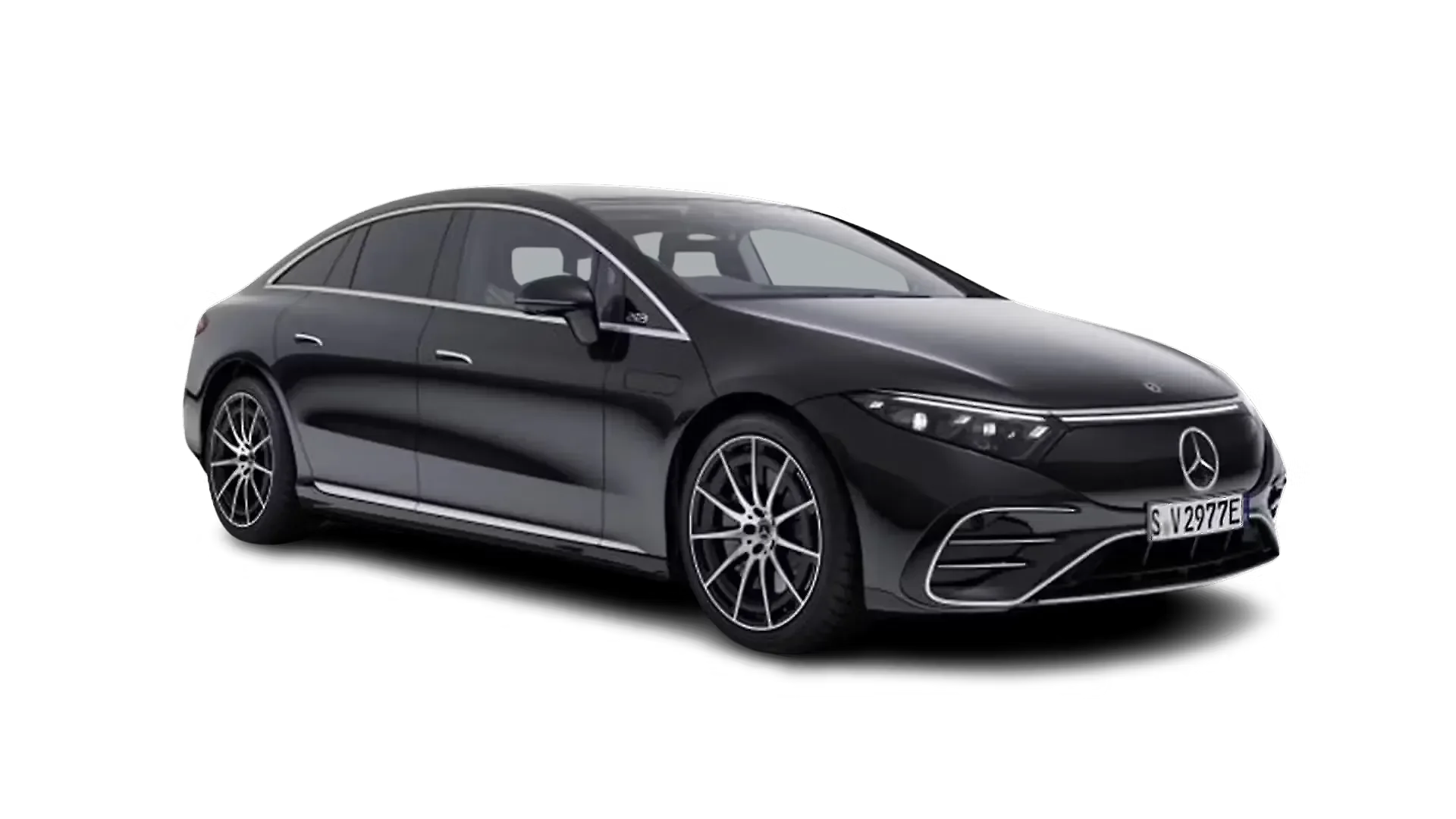
The EQS wears a genuinely distinct silhouette: a closed grille, frameless doors, and a coupe-like roofline that produces a world-record 0.20 drag coefficient. Digital Light headlamps with 1.3 million micro-mirrors per side are functional art. It looks like nothing else on an Indian road, which is precisely the point. 8.0 / 10 |
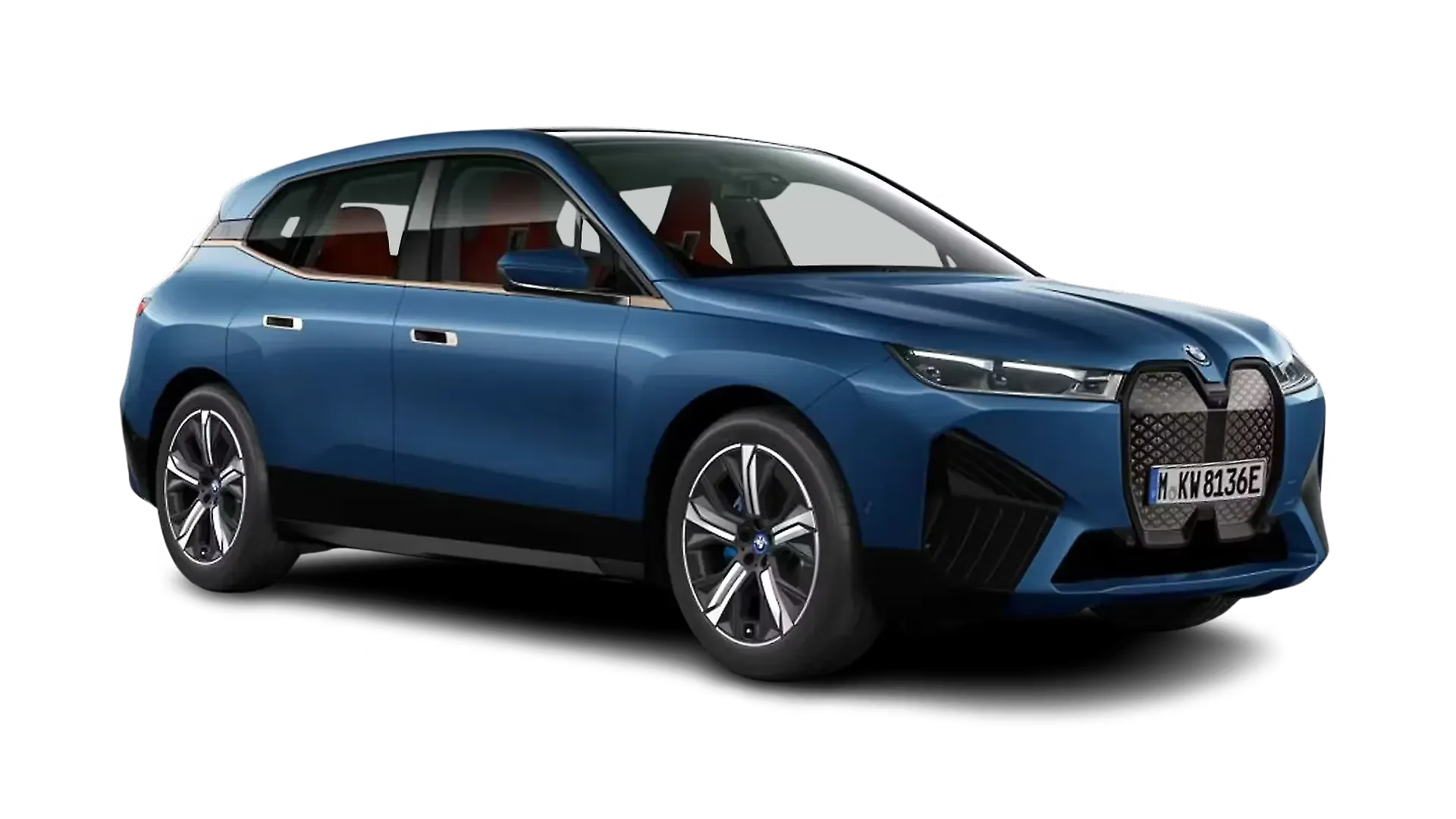
The iX1 LWB gets an M Sport package with a closed kidney grille, blue surround, and 3D LED tail lamps with an unlock animation. It is a competent, contemporary crossover design but stops short of genuinely bold. MotorWagon noted it reads more as a smart-looking SUV than a design statement. 7.5 / 10 |
Presence-conscious buyersEQS commands a street presence the iX1 cannot match
|
Interior |
Three screens span the dashboard, with a 17.7-inch central display flanked by 12.3-inch units. The front passenger display dims via infrared camera if the driver glances over. Biometric facial recognition, massage seats, and adjustable side bolsters make the EQS cabin a genuine destination rather than just transport. 8.5 / 10 |
The 10.25-inch instrument cluster paired with a 10.7-inch curved touchscreen looks appealing in photos but hard plastics dominate surfaces buyers actually touch. V3Cars noted the vegan leather and non-illuminated memory seat buttons as areas where the budget origins show clearly at this price point. 7.0 / 10 |
Rear-seat frequent flyersEQS cabin quality is in a different tier entirely
|
Performance |
523 bhp and 855 Nm through 4Matic all-wheel drive dispatches 0-100 km/h in roughly 4 seconds. As Gagan Choudhary observed, power delivery is deliberately linear rather than aggressive, mimicking a large-capacity ICE rather than a typical EV launch. Effortless rather than theatrical. 7.5 / 10 |
A single 204 hp front motor drives the iX1 with 250 Nm, and MotoWagon tested the real-world 0-100 km/h at 8.39 seconds. No launch control, no paddle shifters, no rear motor. It moves competently in traffic but does not deliver the instant EV surge most buyers expect when stepping into an electric car. 6.5 / 10 |
Effortless highway cruisersEQS power reserve makes overtaking trivially easy
|
Ride Quality |
Adaptive air suspension and four-wheel steering combine to give the EQS a deeply composed ride that isolates occupants from road texture without feeling numb. My Country My Ride noted it handles broken surfaces with the kind of serenity expected from a flagship limousine. Rear passengers feel this benefit most. 8.0 / 10 |
The iX1 rides on conventional suspension and 225/55 R18 tyres that cope adequately with city roads but transmit more secondary road noise and surface harshness than the price suggests they should. Faisal Khan pointed out that at this weight, the suspension tune feels more comfort-biased than sporty, without fully delivering either quality. 6.5 / 10 |
Long-distance rear passengersEQS isolation is in a class the iX1 cannot access
|
Build Quality |
Local assembly at Mercedes-Benz India's Pune facility has not compromised the fundamental solidity of the EQS. Shut lines, panel gaps, and material quality across every touchpoint reflect the car's flagship positioning. MotorBeam noted no regression from the imported specification in terms of perceived quality. 8.0 / 10 |
The iX1 is solidly assembled but interior hard plastics and non-premium upholstery surfaces are a recurring observation across Namaste Car and MotoWagon reviews. The exterior build is appropriate for the segment, but interior material choices reveal the cost engineering that enables the accessible price. 7.0 / 10 |
Buyers who touch and feel everythingEQS materials justify the premium at every point of contact
|
Value for Money |
At ₹1.55 crore, local assembly undercuts the S-Class while delivering more technology and comparable prestige. That is a meaningful value shift within its own segment. For buyers comparing it to the S-Class or imported luxury EVs, the equation works. For buyers comparing it to any other price point, it does not. 7.5 / 10 |
At ₹51.93 lakh on-road, the iX1 LWB delivers a genuine BMW badge, reasonable technology, and a long-wheelbase rear seat at a price no other luxury brand can currently match in India. My Country My Ride called it the most accessible entry into the luxury EV conversation, and on that metric it is difficult to argue. 8.0 / 10 |
Budget-conscious luxury entrantsiX1 delivers more car per rupee at its asking price
|
Range and Charging |
A 107.8 kWh battery and WLTP range exceeding 800 km makes the EQS the most range-confident luxury EV in India today. Real-world figures will be lower, but the buffer is generous enough that most buyers will never feel range anxiety on any route they are likely to drive. |
The 66.4 kWh battery returns a claimed 440 km range but real-world motorway figures drop noticeably. For city-primary use with home charging the iX1 works well, but drivers covering regular intercity distances will need to plan charging stops that EQS owners simply do not. |
Intercity highway regularsEQS range removes the planning burden the iX1 cannot
|
The Mercedes-Benz EQS scores 8.4/10 and the iX 6.6/10, from 6 independent creators. The overall number is only part of the story here: the dimension breakdown is where the real comparison lives.
Autocar: What’s the best luxury EV? | BMW iX vs Mercedes-Benz EQS | Autocar