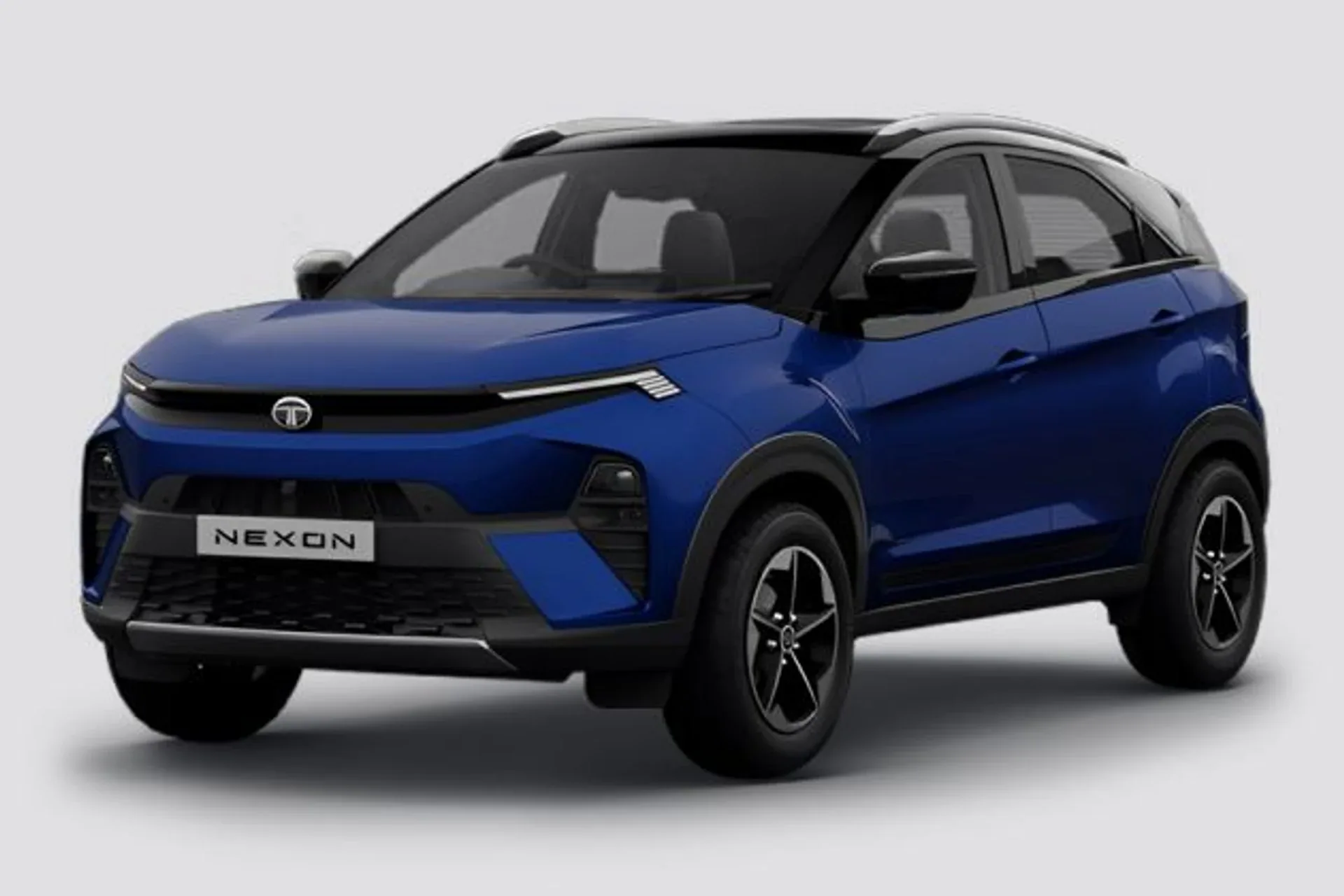
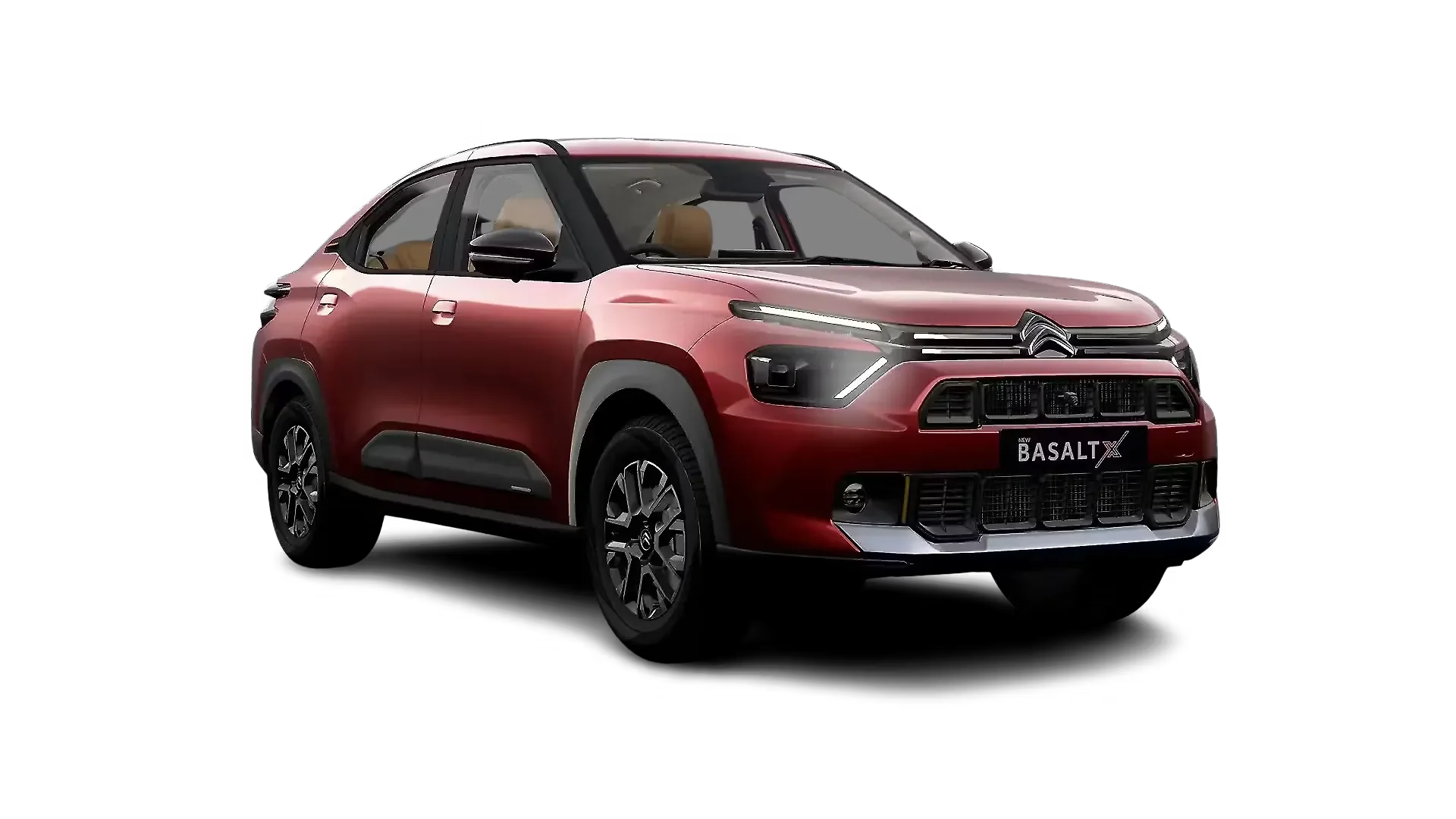
Citroen Basalt vs
Tata Nexon
The Basalt delivers more space, boot capacity and ride comfort; the Nexon counters with stronger safety evidence, more powertrain choice and a wider support base.
Same price. Different life.
Most buyers decide here. Read this before anything else.
- You prioritise rear-seat comfort and ride quality.
- You want a 470-litre boot.
- You like the coupe-SUV design.
- You want a responsive turbo automatic.
- You have a dependable Citroen workshop nearby.
- You want 5-star crash credentials.
- You need diesel or factory CNG choice.
- You prefer more features and a larger service footprint.
- You want stronger resale confidence.
- You need a proven compact-SUV all-rounder.
Four situations that tip the decision
The Basalt scores 7.2/10, the Nexon 7.9/10. In real life, they are built for different people.
The Basalt has the plushest suspension tune and the more relaxed rear-seat experience.
The Nexon offers petrol, diesel and underfloor twin-cylinder CNG options.
The Basalt's 470-litre boot is a decisive advantage over a sub-4-metre SUV.
The Nexon has the broader sales footprint and stronger resale familiarity, despite uneven service reports.
What the jury said, head-to-head
Scores shown inline. "Best for" tells you who each result matters to.
| Axis | Citroen Basalt | Tata Nexon | Best for |
|---|---|---|---|
Design |
Distinctive coupe silhouette, though 16-inch wheels look undersized. 7.5 / 10 |
Bold LED-heavy facelift with stronger conventional SUV presence. 8.0 / 10 |
Road presenceNexon looks more substantial; Basalt is more distinctive.
|
Interior |
Spacious rear bench and adjustable thigh support; several convenience omissions remain. 6.8 / 10 |
Richer equipment and design, but touch controls and storage frustrate. 7.5 / 10 |
Space versus techBasalt for room, Nexon for equipment.
|
Build & Safety |
Six airbags and solid basic structure, with limited crash-test evidence in the review set. 7.8 / 10 |
5-star crash credentials, six airbags, ESP, TPMS and 360 camera. 8.8 / 10 |
Safety confidenceNexon has the stronger proof.
|
Performance |
110 PS turbo and 205 Nm automatic is responsive; 8 to 10 km/l city is modest. 8.0 / 10 |
Diesel is the strongest all-round engine, with petrol and CNG alternatives. 7.5 / 10 |
Powertrain breadthNexon covers more running patterns.
|
Ride Quality |
Class-leading compliance over broken roads and excellent rear comfort. 8.5 / 10 |
Firm but composed with strong highway stability and steering feel. 8.0 / 10 |
Passenger comfortBasalt wins for ride plushness.
|
Value for Money |
Good fundamentals, but missing features and dealer reach weaken the equation. 7.0 / 10 |
More variants, safety kit and powertrain options, though after-sales can vary. 7.5 / 10 |
All-round valueNexon is easier to justify nationally.
|
Practicality |
470-litre boot and generous rear space; rear bench lacks split-fold flexibility. |
Smaller footprint, broad fuel choice and a more established service ecosystem. |
Space versus accessBasalt for cargo, Nexon for support.
|
The aggregated verdict
The Basalt scores 7.2/10 and the Nexon 7.9/10, from 10 independent creators. The overall number is only part of the story here: the dimension breakdown is where the real comparison lives.
How this decision was built
CarJury compared the two existing review dossiers, their dimension scores and the locally stored creator evidence. The recommendation changes with the buyer’s use case; it is not a manufacturer claim or a single-review opinion.
Bottom line: The Basalt delivers more space, boot capacity and ride comfort; the Nexon counters with stronger safety evidence, more powertrain choice and a wider support base.
Frequently asked questions
Which should you buy: Citroen Basalt or Tata Nexon?
The Basalt delivers more space, boot capacity and ride comfort; the Nexon counters with stronger safety evidence, more powertrain choice and a wider support base.
Which is better for performance, Citroen Basalt or Tata Nexon?
Nexon covers more running patterns. 110 PS turbo and 205 Nm automatic is responsive; 8 to 10 km/l city is modest. Diesel is the strongest all-round engine, with petrol and CNG alternatives.
Which is safer, Citroen Basalt or Tata Nexon?
Nexon has the stronger proof. Six airbags and solid basic structure, with limited crash-test evidence in the review set. 5-star crash credentials, six airbags, ESP, TPMS and 360 camera.
Which is more practical for a family?
Basalt for cargo, Nexon for support. 470-litre boot and generous rear space; rear bench lacks split-fold flexibility. Smaller footprint, broad fuel choice and a more established service ecosystem.
What evidence does this comparison use?
This page synthesises CarJury’s local review evidence for the Citroen Basalt and Tata Nexon, including the independent creator transcripts already stored for those reviews. It does not use manufacturer input.